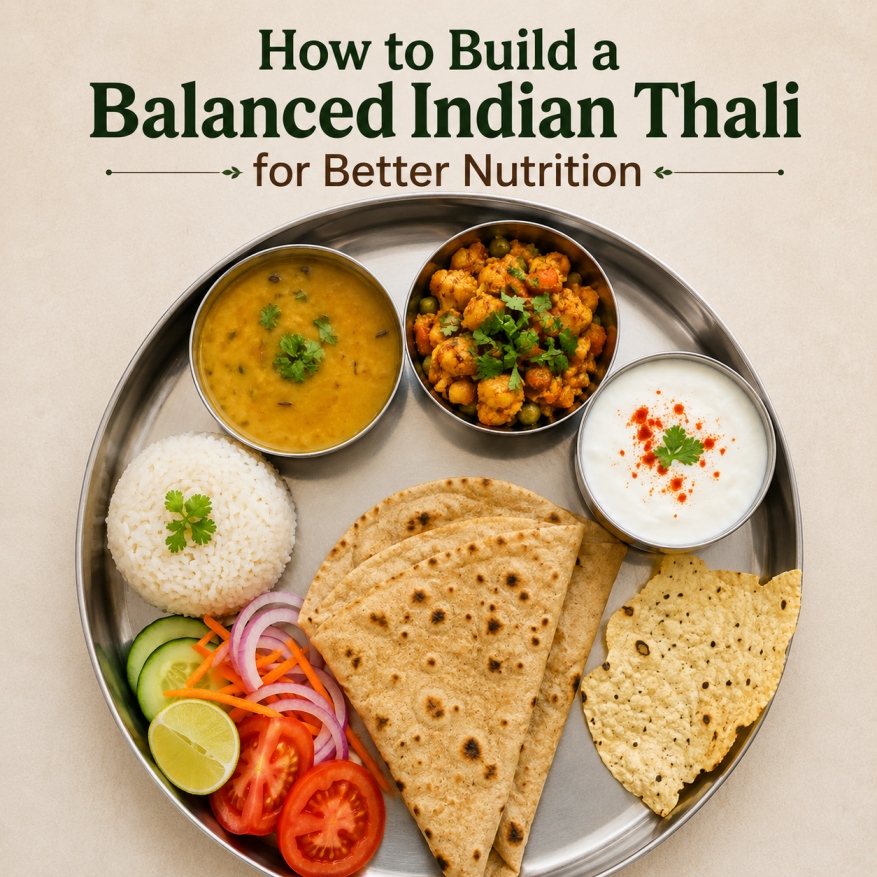
How to Build a Balanced Indian Thali for Better Nutrition
Indian food offers an incredible variety of grains, pulses, vegetables, fruits, dairy products, nuts, seeds, herbs and spices. A traditional Indian meal can therefore provide many of the nutrients the body needs when foods are combined in appropriate proportions.
However, a common problem is that an Indian meal can become heavily focused on one food group.
For example:
3–4 rotis + very little dal + small amount of sabzi
may provide plenty of carbohydrates but comparatively less protein and vegetables.
A more balanced meal could look like:
2 rotis + dal + generous serving of sabzi + salad + curd
The difference is not necessarily about removing Indian foods. It is about building the plate more thoughtfully.
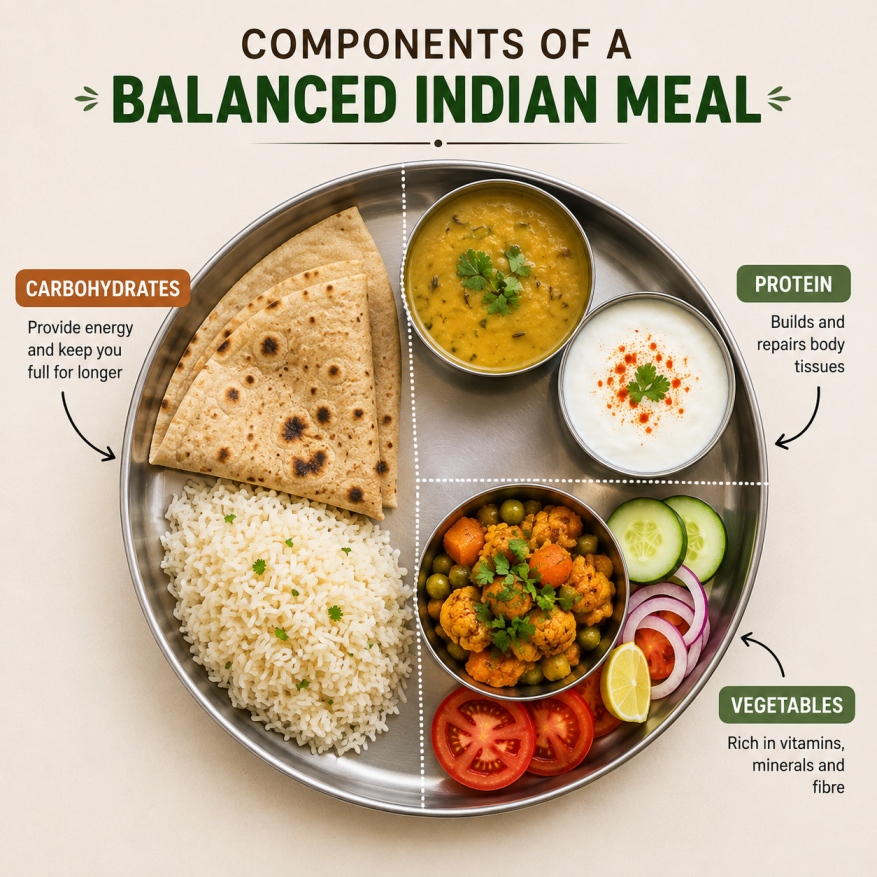
A balanced Indian thali should provide a combination of:
Carbohydrates for energy
Protein for muscle and tissue maintenance
Fibre for digestive and metabolic health
Healthy fats
Vitamins and minerals
Adequate hydration
A variety of foods
The ICMR–NIN Dietary Guidelines for Indians 2024 emphasize dietary diversity and recommend including foods from different food groups rather than relying heavily on one type of food.
The good news is that you do not need expensive ingredients or complicated recipes to build a nutritious Indian meal.
Your everyday dal, roti, sabzi, curd and salad can form the foundation of a balanced thali.https://www.nin.res.in
Understanding a Balanced Indian Thali
What Is a Balanced Indian Thali?
A balanced Indian thali is a meal that combines different food groups in appropriate proportions to provide a broad range of nutrients.
It does not mean that every plate must contain a fixed number of foods.
Instead, think about the overall composition of the meal and your diet throughout the day.
A balanced Indian thali can contain:
1. A carbohydrate source
Roti
Chapati
Rice
Brown rice
Dalia
Jowar
Bajra
Ragi
Other millets
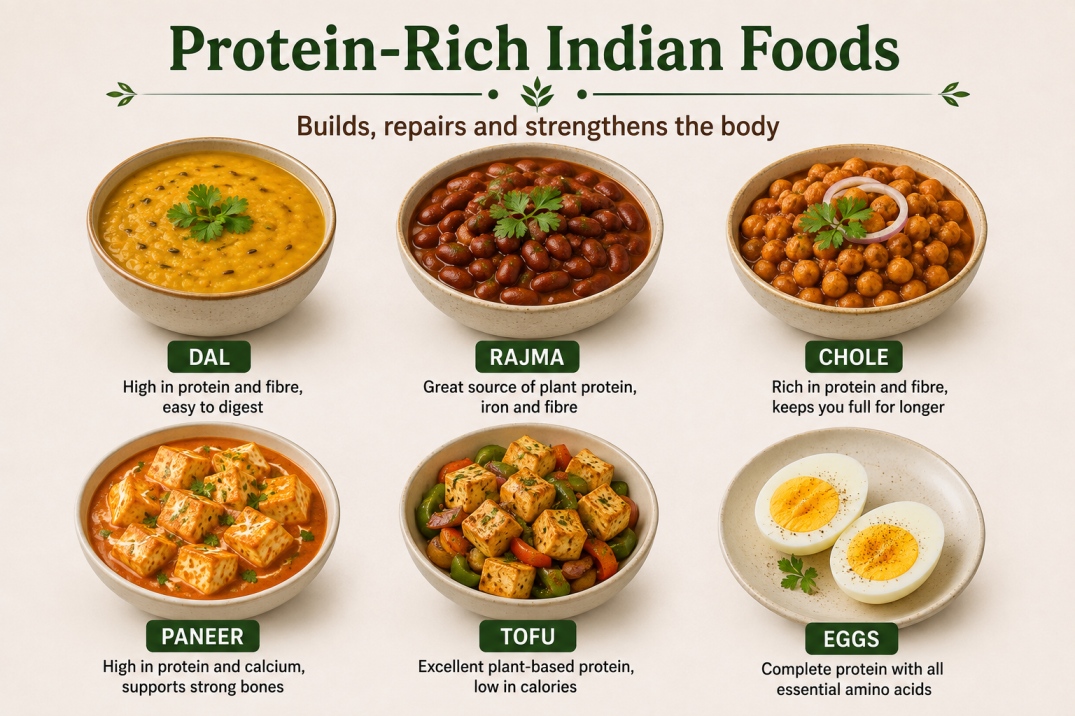
2. A protein source
Dal
Rajma
Chole
Lobia
Soy
Tofu
Paneer
Curd
Eggs
Fish
Chicken
3. Vegetables
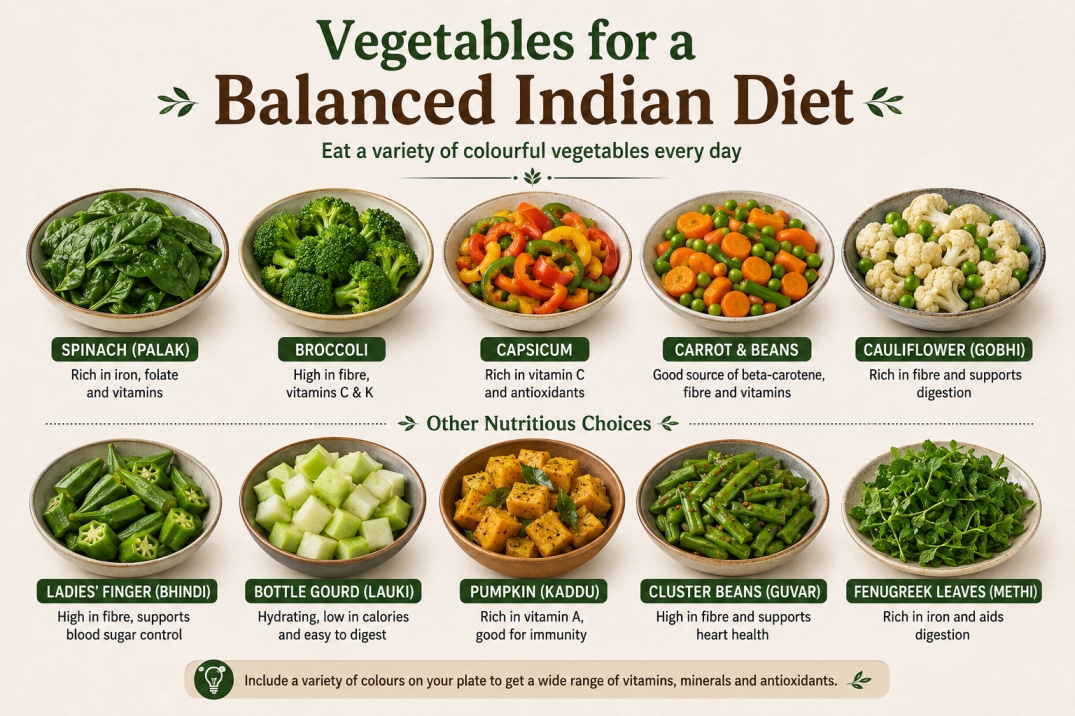
Seasonal vegetables
Green leafy vegetables
Mixed vegetables
Cooked sabzi
Salad
4. Dairy or suitable alternative
Curd
Buttermilk
Milk
Other suitable alternatives
5. Healthy fat
Nuts
Seeds
Groundnuts
Suitable cooking oils
Small amounts of ghee
6. Fruit
Fruit does not have to be included in the same meal. It can be consumed separately during the day.https://wellorafit.com/services/nutrition-diet-planning/
Why Is a Balanced Thali Important?
Eating a balanced meal can help you obtain different nutrients from different foods.
For example:
Roti or rice → carbohydrates and energy
Dal or beans → protein, fibre and micronutrients
Vegetables → fibre, vitamins, minerals and plant compounds
Curd → protein and calcium
Nuts and seeds → healthy fats and additional nutrients
When these foods are combined appropriately, the meal becomes more nutritionally complete.https://www.nin.res.in/dietaryguidelines/
Traditional Indian Food Can Be Healthy
There is a misconception that healthy eating requires completely changing traditional Indian food.
That is not necessarily true.
Common foods such as:
Dal
Roti
Rice
Sabzi
Curd
Chana
Rajma
Sprouts
Seasonal fruits
Green leafy vegetables
can all fit into a healthy diet.
The bigger concern is often portion size, cooking method and overall balance.
For example:
Dal + roti + sabzi + curd
is very different from:
Large portion of fried puris + potato curry + sweetened beverage + dessert
even though both are technically Indian meals.https://wellorafit.com/services/nutrition-diet-planning/
The Main Components of a Balanced Indian Thali
1. Start With a Quality Carbohydrate
Carbohydrates are an important source of energy.
Indian diets commonly provide carbohydrates through:
Wheat
Rice
Millets
Dalia
Other grains
You do not need to eliminate carbohydrates to eat healthily.
Instead, focus on portion and quality.
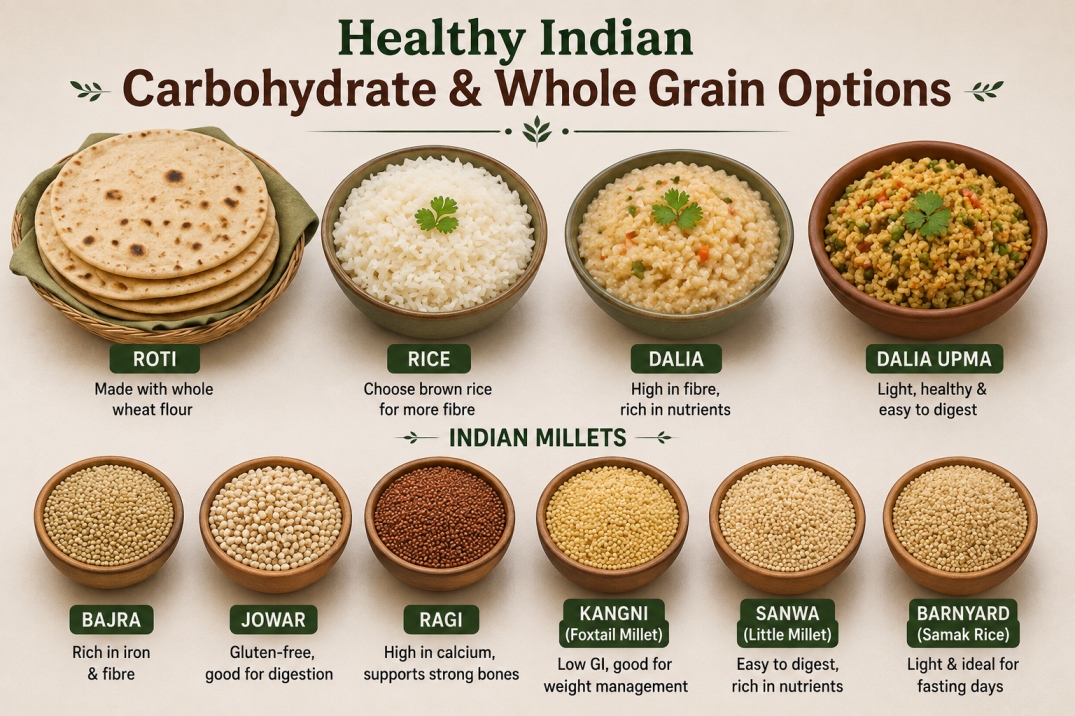
Whole grains and millets can contribute fibre and micronutrients in addition to energy.
The ICMR–NIN 2024 dietary guidance recommends that at least half of recommended cereal intake should come from whole grains, including millets.
Better choices can include:
Whole-wheat roti
Multigrain roti
Jowar roti
Bajra roti
Ragi preparations
Dalia
Brown rice
Appropriate portions of regular rice
Important:
Rice is not automatically unhealthy.
The important factors are:
portion + preparation + what you eat with it + your overall diet.
2. Add a Good Protein Source
Protein is one of the most important components of a balanced meal.
It supports:
Muscle maintenance
Tissue repair
Enzymes and hormones
Immune function
Satiety
Healthy body composition
Many Indian meals contain protein, but the portion can sometimes be too small.
For example:
2 rotis + little sabzi
contains much less protein than:
2 rotis + dal + sabzi + curd
Vegetarian Protein Sources
Moong dal
Masoor dal
Toor dal
Chana
Rajma
Chole
Lobia
Soy
Tofu
Paneer
Curd
Milk
Sprouts
Non-Vegetarian Sources
Eggs
Fish
Chicken
Lean meat
Simple Question to Ask
Before eating lunch or dinner, ask:
"Where is my protein?"
If you cannot identify a meaningful protein source, consider adding one.
3. Make Vegetables a Major Part of the Meal
Vegetables provide fibre, vitamins, minerals and a wide range of plant compounds.
Try to include different vegetables rather than eating the same vegetable every day.
Examples include:
Carrot
Beans
Capsicum
Cauliflower
Cabbage
Pumpkin
Bhindi
Lauki
Tori
Brinjal
Tomato
Beetroot
Radish
Peas
You can also include green leafy vegetables such as:
Spinach
Methi
Amaranth
Bathua
Mustard greens
The ICMR–NIN reference "My Plate for the Day" for a 2,000-kcal pattern includes around 400 g of vegetables per day, demonstrating the importance of vegetables in the overall dietary pattern.
4. Include Salad and Other Fibre-Rich Foods
A simple salad can make an Indian meal more filling and add vegetables and fibre.
Easy options include:
Cucumber
Tomato
Carrot
Radish
Onion
Cabbage
Beetroot
Lemon
You do not need an elaborate salad.
Even a simple:
Cucumber + tomato + carrot
can complement a meal.
If raw vegetables are unsuitable for someone because of a digestive or medical condition, cooked vegetables can be used instead.
5. Add Curd or Another Suitable Dairy Food
Plain curd is a convenient addition to many Indian meals.
It can contribute:
Protein
Calcium
Other nutrients
Examples include:
Plain curd
Dahi
Unsweetened buttermilk
Unsweetened lassi
Avoid turning a nutritious dairy option into a dessert by routinely adding large amounts of sugar.
For example:
Plain curd and sweetened flavoured yogurt are not nutritionally equivalent choices.
6. Include Healthy Fats in Moderate Amounts
Fats are essential for the body and help with the absorption of fat-soluble vitamins.
Sources include:
Almonds
Walnuts
Groundnuts
Sesame seeds
Flaxseeds
Pumpkin seeds
Cooking oils
Ghee
However, fats are energy-dense, so more is not necessarily better.
A meal does not need:
dal + vegetables cooked in excess oil + fried papad + fried snack + large amount of ghee
to be considered nutritious.
Use fats thoughtfully rather than excessively.
7. Include Fruits Across the Day
Fruits provide:
Fibre
Vitamins
Minerals
Naturally occurring plant compounds
Good choices include:
Guava
Apple
Orange
Papaya
Pomegranate
Pear
Banana
Seasonal fruits
Prefer whole fruit over juice most of the time because whole fruit retains its fibre and is more filling.
The ICMR–NIN 2024 reference plate includes fruit as part of the overall daily dietary pattern.
How to Build a Balanced Indian Thali
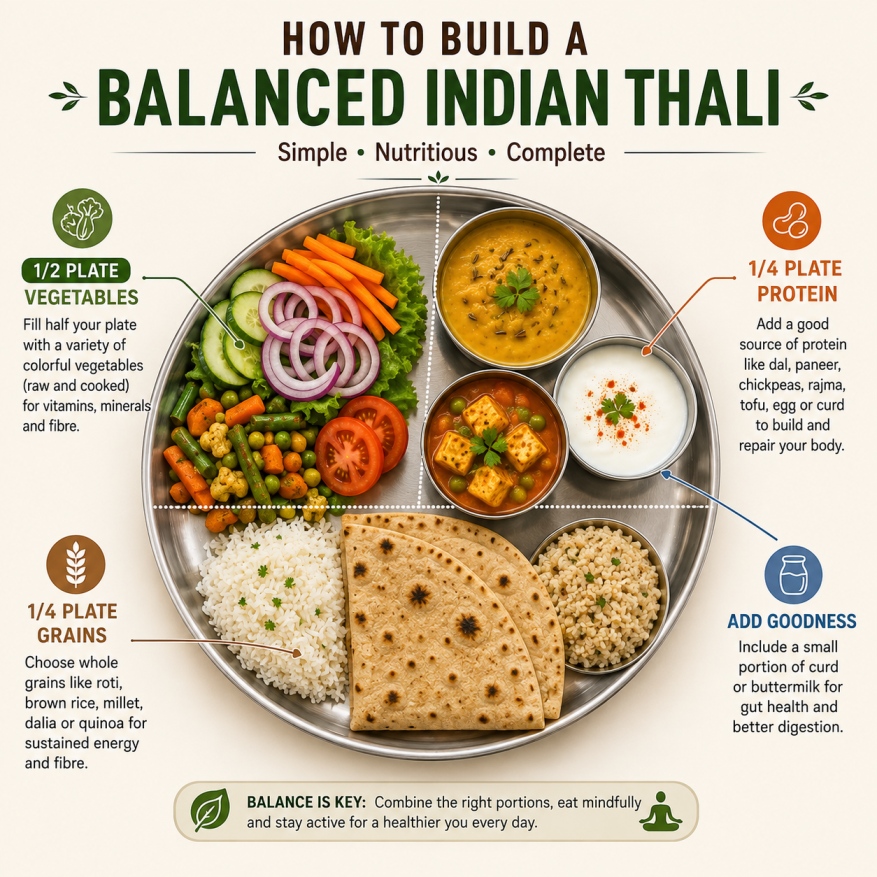
A Simple Plate Formula
A practical way to construct your meal is to think:
1. Vegetables
Make vegetables a substantial part of the meal.
2. Protein
Add a meaningful source of protein.
3. Carbohydrate
Choose an appropriate serving of roti, rice, millet or another grain.
4. Dairy
Add curd or another suitable option when appropriate.
5. Healthy Fat
Use moderate amounts of oil, nuts, seeds or ghee.
This is a visual framework, not a fixed prescription. Individual nutritional requirements vary.
Example 1: Balanced Vegetarian Thali
Plate
2 small rotis
1 bowl dal
1–2 servings vegetable sabzi
Salad
1 bowl plain curd
This provides a combination of:
Carbohydrates
Protein
Fibre
Vitamins
Minerals
Calcium
Other nutrients
Example 2: Rice-Based Balanced Thali
You do not need to avoid rice.
A balanced rice meal could include:
Moderate rice portion
Rajma/chole/dal
Vegetable sabzi
Salad
Curd
This is generally more balanced than having a very large rice portion with little protein and vegetables.
Example 3: High-Protein Vegetarian Thali
For someone with higher protein requirements, an appropriate meal could include:
2 small rotis
Dal
Paneer/tofu
Vegetable sabzi
Curd
This provides protein from multiple foods.
However, protein requirements differ by person, so portion sizes should be individualized.
Example 4: Non-Vegetarian Thali
A balanced non-vegetarian meal can include:
Roti or rice
Fish/chicken/eggs
Vegetable sabzi
Salad
Curd
Animal protein does not mean that vegetables or pulses need to be removed.
Building a Balanced Indian Thali for Weight Loss
A balanced Indian thali can be particularly useful for people working toward healthy weight management.
The goal should not be:
"Eat as little as possible."
Instead, focus on:
"Get more nutrition from an appropriate amount of food."
Prioritize
Protein
Vegetables
Fibre
Whole grains
Whole fruits
Appropriate portions
Limit
Deep-fried foods
Sugary beverages
Excess sweets
Excess oil
Large portions
Frequent highly processed snacks
Example
Instead of:
4 rotis + small sabzi + little dal
try:
2 rotis + larger serving of dal + generous sabzi + salad + curd
This can provide greater nutritional variety and may also improve fullness.
How to Build a Balanced Indian Thali for Better Blood Sugar Management
For people concerned about blood glucose, meal composition and carbohydrate portions are important.
Instead of having a meal dominated by:
large rice portion + potato curry
consider:
moderate rice + dal/beans + non-starchy vegetables + salad + curd
Similarly:
roti + dal + vegetable sabzi + salad
provides a more balanced combination than eating several rotis with minimal protein and vegetables.
People with diabetes should follow individualized dietary recommendations from their healthcare professional.
Easy Balanced Thali Ideas for Busy People
Healthy meals do not need to take hours to prepare.
Option 1
Roti + leftover dal + quick sabzi + curd
Option 2
Rice + rajma + cucumber-tomato salad + curd
Option 3
Moong dal chilla + curd + vegetable filling
Option 4
Vegetable khichdi + curd + salad
Option 5
Paneer/tofu bhurji + roti + vegetables
The best healthy meal is often the one that is simple enough to prepare consistently.
Common Mistakes When Building an Indian Thali
1. Too Much Roti or Rice
One of the most common mistakes is allowing the carbohydrate portion to occupy most of the meal.
Better:
Keep the portion appropriate and increase protein and vegetables.
2. Very Little Protein
A plate containing roti and sabzi may not provide enough protein for everyone.
Better:
Add dal, beans, paneer, tofu, curd, eggs, fish or another suitable source.
3. Counting Potato as the Main Vegetable Every Day
Potatoes can be part of a balanced diet, but meals should include a variety of vegetables.
Better:
Rotate potatoes with leafy greens, gourds, beans, cauliflower, carrots, bhindi and other seasonal vegetables.
4. Excess Oil and Ghee
Even nutritious ingredients can significantly increase the energy content of a meal when prepared with excessive fat.
Better:
Use moderate amounts.
5. Too Many Fried Accompaniments
Papad, pakoras, puris and fried snacks can turn an otherwise balanced meal into a high-energy meal.
Better:
Keep fried foods occasional.
6. Replacing Fruit With Juice
Juice can be easy to consume quickly without the same chewing and fibre benefits of whole fruit.
Better:
Choose whole fruit more often.
7. Forgetting Portion Size
Healthy foods can still contribute substantial calories when eaten in very large quantities.
For example:
nuts + seeds + ghee + oil + paneer
can all be nutritious, but combining large portions of all of them may make the meal very energy-dense.
7 Simple Rules for a Better Indian Thali
Rule 1: Add Protein
Ask:
"Where is my protein?"
Rule 2: Add Vegetables
Aim for variety and colour.
Rule 3: Choose Better Carbohydrates
Use whole grains and millets regularly where suitable.
Rule 4: Control Portions
Healthy food still needs appropriate portions.
Rule 5: Use Less Fried Food
Choose steamed, grilled, roasted or lightly cooked foods more often.
Rule 6: Choose Whole Fruit
Prefer whole fruit over juice.
Rule 7: Think About the Whole Day
One meal does not determine your entire diet.
A balanced diet is created through consistent choices across the day and week.
A Simple Balanced Indian Meal Formula
When you are unsure what to eat, remember:
ROTI/RICE
↓
+ PROTEIN
↓
+ VEGETABLES
↓
+ SALAD
↓
+ CURD
↓
+ MODERATE HEALTHY FAT
This simple structure can be adapted to different Indian cuisines and dietary preferences.
Sample One-Day Balanced Indian Meal Pattern
Breakfast
Moong dal chilla + curd + seasonal fruit
Mid-Morning
One whole fruit
Lunch
2 small rotis + dal + mixed vegetable sabzi + salad + curd
Evening Snack
Roasted chana + unsweetened tea
Dinner
Millet roti + paneer/tofu or dal + vegetable sabzi + salad
Hydration
Water throughout the day according to thirst, climate, activity and individual needs.
This is an example of meal composition, not a personalized diet plan.
Key Takeaways
A balanced Indian thali is built around variety and proportion.
Include a clear protein source in your main meals.
Make vegetables an important part of lunch and dinner.
Choose whole grains and millets regularly.
Rice and roti can both fit into a healthy diet.
Curd can be a convenient source of protein and calcium.
Nuts, seeds and oils provide useful fats but should be portion-controlled.
Prefer whole fruit over juice.
Limit excessive fried foods, sugary drinks and oversized portions.
A balanced thali can be adapted for vegetarian, non-vegetarian and weight-management diets.
Healthy eating does not require abandoning traditional Indian foods.
Consistency matters more than creating a "perfect" plate.
Conclusion
A balanced Indian thali does not need to be complicated.
The traditional combination of roti or rice, dal, vegetables, curd and salad already provides a strong foundation for nutritious eating.
The most important step is to look at the entire meal rather than focusing on one ingredient.
Instead of asking:
"Is rice healthy?"
or
"Is roti healthy?"
ask:
"Is my overall meal balanced?"
A nutritious Indian meal should ideally combine a suitable carbohydrate source with protein, vegetables, fibre and appropriate amounts of healthy fats.
The exact portions will depend on factors such as age, body size, activity level, health status and individual goals.
The goal is not to create a perfect thali every day.
The goal is to create a practical eating pattern that provides variety, adequate nutrition and can be maintained long term.
Whether you enjoy a Gujarati thali, Punjabi meal, South Indian meal, Bengali-style lunch or a simple home-cooked dal-roti-sabzi, the same principle applies:
Balance your plate, vary your foods and keep portions appropriate.
FAQ
1. What is a balanced Indian thali?
A balanced Indian thali combines an appropriate carbohydrate source with protein, vegetables and other nutrient-rich foods such as curd, fruits, nuts and seeds.
2. Is an Indian thali healthy?
It can be. The healthfulness of a thali depends on the foods included, portion sizes, cooking methods and overall dietary pattern.
3. What should be included in a balanced Indian plate?
Include a suitable carbohydrate source, a protein-rich food, plenty of vegetables and appropriate amounts of dairy or alternatives and healthy fats.
4. Can I eat rice on a healthy diet?
Yes. Rice can be part of a balanced diet. Pay attention to portion size and pair it with protein and vegetables.
5. Is roti better than rice?
Neither is automatically better for everyone. Both can be included in a balanced diet. The choice can depend on personal preference, nutritional needs, portion size and the rest of the meal.
6. What is the best protein source for an Indian diet?
There is no single best protein source. Dal, beans, rajma, chole, soy, tofu, paneer, curd, eggs, fish and chicken can all contribute protein.
7. Is a balanced Indian thali good for weight loss?
Yes, a balanced meal can support healthy weight management when total food intake and portions are appropriate.
8. Are millets healthier than rice?
Millets are nutritious whole-grain options and can contribute fibre and micronutrients. However, rice can also be part of a healthy diet. Variety is more important than labelling one grain as universally superior.
9. How much vegetables should I eat?
The ICMR–NIN 2024 reference model for a 2,000-kcal dietary pattern includes approximately 400 g of vegetables per day. Individual requirements can differ.
10. Should I eat salad with every meal?
Not necessarily. Salad is a convenient way to add vegetables and fibre, but cooked vegetables also contribute to a healthy diet.
11. Can I eat a balanced thali while trying to lose weight?
Yes. Focus on appropriate portions, adequate protein, plenty of vegetables and limiting foods that add large amounts of calories without much nutritional value.
12. What is the easiest way to make an Indian meal healthier?
Start by checking three things:
Is there enough protein?
Are there enough vegetables?
Is the carbohydrate portion appropriate?
Making these three adjustments can improve many everyday Indian meals.
Ready to Begin Your Health Journey?
Get a personalized, medically guided plan built around your unique biology.