Blood Sugar Spikes: Prevention Guide
Blood Sugar Spikes Explained: Causes, Symptoms, Risks, and How to Prevent Them Naturally
Have you ever felt tired, sleepy, or hungry again shortly after eating a meal? Maybe you've experienced an afternoon energy crash, intense sugar cravings, or difficulty concentrating after eating sweets or refined carbohydrates. These symptoms may be linked to blood sugar spikes.
Blood sugar, also known as blood glucose, is your body's primary source of energy. Every time you eat foods containing carbohydrates, your digestive system breaks them down into glucose, which enters your bloodstream. Your body then releases insulin, a hormone that helps move glucose from your blood into your cells where it is used for energy.
This process is completely normal. However, problems occur when blood sugar rises too quickly after meals. These rapid increases are known as blood sugar spikes.
Occasional blood sugar spikes are a natural part of digestion, especially after eating carbohydrate-rich foods. But when spikes happen frequently due to poor diet, inactivity, chronic stress, lack of sleep, or underlying insulin resistance, they can place extra strain on your body's metabolic system.
Over time, repeated blood sugar spikes may contribute to increased hunger, energy crashes, weight gain, insulin resistance, Type 2 diabetes, heart disease, and other chronic health conditions.
The good news is that you don't have to eliminate carbohydrates or follow an extreme diet to maintain healthy blood sugar levels. Small lifestyle changes—such as eating balanced meals, staying physically active, getting enough sleep, and choosing high-fiber foods—can significantly reduce blood sugar spikes and improve overall health.
In this comprehensive guide, you'll learn what blood sugar spikes are, why they happen, their symptoms, health risks, and practical ways to prevent them naturally.https://www.who.int
What Are Blood Sugar Spikes?
Blood sugar spikes refer to a rapid rise in the amount of glucose (sugar) circulating in your bloodstream, usually after eating or drinking foods rich in carbohydrates. https://diabetes.org
Carbohydrates are found in many foods, including:
· Rice
· Bread
· Roti
· Pasta
· Potatoes
· Fruits
· Milk
· Breakfast cereals
· Sweets
· Soft drinks
During digestion, carbohydrates are broken down into glucose, which enters your bloodstream.
As blood glucose rises, your pancreas releases insulin, a hormone that helps transport glucose into your body's cells where it can be used for energy or stored for later use.
In healthy individuals, insulin efficiently controls blood sugar, allowing glucose levels to return to normal within a few hours after eating.
However, when glucose rises very quickly—particularly after consuming large amounts of refined carbohydrates or sugary foods—the body must produce more insulin to bring blood sugar back under control.
If this happens repeatedly over many years, the body's cells may become less responsive to insulin, increasing the risk of insulin resistance and eventually Type 2 diabetes.
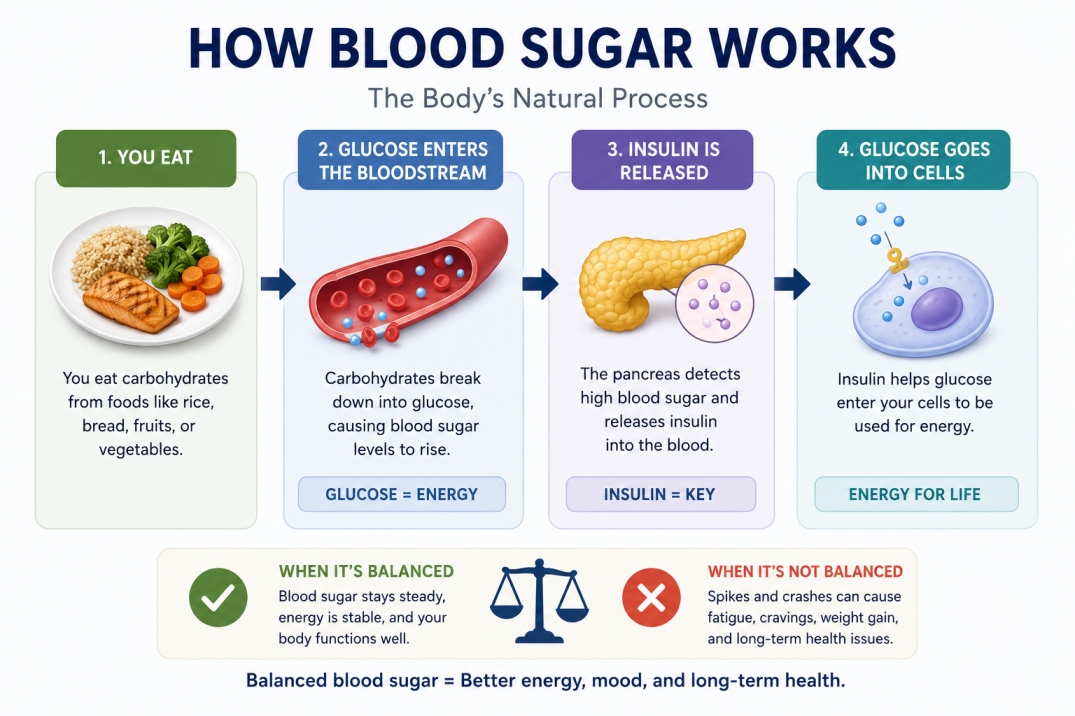
How Blood Sugar Works
To understand blood sugar spikes, it's helpful to know how your body normally regulates blood glucose.
The process is remarkably efficient.
Step 1: You Eat Food
When you eat foods containing carbohydrates, digestion begins in your mouth and continues through your stomach and small intestine.
Carbohydrates are broken down into glucose.
Step 2: Glucose Enters the Bloodstream
The glucose produced during digestion enters your bloodstream.
This causes your blood sugar level to rise.
Step 3: The Pancreas Releases Insulin
Your pancreas detects rising blood sugar levels and releases insulin.
Insulin acts like a key that unlocks your body's cells.
Step 4: Cells Use Glucose
Once insulin unlocks the cells, glucose moves inside and is used to produce energy.
Some glucose is stored in the liver and muscles as glycogen for future energy needs.
Step 5: Blood Sugar Returns to Normal
As glucose moves into cells, blood sugar gradually returns to its normal range.
The entire process usually occurs within a few hours after eating.
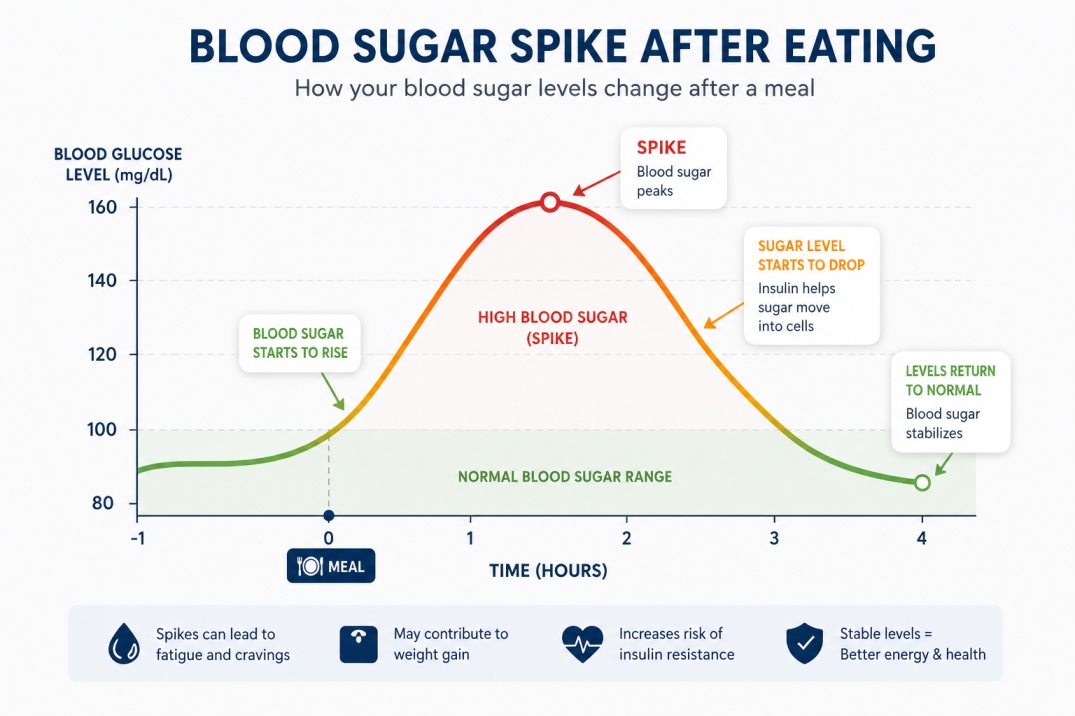
What Happens After You Eat?
Every meal causes some increase in blood sugar.
This is completely normal and expected.
The size of the increase depends on several factors, including:
· The type of carbohydrates eaten
· Portion size
· Fiber content
· Protein intake
· Healthy fat intake
· Physical activity
· Individual insulin sensitivity
For example:
High-Fiber Balanced Meal
A meal containing:
· Grilled chicken
· Brown rice
· Mixed vegetables
· Salad
is digested more slowly.
As a result:
· Glucose enters the bloodstream gradually.
· Insulin is released steadily.
· Energy remains more stable.
· Hunger returns more slowly.
Highly Processed Meal
A meal consisting of:
· White bread
· Sugary soft drink
· French fries
· Dessert
is digested much faster.
This causes:
· Rapid glucose absorption
· Large insulin release
· Sudden rise in blood sugar
· Energy crash afterward
· Increased hunger soon after eating
This pattern explains why some meals leave you satisfied for hours while others make you hungry again shortly afterward.
Normal Blood Sugar Rise vs Blood Sugar Spike
Many people think any increase in blood sugar is harmful, but that's not true.
Blood sugar naturally rises after eating.
The goal is not to prevent this increase entirely.
Instead, the aim is to avoid large, frequent, and rapid spikes that place extra demand on your body's insulin response.
Normal Blood Sugar Response
A healthy blood sugar response:
· Rises gradually after eating
· Returns to normal within about two to three hours
· Provides steady energy
· Keeps hunger under control
Blood Sugar Spike
A blood sugar spike is characterized by:
· Rapid increase after eating
· Large insulin release
· Quick drop in blood sugar afterward
· Fatigue
· Sugar cravings
· Increased hunger
· Reduced concentration
Frequent spikes over time may increase the risk of metabolic disorders.
Blood Sugar Spikes vs Diabetes
Many people assume that having a blood sugar spike means they have diabetes.
Fortunately, this is not true.
Even healthy individuals experience temporary increases in blood sugar after meals.
The difference lies in how efficiently the body returns blood sugar to normal.
Healthy Individual
· Blood sugar rises after eating.
· Insulin responds effectively.
· Glucose moves into the cells.
· Blood sugar returns to normal within a few hours.
Prediabetes
In prediabetes:
· Insulin becomes less effective.
· Blood sugar stays elevated longer.
· Larger amounts of insulin are required.
· Blood sugar control gradually worsens.
Without lifestyle changes, prediabetes can progress to Type 2 diabetes.
Type 2 Diabetes
In Type 2 diabetes:
· Insulin resistance is significant.
· The pancreas may not produce enough insulin.
· Blood sugar remains elevated for prolonged periods.
· Medical treatment is often required alongside lifestyle changes.
Frequent blood sugar spikes may contribute to this progression over time, especially when combined with excess body weight, physical inactivity, poor diet, and genetic risk factors.
Why Blood Sugar Spikes Matter
Occasional blood sugar spikes are completely normal.
The concern arises when they occur repeatedly over months or years.
Frequent spikes can:
· Increase hunger
· Trigger sugar cravings
· Promote overeating
· Reduce energy levels
· Affect concentration
· Increase insulin production
· Contribute to insulin resistance
· Make weight management more difficult
Over time, repeated blood sugar spikes may increase the risk of:
· Prediabetes
· Type 2 diabetes
· Heart disease
· Fatty liver disease
· Obesity
· Metabolic syndrome
The encouraging news is that many blood sugar spikes can be reduced through simple, sustainable lifestyle changes rather than extreme diets.
Common Causes of Blood Sugar Spikes
Blood sugar naturally rises after eating, but certain foods, habits, and health conditions can cause glucose levels to increase much more rapidly than normal.
Understanding these triggers is the first step toward improving blood sugar control and reducing the risk of long-term health complications.
1. Eating Refined Carbohydrates
Refined carbohydrates are digested quickly because they contain little fiber.
As a result, glucose enters the bloodstream rapidly, causing a sharp rise in blood sugar.
Examples include:
White bread
White rice
Maida products
Pizza
Pasta made with refined flour
Noodles
Crackers
White sandwich bread
Replacing refined grains with whole grains can help slow glucose absorption.
2. Sugary Foods and Drinks
Foods high in added sugar are among the biggest causes of blood sugar spikes.
Examples include:
Soft drinks
Sweetened fruit juices
Cakes
Cookies
Pastries
Chocolates
Candy
Ice cream
Sweetened coffee drinks
Energy drinks
Liquid sugar is absorbed especially quickly because it requires very little digestion.
3. Large Portion Sizes
Even healthy carbohydrates can raise blood sugar if eaten in very large amounts.
For example:
Three cups of rice instead of one
Multiple rotis in one meal
Large bowls of pasta
Oversized servings of potatoes
Portion control is just as important as food quality.
4. Eating Carbohydrates Alone
Meals containing only carbohydrates digest faster than balanced meals.
For example:
Plain toast
White rice alone
Biscuits with tea
Sweet breakfast cereal
Fruit juice without protein
Adding protein, healthy fats, and fiber slows digestion and helps reduce blood sugar spikes.https://wellorafit.com/services/nutrition-diet-planning/
5. Lack of Physical Activity
Muscles use glucose for energy.
When you're physically active, your muscles absorb more glucose from the bloodstream.
A sedentary lifestyle reduces glucose utilization, making blood sugar spikes more likely after meals.
Even a short walk after eating can help. https://wellorafit.com/services/fitness-training/
6. Poor Sleep
Sleep deprivation affects hormones that regulate blood sugar and insulin sensitivity.
People who regularly sleep less than 7 hours often experience:
Higher fasting blood sugar
Increased hunger
More sugar cravings
Reduced insulin sensitivity
Increased appetite
Poor sleep and high blood sugar often reinforce each other.
7. Chronic Stress
Stress causes the body to release hormones such as cortisol and adrenaline.
These hormones increase blood sugar by stimulating the liver to release stored glucose into the bloodstream.
While this response is useful during emergencies, chronic stress may contribute to frequent blood sugar spikes.
8. Insulin Resistance
Insulin resistance occurs when the body's cells become less responsive to insulin.
As a result:
More insulin is needed
Blood sugar remains elevated longer
Glucose enters cells less efficiently
Insulin resistance is one of the main risk factors for Type 2 diabetes.
9. Certain Medications
Some medications may increase blood sugar, including:
Corticosteroids
Certain antipsychotic medications
Some diuretics
Certain immunosuppressants
Never stop prescription medications without consulting your healthcare provider.
10. Medical Conditions
Several medical conditions may contribute to elevated blood sugar, including:
Type 2 diabetes
Prediabetes
PCOS
Cushing's syndrome
Certain pancreatic disorders
Managing these conditions can improve blood sugar control.
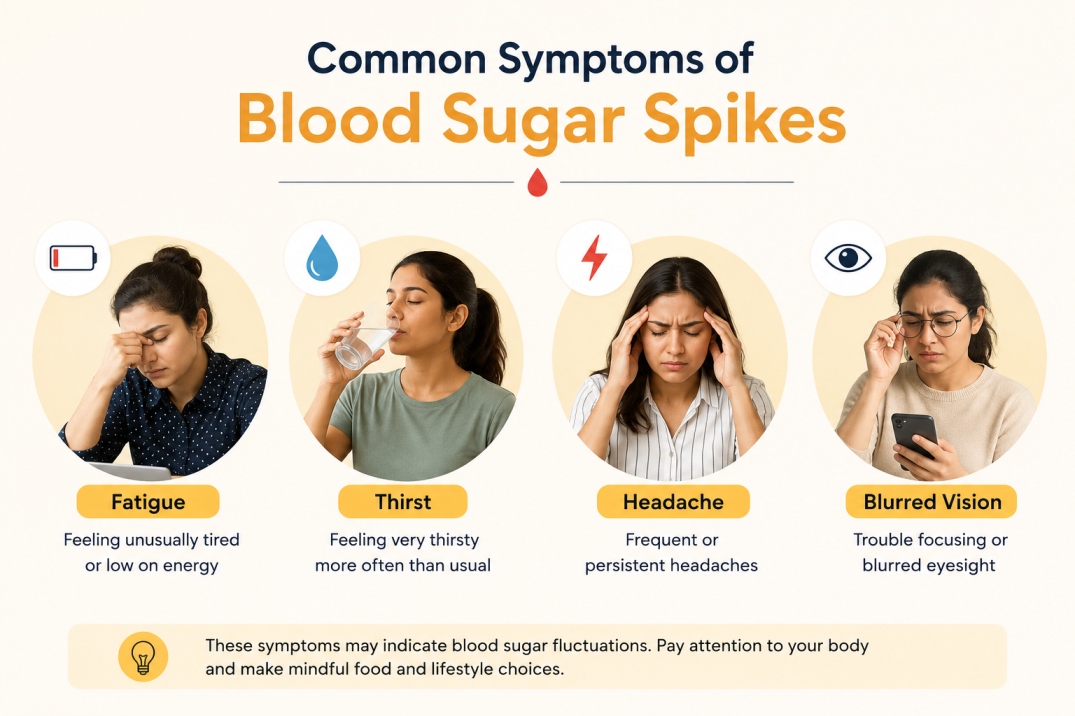
Symptoms of Blood Sugar Spikes
Many people don't notice occasional blood sugar spikes.
However, frequent or significant increases may cause noticeable symptoms.
Common symptoms include:
Feeling tired after meals
Sleepiness
Increased thirst
Frequent urination
Headaches
Blurred vision
Brain fog
Difficulty concentrating
Sugar cravings
Hunger shortly after eating
Dry mouth
Mood changes
Irritability
Some people experience several of these symptoms together, especially after consuming high-sugar meals.
What Happens After a Blood Sugar Spike?
One reason blood sugar spikes feel unpleasant is what often happens afterward.
The process usually follows this pattern:
High-Carbohydrate Meal
↓
Rapid Increase in Blood Sugar
↓
Large Insulin Release
↓
Quick Drop in Blood Sugar
↓
Fatigue
↓
Sugar Cravings
↓
Hunger
↓
Eating Again
This repeating cycle may encourage overeating throughout the day.
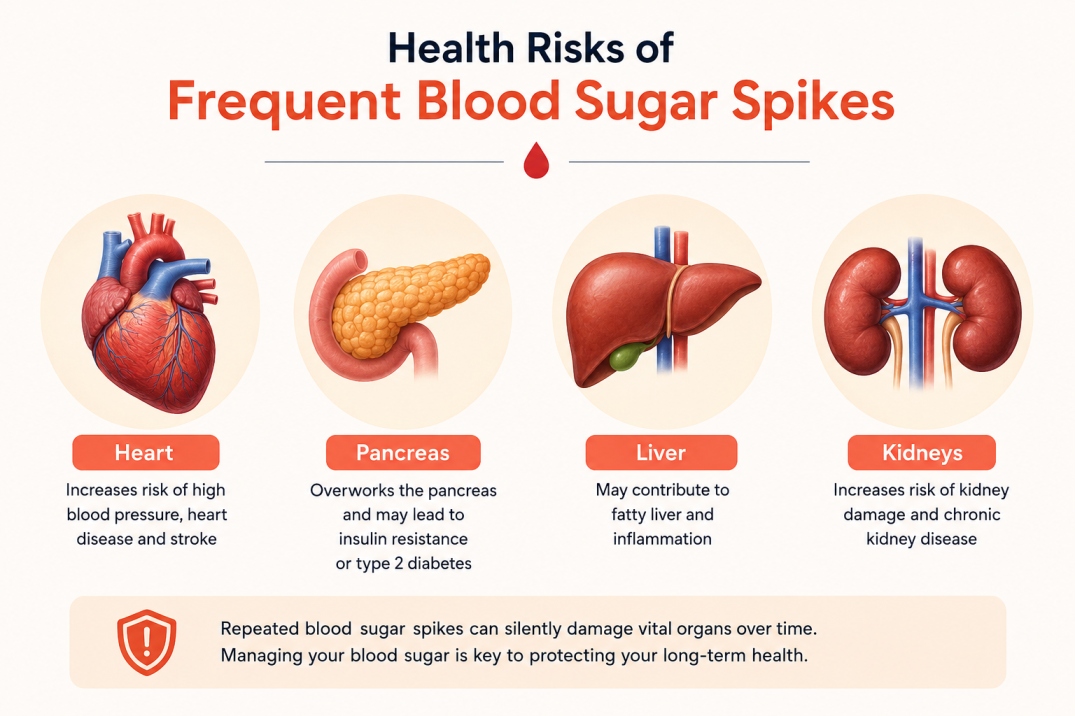
Health Risks of Frequent Blood Sugar Spikes
Occasional blood sugar spikes are normal.
Problems arise when spikes occur repeatedly over many months or years.
Frequent spikes may increase the risk of several health conditions.
1. Insulin Resistance
Repeated insulin release can gradually reduce the body's sensitivity to insulin.
This makes blood sugar harder to control over time.
2. Prediabetes
Persistently elevated blood sugar may eventually lead to prediabetes.
Without lifestyle changes, prediabetes can progress to Type 2 diabetes.
3. Type 2 Diabetes
Over time, the pancreas may struggle to produce enough insulin to meet the body's needs.
This can result in chronically high blood sugar levels requiring medical treatment.
4. Weight Gain
Frequent blood sugar spikes are often followed by increased hunger and cravings.
Eating more calories than your body needs can contribute to gradual weight gain.
5. Belly Fat
Repeated insulin spikes may encourage fat storage, particularly around the abdomen, especially when combined with excess calorie intake and physical inactivity.
6. Heart Disease
Poor blood sugar control is associated with:
High blood pressure
Increased inflammation
Elevated triglycerides
Cardiovascular disease
Maintaining stable blood sugar supports heart health.
7. Fatty Liver Disease
Excess sugar intake, particularly from sugary beverages and processed foods, may contribute to fat accumulation in the liver.
8. Reduced Energy Levels
Frequent blood sugar fluctuations often cause:
Afternoon energy crashes
Reduced productivity
Difficulty concentrating
Mental fatigue
Stable blood sugar generally supports more consistent energy throughout the day.
Blood Sugar Spikes and Weight Gain
Many people notice that frequent sugar cravings make losing weight difficult.
One reason is that rapid rises in blood sugar are often followed by rapid drops.
When blood sugar falls quickly:
Hunger returns sooner
Cravings increase
Portion sizes become larger
Snacking becomes more frequent
This pattern increases daily calorie intake.
Over time, consistently consuming more calories than the body burns can lead to weight gain.
Blood Sugar Spikes and Belly Fat
Belly fat develops through a combination of factors including:
Excess calorie intake
Physical inactivity
Genetics
Hormones
Poor sleep
Stress
Insulin resistance
Frequent blood sugar spikes may contribute indirectly by increasing insulin production and promoting overeating.
Combined with a sedentary lifestyle, this can increase abdominal fat accumulation over time.
Blood Sugar Spikes and Insulin Resistance
Insulin is responsible for moving glucose from the bloodstream into your body's cells.
With insulin resistance:
Cells stop responding efficiently
More insulin is needed
Blood sugar remains elevated longer
The pancreas works harder
Over many years, this may progress to Type 2 diabetes if not addressed.
The encouraging news is that healthy eating, regular exercise, weight management, and quality sleep can significantly improve insulin sensitivity in many individuals.
Foods That Cause Blood Sugar Spikes
Not all carbohydrates affect your blood sugar in the same way. Foods that are highly processed, low in fiber, and rich in added sugars are digested quickly, causing glucose to enter the bloodstream rapidly.
This doesn't mean you must completely avoid these foods. Instead, understanding which foods are more likely to spike blood sugar can help you make healthier choices and maintain better energy levels throughout the day.
1. Sugary Drinks
Sugary beverages are one of the fastest ways to increase blood sugar because they contain large amounts of rapidly absorbed sugar with little or no fiber.
Examples include:
· Soft drinks
· Sweetened fruit juices
· Energy drinks
· Sweetened iced tea
· Flavored milk
· Sports drinks
· Sweet coffee beverages
Choose water, unsweetened tea, buttermilk, or infused water instead.
2. White Bread and Refined Flour Products
Foods made from refined flour (maida) digest quickly and have a high glycemic index.
Examples include:
· White bread
· Burger buns
· Pizza base
· White pasta
· Naan
· Biscuits
· Bakery products
Replace them with:
· Whole wheat bread
· Multigrain bread
· Whole wheat roti
· Oats
· Millets
3. Sugary Breakfast Cereals
Many breakfast cereals marketed as healthy contain significant amounts of added sugar.
Instead choose:
· Plain oats
· Unsweetened muesli
· High-fiber cereals
· Homemade vegetable poha with protein
· Vegetable upma with nuts
4. Sweets and Desserts
Indian sweets and desserts often contain large amounts of sugar and refined carbohydrates.
Examples include:
· Gulab jamun
· Jalebi
· Rasgulla
· Cakes
· Pastries
· Cookies
· Ice cream
· Chocolates
Enjoy them occasionally and in moderation.
5. White Rice
White rice is digested faster than whole grains.
Large portions may lead to a quicker rise in blood sugar.
Healthier alternatives include:
· Brown rice
· Red rice
· Quinoa
· Millets
· Barley
6. Fried Snacks
Although fried foods are high in fat, many are also made with refined flour or potatoes.
Examples include:
· French fries
· Chips
· Samosas
· Kachori
· Pakoras
· Namkeen
Frequent consumption may contribute to poor blood sugar control and weight gain.
7. Processed Snack Foods
Convenience foods often combine refined carbohydrates, unhealthy fats, and excess sodium.
Examples include:
· Crackers
· Instant noodles
· Chips
· Packaged snacks
· Ready-to-eat foods
These foods are generally low in fiber and nutrients.
Foods That Help Stabilize Blood Sugar
A balanced diet rich in whole foods can help reduce blood sugar spikes by slowing digestion and improving insulin sensitivity.
1. Protein-Rich Foods
Protein slows digestion and promotes fullness.
Excellent sources include:
· Eggs
· Chicken
· Fish
· Paneer
· Greek yogurt
· Tofu
· Lentils
· Chickpeas
· Kidney beans
Try including protein with every meal.
2. High-Fiber Foods
Fiber slows glucose absorption and helps maintain steady blood sugar.
Good choices include:
· Oats
· Brown rice
· Whole wheat
· Millets
· Quinoa
· Apples
· Pears
· Berries
· Carrots
· Broccoli
· Spinach
· Beans
· Chia seeds
· Flaxseeds
Adults should aim for 25–35 grams of fiber daily.
3. Healthy Fats
Healthy fats improve satiety and help slow digestion.
Choose:
· Almonds
· Walnuts
· Pistachios
· Peanuts
· Pumpkin seeds
· Olive oil
· Avocados
· Flaxseeds
Remember that healthy fats are calorie-dense, so moderation is important.
4. Non-Starchy Vegetables
Vegetables are naturally rich in fiber and nutrients while being low in calories.
Include:
· Spinach
· Broccoli
· Cauliflower
· Cabbage
· Cucumber
· Tomatoes
· Bell peppers
· Mushrooms
· Green beans
· Zucchini
Aim to fill at least half your plate with vegetables.
5. Low-Glycemic Fruits
Fruit contains natural sugar but also provides fiber, vitamins, and antioxidants.
Better choices include:
· Apples
· Pears
· Oranges
· Berries
· Guava
· Kiwi
· Papaya
Eat whole fruits instead of fruit juices whenever possible.
Best Breakfast for Stable Blood Sugar
Breakfast sets the tone for your energy levels throughout the day.
A balanced breakfast should include protein, fiber, and healthy fats.
Healthy options include:
· Vegetable oats with boiled eggs
· Besan chilla with curd
· Vegetable omelette with whole wheat toast
· Greek yogurt with nuts and seeds
· Moong dal chilla with paneer
· Vegetable poha with peanuts
· Idli with sambar
· Overnight oats with chia seeds
· Vegetable upma with sprouts
Avoid breakfasts consisting only of sugary cereals, pastries, or sweetened beverages.
Exercise Helps Control Blood Sugar
Physical activity helps muscles absorb glucose from the bloodstream, reducing blood sugar levels and improving insulin sensitivity.
Walking
Walking is one of the simplest and most effective ways to improve blood sugar control.
Walking for 10–20 minutes after meals can help reduce post-meal blood sugar spikes.
Aim for 30–45 minutes of brisk walking most days of the week.
Strength Training
Strength training builds muscle, which improves the body's ability to use glucose.
Aim for 2–4 sessions each week targeting all major muscle groups.
Cycling
Cycling supports heart health while helping muscles use glucose efficiently.
Swimming
Swimming provides a full-body workout with minimal stress on the joints.
Yoga
Yoga combines movement, flexibility, and breathing exercises.
Research suggests yoga may improve stress management and insulin sensitivity.
Sleep and Blood Sugar
Poor sleep affects the hormones that regulate hunger, appetite, and insulin sensitivity.
People who regularly sleep less than seven hours may experience:
· Increased hunger
· Sugar cravings
· Higher fasting blood sugar
· Increased insulin resistance
· Fatigue
· Reduced concentration
Tips for Better Sleep
· Sleep 7–9 hours each night.
· Follow a regular sleep schedule.
· Limit caffeine late in the day.
· Reduce screen time before bed.
· Keep your bedroom cool and quiet.
· Practice a relaxing bedtime routine.
Stress and Blood Sugar
Stress hormones such as cortisol and adrenaline signal the liver to release stored glucose into the bloodstream.
Chronic stress may therefore contribute to frequent blood sugar spikes.
Healthy ways to manage stress include:
· Deep breathing
· Meditation
· Yoga
· Walking outdoors
· Journaling
· Reading
· Listening to music
· Spending time with loved ones
Managing stress benefits both blood sugar control and overall well-being.
Lifestyle Habits That Support Healthy Blood Sugar
Simple daily habits can make a big difference.
Aim to:
· Eat balanced meals.
· Avoid skipping meals.
· Stay physically active.
· Stay hydrated.
· Sleep 7–9 hours.
· Manage stress.
· Eat more fiber.
· Include protein with every meal.
· Limit sugary drinks.
· Maintain a healthy body weight.
Small, consistent changes are more effective than restrictive diets.
Common Mistakes People Make
Many people unintentionally make choices that lead to larger blood sugar spikes.
Common mistakes include:
1. Drinking Fruit Juice Instead of Eating Whole Fruit
Whole fruit contains fiber that slows sugar absorption.
Fruit juice removes most of this fiber.
2. Eating Carbohydrates Alone
Meals consisting only of bread, rice, or pasta digest quickly.
Pair carbohydrates with protein, healthy fats, and vegetables.
3. Skipping Meals
Skipping meals may lead to excessive hunger and overeating later.
4. Drinking Sugary Beverages
Liquid sugar is absorbed rapidly and often causes large blood sugar spikes.
5. Sitting Immediately After Meals
Light physical activity, such as walking, can help muscles use glucose more effectively.
6. Believing Only People With Diabetes Need to Care About Blood Sugar
Healthy blood sugar benefits everyone by supporting stable energy, appetite control, heart health, and long-term metabolic health.
How to Prevent Blood Sugar Spikes Long-Term
Preventing blood sugar spikes isn't about eliminating carbohydrates or following restrictive diets. Instead, it's about making smart food choices, staying active, and building healthy habits that support stable blood sugar over time.
Here are the most effective long-term strategies:
1. Build Balanced Meals
Rather than eating carbohydrates alone, combine them with protein, healthy fats, and fiber.
A balanced plate should include:
· ½ plate: Non-starchy vegetables
· ¼ plate: Lean protein
· ¼ plate: Whole grains or healthy carbohydrates
Balanced meals slow digestion and reduce rapid increases in blood sugar.
2. Choose High-Fiber Foods
Fiber slows the absorption of glucose into the bloodstream.
Include foods such as:
· Oats
· Brown rice
· Whole wheat
· Millets
· Lentils
· Beans
· Fruits
· Vegetables
· Chia seeds
· Flaxseeds
Adults should aim for 25–35 grams of fiber daily.
3. Include Protein with Every Meal
Protein helps improve satiety and slows carbohydrate digestion.
Good options include:
· Eggs
· Chicken
· Fish
· Paneer
· Greek yogurt
· Tofu
· Lentils
· Chickpeas
Protein-rich meals help reduce hunger between meals.
4. Watch Portion Sizes
Even healthy carbohydrates can increase blood sugar when eaten in excessive amounts.
Instead of eliminating foods you enjoy:
· Use smaller plates.
· Measure portions occasionally.
· Eat slowly.
· Stop when comfortably full.
Portion awareness is one of the simplest ways to improve blood sugar control.
5. Stay Physically Active
Exercise helps muscles use glucose more efficiently.
Aim for:
· 150 minutes of moderate exercise each week
· 2–3 strength-training sessions weekly
Even a 10–20 minute walk after meals can help reduce post-meal blood sugar spikes.
6. Drink Enough Water
Staying hydrated supports normal body functions, including blood sugar regulation.
Water is the best beverage choice.
Limit:
· Sugary drinks
· Energy drinks
· Sweetened juices
7. Prioritize Sleep
Quality sleep improves insulin sensitivity and appetite regulation.
Healthy sleep habits include:
· Sleeping 7–9 hours
· Going to bed at a consistent time
· Reducing screen time before sleep
· Avoiding caffeine late in the day
8. Manage Stress
Stress hormones can increase blood sugar even if you haven't eaten.
Healthy stress-management techniques include:
· Meditation
· Yoga
· Deep breathing
· Walking outdoors
· Journaling
· Reading
· Spending time with loved ones
Managing stress supports both physical and emotional health.
9. Limit Highly Processed Foods
Highly processed foods often contain:
· Refined carbohydrates
· Added sugar
· Unhealthy fats
· Excess sodium
Instead, choose foods that are closer to their natural state whenever possible.
10. Monitor Your Health Regularly
If you're at risk for diabetes or have prediabetes, regular health check-ups are important.
Discuss with your healthcare provider whether you need tests such as:
· Fasting Blood Sugar (FBS)
· HbA1c
· Oral Glucose Tolerance Test (OGTT)
Early detection allows timely lifestyle changes and treatment when needed.
Key Takeaways
· Blood sugar spikes are temporary increases in blood glucose after eating.
· Occasional blood sugar spikes are normal.
· Frequent large spikes may increase the risk of insulin resistance, weight gain, and Type 2 diabetes.
· Refined carbohydrates and sugary drinks are common causes of rapid blood sugar increases.
· Protein, fiber, healthy fats, and balanced meals help slow glucose absorption.
· Regular exercise improves insulin sensitivity and supports blood sugar control.
· Quality sleep and stress management play important roles in maintaining healthy blood sugar.
· Small, sustainable lifestyle changes are more effective than restrictive diets.
Conclusion
Blood sugar naturally rises after meals, but frequent and significant spikes can affect your energy levels, appetite, and long-term health.
Fortunately, preventing blood sugar spikes doesn't require eliminating all carbohydrates or following complicated diets. Instead, choosing balanced meals, increasing fiber intake, staying physically active, getting enough sleep, and managing stress can make a meaningful difference.
These healthy habits not only help stabilize blood sugar but also support weight management, heart health, and overall well-being.
Remember that lasting health is built through consistent daily choices—not perfection. Small improvements made over time can have a significant impact on your metabolic health and reduce the risk of chronic diseases in the future.
FAQ Schema
1. What is a blood sugar spike?
A blood sugar spike is a rapid increase in blood glucose levels after eating, especially after consuming foods high in refined carbohydrates or added sugars.
2. Are blood sugar spikes normal?
Yes. A temporary rise in blood sugar after eating is completely normal. Problems occur when spikes are frequent, large, or prolonged.
3. What foods cause blood sugar spikes?
Foods such as sugary drinks, sweets, white bread, white rice, pastries, refined flour products, and highly processed snacks are common causes of rapid blood sugar increases.
4. What are the symptoms of high blood sugar after eating?
Symptoms may include fatigue, increased thirst, frequent urination, headaches, blurred vision, sugar cravings, hunger soon after meals, and difficulty concentrating.
5. How can I prevent blood sugar spikes naturally?
Eating balanced meals, choosing high-fiber foods, including protein with meals, staying active, sleeping well, managing stress, and limiting sugary foods can help reduce blood sugar spikes.
6. Does walking after meals lower blood sugar?
Yes. A short walk after eating can help muscles use glucose more effectively and reduce post-meal blood sugar levels.
7. Can blood sugar spikes cause weight gain?
Frequent blood sugar spikes may increase hunger, cravings, and calorie intake, which can contribute to gradual weight gain over time.
8. Is fruit bad for blood sugar?
Whole fruits contain natural sugars along with fiber, vitamins, and antioxidants. Most people can enjoy whole fruits as part of a balanced diet. Fruit juice, however, may cause faster blood sugar spikes because it lacks fiber.
9. Can stress increase blood sugar?
Yes. Stress hormones such as cortisol and adrenaline can raise blood sugar levels, especially during prolonged periods of stress.
10. When should I see a doctor about blood sugar?
Consult a healthcare professional if you experience persistent high blood sugar symptoms, have risk factors for diabetes, or receive abnormal blood sugar test results.
Ready to Begin Your Health Journey?
Get a personalized, medically guided plan built around your unique biology.