Cholesterol Explained: HDL, LDL and Triglycerides
Cholesterol is one of those health terms you may hear regularly—but understanding your cholesterol report can sometimes feel confusing.
You may see numbers for total cholesterol, LDL, HDL and triglycerides and wonder:
Which number is the “bad” one?
Is high HDL always good?
Are triglycerides the same as cholesterol?
What does LDL actually do?
Can food lower cholesterol?
Do I need to avoid all fats?
What does a lipid profile really tell me?
The good news is that you don't need to be a medical expert to understand your cholesterol report.
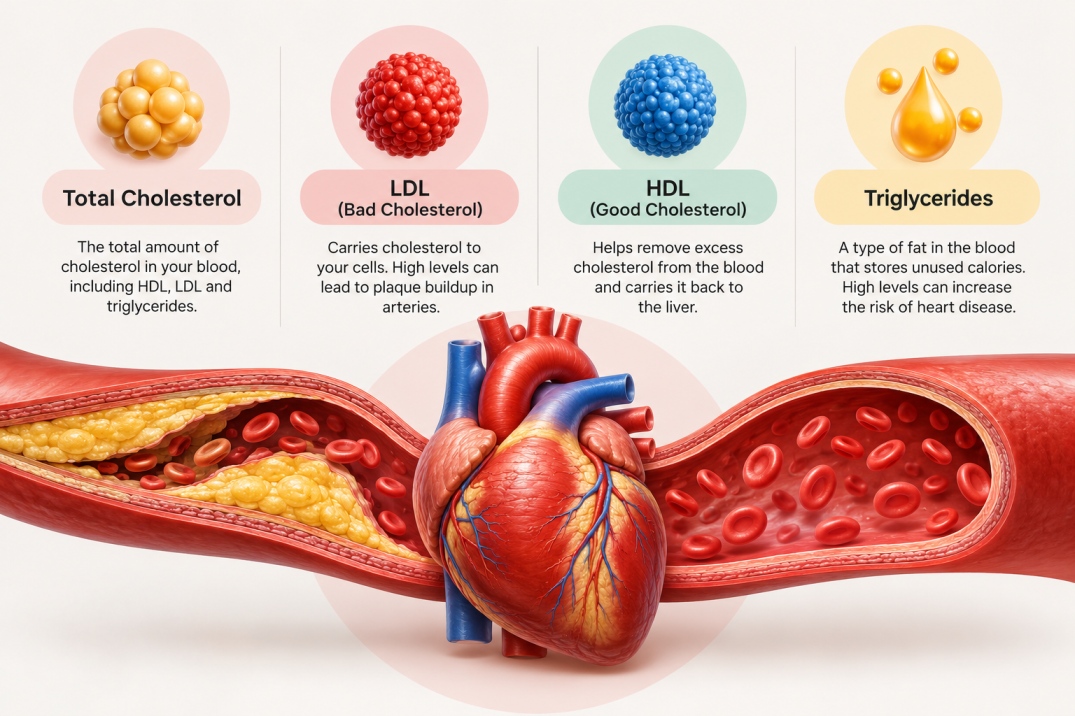
Cholesterol is an essential substance that your body needs for several important functions. The concern arises when certain blood lipids—particularly LDL cholesterol—remain elevated or when your overall lipid profile is associated with increased cardiovascular risk.
Understanding the difference between LDL, HDL and triglycerides can help you make better nutrition and lifestyle choices and have more informed conversations with your healthcare professional. https://www.heart.org/en/health-topics/cholesterol/about-cholesterol
What Is Cholesterol?
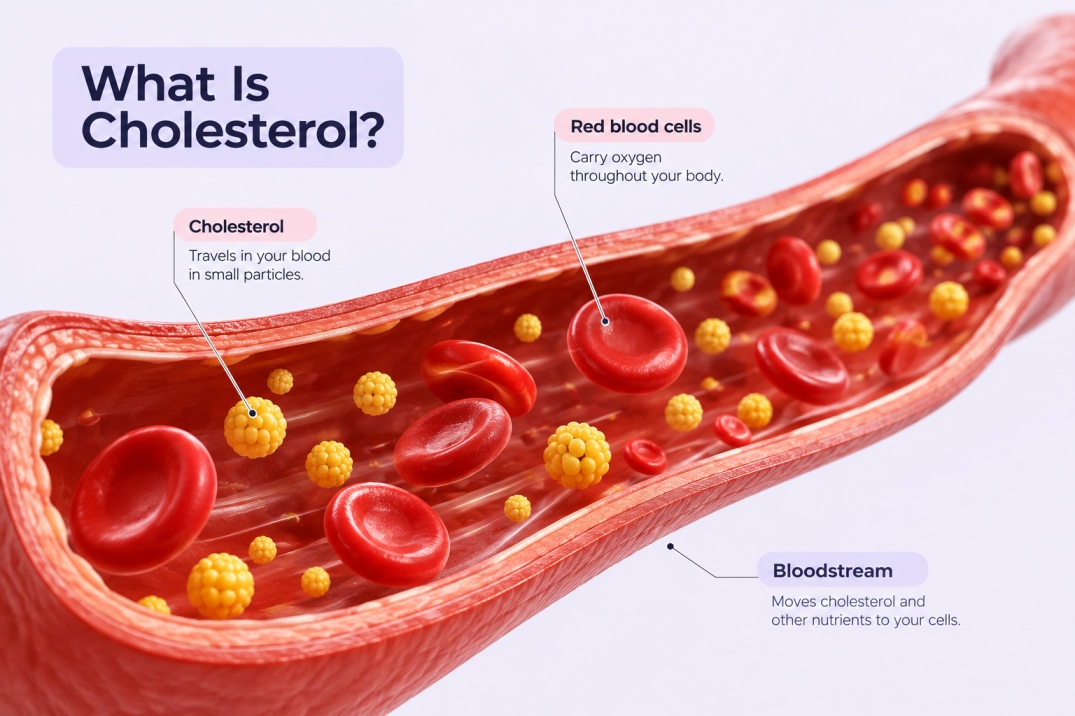
Cholesterol is a waxy, fat-like substance found in your blood and cells.
Your body needs cholesterol to perform important functions, including:
Making certain hormones
Supporting cell membranes
Helping produce bile acids involved in fat digestion
Supporting normal body functions
Your liver makes cholesterol, and cholesterol also enters the body through foods of animal origin.
Because cholesterol does not dissolve easily in blood, it needs to be transported through the bloodstream by particles called lipoproteins.
This is where LDL and HDL come in.
Cholesterol vs. Triglycerides: Are They the Same?
No.
Although cholesterol and triglycerides are both lipids measured in a lipid profile, they are different substances.
Cholesterol
Cholesterol is used by the body for functions such as hormone production, cell structure and bile acid production.
Triglycerides
Triglycerides are a type of fat that the body uses to store excess energy.
When you consume more energy than your body needs, some of that energy can be converted into triglycerides and stored in fat tissue.
So:
Cholesterol ≠ triglycerides
Both matter, but they tell you different things about your metabolic and cardiovascular health.https://www.heart.org/en/health-topics/cholesterol/about-cholesterol
What Is a Lipid Profile?
A lipid profile, also called a lipid panel, is a blood test that measures several important blood lipids.
It commonly includes:
Test
What it tells you
Total Cholesterol
Overall amount of cholesterol in the blood
LDL Cholesterol
A major cholesterol-related cardiovascular risk factor
HDL Cholesterol
Helps transport cholesterol back toward the liver
Triglycerides
A type of fat circulating in the blood
Some reports may also include:
Non-HDL cholesterol
VLDL
Lipoprotein(a) or Lp(a)
ApoB
The complete picture is more useful than looking at one number in isolation.
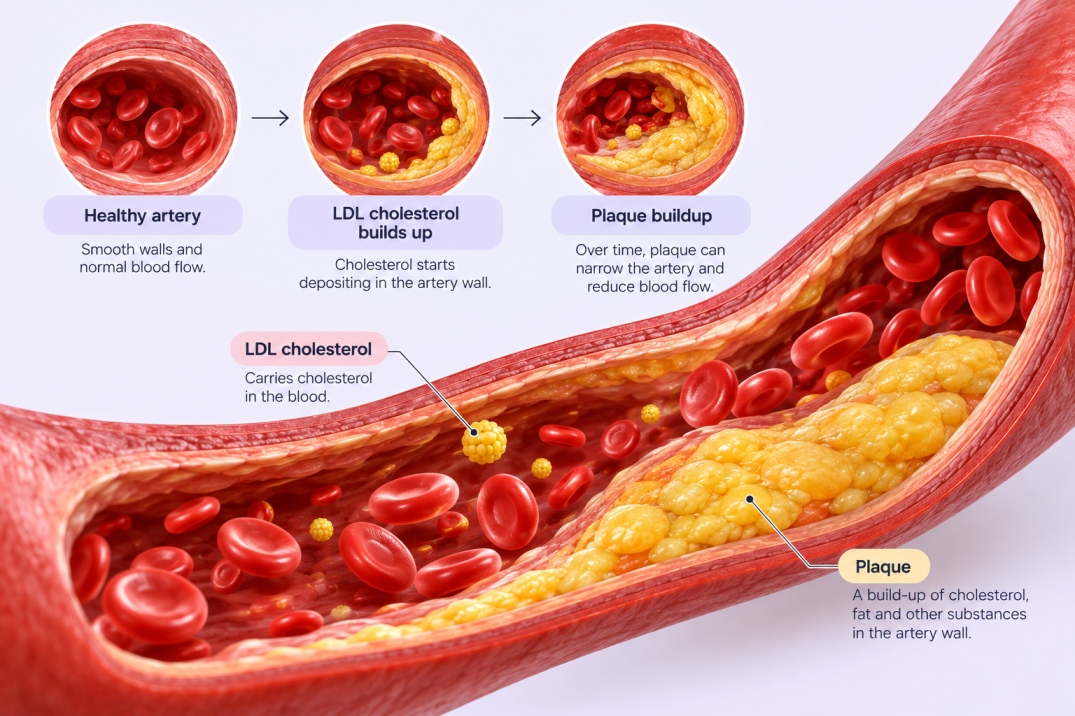
What Is LDL Cholesterol?
LDL stands for Low-Density Lipoprotein.
LDL is often called “bad cholesterol.”
Technically, LDL itself is a lipoprotein particle that transports cholesterol through the bloodstream.
When LDL levels are elevated, cholesterol can contribute to plaque formation in the artery walls over time.
This process is called atherosclerosis.
As plaque builds up, arteries can become narrower and less flexible, increasing the risk of cardiovascular events such as heart attack and stroke.
Why Does LDL Matter?
LDL is particularly important because prolonged exposure to elevated LDL is associated with increased cardiovascular risk.
However, there isn't one LDL target that applies equally to everyone.
Your appropriate LDL goal may depend on factors such as:
Age
Existing heart disease
Previous stroke
Diabetes
Blood pressure
Smoking
Family history
Overall cardiovascular risk
Other medical conditions
Therefore, don't interpret your LDL number without considering your overall health.
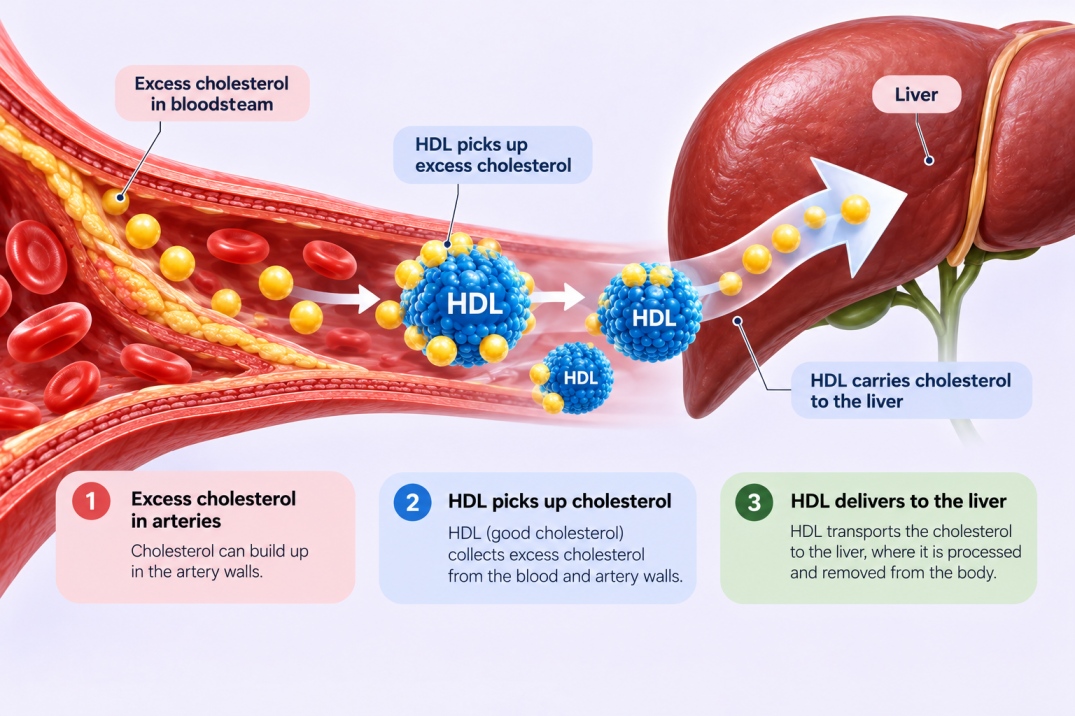
What Is HDL Cholesterol?
HDL stands for High-Density Lipoprotein.
It is commonly called “good cholesterol.”
HDL participates in transporting cholesterol away from tissues and arteries toward the liver, where it can be processed.
This is one reason higher HDL levels have traditionally been associated with better cardiovascular health.
However, there is an important point to remember:
Higher HDL does not automatically cancel out high LDL.
HDL is only one part of your lipid profile.
Simply trying to increase HDL without addressing elevated LDL, triglycerides, blood pressure, smoking, diet, physical activity or other risk factors is not a complete approach to cardiovascular health.
In other words:
Don't focus only on increasing HDL. Look at the whole picture.
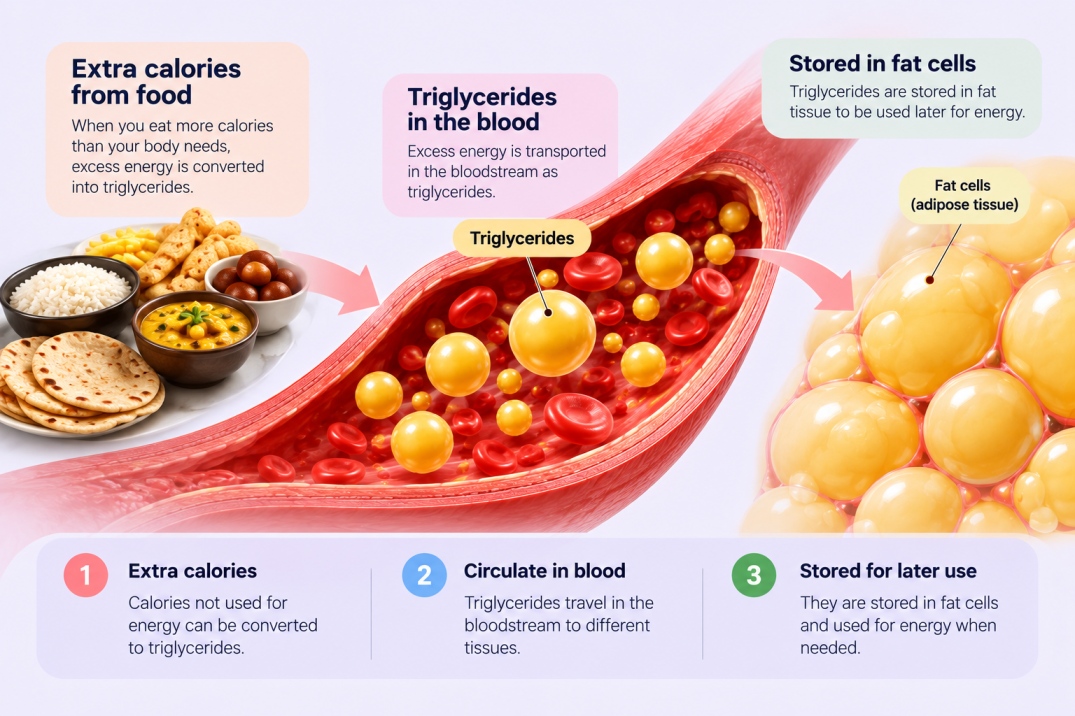
What Are Triglycerides?
Triglycerides are the most common type of fat in the body.
They provide and store energy.
After eating, your body uses some of the energy immediately. Excess energy can be converted into triglycerides and stored.
Triglyceride levels can be influenced by factors such as:
Excess calorie intake
Overweight or obesity
High intake of refined carbohydrates
Added sugars
Alcohol
Physical inactivity
Diabetes or insulin resistance
Certain medications
Some medical conditions
Genetics
High triglycerides can become particularly concerning when they occur alongside high LDL and/or low HDL.
What Do Cholesterol Numbers Mean?
A common mistake is to look at a report and decide:
“My total cholesterol is okay, so everything must be fine.”
Not necessarily.
Total cholesterol is only one part of the picture.
For example, two people could have a similar total cholesterol level but very different LDL, HDL and triglyceride profiles.
Your healthcare professional may therefore look at:
LDL + HDL + triglycerides + non-HDL cholesterol + other cardiovascular risk factors
rather than relying on total cholesterol alone.
Common Cholesterol Reference Levels
General adult reference ranges often used in clinical practice include:
Lipid
Common reference point
Total cholesterol
Below 200 mg/dL
LDL cholesterol
Lower is generally better; target depends on individual risk
HDL cholesterol
Higher levels are generally associated with lower cardiovascular risk
Triglycerides
Below 150 mg/dL
These numbers should not be treated as universal treatment targets.
For example, a person who already has cardiovascular disease may have a much lower LDL target than someone without established cardiovascular disease.
Your doctor or healthcare professional should interpret your results according to your individual risk profile.
Why Can Cholesterol Become High?
High cholesterol doesn't always come from eating “unhealthy food.”
Several factors can influence cholesterol levels.
1. Genetics
Some people inherit conditions that cause very high LDL cholesterol.
Familial hypercholesterolemia is one example.
2. Diet
A diet high in saturated fat and trans fat can adversely affect blood lipid levels.
Frequent consumption of highly processed foods may also contribute to an overall dietary pattern that increases cardiovascular risk.https://wellorafit.com/services/nutrition-diet-planning/
3. Excess Body Weight
Excess body fat, particularly when associated with metabolic dysfunction, can be associated with unfavorable lipid patterns.
4. Physical Inactivity
Regular physical activity supports cardiovascular and metabolic health.
5. Diabetes and Insulin Resistance
Metabolic conditions can affect triglycerides, HDL and other aspects of the lipid profile.
6. Smoking
Smoking can negatively affect cardiovascular health and is associated with an unfavorable cardiovascular risk profile.
7. Alcohol
Excessive alcohol intake can increase triglyceride levels in some people.
8. Certain Medications and Medical Conditions
Some medicines and health conditions can affect cholesterol or triglyceride levels.
This is why unexpectedly abnormal cholesterol results should not automatically be blamed on diet.
Does Eating Cholesterol-Rich Food Always Cause High Cholesterol?
Not necessarily.
This is one of the most common cholesterol misconceptions.
Dietary cholesterol and blood cholesterol are related but are not the same thing.
For many people, the type of fat in the diet—particularly saturated and trans fats—has a more important effect on blood LDL cholesterol than dietary cholesterol alone.
This does not mean food choices don't matter.
Instead of focusing on eliminating one specific food, look at the overall dietary pattern.
Saturated Fat and Cholesterol
Saturated fats can raise LDL cholesterol.
Common sources include:
Butter
Ghee
Cream
Full-fat dairy products
Fatty meats
Processed meats
Some bakery products
Fried and packaged foods
Coconut and palm oils
This doesn't mean every food containing saturated fat must be completely eliminated.
The goal is to keep saturated fat intake appropriate and replace some sources with healthier unsaturated fats where suitable.
What Are Healthy Fats?
Unsaturated fats can be part of a heart-friendly eating pattern.
Sources include:
Nuts
Almonds
Walnuts
Pistachios
Peanuts
Seeds
Flaxseeds
Chia seeds
Sunflower seeds
Pumpkin seeds
Oils
Use appropriate amounts of unsaturated plant oils such as:
Mustard oil
Groundnut oil
Rice bran oil
Sesame oil
Olive oil
The key is still portion control.
Healthy fat is still energy-dense.https://wellorafit.com/services/nutrition-diet-planning/
Can Fiber Help Lower LDL Cholesterol?
Yes.
Certain types of soluble fiber can help reduce LDL cholesterol.
Good sources include:
Oats
Barley
Beans
Lentils
Chickpeas
Fruits
Vegetables
Psyllium husk
A practical way to increase fiber is to gradually build meals around:
Whole grains + pulses + vegetables + fruit + nuts/seeds
rather than relying heavily on refined grains and packaged foods.
Foods That Can Support Healthy Cholesterol Levels
A cholesterol-friendly eating pattern doesn't have to be complicated.
Focus more often on:
1. Vegetables
Include a variety of:
Green vegetables
Gourds
Carrots
Beans
Cauliflower
Cabbage
Capsicum
Tomatoes
Other seasonal vegetables
2. Whole Fruits
Choose whole fruits rather than relying regularly on fruit juices.
Examples:
Apple
Orange
Guava
Papaya
Pear
Berries
Pomegranate
3. Pulses and Legumes
Dal
Rajma
Chole
Black chana
Moong
Masoor
Soybeans
4. Whole Grains
Oats
Barley
Whole wheat
Millets
Brown rice
5. Nuts and Seeds
Use sensible portions of:
Almonds
Walnuts
Flaxseeds
Chia seeds
6. Protein-Rich Foods
Depending on dietary preference:
Dal
Beans
Tofu
Soy
Low-fat dairy
Fish
Lean poultry
What Foods Should You Limit?
There is no need to create a “forbidden foods” list.
Instead, limit frequent or excessive intake of foods that are high in saturated fat, trans fat, added sugars, refined carbohydrates or excess calories.
Examples include:
Deep-fried foods
Processed meats
Frequent bakery foods
Commercial fried snacks
Highly processed packaged foods
Sugary beverages
Excess sweets
Foods made with large amounts of butter or cream
Excess alcohol, particularly when triglycerides are high
The goal is to improve your overall eating pattern, not fear individual foods.
Does Sugar Affect Cholesterol?
Sugar does not contain cholesterol.
However, a diet high in added sugars and refined carbohydrates can contribute to excess calorie intake and may be associated with higher triglycerides, particularly in susceptible individuals.
Examples include frequent intake of:
Soft drinks
Sweetened beverages
Desserts
Mithai
Sweet biscuits
Cakes
Sugary breakfast cereals
Excess refined snacks
If triglycerides are elevated, reducing excess added sugar and refined carbohydrate intake can be especially useful.
Cholesterol and Weight Management
Body weight is only one part of cardiovascular health.
If someone has overweight or obesity, gradual weight loss—when appropriate—can improve several metabolic risk factors.
However, cholesterol management should not become a race to lose weight.
A sustainable approach includes:
Balanced food + appropriate portions + regular movement + strength training + adequate sleep + consistency
The goal is better metabolic health, not simply a lower number on the weighing scale.
Can Exercise Improve Cholesterol?
Regular physical activity can support a healthier lipid profile and overall cardiovascular health.
Activities can include:
Brisk walking
Cycling
Swimming
Dancing
Jogging
Strength training
Yoga
Sports
Active household movement
A combination of aerobic activity and resistance training can be particularly useful for overall health.
The best exercise program is one you can perform consistently.
Does Walking Help With Cholesterol?
Yes, regular walking can contribute to cardiovascular health and physical activity goals.
You don't need to start with an intense workout.
Try:
10-minute walk → 20-minute walk → 30-minute walk → regular activity
You can also add movement throughout the day:
Walk after meals
Take stairs when appropriate
Take walking breaks at work
Walk while talking on the phone
Reduce prolonged sitting
Small amounts of movement can add up.
Cholesterol and Indian Diet: What Should You Actually Do?
You don't need to stop eating Indian food because you have high cholesterol.
Instead, modify the way you build your meals.
Instead of:
Large portion of white rice + little dal + fried side dish
Try:
Controlled rice portion + dal/rajma + vegetables + salad
Instead of:
Butter-heavy paratha + creamy curry
Try:
Whole-wheat roti + dal + vegetable sabzi + curd
Instead of:
Namkeen + biscuits + sweet tea
Try:
Roasted chana + fruit + unsweetened tea
Instead of:
Deep-fried evening snack
Try:
Chana chaat / sprouts chaat / roasted makhana
The goal is not to eliminate Indian food.
It is to improve portion size, cooking method, fiber, protein and overall dietary balance.
A Simple Cholesterol-Friendly Indian Plate
A practical plate can look like:
½ Plate
Vegetables + salad
¼ Plate
Protein:
Dal
Rajma
Chole
Tofu
Paneer in an appropriate portion
Fish
Lean chicken
¼ Plate
High-fiber carbohydrate:
Roti
Brown rice
Barley
Millet
Other whole-grain options
Add a moderate amount of healthy fat where appropriate.
This approach provides structure without requiring complicated calculations at every meal.
7 Simple Habits for Better Cholesterol Health
1. Add More Fiber
Include vegetables, fruits, pulses, oats and whole grains regularly.
2. Choose Better Fats
Use nuts, seeds and appropriate amounts of unsaturated oils instead of relying heavily on saturated-fat sources.
3. Reduce Deep-Fried Foods
Keep fried foods occasional rather than everyday foods.
4. Move Regularly
Aim for consistent physical activity.
5. Maintain a Healthy Weight
If weight loss is appropriate, focus on gradual and sustainable changes.
6. Don't Smoke
Smoking is a major cardiovascular risk factor.
7. Get Your Lipid Profile Checked
Knowing your numbers is the first step toward understanding your cardiovascular risk.
Common Cholesterol Myths
Myth 1: “All cholesterol is bad.”
Fact: Your body needs cholesterol for important functions. The concern is unhealthy blood lipid levels and their impact on cardiovascular risk.
Myth 2: “HDL can cancel out high LDL.”
Fact: A higher HDL does not make elevated LDL harmless. Each part of the lipid profile needs to be considered in context.
Myth 3: “Triglycerides and cholesterol are the same.”
Fact: They are different types of lipids. Cholesterol and triglycerides perform different functions in the body.
Myth 4: “If I don't eat oily food, my cholesterol cannot be high.”
Fact: Genetics, body weight, physical activity, metabolic health, medications and other factors can also affect cholesterol.
Myth 5: “I need to completely stop eating fats.”
Fact: Your body needs dietary fat. The focus should be on the type and amount of fat.
Myth 6: “Only older people need cholesterol testing.”
Fact: Cholesterol can be elevated at younger ages, particularly in people with genetic or metabolic risk factors.
Myth 7: “One abnormal cholesterol result means I have heart disease.”
Fact: A lipid profile is a risk marker, not a diagnosis of heart disease by itself. Your healthcare professional interprets the results alongside your overall health and cardiovascular risk.
When Should You Speak With a Healthcare Professional?
Discuss your lipid profile with a healthcare professional if:
LDL cholesterol is elevated
Triglycerides are high
You have diabetes
You have high blood pressure
You have a family history of early heart disease
You have previously had a heart attack or stroke
You have been diagnosed with cardiovascular disease
Cholesterol remains abnormal despite lifestyle changes
You are taking cholesterol-lowering medication
You suspect familial hypercholesterolemia
Some people need lifestyle changes alone, while others may benefit from medication.
Do not stop or change prescribed cholesterol medication without discussing it with your healthcare professional.
Does High Cholesterol Cause Symptoms?
Usually, high cholesterol does not cause obvious symptoms.
You may feel completely healthy while having elevated LDL or triglycerides.
That is why a blood test is important.
A lipid profile can provide information that you cannot obtain simply by looking at how you feel.
How Often Should You Check Your Cholesterol?
The appropriate testing frequency depends on your age, health history, risk factors, previous results and whether you are receiving treatment.
Some healthy adults may be screened periodically, while people with cardiovascular disease, diabetes, familial hypercholesterolemia or abnormal results may need more frequent monitoring.
Ask your healthcare professional how often testing is appropriate for you.
Do You Need to Fast for a Lipid Profile?
It depends on the test and the reason it is being performed.
Some lipid tests can be performed without fasting, while healthcare professionals may recommend fasting in certain circumstances.
If your laboratory or doctor has instructed you to fast, follow those instructions.
Don't assume that every cholesterol test requires the same preparation.
Understanding Your Cholesterol Report: A Simple Example
Imagine a report shows:
Total Cholesterol: 220 mg/dL
LDL: 145 mg/dL
HDL: 50 mg/dL
Triglycerides: 125 mg/dL
Instead of simply saying:
“My cholesterol is 220.”
Look at the individual components.
The LDL is elevated relative to commonly used general reference points, while triglycerides are below 150 mg/dL.
But even this information is not enough to determine the appropriate treatment target.
Your healthcare professional may also consider:
Age
Blood pressure
Diabetes
Smoking
Family history
Existing cardiovascular disease
Other risk factors
Your cholesterol report is a starting point—not the entire diagnosis.
The Bigger Picture: Cholesterol Is More Than One Number
Heart health isn't determined by LDL alone.
A broader picture may include:
Lipid profile + blood pressure + blood glucose + body composition + physical activity + smoking status + family history + overall diet + other medical conditions
This is why chasing one “perfect” cholesterol number can sometimes distract from the bigger picture.
Focus on the habits that improve overall cardiovascular health.
A Simple Daily Cholesterol-Friendly Routine
Morning
Start with:
Water
Balanced breakfast
Fiber-rich carbohydrate
Protein source
Lunch
Build a balanced Indian meal:
Vegetables + dal/other protein + roti or controlled rice portion + curd
Evening
Choose:
Fruit
Roasted chana
Nuts
Makhana
Chana/sprouts
instead of frequently relying on fried or packaged snacks.
Dinner
Keep it balanced:
Vegetables + protein + appropriate carbohydrate portion
Throughout the Day
Stay physically active
Drink adequate fluids
Avoid prolonged sitting
Limit smoking
Limit excess alcohol
Prioritize sleep
Key Takeaways
Cholesterol is essential for normal body functions.
LDL is often called “bad cholesterol” because elevated levels contribute to plaque buildup and cardiovascular risk.
HDL helps transport cholesterol toward the liver and is associated with cardiovascular protection, but it should not be viewed in isolation.
Triglycerides are different from cholesterol and are a type of fat used to store energy.
A lipid profile usually measures total cholesterol, LDL, HDL and triglycerides.
High cholesterol often causes no obvious symptoms.
Genetics, diet, physical activity, body weight, metabolic health, medications and other factors can influence lipid levels.
You do not need to eliminate all dietary fat.
Increasing fiber and choosing healthier unsaturated fats can support a heart-friendly eating pattern.
Regular physical activity supports cardiovascular health.
Cholesterol numbers should be interpreted in the context of your overall cardiovascular risk.
Some people may need medication in addition to lifestyle changes.
Sustainable habits are more useful than extreme “cholesterol detox” diets.
Conclusion
Cholesterol doesn't need to be confusing.
When you understand the difference between LDL, HDL and triglycerides, your lipid profile becomes much easier to interpret.
The goal isn't simply to have a “good cholesterol number.”
It's to support overall cardiovascular health through a combination of:
**Balanced nutrition
adequate fiber
healthier fat choices
regular physical activity
healthy weight management
good sleep
no smoking
appropriate medical care**
And remember: your cholesterol report is only one part of your health picture.
If your numbers are abnormal, don't panic—and don't rely on internet “cholesterol-lowering hacks.”
Discuss your results with a qualified healthcare professional and build a plan based on your individual risk factors.
Frequently Asked Questions
1. What is cholesterol?
Cholesterol is a waxy, fat-like substance that your body needs for important functions including cell structure, hormone production and bile acid production.
2. What is LDL cholesterol?
LDL stands for low-density lipoprotein. Elevated LDL cholesterol can contribute to plaque buildup in the arteries and increase cardiovascular risk.
3. What is HDL cholesterol?
HDL stands for high-density lipoprotein. HDL participates in transporting cholesterol back toward the liver and is associated with lower cardiovascular risk.
4. What are triglycerides?
Triglycerides are a type of fat in the blood that stores excess energy.
5. Is LDL or HDL more important?
Both are relevant, but LDL is an especially important marker of cardiovascular risk. Your healthcare professional should interpret your complete lipid profile rather than focusing on one number.
6. Are triglycerides cholesterol?
No. Triglycerides are a type of fat, while cholesterol is a different type of lipid.
7. Can I lower LDL naturally?
Dietary improvements, regular physical activity, weight management when appropriate and other lifestyle changes can help improve LDL levels. Some people, however, also require medication.
8. Can exercise improve cholesterol?
Regular physical activity can support a healthier lipid profile and overall cardiovascular health.
9. Does eating eggs cause high cholesterol?
The effect of dietary cholesterol varies between individuals, and overall dietary pattern and saturated-fat intake also matter. If you have high cholesterol, discuss your individual diet with your dietitian or healthcare professional rather than automatically eliminating individual foods.
10. Can I have high cholesterol without symptoms?
Yes. High cholesterol usually does not cause obvious symptoms, which is why appropriate blood testing is important.
11. What should I eat if my cholesterol is high?
Focus on vegetables, fruits, whole grains, pulses, legumes, nuts, seeds and appropriate protein sources while limiting excess saturated fat, trans fat, added sugars and highly processed foods.
12. Do I need medicine for high cholesterol?
Not everyone with high cholesterol needs the same treatment. The decision depends on your LDL level and your overall cardiovascular risk. Your healthcare professional can determine whether lifestyle changes, medication or both are appropriate.
Ready to Begin Your Health Journey?
Get a personalized, medically guided plan built around your unique biology.