Electrolytes Explained: When Does Your Body Need Them?
You have probably seen electrolyte drinks everywhere—from gyms and sports stores to social media wellness videos.
They are often marketed as if every workout, hot day or tired morning requires an electrolyte drink.
But is that actually true?
For most healthy people doing normal daily activities, plain water and regular meals are usually enough to maintain fluid and electrolyte balance. The need for additional electrolytes becomes more relevant when you are losing substantial amounts of fluid and minerals through prolonged sweating, vomiting, diarrhea or certain medical conditions.
Electrolytes are minerals that carry an electrical charge when dissolved in body fluids. They help regulate:
Fluid balance
Nerve signaling
Muscle function
Heart rhythm
Blood pressure
Acid-base balance
Important electrolytes include sodium, potassium, chloride, calcium, magnesium, phosphate and bicarbonate.
So before reaching for an electrolyte sachet or sports drink, ask:
Are you actually losing electrolytes—or do you simply need water? https://medlineplus.gov/fluidandelectrolytebalance.html
What Are Electrolytes?
Electrolytes are minerals that carry an electrical charge when dissolved in water or body fluids.
They are present in:
Blood
Sweat
Urine
Cells
Other body fluids
Your body tightly regulates their concentrations because even relatively small changes can affect important physiological functions.
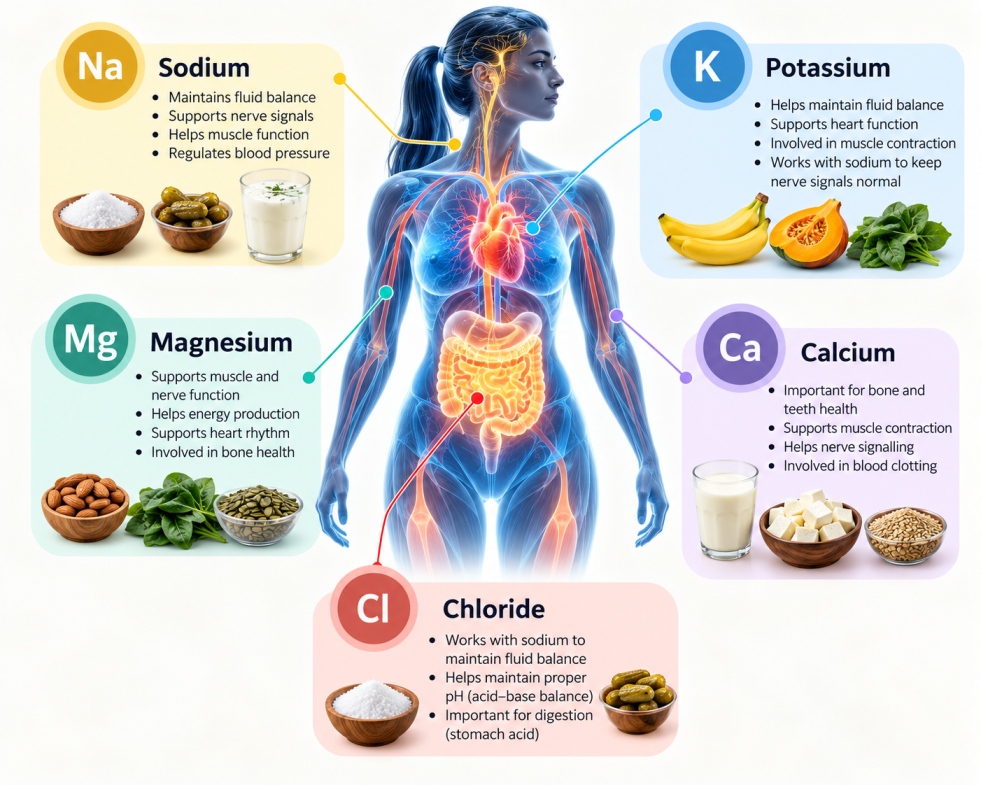
The main electrolytes include:
Sodium
Helps regulate fluid balance and supports normal nerve and muscle function.
Potassium
Important for cells, muscles and normal heart function.
Chloride
Works with sodium to help regulate fluid balance and contributes to acid-base balance.
Calcium
Important for bones, muscle contraction and nerve signaling.
Magnesium
Supports muscle and nerve function and many enzyme reactions.
Phosphate
Works with calcium and is involved in energy metabolism.
Bicarbonate
Helps maintain the body's acid-base balance.
Why Does Your Body Need Electrolytes?
Electrolytes aren't just about hydration.
They perform several different jobs.
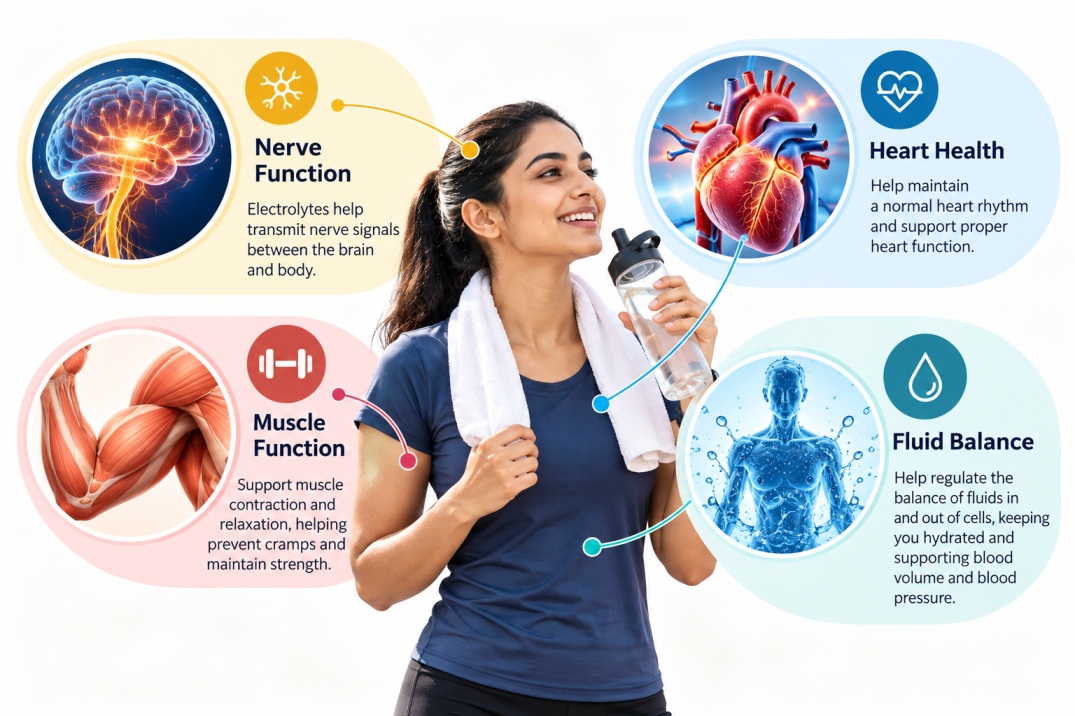
1. They Help Regulate Fluid Balance
Sodium and other electrolytes help determine how water is distributed between different compartments of the body.
Your body constantly adjusts water and electrolyte levels through:
Kidneys
Urine
Sweat
Thirst
Hormonal mechanisms
This is why hydration is about more than simply drinking as much water as possible. https://medlineplus.gov/fluidandelectrolytebalance.html
2. They Support Muscle Function
Muscles rely on electrical signals and carefully controlled movement of electrolytes.
Sodium, potassium, calcium and magnesium all contribute to normal muscle function.
This includes:
Walking
Running
Exercising
Breathing
Heart contractions
Electrolyte disturbances can interfere with normal muscle function.
3. They Support Nerve Signaling
Nerve cells communicate using electrical impulses.
Electrolytes such as sodium, potassium and calcium play important roles in generating and transmitting these signals.
This is why maintaining appropriate electrolyte levels is essential for normal nervous-system function.
4. They Help Maintain Normal Heart Rhythm
The heart is a muscle that depends on electrical signaling.
Potassium, calcium, magnesium and sodium all play roles in normal cardiac electrical activity.
Significant electrolyte abnormalities can therefore become medically serious and may affect heart rhythm.
This is one reason people with kidney disease, certain heart conditions or medications affecting electrolytes should be particularly careful with electrolyte supplements.
5. They Help Maintain Acid-Base Balance
Bicarbonate and other electrolytes help regulate the body's pH.
This is a complex system involving the:
Lungs
Kidneys
Blood
Electrolytes
Your body works continuously to keep this balance within a narrow range.
What Happens to Electrolytes When You Sweat?
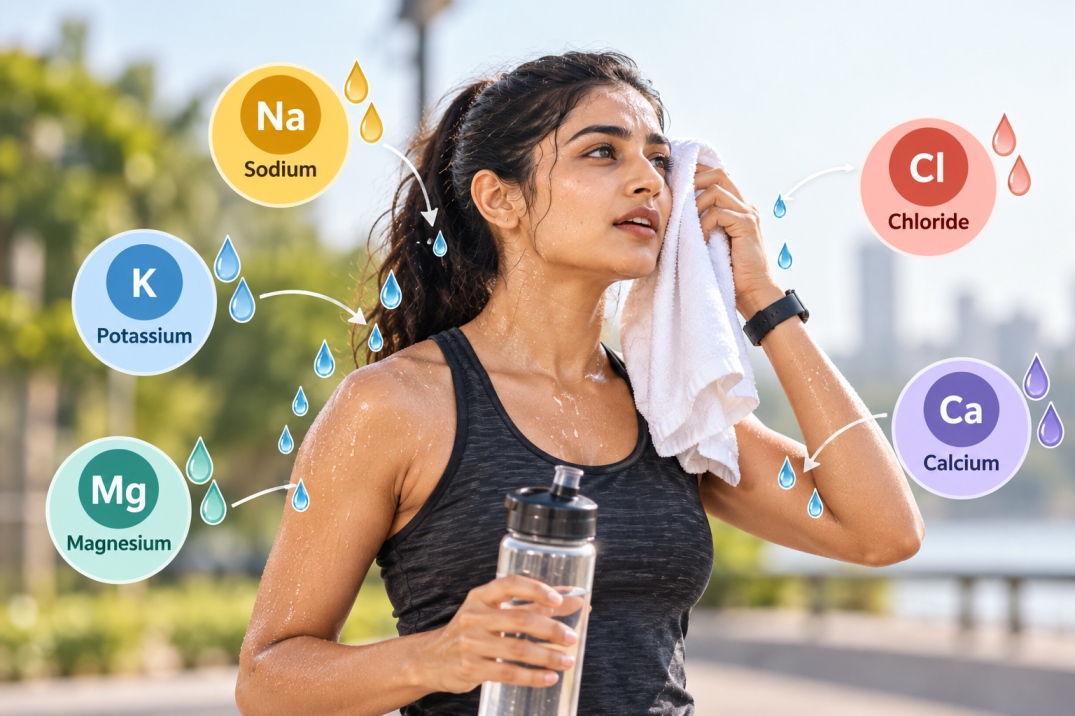
Sweat contains water and electrolytes, particularly sodium and chloride.
The amount lost varies considerably between people.
It depends on:
How much you sweat
Exercise duration
Temperature
Humidity
Individual sweat composition
Acclimatization
Clothing
Exercise intensity
In hot conditions, prolonged sweating can result in substantial fluid and electrolyte losses. WHO notes that heavy sweating can lead to losses of both water and electrolytes and that hydration needs increase in heat.
Do You Need Electrolytes Every Time You Sweat?
No.
This is one of the biggest misconceptions about electrolyte products.
For shorter or moderate activities, especially when you're otherwise healthy and eating normal meals, water is often sufficient.
CDC/NIOSH guidance notes that during exercise or work in heat for around one to two hours, plain cool water is generally sufficient; electrolyte-containing drinks become more relevant with prolonged sweating lasting several hours.
Regular meals also provide sodium and other electrolytes.
So:
Short workout
Water is usually enough.
Longer workout with heavy sweating
Electrolytes may become useful.
Several hours of activity in heat
Fluid + electrolyte replacement becomes more important.
When Do You Actually Need Electrolytes?
There are several situations in which electrolyte replacement can make more sense.
1. Prolonged Exercise
If you're exercising continuously for several hours, particularly in hot or humid conditions, you may lose significant amounts of sodium and fluid through sweat.
In this situation, an appropriately formulated electrolyte drink can be useful.
2. Heavy Sweating in Hot Weather
This is especially relevant in hot climates.
If you spend several hours:
Working outdoors
Playing sports
Hiking
Cycling
Running
Performing physical labor
and are sweating heavily, you may lose both water and electrolytes.
WHO notes that sweating in heat can result in substantial fluid loss and that excessive sweating can contribute to electrolyte losses.
3. Vomiting or Diarrhea
This is a very different situation from a normal workout.
Vomiting and diarrhea can cause significant losses of:
Water
Sodium
Chloride
Potassium
Other electrolytes
WHO identifies dehydration from diarrhea as a major concern because water and electrolytes are lost through liquid stools and vomiting.
In these situations, oral rehydration solution (ORS) is specifically designed to replace water and electrolytes.
This is different from a regular flavored sports drink.
4. Certain Medical Conditions
People with some medical conditions may experience abnormal electrolyte levels.
Examples include certain:
Kidney disorders
Heart conditions
Gastrointestinal disorders
Hormonal disorders
Some medications can also affect electrolyte levels.
These situations require individualized medical advice.
5. Recovery From Significant Fluid Loss
If you have experienced substantial fluid loss through:
Heavy sweating
Vomiting
Diarrhea
replacing water alone may not always be sufficient.
The appropriate rehydration approach depends on the cause and severity of the fluid loss.
When Water Is Usually Enough
For most healthy adults, plain water is usually the appropriate choice for:
Normal daily hydration
Desk work
Routine errands
Short walks
Light exercise
Short gym sessions
Everyday activities
CDC/NIOSH states that regular meals plus adequate water intake are generally sufficient to maintain water and electrolyte balance for most people working in the heat.
This is an important message for WelloraFit:
You don't need an electrolyte drink simply because you're thirsty.
Electrolytes vs Water: What's the Difference?
Water
Electrolytes
Replaces fluid
Help replace specific minerals as well as fluid
Usually sufficient for everyday hydration
More useful when electrolyte losses are substantial
No significant electrolytes naturally
Contains minerals such as sodium/potassium
Usually appropriate for short workouts
Can be useful during prolonged heavy sweating
Low/no calories
Some products contain sugar and calories
The two aren't competitors.
Electrolytes are part of hydration—not a replacement for water.
What Is an Electrolyte Drink?
An electrolyte drink is a beverage containing one or more electrolytes, often:
Sodium
Potassium
Magnesium
Chloride
Some also contain:
Carbohydrates
Sugar
Flavorings
Vitamins
The composition varies widely.
That's why "electrolyte drink" is not a single standardized category.
One product may be designed for prolonged exercise, while another may simply contain a small amount of minerals and sweeteners.
What About Sports Drinks?
Sports drinks are formulated primarily for exercise-related hydration and may contain both fluids and carbohydrates along with electrolytes.
They can be useful during prolonged, strenuous exercise, particularly in heat.
But they aren't necessary for every gym session.
CDC/NIOSH cautions that heavy consumption of sports drinks can add unnecessary calories because many contain added sugar.
So if you're doing:
30 minutes of light-to-moderate exercise
you probably don't need a sugary sports drink.
What About Electrolyte Powders?
Electrolyte powders are simply another delivery format.
They may contain:
Sodium
Potassium
Magnesium
Other minerals
Sugar or artificial sweeteners
Before using one, check:
Sodium content
Is it actually providing meaningful sodium?
Sugar content
Is it adding unnecessary calories?
Serving size
Are you taking one serving—or accidentally consuming several?
Purpose
Is it intended for everyday hydration or prolonged exercise?
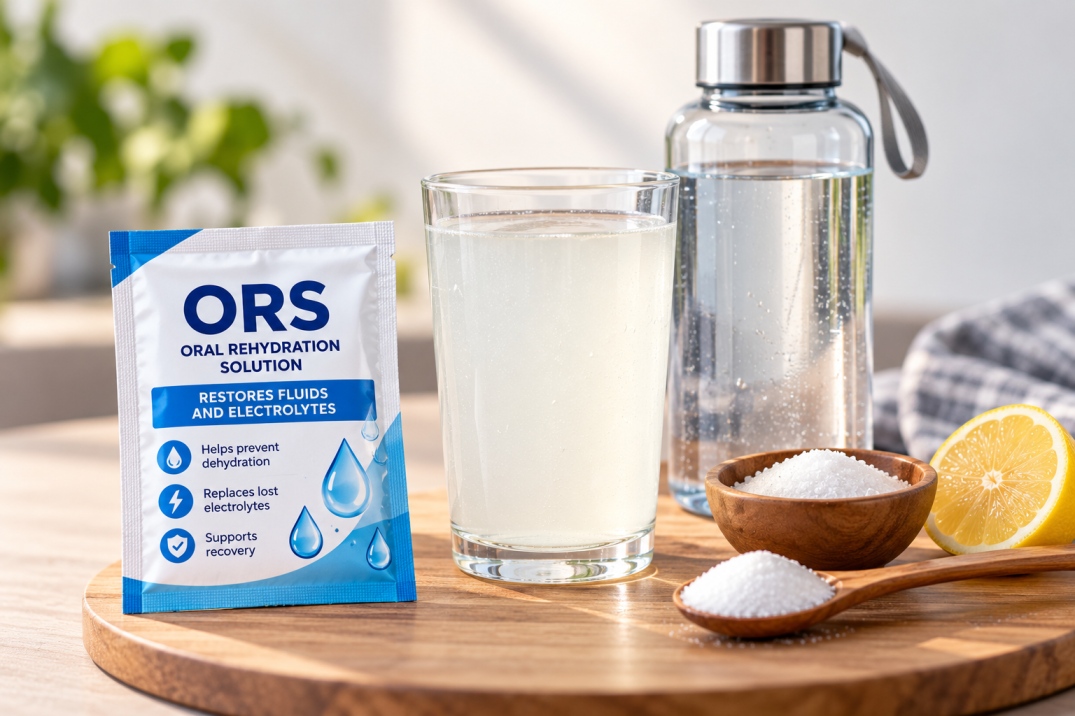
What Is ORS?
ORS stands for Oral Rehydration Solution.
It is specifically formulated to help prevent or treat dehydration caused by significant fluid and electrolyte losses, particularly from diarrhea and vomiting.
WHO's recommended low-osmolarity ORS formulation contains:
Glucose
Sodium chloride
Potassium chloride
Trisodium citrate
in carefully controlled proportions.
This is important:
ORS is not simply "salt water."
Its specific glucose-electrolyte composition facilitates fluid absorption.https://wellorafit.com/services/nutrition-diet-planning/
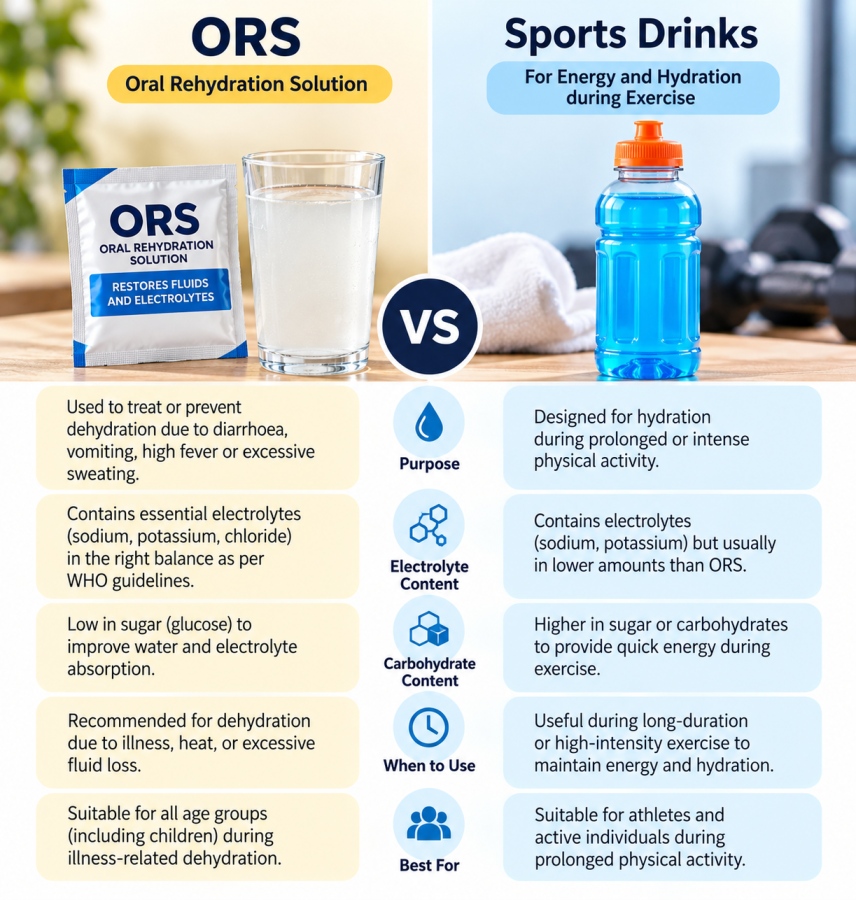
ORS vs Sports Drinks
These are not interchangeable.
ORS
Sports Drink
Designed for rehydration during dehydration
Designed mainly for exercise
Specific glucose-electrolyte formulation
Formulation varies
Used in diarrhea/vomiting-related dehydration
Used during prolonged exercise
Medical/public-health purpose
Sports/performance purpose
Should be prepared/used according to instructions
Product-specific serving instructions
WHO specifically recommends ORS for dehydration associated with diarrheal illness.
If someone has significant diarrhea or vomiting, an appropriate ORS is generally more suitable than simply reaching for a sports drink.
Can Coconut Water Replace Electrolyte Drinks?
Coconut water naturally contains electrolytes, particularly potassium.
It can be a refreshing beverage and can contribute to fluid and electrolyte intake.
But it is not identical to ORS, and its electrolyte composition does not make it a universal replacement for medically appropriate rehydration solutions.
For everyday hydration, coconut water is optional—not necessary.
What Foods Naturally Provide Electrolytes?
You don't need to get all your electrolytes from beverages.
Many everyday foods provide them.
Sodium
Main sources include:
Salt
Pickles
Papad
Soups
Processed foods
Packaged snacks
Sauces and condiments
However, sodium is one electrolyte where more is not better.
WHO recommends adults consume less than 2,000 mg sodium per day, equivalent to less than 5 g of salt per day.https://wellorafit.com/services/nutrition-diet-planning/
Potassium-Rich Foods
Potassium is widely available in foods.
Good sources include:
Bananas
Oranges
Coconut water
Potatoes
Sweet potatoes
Tomatoes
Spinach
Beans
Lentils
Yogurt
Nuts
WHO highlights beans, nuts, vegetables and fruits as important dietary potassium sources.
Magnesium-Rich Foods
Magnesium can be obtained from:
Nuts
Seeds
Whole grains
Legumes
Green leafy vegetables
Examples include:
Almonds
Pumpkin seeds
Sesame seeds
Peanuts
Dal
Rajma
Chole
Whole grains
Spinach
For more details, see:
Magnesium: Why Your Body Needs It and Where to Get It
Calcium-Rich Foods
Calcium is another electrolyte.
Useful sources include:
Milk
Curd
Paneer
Ragi
Sesame
Calcium-set tofu
Fortified plant milk
Certain leafy vegetables
For a deeper guide, see:
Calcium Beyond Milk: The Best Dietary Sources
Indian Foods That Support Electrolyte Intake
A balanced Indian diet can naturally provide many electrolytes.
For example:
Breakfast
Poha + peanuts + fruit
Lunch
Dal + roti + vegetables + curd
Snack
Fruit + nuts
Dinner
Rajma + rice + vegetables
This combination provides:
Sodium
Potassium
Magnesium
Calcium
Water from food
Other vitamins and minerals
You don't necessarily need a brightly colored electrolyte beverage to obtain these nutrients.
Electrolytes in Fruits and Vegetables
Fruits and vegetables contain significant amounts of water and potassium and can contribute to overall hydration.
Examples include:
Watermelon
Orange
Muskmelon
Coconut
Banana
Cucumber
Tomato
They also provide:
Fiber
Vitamins
Minerals
Plant compounds
This is one reason hydration should be thought of as food + fluids, not beverages alone.
Does Salt Water Count as an Electrolyte Drink?
Salt contains sodium and chloride, so adding salt to water technically provides electrolytes.
But randomly adding salt to drinking water is not the same as preparing ORS.
The amount matters.
Too much sodium can be harmful, particularly for people with certain health conditions.
If you need rehydration because of diarrhea or vomiting, use a properly prepared ORS according to the product instructions or medical advice rather than experimenting with homemade concentrations.
What Happens When Electrolytes Are Too Low?
Electrolyte disturbances can produce different symptoms depending on which electrolyte is abnormal and how severe the imbalance is.
Possible symptoms include:
Fatigue
Weakness
Headache
Nausea
Muscle cramps
Confusion
Irregular heartbeat
Changes in blood pressure
Severe electrolyte abnormalities can be emergencies.
MedlinePlus notes that abnormal electrolyte levels can be associated with serious health problems, including dangerous heart-rhythm disturbances.
What About Low Sodium?
Low blood sodium is called hyponatremia.
It is not simply a matter of "not eating enough salt."
It can occur for several reasons, including:
Excessive water intake
Certain medications
Kidney problems
Heart conditions
Hormonal disorders
Prolonged endurance exercise
This is why drinking huge amounts of plain water can also be problematic in certain circumstances.
Electrolyte balance is about the relationship between water and minerals—not simply maximizing either one.
Can You Drink Too Much Water?
Yes.
Overhydration can dilute blood sodium and contribute to hyponatremia.
This is particularly relevant during prolonged endurance exercise when people may consume large amounts of water without adequately accounting for fluid losses.
The solution isn't to avoid water.
It is to drink appropriately for your activity, environment and losses.
Can Electrolyte Drinks Be Harmful?
They can be unnecessary or problematic when consumed excessively.
Potential concerns include:
Too much sugar
Some sports drinks contain substantial added sugar.
Too much sodium
This can be inappropriate for people who already need to limit sodium.
Excess calories
Regular consumption can work against weight-management goals.
Excess minerals
Some products contain high amounts of certain electrolytes.
Medication interactions
Certain people need to monitor potassium, sodium or magnesium because of medications or medical conditions.
Electrolytes and Weight Loss
This is particularly important for WelloraFit's audience.
Electrolytes do not burn fat.
An electrolyte drink may help replace fluid and minerals when you're losing them through sweat, but it does not automatically:
Increase fat burning
Speed up metabolism
Cause weight loss
"Flush toxins"
Replace a balanced diet
Some electrolyte beverages contain significant calories and sugar.
For everyday weight management, water is often the better default beverage.
Electrolytes and Exercise
The need depends largely on:
Duration + Intensity + Heat + Sweat Loss
Short Workout
Usually: Water
Moderate Workout
Usually: Water + normal meals
Long Workout
May need: Fluids + electrolytes
Several Hours in Heat
More likely: Deliberate fluid and electrolyte replacement
CDC/NIOSH guidance specifically distinguishes shorter activity from prolonged sweating lasting several hours.
What About Yoga or Pilates?
For a typical indoor yoga or Pilates session, especially one lasting around an hour without heavy sweating:
You generally do not need a special electrolyte drink.
Water is usually sufficient.
The situation can be different for:
Hot yoga
Long sessions
Outdoor sessions in high heat
Very heavy sweaters
What About Walking?
For normal daily walking:
Water is generally enough.
If you're walking for several hours outdoors in extreme heat and sweating heavily, your needs change.
In that situation, hydration and electrolyte replacement deserve more attention.
What About Gym Workouts?
A common mistake is assuming:
"I went to the gym, therefore I need electrolytes."
Not necessarily.
For many standard gym sessions:
Drink water according to thirst and conditions
Eat normal balanced meals
Replace fluids after exercise
Electrolyte products become more useful when exercise is prolonged, strenuous or associated with substantial sweat losses.
What About Running?
Running is more variable.
A short run may only require water.
A long-distance run, especially in hot or humid weather, can involve significant sweat and sodium losses.
For prolonged endurance exercise, individualized hydration and sodium strategies may be appropriate.
Electrolytes in Hot Indian Weather
This topic is particularly relevant for India.
High temperatures can increase sweating.
If you're spending extended periods outdoors, consider:
Carrying water
Taking regular breaks
Avoiding peak heat when possible
Wearing appropriate clothing
Monitoring symptoms
Replacing electrolytes when losses are substantial
WHO emphasizes that heat increases fluid needs and that heavy sweating can result in electrolyte losses.
But remember:
Hot weather does not automatically mean everyone needs an electrolyte beverage.
How to Recognize Dehydration
Possible signs of dehydration include:
Thirst
Dry mouth
Darker urine
Fatigue
Headache
Dizziness
Reduced urination
More severe dehydration can cause:
Confusion
Severe weakness
Fainting
Very low urine output
Severe symptoms require prompt medical attention.
Is Urine Color a Perfect Hydration Test?
Urine color can provide a rough indication of hydration, but it is not a perfect diagnostic tool.
Urine can be affected by:
Certain foods
Supplements
Medications
Illness
Timing
So don't obsess over making urine completely clear.
Pale yellow urine is generally more realistic than aiming for completely colorless urine.
Do You Need Electrolytes After Every Sweaty Workout?
Not necessarily.
Ask yourself:
How long did I exercise?
How much did I sweat?
Was it hot or humid?
Did I lose a lot of fluid?
Am I eating normal meals?
Did I have vomiting or diarrhea?
The answers matter more than the fact that you simply "sweated."
A Simple Hydration Decision Guide
Situation 1
Normal day + normal meals + no unusual sweating
→ Water
Situation 2
Short workout
→ Water
Situation 3
Long workout + heavy sweating
→ Fluids + consider electrolytes
Situation 4
Several hours outdoors in intense heat
→ Plan hydration and electrolyte replacement
Situation 5
Vomiting/diarrhea with dehydration
→ Appropriate ORS and medical guidance when needed
Situation 6
Kidney/heart disease or medication affecting electrolytes
→ Individual medical advice
Electrolytes and Food: You May Already Be Getting Them
One reason electrolyte drinks are often overused is that people forget about food.
A regular meal can provide:
Sodium + potassium + magnesium + calcium + water
For example:
Dal
Potassium + magnesium
Curd
Calcium + potassium
Banana
Potassium
Nuts and seeds
Magnesium + potassium
Vegetables
Potassium + water
Salt used in cooking
Sodium + chloride
This is why regular meals can help maintain electrolyte balance. CDC/NIOSH specifically notes that normal meals can replace salt lost through sweat in many situations.
Are Bananas an Electrolyte Food?
Yes, bananas provide potassium.
But a banana is not a complete electrolyte-replacement solution.
It does not replace the carefully formulated combination of glucose and electrolytes in ORS, for example.
Think of bananas as:
A potassium-containing food
—not as a medical rehydration product.
Is Coconut Water an Electrolyte Drink?
Coconut water naturally contains electrolytes, especially potassium.
It can be useful as a beverage, but it is not required for everyday hydration.
It also should not be confused with ORS when treating clinically significant dehydration from diarrhea or vomiting.
Are Lemon Water and Salt Water Good for Hydration?
Lemon water can be a pleasant way to drink more water.
Adding a small amount of salt can provide sodium.
But it is not necessary for everyday hydration and does not reproduce the specific composition of ORS.
If you need therapeutic oral rehydration, use an appropriate ORS product rather than relying on a homemade wellness drink.
Do You Need Electrolytes When Fasting?
Not automatically.
The need depends on:
Duration of the fast
Fluid intake
Activity
Heat exposure
Health conditions
Medications
People with diabetes, kidney disease, blood-pressure problems or other medical conditions should not make electrolyte or fasting decisions without appropriate professional guidance.
Electrolytes and Intermittent Fasting
There is no universal rule that everyone practicing intermittent fasting needs electrolyte supplements.
If your eating window contains balanced meals and your fluid intake is appropriate, additional electrolytes may not be necessary.
Avoid turning fasting into an excuse to consume large amounts of salt or electrolyte powders.
Electrolytes and Low-Carb Diets
Some people report changes in fluid and electrolyte balance when carbohydrate intake is significantly reduced.
However, this does not mean everyone following a low-carb diet needs high-dose electrolyte supplements.
If you're following a restrictive diet, focus first on:
Adequate fluids
Vegetables
Nuts/seeds
Protein-rich foods
Appropriate sodium intake
Overall dietary variety
If you have symptoms or medical conditions, seek individualized advice.
How to Choose an Electrolyte Product
If you actually need one, don't choose based only on packaging.
Check:
1. Sodium
Is there enough to serve the intended purpose?
2. Potassium
Is it appropriate for your needs?
3. Sugar
How much added sugar does it contain?
4. Calories
Does it fit your dietary goals?
5. Serving size
How much are you actually consuming?
6. Intended use
Is it an everyday hydration drink, sports product or rehydration solution?
What Should You Avoid?
1. Using Electrolytes as a Daily "Detox"
Your kidneys and liver already perform important roles in maintaining fluid and mineral balance and removing waste.
You don't need electrolyte drinks to "detox" your body.
2. Drinking Sports Drinks Just Because They Are Popular
Popularity doesn't mean necessity.
3. Using Salt Tablets Without Medical Guidance
CDC/NIOSH specifically advises against routine salt-tablet use and notes that normal meals generally replace salt lost through sweat in most situations.
4. Replacing Every Glass of Water With an Electrolyte Drink
This can unnecessarily increase:
Sodium
Sugar
Calories
depending on the product.
5. Confusing ORS With a Sports Drink
ORS has a specific purpose and formulation.
Use it appropriately.
Electrolytes and Medical Conditions
This is one area where general advice has limits.
People with:
Kidney disease
Heart failure
High blood pressure
Certain endocrine conditions
Liver disease
Certain gastrointestinal disorders
may have different fluid or electrolyte requirements.
Some medications can also affect:
Sodium
Potassium
Magnesium
If you have a chronic condition or take regular medication, ask your healthcare professional before routinely using electrolyte supplements.
When Should You Seek Medical Help?
Severe dehydration or electrolyte disturbances can become serious.
Seek urgent medical care if dehydration is accompanied by symptoms such as:
Confusion
Fainting
Severe weakness
Inability to drink
Persistent vomiting
Very little or no urine
Severe dizziness
Abnormal heartbeat
Children, older adults and people with chronic illnesses may become dehydrated more quickly and may require earlier evaluation.
7 Practical Hydration Rules for Everyday Life
1. Make Water Your Default
You don't need an electrolyte drink every time you're thirsty.
2. Eat Regular Balanced Meals
Food naturally supplies many electrolytes.
3. Increase Fluids in Heat
Hot weather and heavy sweating increase fluid requirements.
4. Consider Electrolytes for Prolonged Heavy Sweating
Especially during several hours of exercise or outdoor work.
5. Use ORS for Appropriate Dehydration Situations
Especially vomiting or diarrhea-related dehydration, following product instructions and medical advice when needed.
6. Don't Overconsume Salt
More sodium is not automatically better.
7. Read the Label
Electrolyte drinks can contain significant sugar, sodium or calories.
Electrolytes vs Common Drinks
Drink
Everyday Hydration
Electrolyte Replacement
Water
Excellent
Limited electrolytes
Coconut water
Suitable
Provides some electrolytes
Milk
Provides fluid + electrolytes
Nutritionally useful
Lemon water
Suitable
Minimal unless ingredients are added
Sports drink
Usually unnecessary
Useful in selected prolonged exercise situations
ORS
Not necessary for routine hydration
Designed for dehydration treatment
Sugary soft drink
Not recommended as hydration strategy
Not an electrolyte solution
A WelloraFit Approach to Electrolytes
At WelloraFit, the goal should not be:
"Drink more electrolytes."
The better message is:
"Match your hydration strategy to your actual needs."
For everyday life:
Water + balanced meals
For prolonged heavy sweating:
Fluids + appropriate electrolytes
For vomiting/diarrhea-related dehydration:
Appropriate ORS + medical advice when needed
For medical conditions:
Individualized guidance
This prevents both extremes:
Not enough hydration
and
unnecessary electrolyte overload.
Key Takeaways
Electrolytes are charged minerals found in body fluids.
Important electrolytes include sodium, potassium, chloride, calcium and magnesium.
They support fluid balance, muscle function, nerve signaling, heart rhythm and acid-base balance.
Your body regulates electrolyte levels very tightly.
For most healthy people, water and normal meals are sufficient for everyday hydration.
Short workouts generally do not require special electrolyte drinks.
Electrolytes become more relevant during prolonged heavy sweating, particularly in heat.
Vomiting and diarrhea can cause significant water and electrolyte losses.
ORS is specifically formulated for rehydration during dehydration and is different from a sports drink.
Fruits, vegetables, legumes, dairy, nuts and seeds naturally provide electrolytes.
Electrolyte drinks are not weight-loss or detox products.
Some sports drinks contain considerable added sugar and calories.
Excessive water intake can also disturb electrolyte balance.
People with kidney, heart or other medical conditions may have different electrolyte needs.
High-dose electrolyte supplements should not be taken routinely without a reason.
Conclusion
Electrolytes are essential—but that doesn't mean everyone needs an electrolyte drink every day.
Your body already has sophisticated systems for maintaining fluid and electrolyte balance, and for most healthy people, a combination of water + balanced meals does the job.
The need for additional electrolyte replacement becomes more relevant when losses are substantial—for example:
Prolonged exercise + heavy sweating + hot weather
or
Vomiting/diarrhea + dehydration
In these situations, replacing both fluid and electrolytes can be important. For diarrheal dehydration, properly formulated ORS has a specific role and should not be confused with a regular sports drink.
For everyday hydration, however, you don't need to turn every bottle of water into an electrolyte drink.
A banana, dal, curd, vegetables, nuts, seeds and normal meals already provide many of the minerals your body needs.
So before buying the latest electrolyte powder, ask yourself:
"What am I actually losing—and what am I trying to replace?"
That simple question can help you hydrate more intelligently.
Hydration isn't about drinking the most. It's about replacing what your body actually needs.
FAQ
1. What are electrolytes?
Electrolytes are minerals that carry an electrical charge when dissolved in body fluids. They include sodium, potassium, chloride, calcium and magnesium, among others.
2. Do I need electrolytes every day?
Not necessarily. Most healthy people can maintain electrolyte balance through normal food and fluid intake.
3. Do I need electrolytes during every workout?
No. For many short or moderate workouts, water is sufficient. Electrolytes become more relevant when exercise is prolonged and sweating is substantial.
4. Are electrolyte drinks good for weight loss?
No. Electrolytes do not burn fat. Some electrolyte drinks contain added sugar and calories, so frequent use may actually make weight management more difficult.
5. Is coconut water an electrolyte drink?
Coconut water naturally contains electrolytes, particularly potassium. It can contribute to hydration but isn't a substitute for ORS when treating significant dehydration.
6. What foods contain electrolytes?
Fruits, vegetables, legumes, dairy products, nuts and seeds provide various electrolytes. Sodium is also supplied by salt and many processed foods.
7. Do I need electrolytes in hot weather?
Not automatically. You need more attention to hydration when you're sweating heavily for prolonged periods, especially in hot conditions.
8. What is ORS?
ORS, or Oral Rehydration Solution, is a specially formulated glucose-electrolyte solution used to prevent or treat dehydration, particularly from diarrhea and vomiting.
9. Is ORS the same as a sports drink?
No. ORS has a specific formulation designed for rehydration during dehydration. Sports drinks are primarily designed for exercise and vary considerably in their composition.
10. Can I drink too many electrolytes?
Yes. Excessive intake of sodium or other minerals can be problematic, especially for people with certain medical conditions. Some products also contain significant sugar and calories.
11. Can drinking too much water cause an electrolyte imbalance?
Yes. Excessive water intake can dilute blood sodium and contribute to hyponatremia in certain situations.
12. Who should be careful with electrolyte supplements?
People with kidney disease, heart conditions, certain endocrine disorders, or those taking medications that affect electrolyte levels should seek individualized advice before routinely using electrolyte supplements.
Ready to Begin Your Health Journey?
Get a personalized, medically guided plan built around your unique biology.