Emotional Eating: Causes, Signs & How to Stop Stress Eating
Emotional Eating: Causes, Signs, and How to Stop Stress Eating Naturally
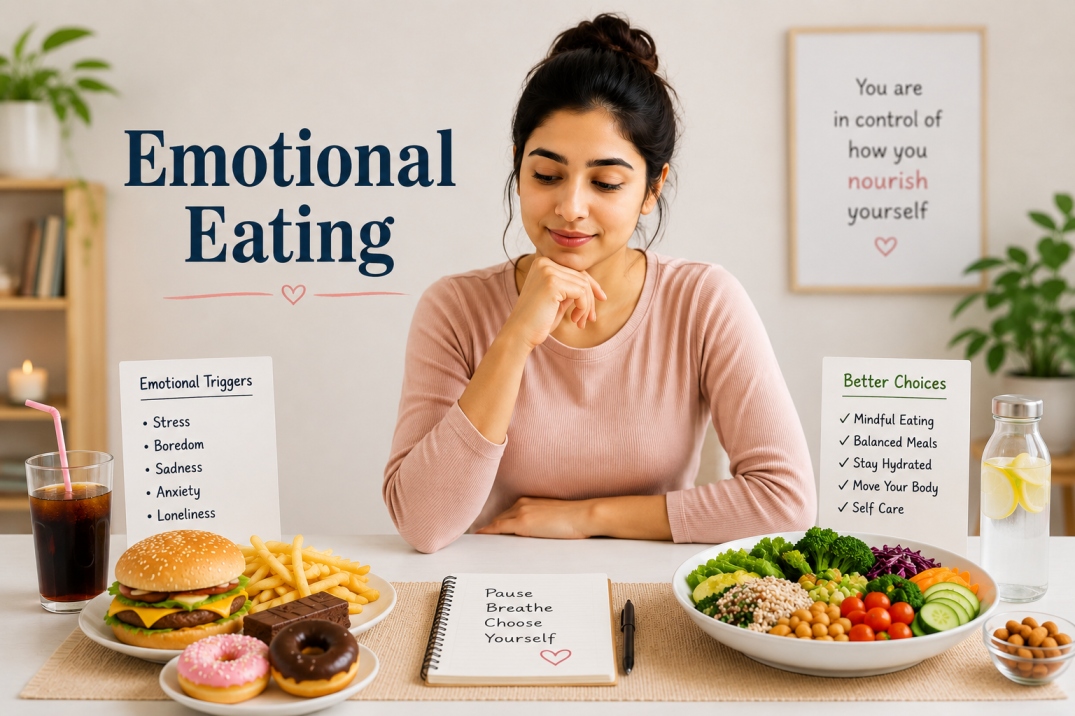
Have you ever reached for a packet of chips after a stressful day at work or craved chocolate when feeling sad, anxious, or lonely? If so, you're not alone. Many people eat not because they are physically hungry but because food temporarily helps them cope with emotions. This behavior is known as emotional eating.
Emotional eating is a common response to stress, boredom, anxiety, frustration, loneliness, or even happiness. While occasionally eating for comfort is completely normal, relying on food as the primary way to manage emotions can contribute to weight gain, poor nutrition, guilt, and an unhealthy relationship with food.
Unlike physical hunger, emotional hunger often comes on suddenly, feels urgent, and usually involves cravings for highly processed, sugary, or high-fat foods. Although these foods may provide temporary comfort, they do not address the underlying emotional need, often leading to a cycle of overeating followed by guilt or regret.
The good news is that emotional eating can be managed. By understanding your triggers, practicing mindful eating, improving stress management, and building healthier coping strategies, you can develop a more positive relationship with food and support long-term health and weight management.
In this guide, you'll learn what emotional eating is, why it happens, how to recognize the signs, and the first steps to overcoming it naturally. https://www.who.int
What Is Emotional Eating?
Emotional eating refers to eating in response to feelings rather than physical hunger. Food is used as a way to comfort, distract, reward, or cope with emotions instead of satisfying the body's nutritional needs.
Everyone eats for emotional reasons occasionally. Celebrating with cake on a birthday or enjoying favorite foods during festivals is a normal part of life. Emotional eating becomes a concern when it happens frequently and begins to interfere with physical or emotional well-being.
People who emotionally eat often choose foods that are:
High in sugar
High in fat
High in salt
Highly processed
Easy to eat quickly
Comfort foods associated with positive memories
Examples include:
Chocolate
Ice cream
Pizza
Burgers
Chips
Cookies
Cakes
Soft drinks
Fast food
These foods activate the brain's reward system by releasing dopamine, creating temporary feelings of pleasure and relief.
However, because the emotional problem remains unresolved, the urge to eat often returns. https://www.nih.gov
Emotional Hunger vs Physical Hunger
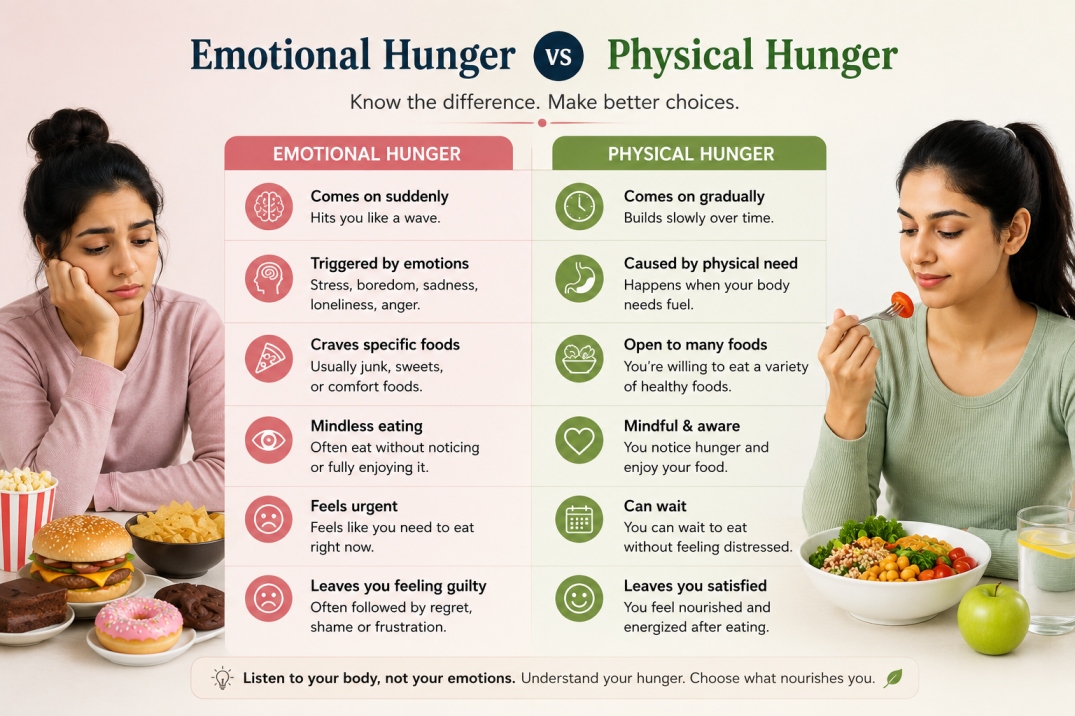
Understanding the difference between emotional hunger and physical hunger is one of the most effective ways to recognize emotional eating.
Physical Hunger
Physical hunger develops gradually as your body needs energy.
Characteristics include:
Comes on slowly
Can wait for a meal
Open to different food choices
Stops when you're comfortably full
Doesn't cause guilt after eating
Satisfies your body's nutritional needs
Examples:
Feeling hungry several hours after lunch
Low energy before dinner
Mild stomach growling
Emotional Hunger
Emotional hunger appears suddenly and is usually triggered by emotions rather than physical need.
Characteristics include:
Comes on suddenly
Feels urgent
Craves specific comfort foods
Continues even when you're physically full
Often leads to overeating
Followed by guilt, regret, or shame
Examples:
Eating ice cream after an argument
Ordering fast food because you're stressed
Snacking continuously while feeling bored
Finishing a packet of chips while watching television without realizing it
Learning to pause and ask, "Am I physically hungry, or am I trying to comfort an emotion?" can help break the cycle of emotional eating.
Common Causes of Emotional Eating
Emotional eating rarely has a single cause. It often develops through a combination of emotional, psychological, and environmental factors.
1. Stress
Stress is one of the most common triggers for emotional eating.
When you're stressed, the body releases cortisol, a hormone that can increase appetite and cravings for calorie-dense foods.
Many people find themselves reaching for sweets, chocolate, or fast food during busy workdays or stressful life events.
2. Anxiety
Anxiety can make food feel comforting because eating temporarily distracts from racing thoughts and uncomfortable emotions.
Unfortunately, this relief is usually short-lived and may lead to guilt afterward.
3. Sadness or Loneliness
Food often provides temporary comfort during periods of sadness or loneliness.
Many comfort foods are associated with positive memories, family gatherings, or childhood experiences, making them emotionally soothing.
4. Boredom
Eating can become a way to fill time rather than satisfy hunger.
Mindless snacking while watching television, scrolling through social media, or working at a desk is a common example of boredom eating.
5. Fatigue
Lack of sleep and low energy levels can increase cravings for sugary foods because the body is searching for quick energy.
Fatigue also reduces self-control, making unhealthy choices more likely.
6. Habit
Sometimes emotional eating becomes an automatic habit.
For example:
Dessert every night after dinner
Popcorn every time you watch a movie
Chocolate during work breaks
Ice cream after a stressful day
Over time, these repeated behaviors become strongly associated with certain emotions or situations.
7. Social Influences
Food plays an important role in celebrations, holidays, family gatherings, and social events.
People may eat more than they need simply because food is available or because others are eating.
Signs You May Be an Emotional Eater
Recognizing emotional eating is the first step toward changing it.
Common signs include:
Eating when you're not physically hungry
Frequent cravings for sweets or junk food
Eating because you're stressed, bored, or anxious
Eating quickly without paying attention
Continuing to eat even after feeling full
Feeling guilty after eating
Using food as a reward
Secret eating or hiding food
Difficulty controlling portion sizes during emotional situations
Frequently thinking about food during stressful times
If these behaviors occur regularly, they may indicate that emotions—not hunger—are driving your eating habits.
Health Risks of Emotional Eating
Occasional comfort eating is unlikely to cause long-term harm. However, frequent emotional eating can affect both physical and mental health.
Weight Gain
Regularly consuming high-calorie comfort foods can lead to gradual weight gain over time.
Obesity
Long-term emotional eating increases the risk of overweight and obesity, especially when combined with a sedentary lifestyle.
Insulin Resistance
Frequent consumption of sugary and processed foods may contribute to insulin resistance, increasing the risk of prediabetes and Type 2 diabetes.
High Blood Pressure and Heart Disease
Diets high in processed foods, sodium, and unhealthy fats can increase cardiovascular risk over time.
Digestive Problems
Overeating may contribute to bloating, acid reflux, indigestion, and discomfort.
Poor Mental Health
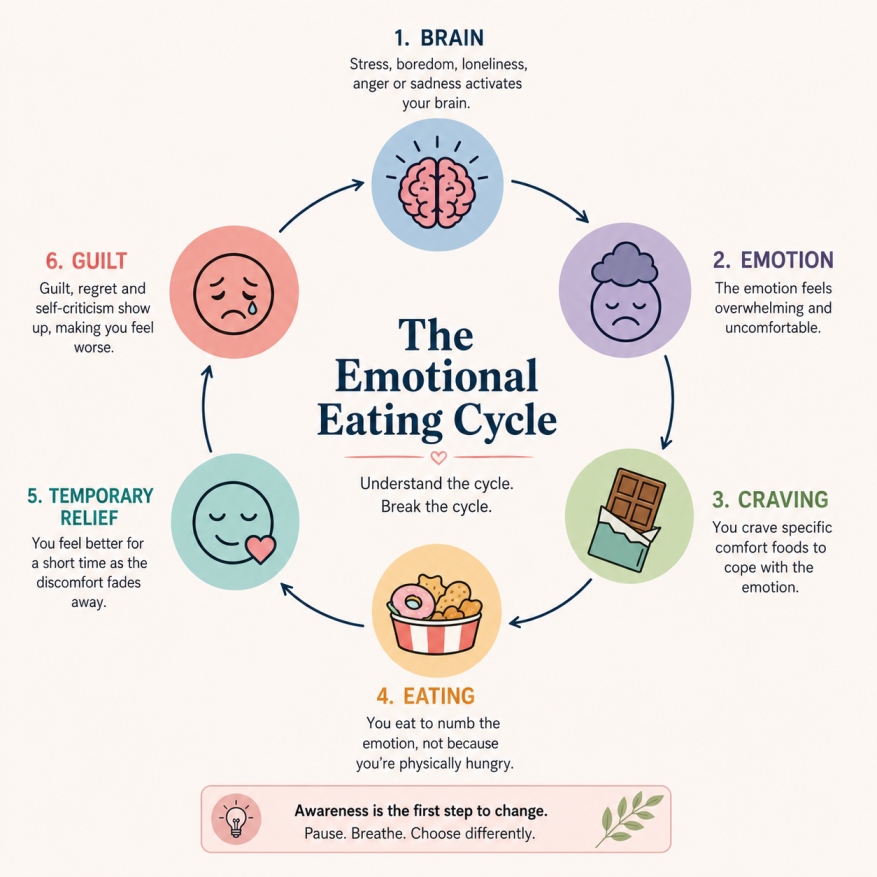
Emotional eating often creates a cycle:
Stress → Comfort Food → Temporary Relief → Guilt → More Stress → More Eating
Breaking this cycle requires addressing both eating habits and emotional well-being.
Reduced Self-Confidence
Many people experience frustration and reduced self-esteem when emotional eating interferes with their health goals.
Remember that emotional eating is a learned behavior—not a personal failure—and healthier coping strategies can be developed with time and practice.
Why Emotional Eating Causes Weight Gain
Emotional eating often involves consuming foods that are high in calories, sugar, unhealthy fats, and refined carbohydrates. While these foods may provide temporary comfort, they can easily lead to consuming more calories than your body needs.
Unlike physical hunger, emotional hunger is not satisfied when your body's energy needs are met. This means you may continue eating even after feeling physically full.
Over time, regularly eating in response to emotions rather than hunger can contribute to gradual weight gain and make weight management more difficult.
Common reasons emotional eating leads to weight gain include:
· Frequent overeating
· Large portion sizes
· Mindless snacking
· Preference for calorie-dense foods
· Reduced awareness of fullness signals
· Eating late at night
· Limited physical activity after overeating
Repeated emotional eating can create a cycle where weight gain leads to frustration, which triggers more emotional eating.
Best Foods That Help Reduce Emotional Eating
No single food can completely stop emotional eating, but choosing nutrient-rich foods can help stabilize blood sugar, reduce cravings, and improve feelings of fullness.https://www.nin.res.in
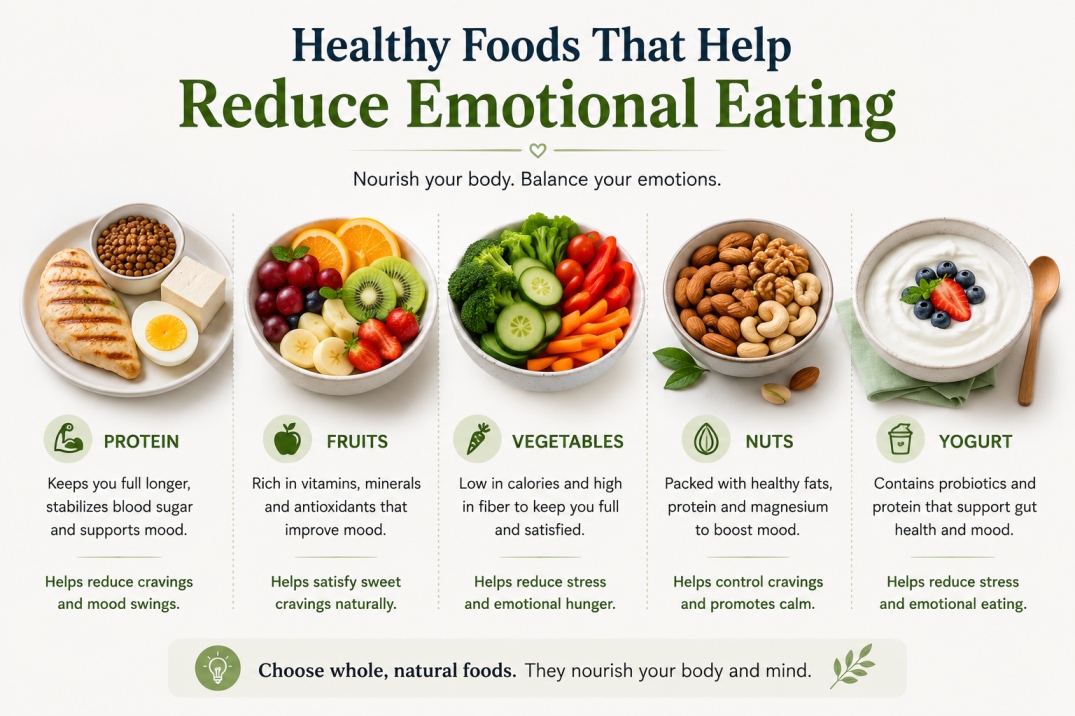
1. Protein-Rich Foods
Protein helps keep you satisfied for longer and reduces frequent snacking.
Good choices include:
· Eggs
· Chicken breast
· Fish
· Paneer
· Greek yogurt
· Cottage cheese
· Tofu
· Lentils
· Chickpeas
· Kidney beans
Try including a source of protein with every meal.
2. High-Fiber Foods
Fiber slows digestion and helps you feel full for longer.
Include:
· Oats
· Brown rice
· Whole wheat
· Millets
· Quinoa
· Apples
· Pears
· Berries
· Oranges
· Broccoli
· Carrots
· Spinach
· Beans
· Chia seeds
· Flaxseeds
Adults should aim for 25–35 grams of fiber daily.
3. Healthy Fats
Healthy fats improve satiety and support overall health.
Choose:
· Almonds
· Walnuts
· Pistachios
· Pumpkin seeds
· Olive oil
· Avocados
· Fatty fish
Eat these in moderation because they are calorie-dense.
4. Magnesium-Rich Foods
Some research suggests that magnesium may support relaxation and help manage stress in certain individuals.
Foods include:
· Spinach
· Pumpkin seeds
· Almonds
· Cashews
· Dark leafy vegetables
· Beans
5. Complex Carbohydrates
Complex carbohydrates provide steady energy and help reduce sudden cravings.
Examples:
· Sweet potatoes
· Brown rice
· Oats
· Whole wheat bread
· Millets
· Quinoa
· Whole-grain pasta
Foods to Limit
Highly processed foods can stimulate the brain's reward system, making it easier to overeat during emotional situations.
Try limiting:
· Sugary beverages
· Soft drinks
· Cakes
· Cookies
· Candy
· Ice cream
· Pastries
· Chips
· Fast food
· Deep-fried foods
· Instant noodles
· Sugary breakfast cereals
You don't have to eliminate these foods completely. Instead, enjoy them occasionally while building healthier daily habits.
Practice Mindful Eating
Mindful eating is one of the most effective ways to reduce emotional eating.
It involves paying attention to:
· Hunger
· Fullness
· Taste
· Texture
· Eating speed
· Emotions before and after eating
Mindful Eating Tips
· Eat without watching TV.
· Put away your phone during meals.
· Chew food slowly.
· Notice flavors and textures.
· Pause halfway through your meal.
· Ask yourself if you're still hungry.
· Stop eating when comfortably satisfied.
Mindful eating helps reconnect you with your body's natural hunger signals.https://wellorafit.com/services/nutrition-diet-planning/
Stress Management
Since stress is one of the biggest triggers for emotional eating, learning healthier ways to manage it is essential.
Healthy stress-relief techniques include:
· Deep breathing
· Meditation
· Yoga
· Journaling
· Listening to music
· Walking outdoors
· Gardening
· Reading
· Spending time with loved ones
Even 10–15 minutes of relaxation each day can make a difference.
Exercise Helps Reduce Emotional Eating
Physical activity improves mood by increasing endorphins, the body's natural "feel-good" chemicals.
Exercise also helps reduce stress, anxiety, and depression while supporting healthy weight management.https://wellorafit.com/services/fitness-training/
Recommended activities include:
Walking
Aim for 30–45 minutes most days.
Strength Training
Strength training improves confidence, supports metabolism, and helps preserve muscle.
Aim for 2–4 sessions weekly.
Yoga
Yoga combines movement with breathing exercises, making it especially helpful for reducing stress and emotional eating.
Cycling
Cycling improves cardiovascular health while providing a healthy outlet for stress.
Dancing
Dancing is an enjoyable way to stay active while improving mood.
The best exercise is one you enjoy and can maintain consistently.
Sleep and Emotional Eating
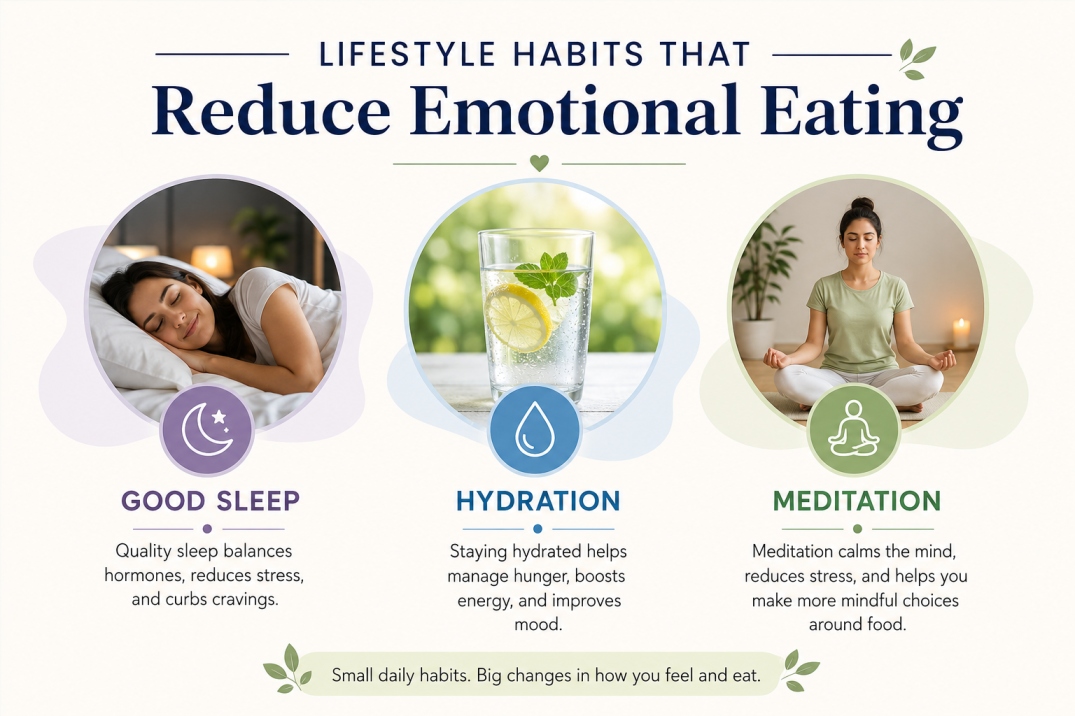
Poor sleep affects hormones that regulate hunger and fullness.
Sleeping less than 7 hours may increase:
· Hunger
· Sugar cravings
· Emotional eating
· Fatigue
· Poor food choices
Tips for Better Sleep
· Go to bed at the same time daily.
· Avoid screens before bedtime.
· Limit caffeine in the evening.
· Keep your bedroom cool and quiet.
· Develop a relaxing bedtime routine.
Adults should aim for 7–9 hours of quality sleep each night.
Healthy Coping Strategies Instead of Eating
The next time you feel the urge to eat, ask yourself:
"What am I really feeling right now?"
If the answer is stress, boredom, sadness, or loneliness, consider trying one of these alternatives first:
· Go for a short walk
· Call a friend
· Drink a glass of water
· Listen to calming music
· Practice deep breathing
· Stretch for five minutes
· Read a book
· Write in a journal
· Play with your pet
· Work on a hobby
Sometimes simply waiting 10 minutes before eating is enough for the craving to pass.
Build a Healthy Relationship with Food
Food should nourish both your body and your enjoyment of eating—not become your only coping mechanism.
Healthy habits include:
· Eating regular meals
· Avoiding strict food rules
· Allowing occasional treats without guilt
· Focusing on progress instead of perfection
· Practicing self-compassion
· Celebrating healthy behaviors rather than only weight loss
Remember that one emotional eating episode does not undo your progress. What matters most is your overall pattern of healthy choices.
Practical Tips to Stop Emotional Eating
· Keep a food and mood journal.
· Identify your emotional triggers.
· Don't skip meals.
· Eat enough protein and fiber.
· Stay hydrated throughout the day.
· Plan healthy snacks.
· Remove tempting foods from easy reach.
· Practice mindful eating.
· Exercise regularly.
· Get enough sleep.
· Learn stress-management techniques.
· Seek professional support if emotional eating feels overwhelming or is affecting your quality of life.
Changing emotional eating habits takes time. Small, consistent changes are far more effective than trying to change everything at once.
Common Mistakes People Make When Trying to Stop Emotional Eating
Breaking the cycle of emotional eating is not about having perfect willpower. Many people unknowingly adopt strategies that are too restrictive or unrealistic, making it harder to build lasting habits. Recognizing these common mistakes can help you develop a healthier and more sustainable approach.
1. Skipping Meals
Many people skip breakfast or lunch to "make up" for overeating earlier. Unfortunately, this often leads to intense hunger later in the day, increasing the likelihood of emotional eating or binge eating.
Instead: Eat regular, balanced meals that include protein, fiber, and healthy fats to keep hunger under control.
2. Following Strict Diet Rules
Completely avoiding favorite foods can increase cravings and feelings of deprivation.
Instead: Allow occasional treats in moderation. A flexible eating pattern is easier to maintain long-term than a restrictive diet.
3. Ignoring Emotional Triggers
Many people focus only on food choices without addressing the emotions driving their eating habits.
Instead: Ask yourself what you're feeling before eating. If you're stressed, lonely, anxious, or bored, try a non-food coping strategy first.
4. Keeping Trigger Foods Easily Accessible
Having large quantities of chips, chocolates, cookies, or sugary drinks within easy reach makes emotional eating more likely.
Instead: Keep nutritious snacks such as fruits, yogurt, nuts, or roasted chickpeas readily available.
5. Expecting Immediate Results
Changing emotional eating habits takes time. Occasional setbacks are normal and do not mean you've failed.
Instead: Focus on consistency and celebrate small improvements.
How to Overcome Emotional Eating Long-Term
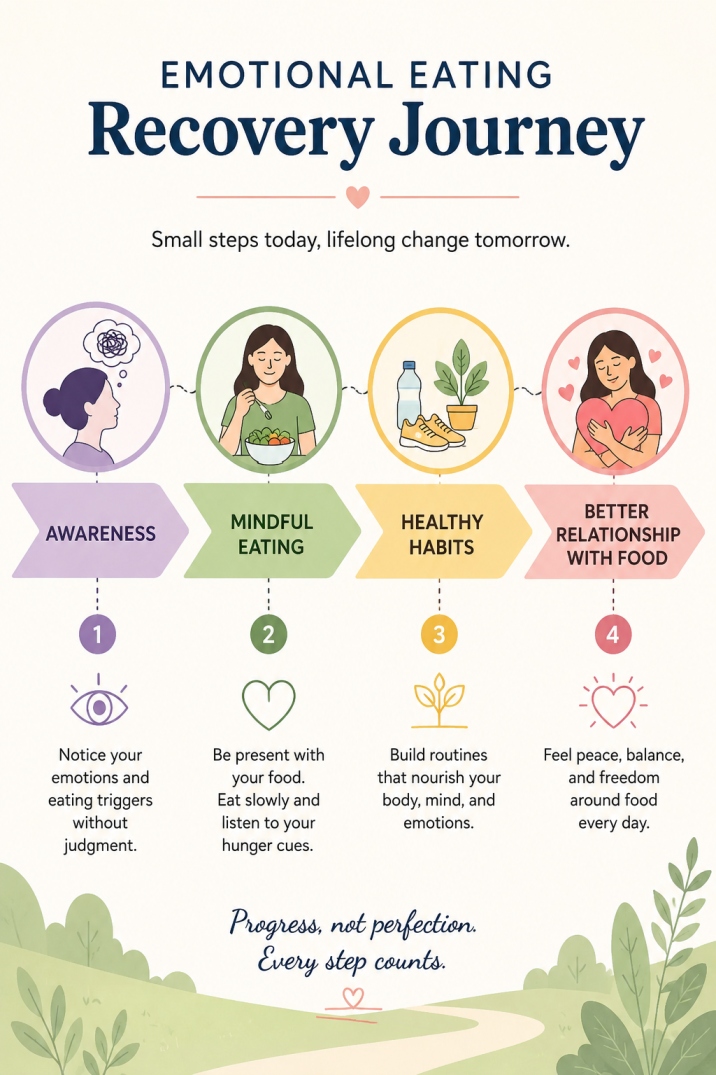
Long-term success comes from changing both your eating habits and your response to emotions.
Identify Your Triggers
Notice situations that lead to emotional eating, such as:
· Work stress
· Arguments
· Boredom
· Loneliness
· Anxiety
· Fatigue
Keeping a food and mood journal can help identify patterns.
Build Healthy Coping Strategies
Replace emotional eating with activities that reduce stress without involving food.
Examples include:
· Going for a walk
· Deep breathing exercises
· Yoga
· Meditation
· Journaling
· Reading
· Talking with a friend
· Listening to music
· Gardening
· Practicing a hobby
Practice Self-Compassion
Everyone emotionally eats occasionally.
Avoid guilt and self-criticism. Instead, learn from each experience and continue making healthy choices.
Remember that progress is measured by your overall habits—not by one meal or one day.
Seek Professional Support
If emotional eating is frequent, causing significant distress, or feels difficult to control, consider seeking help from a registered dietitian, psychologist, or healthcare professional.
Professional guidance can provide personalized strategies and support for building a healthier relationship with food.
Key Takeaways
· Emotional eating is eating in response to emotions rather than physical hunger.
· Stress, anxiety, boredom, loneliness, and fatigue are common triggers.
· Emotional hunger develops suddenly and usually craves specific comfort foods.
· Frequent emotional eating can contribute to weight gain and an unhealthy relationship with food.
· Balanced meals, protein, fiber, exercise, stress management, and mindful eating can help reduce emotional eating.
· Healthy coping strategies are more effective than relying on food to manage emotions.
· Small, consistent changes lead to long-term success.
Conclusion
Emotional eating is a common experience, and it does not mean you lack willpower or discipline. Food can provide temporary comfort, but it cannot resolve the emotions that trigger stress eating.
By learning to recognize your emotional triggers, practicing mindful eating, nourishing your body with balanced meals, staying active, getting enough sleep, and developing healthier coping strategies, you can gradually break the cycle of emotional eating.
Remember that building a healthy relationship with food is a journey. Be patient with yourself, celebrate progress, and focus on creating sustainable habits that support both your physical and emotional well-being.
FAQ Schema
1. What is emotional eating?
Emotional eating is eating in response to emotions such as stress, sadness, boredom, or anxiety rather than physical hunger.
2. How can I tell if I'm emotionally eating?
Emotional hunger comes on suddenly, craves specific comfort foods, and often continues even after you're physically full.
3. Does emotional eating cause weight gain?
Frequent emotional eating can contribute to weight gain because it often involves consuming high-calorie, processed foods in large portions.
4. What foods help reduce emotional eating?
Protein-rich foods, high-fiber foods, healthy fats, fruits, vegetables, and whole grains help stabilize blood sugar and improve fullness.
5. Can stress increase food cravings?
Yes. Stress raises cortisol levels, which may increase appetite and cravings for sugary or high-fat foods.
6. Is emotional eating the same as binge eating disorder?
No. Emotional eating is common and does not necessarily indicate binge eating disorder, which is a diagnosed mental health condition. If you experience recurrent episodes of eating unusually large amounts of food with a sense of loss of control, seek professional evaluation.
7. Can exercise help reduce emotional eating?
Yes. Regular physical activity helps reduce stress, improve mood, and decrease the urge to eat for emotional reasons.
8. How does sleep affect emotional eating?
Poor sleep can increase hunger hormones, reduce fullness signals, and make emotional eating more likely.
9. Can mindful eating help?
Yes. Mindful eating helps you recognize hunger and fullness cues while reducing impulsive eating.
10. When should I seek professional help?
If emotional eating happens frequently, causes distress, or interferes with your health goals, consult a healthcare professional or registered dietitian.
Ready to Begin Your Health Journey?
Get a personalized, medically guided plan built around your unique biology.