How Nutrition Supports Healthy Blood Pressure
Blood pressure is something many people don't think about until a reading comes back higher than expected.
But your blood pressure is influenced by much more than just the amount of salt you add to your food.
Your overall dietary pattern matters.
The foods you eat can affect:
Sodium intake
Potassium intake
Body weight
Fiber intake
Saturated fat intake
Overall cardiovascular health
Blood glucose regulation
Nutrient intake
This is why nutrition plays an important role in maintaining healthy blood pressure.
One of the best-studied dietary approaches is the DASH eating pattern—Dietary Approaches to Stop Hypertension. It emphasizes vegetables, fruits, whole grains, beans, nuts, seeds, low-fat dairy and other nutrient-rich foods while limiting sodium, saturated fat and added sugars. Research supported by the NHLBI has shown that DASH can lower blood pressure.
But you don't have to completely change your cuisine to eat for better blood-pressure health.
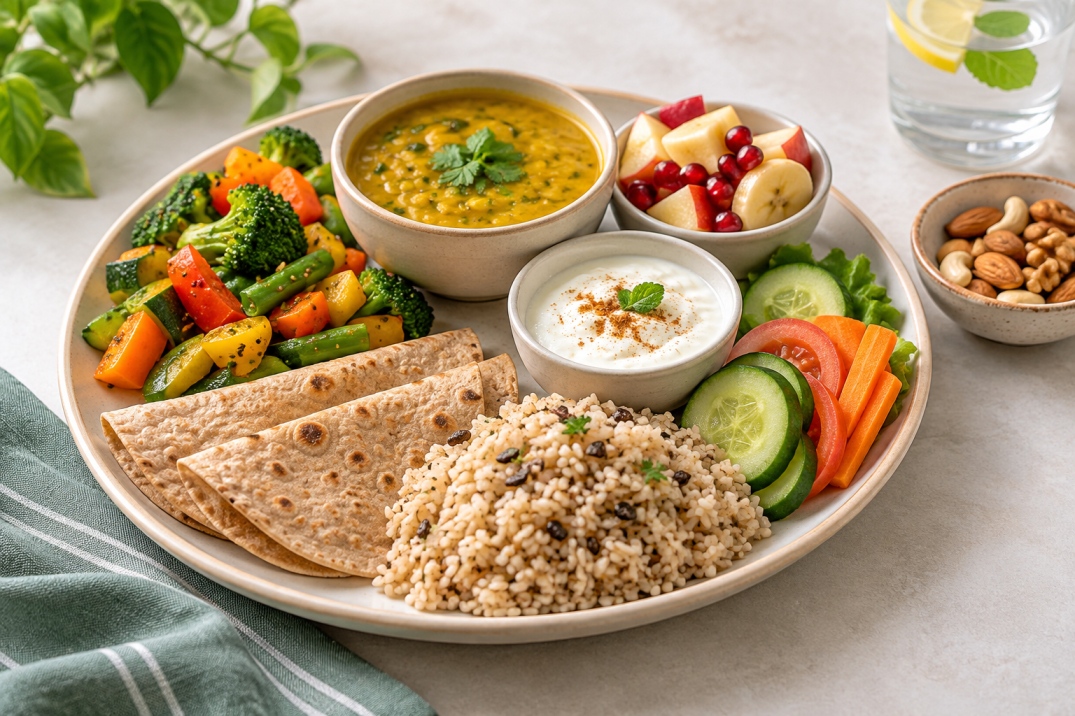
A traditional Indian diet can be adapted using familiar foods such as:
Dal + vegetables + whole grains + fruits + nuts/seeds + appropriate dairy + less salty packaged food.
Let's understand how.
https://www.nhlbi.nih.gov/health/dash-eating-plan
What Is Blood Pressure?
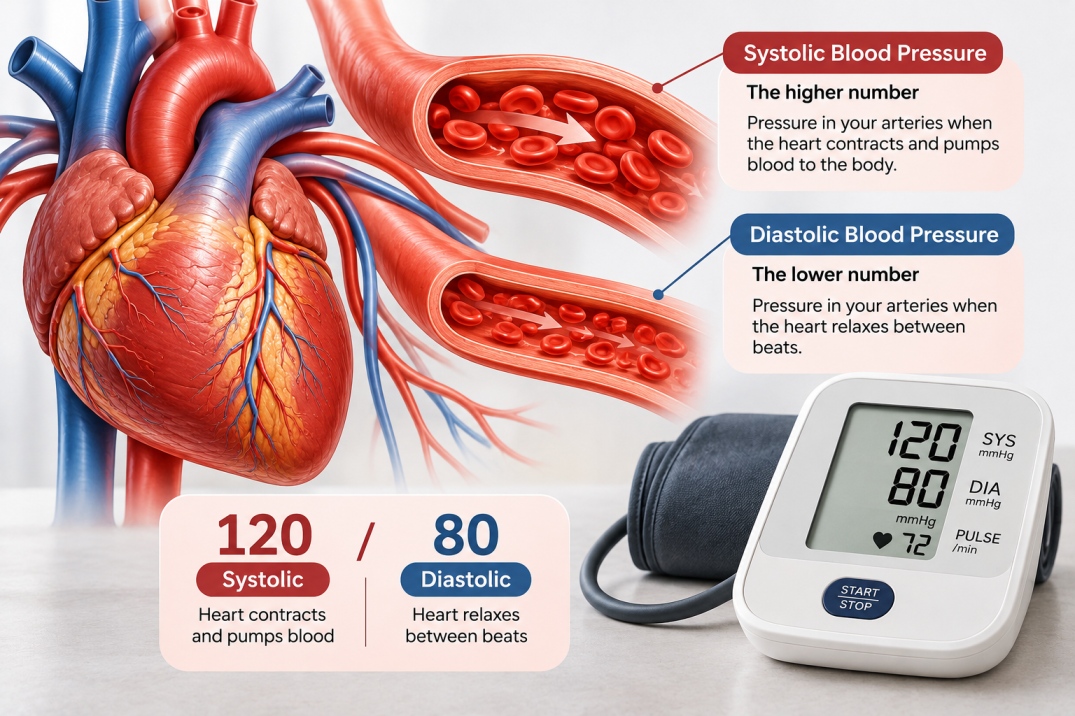
Blood pressure is the force of circulating blood against the walls of your arteries.
It is recorded using two numbers:
Systolic blood pressure
The top number represents the pressure when the heart contracts.
Diastolic blood pressure
The bottom number represents the pressure when the heart relaxes between beats.
For adults, the 2025 American Heart Association/American College of Cardiology guideline defines:
Normal: less than 120/80 mm Hg
Elevated: 120–129 systolic and less than 80 diastolic
Stage 1 hypertension: 130–139 systolic or 80–89 diastolic
Stage 2 hypertension: 140 or higher systolic or 90 or higher diastolic
A single high reading does not necessarily mean that you have hypertension.
Blood pressure can vary depending on:
Stress
Physical activity
Sleep
Caffeine
Illness
Medications
Measurement conditions
Persistent elevated readings should be discussed with a healthcare professional.
https://www.nhlbi.nih.gov/health/dash-eating-plan
Why Does Nutrition Matter for Blood Pressure?
Your diet can influence several factors associated with blood pressure.
For example:
High sodium intake
Can contribute to higher blood pressure in many people.
Low potassium intake
May reduce one of the dietary factors that helps counter sodium's effects.
Excess calorie intake
Can contribute to excess body weight, which is associated with higher blood pressure.
Low intake of fruits and vegetables
Can mean lower intake of potassium, magnesium, fiber and other nutrients.
High intake of saturated fat and highly processed foods
Can work against an overall heart-healthy eating pattern.
This is why blood-pressure nutrition is not simply:
"Stop eating salt."
It is:
"Build a healthier overall dietary pattern."
https://wellorafit.com/services/nutrition-diet-planning/
The DASH Diet: A Science-Backed Approach
DASH stands for:
Dietary Approaches to Stop Hypertension.
It was developed and studied specifically in relation to blood pressure.
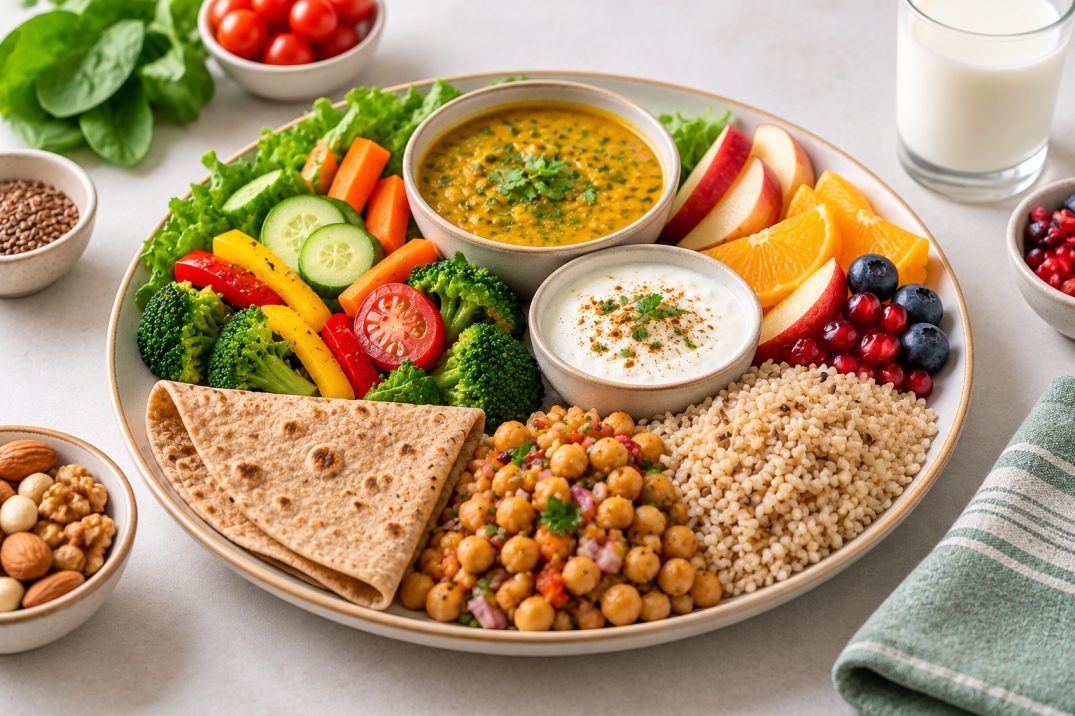
The eating pattern emphasizes:
Vegetables
Fruits
Whole grains
Beans and legumes
Nuts and seeds
Low-fat or fat-free dairy
Fish and lean proteins
Healthy oils
It limits:
Sodium
Saturated fat
Sugary foods and beverages
Excessive sweets
Foods high in saturated fat
Importantly, DASH isn't a crash diet.
It is a long-term eating pattern.
What Makes DASH Different?
DASH isn't based on one "superfood."
Its strength comes from the combination of foods.
The pattern provides more:
Potassium
Calcium
Magnesium
Fiber
Protein
while reducing:
Sodium
Saturated fat
Added sugars
The NHLBI describes DASH as a flexible eating plan rather than a diet requiring special foods.
This makes its principles adaptable to Indian cooking.
1. Sodium: The Nutrient to Watch
Sodium is an essential mineral.
Your body needs it for:
Fluid balance
Nerve function
Muscle function
But too much sodium can contribute to increased blood pressure.
The WHO recommends that adults consume less than 2,000 mg of sodium per day, equivalent to less than 5 g of salt per day.
The American Heart Association recommends no more than 2,300 mg sodium per day for adults, with an ideal limit of 1,500 mg for most adults, particularly those with high blood pressure.
These recommendations are about total sodium intake, not simply the salt you add at the table.
Where Does Sodium Come From?
Many people think sodium comes only from the salt shaker.
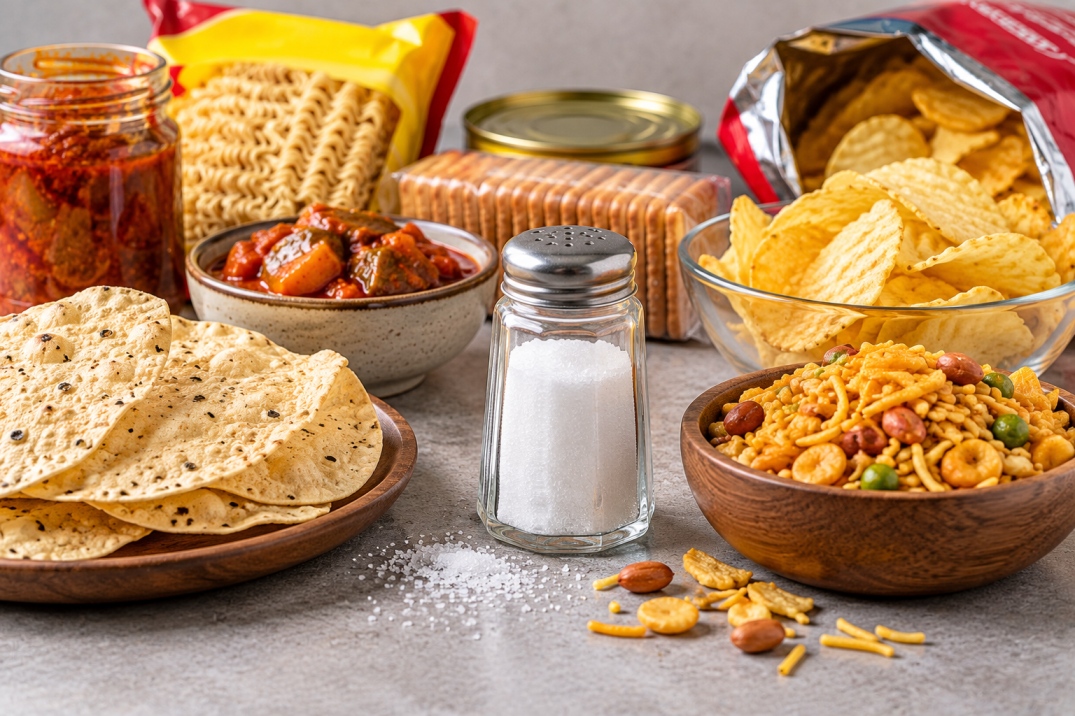
But sodium can also come from:
Pickles
Papad
Namkeen
Packaged snacks
Instant noodles
Processed sauces
Ready-to-eat foods
Packaged soups
Processed meats
Restaurant foods
Commercial breads
Seasoning mixes
WHO highlights processed foods and condiments as important sources of sodium.
This means you can eat relatively little added salt at home and still consume a high-sodium diet if packaged foods are frequent.
Does That Mean You Should Stop Eating Salt Completely?
No.
Sodium is essential.
The goal is to avoid excessive intake, not eliminate sodium completely.
A better strategy is:
Use less salt + reduce high-sodium packaged foods + choose more naturally nutrient-rich foods.
Indian Foods That Can Be High in Sodium
Some foods that deserve portion and frequency awareness include:
Pickles
Papad
Namkeen
Bhujia
Salted peanuts
Packaged soups
Instant noodles
Processed cheese
Sauces
Chutneys with large amounts of salt
Packaged ready-to-eat meals
Restaurant gravies
This doesn't mean you can never eat them.
It means they shouldn't become the daily foundation of your diet if you're trying to manage blood pressure.
https://wellorafit.com/services/nutrition-diet-planning/
2. Potassium: The Sodium Counterbalance
Potassium is another important mineral for blood-pressure health.
Potassium-rich foods can help counter some of sodium's effects and support normal blood-vessel function.
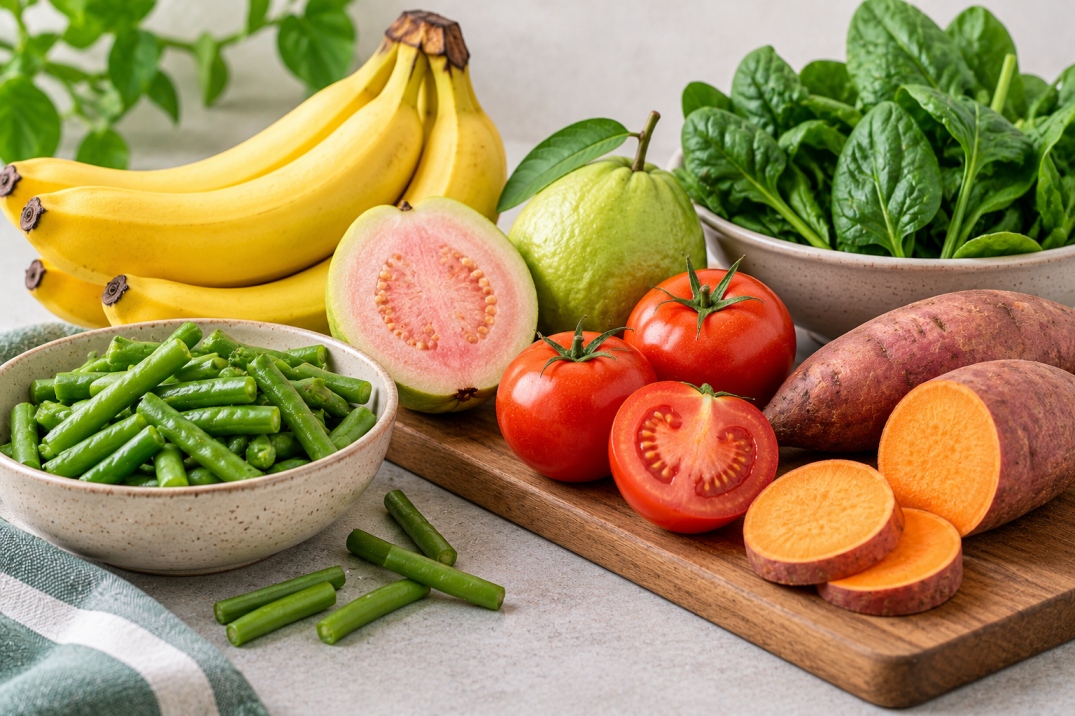
Good food sources include:
Bananas
Oranges
Guava
Papaya
Potatoes
Sweet potatoes
Tomatoes
Spinach
Beans
Lentils
Yogurt
Nuts
The key message:
Don't only reduce sodium. Also build a diet naturally rich in potassium-containing foods.
Important: Potassium Supplements Are Not for Everyone
More potassium isn't automatically better.
People with:
Kidney disease
Certain heart conditions
Some hormonal disorders
or those taking certain medications may need to limit potassium or monitor it carefully.
The AHA specifically cautions that increasing potassium or using potassium-based salt substitutes may be harmful for people with kidney disease or certain medications.
So:
Food first, supplements only when appropriate.
3. Fruits and Vegetables Matter
One of the simplest ways to improve your diet for blood-pressure health is to eat more fruits and vegetables.
They provide:
Potassium
Magnesium
Fiber
Antioxidants
Vitamins
Water
Plant compounds
The DASH eating pattern emphasizes 4–5 servings each of vegetables and fruits per day at a 2,000-calorie level.
You don't have to eat exactly that amount if your calorie needs differ, but the principle is important:
Make plant foods a regular part of your meals.
4. Choose Whole Grains More Often
Whole grains provide:
Fiber
Magnesium
B vitamins
Other nutrients
Examples include:
Whole wheat
Oats
Barley
Brown rice
Jowar
Bajra
Ragi
Instead of making refined grains the only grain choice, rotate different whole-grain options.
For example:
Roti + dal + vegetables
is a more nutrient-dense pattern than a meal built primarily around refined packaged foods.
5. Fiber and Blood Pressure
Fiber is not a blood-pressure medication.
But high-fiber dietary patterns are associated with better overall cardiovascular health.
Good sources include:
Vegetables
Fruits
Whole grains
Beans
Dal
Chickpeas
Nuts
Seeds
Increasing fiber gradually while drinking adequate fluids can help you build a more balanced diet.
6. Beans and Dal: An Indian Advantage
Indian diets have a major advantage when it comes to blood-pressure-friendly foods:
Legumes are already part of traditional cooking.
Examples include:
Moong dal
Masoor dal
Toor dal
Chana dal
Rajma
Chole
Lobia
These foods provide combinations of:
Protein
Fiber
Potassium
Magnesium
Other micronutrients
DASH specifically includes beans, peas, nuts and seeds as part of the eating pattern.
7. Nuts and Seeds
Nuts and seeds can fit well into a heart-healthy eating pattern.
Examples:
Almonds
Walnuts
Peanuts
Pumpkin seeds
Flaxseeds
Chia seeds
Sesame seeds
They provide:
Healthy fats
Magnesium
Fiber
Plant protein
Choose unsalted versions more often to avoid unnecessary sodium.
And remember:
Healthy does not mean unlimited.
Nuts and seeds are energy-dense, so portion size still matters.
8. Choose Healthy Fats
The type of fat in your diet matters.
A heart-healthy pattern emphasizes unsaturated fats while limiting saturated and trans fats.
Useful sources include:
Nuts
Seeds
Fish
Avocado
Vegetable oils in appropriate amounts
The DASH eating plan specifically limits foods high in saturated fat, including fatty meats, full-fat dairy and certain tropical oils.
9. What About Dairy?
Low-fat or fat-free dairy foods are included in the DASH eating pattern because they provide:
Calcium
Protein
Other nutrients
Examples:
Low-fat milk
Curd
Yogurt
For people who don't consume dairy, calcium-fortified alternatives can be considered.
For more information, see:
Calcium Beyond Milk: The Best Dietary Sources
10. Limit Saturated Fat
Blood pressure isn't only about sodium.
A heart-healthy dietary pattern also considers fat quality.
Limit frequent intake of foods high in saturated fat such as:
Fatty meats
High-fat dairy
Butter and ghee in excessive amounts
Fried foods
Commercial baked foods
Some highly processed foods
This doesn't mean you need to completely eliminate traditional foods.
It means frequency, quantity and overall dietary pattern matter.
11. Added Sugar Matters Too
Sugar doesn't directly act like sodium, but diets high in added sugars can contribute to excess calorie intake and weight gain.
Sugary drinks are particularly easy to overconsume because they provide calories without much satiety.
Limit:
Soft drinks
Sweetened juices
Energy drinks
Sugary coffee drinks
Sweetened packaged beverages
Frequent sweets and desserts
DASH also recommends limiting sweets and sugar-sweetened beverages.
12. Weight Management and Blood Pressure
Body weight is another factor that can influence blood pressure.
For people living with excess weight, even modest weight loss can support cardiovascular health.
The current AHA/ACC guideline recommends maintaining or achieving a healthy weight as part of lifestyle management for elevated blood pressure and hypertension.
This doesn't mean crash dieting.
Instead focus on:
Sustainable calorie intake
Protein-rich meals
Fiber
Vegetables
Whole grains
Regular physical activity
Adequate sleep
13. Alcohol and Blood Pressure
Alcohol can contribute to elevated blood pressure.
For people who drink, reducing alcohol intake—or avoiding it—can be part of a heart-healthy approach.
The 2025 AHA/ACC guideline recommends reducing or eliminating alcohol as part of lifestyle management for elevated blood pressure and hypertension.
14. Hydration and Blood Pressure
Water is important for normal body function, but drinking excessive amounts of water does not treat high blood pressure.
Aim for appropriate hydration based on:
Thirst
Weather
Activity
Individual needs
Medical conditions
People with certain heart or kidney conditions may have individualized fluid recommendations.
15. Read Food Labels for Sodium
This is one of the most practical habits you can develop.
When buying packaged food, look for:
Sodium
rather than only checking:
Salt
Compare similar products and choose lower-sodium options when possible.
Also pay attention to:
Serving size
Number of servings per package
Saturated fat
Added sugar
The AHA recommends using nutrition labels to make more informed choices about sodium and saturated fat.
A Simple Indian Food Swap Strategy
You don't have to completely redesign your meals.
Make small changes.
Instead of
Try more often
Salted namkeen
Unsalted nuts + fruit
Instant noodles
Vegetable poha/upma
Pickle with every meal
Fresh salad/vegetables
Salted peanuts
Unsalted roasted peanuts
Refined bread
Whole-grain options
Packaged soup
Homemade vegetable soup
Sugary drinks
Water/unsweetened beverages
Fried snacks
Roasted chana
Very salty papad
Vegetables or dal
Restaurant-heavy meals
Home-cooked meals
What Does a Blood-Pressure-Friendly Indian Plate Look Like?
A practical plate could contain:
½ Plate
Vegetables and/or salad
¼ Plate
Protein-rich food such as:
Dal
Beans
Chole
Rajma
Tofu
Fish
Lean chicken
¼ Plate
Whole-grain carbohydrate such as:
Roti
Brown rice
Millets
Barley
And add:
Curd + fruit + a small portion of unsalted nuts/seeds
when appropriate.
This isn't a rigid prescription.
It's a simple framework for building a balanced meal.
Example: Blood-Pressure-Friendly Indian Day
Early Morning
Water
Breakfast
Vegetable oats or vegetable poha + unsalted peanuts
Mid-Morning
Guava/orange/papaya
Lunch
2 whole-wheat rotis + moong dal + mixed vegetable sabzi + curd + salad
Evening Snack
Roasted chana + fruit
Dinner
Rajma + controlled portion of brown rice + vegetables
Optional
Unsweetened yogurt or another suitable snack depending on individual requirements
This type of meal pattern naturally provides:
Potassium
Magnesium
Calcium
Fiber
Protein
while making it easier to limit highly processed, high-sodium foods.
What About Pickles and Papad?
You don't necessarily need to ban them.
But both can add significant sodium depending on preparation and portion.
Instead of:
Pickle + papad + salty snack + packaged food
every day, think:
Occasional small portion + mostly fresh foods.
The overall sodium load matters.
Restaurant Food and Blood Pressure
Restaurant meals can contain more sodium than you expect.
Common sources include:
Gravies
Sauces
Cheese
Pickles
Seasoning mixes
Salted butter
Processed ingredients
Useful strategies:
Ask for less salt where possible.
Choose grilled, steamed or lightly cooked options.
Request sauces separately.
Choose dal, vegetables and roti over heavily processed sides.
Avoid adding extra salt automatically.
Cooking Methods That Can Help
You don't need to eat bland food to reduce sodium.
Build flavor using:
Lemon
Coriander
Mint
Ginger
Garlic
Cumin
Black pepper
Turmeric
Chilli
Fresh herbs
Roasted spices
The goal is:
Less dependence on salt for flavor.
Is Himalayan Pink Salt Better for Blood Pressure?
This is a common misconception.
Himalayan pink salt is still primarily sodium chloride.
Replacing regular salt with pink salt does not automatically make a high-sodium diet heart-healthy.
The important factor is total sodium intake.
What About Rock Salt?
Rock salt also contains sodium.
So:
Rock salt ≠ low-sodium salt
Simply changing the type of salt doesn't solve excessive sodium intake.
What About Potassium Salt?
Potassium-based salt substitutes can help lower sodium intake and may benefit some adults with elevated blood pressure.
However, they are not suitable for everyone.
People with:
Kidney disease
Certain medical conditions
Certain medications
may develop dangerously high potassium levels.
Always check with a healthcare professional before switching to a potassium-based salt substitute if you have a medical condition or take regular medication.
Can Bananas Lower Blood Pressure?
Bananas are a good source of potassium.
Potassium-rich foods can support blood-pressure management as part of an overall healthy eating pattern.
But eating a banana does not "cancel out" a high-sodium diet.
Think:
Overall pattern > single food.
What About Beetroot?
Beetroot contains naturally occurring nitrates, which have been studied in relation to vascular function and blood pressure.
But you don't need beetroot juice as a mandatory treatment.
Whole vegetables and a varied diet remain the foundation.
If you enjoy beetroot, include it as one of many vegetables.
What About Garlic?
Garlic is a nutritious ingredient and can be part of a heart-healthy eating pattern.
But garlic should not be treated as a replacement for prescribed blood-pressure medication.
Use it to improve flavor while reducing dependence on excess salt.
What About Green Tea?
Unsweetened green tea can fit into a healthy diet.
But it is not a treatment for hypertension.
Also remember that green tea contains caffeine, which can temporarily affect blood pressure in some people.
What About "Detox" Drinks?
Lemon water, cucumber water, herbal drinks and similar beverages can be enjoyable.
But there is no special detox drink that replaces a healthy diet or blood-pressure treatment.
For blood-pressure health:
Your everyday meals matter far more than a morning drink.
Can Nutrition Replace Blood Pressure Medication?
Not always.
Lifestyle changes can help prevent and manage high blood pressure, but some people need medication.
The 2025 AHA/ACC guideline recommends medication alongside lifestyle interventions for all adults with average blood pressure ≥140/90 mm Hg and for selected adults at ≥130/80 mm Hg depending on cardiovascular disease, stroke, diabetes, chronic kidney disease or overall cardiovascular risk.
Never stop or reduce prescribed blood-pressure medication because your diet has improved.
Nutrition Is One Part of Blood Pressure Management
A heart-healthy lifestyle combines:
Nutrition
DASH-style eating, lower sodium and more potassium-rich foods.
Physical Activity
Regular movement and exercise.
Healthy Weight
Achieve or maintain a healthy weight where appropriate.
Sleep
Adequate, consistent sleep.
Stress Management
Healthy ways to manage chronic stress.
Alcohol
Reduce or avoid alcohol.
These lifestyle measures are recommended alongside appropriate medical care.
7 Simple Nutrition Habits for Healthier Blood Pressure
1. Add One More Vegetable
Increase vegetables gradually rather than trying to completely change your diet overnight.
2. Eat Fruit Daily
Choose whole fruit more often than sugary beverages.
3. Include Dal or Legumes
Make dal, beans, chole, rajma or lobia regular parts of meals.
4. Reduce Packaged Salty Snacks
Namkeen, chips and instant foods can quickly increase sodium intake.
5. Choose Unsalted Nuts and Seeds
They provide healthy fats, fiber and minerals without unnecessary added sodium.
6. Use Less Salt While Cooking
Then build flavor using spices, herbs, lemon, ginger and garlic.
7. Read the Label
Compare sodium, saturated fat and added sugar before buying packaged foods.
A Quick Blood-Pressure-Friendly Grocery List
Vegetables
Spinach
Methi
Carrots
Tomatoes
Broccoli
Cabbage
Cauliflower
Beans
Bottle gourd
Pumpkin
Fruits
Guava
Orange
Banana
Papaya
Apple
Pomegranate
Melons
Protein Foods
Moong dal
Masoor dal
Rajma
Chole
Lobia
Tofu
Curd
Fish
Lean poultry
Whole Grains
Whole wheat
Oats
Barley
Brown rice
Jowar
Bajra
Ragi
Healthy Fats
Almonds
Walnuts
Peanuts
Flaxseeds
Chia seeds
Sesame seeds
Flavor Builders
Lemon
Garlic
Ginger
Coriander
Mint
Cumin
Black pepper
Turmeric
Foods to Limit More Often
This does not mean every item is "forbidden."
Focus on reducing frequency and portions.
High-Sodium Foods
Chips
Namkeen
Pickles
Papad
Instant noodles
Packaged soups
Processed meats
Salty sauces
Ready-to-eat meals
High-Saturated-Fat Foods
Fatty meats
Excess butter
Large amounts of ghee
Full-fat processed foods
Deep-fried foods
High-Added-Sugar Foods
Soft drinks
Sweetened beverages
Frequent desserts
Sugary cereals
Packaged sweets
Common Myths About Nutrition and Blood Pressure
Myth 1: Blood Pressure Is Only About Salt
Fact: Sodium matters, but blood pressure is influenced by overall diet, body weight, physical activity, alcohol, stress and other factors.
Myth 2: You Must Stop Eating Salt Completely
Fact: Sodium is an essential nutrient. The goal is to avoid excessive intake.
Myth 3: Pink Salt Is Better for Blood Pressure
Fact: Pink salt still contains sodium. Switching salts doesn't automatically reduce sodium intake.
Myth 4: One Banana Can Lower Your Blood Pressure
Fact: Bananas provide potassium, but blood-pressure management depends on the overall dietary pattern.
Myth 5: Only Older Adults Need to Worry About Blood Pressure
Fact: Elevated blood pressure can occur in younger adults too. Healthy habits are useful throughout life.
Myth 6: If You Eat Healthy, You Don't Need Medication
Fact: Some people still require medication despite healthy lifestyle habits.
Myth 7: You Need Expensive "Heart-Healthy" Foods
Fact: Many affordable foods—dal, beans, seasonal vegetables, fruits, whole grains and peanuts—fit well into a heart-healthy diet.
Myth 8: A Heart-Healthy Diet Has to Be Bland
Fact: Herbs, spices, lemon, ginger, garlic and other flavoring ingredients can make lower-sodium meals enjoyable.
Key Takeaways
Nutrition is an important part of preventing and managing elevated blood pressure.
DASH is one of the best-studied eating patterns for blood-pressure management.
A blood-pressure-friendly diet emphasizes vegetables, fruits, whole grains, legumes, nuts, seeds and appropriate dairy or alternatives.
Reducing excessive sodium intake is important.
WHO recommends adults consume less than 2,000 mg sodium per day, equivalent to less than 5 g of salt.
Potassium-rich foods can help counter some of sodium's effects.
People with kidney disease or certain medical conditions should not increase potassium without professional advice.
Choose unsalted nuts and seeds more often.
Limit highly processed and salty foods.
Fiber-rich foods such as vegetables, fruits, legumes and whole grains support an overall heart-healthy dietary pattern.
Weight management, physical activity, adequate sleep and stress management also matter.
A healthy diet can support blood-pressure management but does not always replace medication.
Never stop prescribed blood-pressure medication without medical guidance.
Conclusion
Healthy blood pressure isn't built by removing one ingredient from your diet.
It is built through hundreds of small food choices repeated over time.
Instead of thinking:
"I need a special hypertension diet."
Think:
"I need a more heart-friendly everyday diet."
That can mean:
More vegetables.
More fruits.
More dal and legumes.
More whole grains.
More unsalted nuts and seeds.
Less packaged salty food.
Less excess sugar.
Less reliance on highly processed meals.
And when appropriate, less sodium overall.
The DASH eating pattern provides a useful framework because it combines these principles rather than focusing on a single nutrient. Research has consistently shown that DASH can help lower blood pressure, particularly when combined with reduced sodium intake.
For an Indian household, this doesn't require abandoning familiar foods.
A meal of:
Dal + roti + sabzi + curd + salad
can fit beautifully into a heart-healthy pattern.
So can:
Rajma + controlled rice portion + vegetables
or:
Chole + whole-wheat roti + mixed vegetables.
The goal is not perfection.
It's to gradually shift the balance toward fresh, minimally processed, nutrient-rich foods and away from excess sodium, added sugars and highly processed foods.
And if your blood pressure is consistently elevated, nutrition should be viewed as one part of treatment—not a replacement for medical care.
Eat for your heart today, not only when your blood pressure becomes a problem.
FAQ
1. Can diet help lower blood pressure?
Yes. Dietary patterns such as DASH have been shown to lower blood pressure. Reducing sodium and emphasizing vegetables, fruits, whole grains, legumes, nuts and appropriate dairy are key components.
2. What foods are best for healthy blood pressure?
Vegetables, fruits, whole grains, legumes, nuts, seeds, low-fat dairy and other minimally processed foods are useful components of a heart-healthy diet.
3. How much salt should I eat?
WHO recommends less than 5 g of salt per day, equivalent to less than 2,000 mg sodium for adults.
4. Is potassium good for blood pressure?
Potassium-rich foods can help reduce the effects of sodium and support healthy blood pressure.
5. Which Indian foods are rich in potassium?
Dal, beans, potatoes, sweet potatoes, spinach, tomatoes, bananas, guava, oranges and other fruits and vegetables can contribute potassium.
6. Should people with high blood pressure stop eating salt completely?
No. Sodium is essential, but excessive intake should be reduced. The goal is to stay within recommended limits.
7. Is Himalayan pink salt better for blood pressure?
No. Pink salt still contains sodium. The important factor is total sodium intake.
8. Can I eat dal if I have high blood pressure?
Yes. Dal and other legumes fit well into a DASH-style eating pattern and provide protein, fiber and minerals.
9. Is curd good for blood pressure?
Plain curd or yogurt can fit into a heart-healthy eating pattern and provides calcium and protein. Choose lower-sodium options and avoid heavily sweetened varieties.
10. Can weight loss improve blood pressure?
For people with excess weight, achieving a healthier weight can support blood-pressure management.
11. Can I control high blood pressure with diet alone?
Sometimes lifestyle changes have a significant effect, but many people require medication as well. Do not stop prescribed medication without medical advice.
12. Should I take potassium supplements for high blood pressure?
Not without professional advice. Potassium supplements and potassium-based salt substitutes can be dangerous for people with kidney disease or certain medical conditions and medications.
Ready to Begin Your Health Journey?
Get a personalized, medically guided plan built around your unique biology.