How Often Should You Review Your Diet Plan?
Introduction
Starting a healthy diet is an important step toward improving your health, but following the same diet plan indefinitely may not produce the best results. As your body, lifestyle, health conditions, and goals evolve, your nutritional needs change too. A meal plan that was effective six months ago may no longer provide the right balance of calories, protein, vitamins, or other nutrients your body requires today.
Many people assume that once they receive a diet plan, they can continue following it for years. However, nutrition is not a one-time prescription. Just as your doctor adjusts medications based on your progress, your diet should also be reviewed and modified periodically to ensure it continues to support your health goals.
Whether you're trying to lose weight, manage diabetes, build muscle, recover from an illness, or simply maintain a healthy lifestyle, regular diet reviews help ensure your nutrition remains effective, balanced, and aligned with your current needs.
In this guide, we'll explore how often you should review your diet plan, the signs that indicate it's time for an update, and why regular follow-ups with a qualified dietitian can improve your long-term health and success.https://www.eatright.org/
Why a Diet Plan Isn't Meant to Last Forever
Your body is constantly changing.
Weight fluctuates, muscle mass changes, hormone levels vary, physical activity increases or decreases, and medical conditions may develop over time. Because nutrition requirements are closely linked to these factors, no single diet plan can meet your needs forever.
A personalized diet plan is designed based on your health status at a particular point in time. As your circumstances change, your nutrition plan should change too.
For example:
· Someone who has lost 10 kg may require fewer calories than when they started their weight loss journey.
· A person beginning strength training will usually need more protein than before.
· A woman who becomes pregnant has increased nutritional requirements to support both her health and the baby's development.
· An individual diagnosed with diabetes or high blood pressure may need significant dietary adjustments to help manage their condition.
Regular reviews ensure your meal plan continues to support your goals instead of becoming outdated or ineffective.
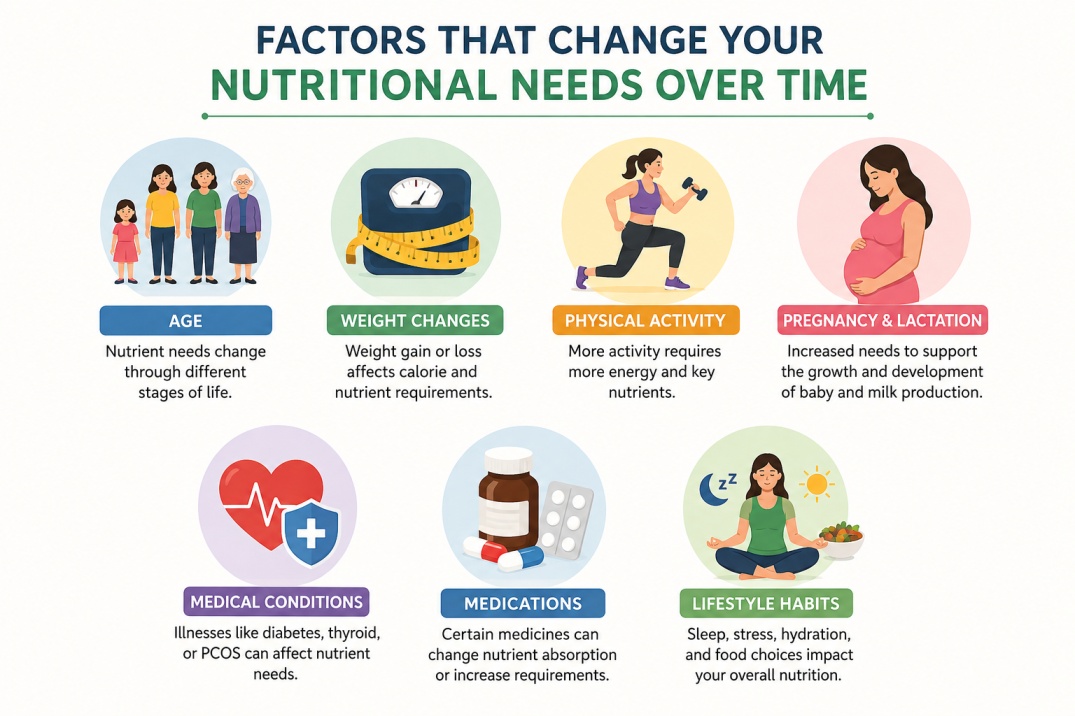
Why Your Nutritional Needs Change Over Time
Several factors influence how much energy and nutrients your body requires. These changes can happen gradually or suddenly, making periodic diet reviews essential.
1. Changes in Body Weight
As you lose or gain weight, your body's calorie requirements change.
For example:
· Weight loss generally reduces daily calorie needs.
· Muscle gain often increases energy and protein requirements.
· Significant weight changes may also affect vitamin and mineral needs.
Continuing to follow your original calorie intake may eventually slow progress or make it difficult to maintain your results.
2. Changes in Physical Activity
Your activity level has a major impact on your nutritional requirements.
You may need to adjust your diet if you:
· Start exercising regularly
· Begin strength training
· Train for a marathon
· Change from an active job to a desk job
· Recover from an injury
· Become less physically active
Proper nutrition supports recovery, performance, and overall health.
3. Aging
As we age, our metabolism, body composition, and nutrient needs naturally change.
Older adults often require:
· More protein to preserve muscle mass
· Adequate calcium and vitamin D for bone health
· More vitamin B12 due to reduced absorption
· Sufficient fiber for digestive health
· Appropriate hydration
A diet that met your needs in your twenties may not be ideal in your fifties or sixties.
4. Hormonal Changes
Hormones significantly influence metabolism, appetite, and body composition.
Examples include:
· Pregnancy
· Breastfeeding
· Menopause
· PCOS
· Thyroid disorders
These life stages often require adjustments in calorie intake, protein, healthy fats, vitamins, and minerals.
5. New Medical Conditions
A new diagnosis can completely change your nutritional requirements.
Conditions commonly requiring dietary modifications include:
· Diabetes
· Hypertension
· Kidney disease
· Heart disease
· Fatty liver disease
· Celiac disease
· Food allergies
· Digestive disorders
Early nutrition intervention helps improve disease management and reduces the risk of complications.
6. Medication Changes
Some medications affect appetite, nutrient absorption, metabolism, or fluid balance.
For example:
· Steroids may increase appetite.
· Certain diabetes medications can affect blood sugar patterns.
· Diuretics may alter electrolyte balance.
· Some medications reduce the absorption of specific vitamins and minerals.
Reviewing your diet after medication changes helps maintain nutritional adequacy.
7. Lifestyle Changes
Your daily routine directly affects your eating habits.
You may need to review your diet if you:
· Change jobs
· Begin working night shifts
· Travel frequently
· Move to a new city
· Get married
· Become a parent
· Experience increased stress
A practical meal plan should fit your current lifestyle—not the lifestyle you had months or years ago.
What Happens If You Never Review Your Diet Plan?
Continuing the same diet plan without periodic review can lead to several challenges.
Weight Loss May Stall
One of the most common reasons for a weight loss plateau is that your body has adapted to your current calorie intake.
Without adjusting your nutrition plan, progress often slows or stops altogether.
Nutrient Deficiencies Can Develop
Over time, your nutritional requirements may increase or change.
An outdated meal plan may not provide enough:
· Protein
· Iron
· Calcium
· Vitamin D
· Vitamin B12
· Healthy fats
· Fiber
Long-term deficiencies can affect energy, immunity, bone health, and overall well-being.
Health Conditions May Change
Medical conditions can improve or worsen over time.
For example:
· Blood sugar levels may improve.
· Cholesterol may decrease.
· Blood pressure may normalize.
· Kidney function may change.
Your nutrition plan should reflect these changes to remain safe and effective.
Your Goals May Be Different
Perhaps you initially wanted to lose weight, but now your priorities include:
· Building muscle
· Improving athletic performance
· Preparing for pregnancy
· Maintaining your weight
· Managing a chronic disease
· Healthy aging
Each goal requires a different nutritional approach.
Motivation May Decrease
Eating the same meals every day can become repetitive and difficult to maintain.
Regular diet reviews introduce:
· New recipes
· Seasonal foods
· Different meal combinations
· Updated nutrition strategies
These changes help keep healthy eating enjoyable and sustainable.
Why Regular Diet Reviews Matter
Reviewing your diet isn't about starting over—it's about making informed adjustments based on your progress and current needs.
Regular reviews help:
· Ensure you're meeting your nutritional requirements.
· Adapt your meal plan to lifestyle or health changes.
· Prevent weight loss plateaus.
· Improve management of chronic diseases.
· Identify nutrient deficiencies early.
· Keep your meals enjoyable and sustainable.
· Support long-term health rather than short-term results.
Nutrition is not static, and neither is your body. A flexible, personalized approach is far more effective than following the same meal plan indefinitely.
How Often Should You Review Your Diet Plan?
There is no single timeline that works for everyone. The ideal frequency for reviewing your diet plan depends on your health goals, medical conditions, lifestyle, and how your body responds to the current plan.
For some people, a review every few weeks is beneficial, while others may only need adjustments every few months. The key is to ensure your nutrition plan continues to support your changing needs and helps you make steady progress toward your goals.
Below are the recommended review frequencies for different health situations.· https://www.who.int/news-room/fact-sheets/detail/healthy-diet
1. Healthy Adults
If you're generally healthy and following a balanced diet to maintain overall wellness, frequent changes may not be necessary.
However, reviewing your diet periodically helps ensure you're meeting your nutritional needs as your lifestyle evolves.
Recommended Review Frequency
Every 6–12 months
During the review, your dietitian may evaluate:
· Current body weight and body composition
· Energy levels
· Physical activity
· Sleep quality
· Eating habits
· Blood test results (if available)
· Lifestyle changes
Regular reviews help identify potential nutrient deficiencies before they become a problem.
2. Weight Loss Goals
Weight loss is one of the most common reasons people seek nutrition guidance.
As your body weight decreases, your calorie requirements also decline. Continuing the same meal plan for several months may eventually slow progress.
Recommended Review Frequency
Every 2–4 weeks
Regular reviews allow your dietitian to:
· Monitor weight loss progress
· Adjust calorie intake
· Increase or decrease protein requirements
· Prevent weight loss plateaus
· Improve adherence
· Modify meal options to reduce boredom
Frequent follow-ups also provide accountability, which is associated with better long-term weight management.
3. Weight Gain or Muscle Building
Building muscle requires progressive changes in nutrition as training intensity and muscle mass increase.
Recommended Review Frequency
Every 3–6 weeks
Your nutrition plan may need adjustments in:
· Calories
· Protein intake
· Carbohydrate timing
· Recovery nutrition
· Hydration
· Supplement recommendations (when appropriate)
Regular reviews ensure you're gaining lean muscle rather than excess body fat.
4. Diabetes
People with diabetes often benefit from closer nutrition monitoring, especially after diagnosis or when medications change.
Recommended Review Frequency
Every 2–6 weeks initially, then every 2–3 months
A diet review may include:
· Blood glucose records
· HbA1c trends
· Meal timing
· Carbohydrate intake
· Weight changes
· Medication adjustments
· Physical activity
Nutrition plans are updated based on blood sugar control and treatment goals.
5. PCOS
PCOS symptoms often improve gradually through nutrition and lifestyle modifications.
Recommended Review Frequency
Every 4–8 weeks
Follow-up appointments may assess:
· Weight changes
· Menstrual regularity
· Energy levels
· Hunger patterns
· Physical activity
· Hormonal symptoms
· Insulin resistance management
Small adjustments over time often produce better long-term results than drastic dietary changes.
6. Thyroid Disorders
Individuals with hypothyroidism or hyperthyroidism may require periodic nutrition adjustments depending on medication response and metabolic changes.
Recommended Review Frequency
Every 6–12 weeks
Reviews may focus on:
· Weight changes
· Energy levels
· Thyroid function test results
· Medication timing
· Nutrient intake
· Digestive health
Nutrition plans should always complement medical treatment rather than replace it.
7. Pregnancy and Breastfeeding
Nutritional needs change significantly throughout pregnancy and during breastfeeding.
Recommended Review Frequency
Every 4–6 weeks, or as advised by your healthcare provider
Diet reviews help ensure adequate intake of:
· Protein
· Iron
· Calcium
· Folate
· Vitamin D
· Omega-3 fats
· Fluids
Regular monitoring supports the health of both mother and baby.
8. Senior Adults
Older adults often experience changes in appetite, digestion, muscle mass, and nutrient absorption.
Recommended Review Frequency
Every 3–6 months
Diet reviews help monitor:
· Weight changes
· Muscle loss
· Bone health
· Hydration
· Medication interactions
· Protein intake
· Vitamin and mineral status
Early adjustments help prevent frailty and malnutrition.
9. Athletes and Highly Active Individuals
Athletes have dynamic nutritional needs that change with training intensity and competition schedules.
Recommended Review Frequency
Every 4–8 weeks
Nutrition reviews may include:
· Training volume
· Performance goals
· Recovery
· Body composition
· Hydration
· Competition preparation
· Injury recovery
Personalized nutrition helps optimize performance while supporting recovery and overall health.
10. People with Chronic Medical Conditions
Individuals managing conditions such as:
· Heart disease
· Kidney disease
· Fatty liver disease
· Digestive disorders
· Cancer
· Autoimmune diseases
often require more frequent dietary adjustments based on disease progression and treatment plans.
Recommended Review Frequency
Every 1–3 months (or as recommended by your healthcare team)
Reviews may involve:
· Laboratory reports
· Medication changes
· Symptom management
· Nutritional deficiencies
· Appetite changes
· Treatment-related side effects
A personalized approach helps ensure the nutrition plan remains safe and effective.

Recommended Diet Review Frequency by Health Goal
Health Goal or Condition
Suggested Review Frequency
Healthy adults
Every 6–12 months
Weight loss
Every 2–4 weeks
Weight gain or muscle building
Every 3–6 weeks
Diabetes
Every 2–6 weeks initially, then every 2–3 months
PCOS
Every 4–8 weeks
Thyroid disorders
Every 6–12 weeks
Pregnancy & breastfeeding
Every 4–6 weeks
Senior adults
Every 3–6 months
Athletes
Every 4–8 weeks
Chronic medical conditions
Every 1–3 months
Can You Review Your Diet Too Often?
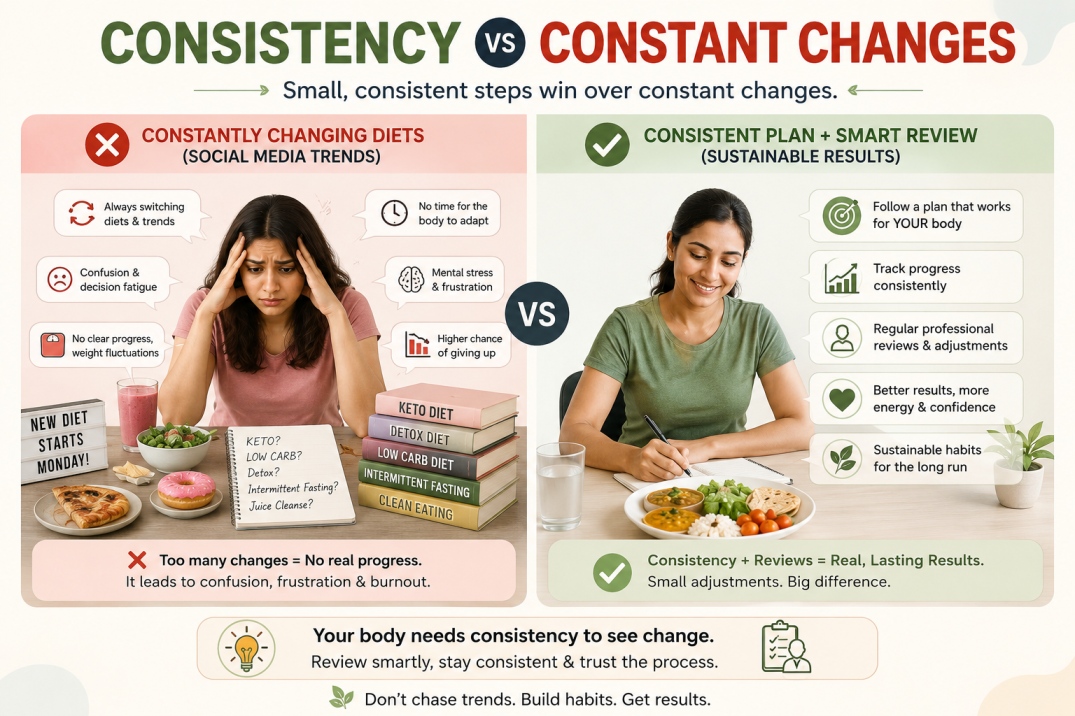
While regular follow-ups are beneficial, changing your diet every few days without allowing time for results can be counterproductive.
The body needs time to adapt to nutritional changes. Constantly switching meal plans may:
· Make it difficult to evaluate progress.
· Create unnecessary confusion.
· Reduce consistency.
· Increase frustration.
· Lead to unrealistic expectations.
Unless there is a significant medical change or your dietitian recommends otherwise, it's generally best to follow a plan consistently before making adjustments.
Why Follow-Up Appointments Matter
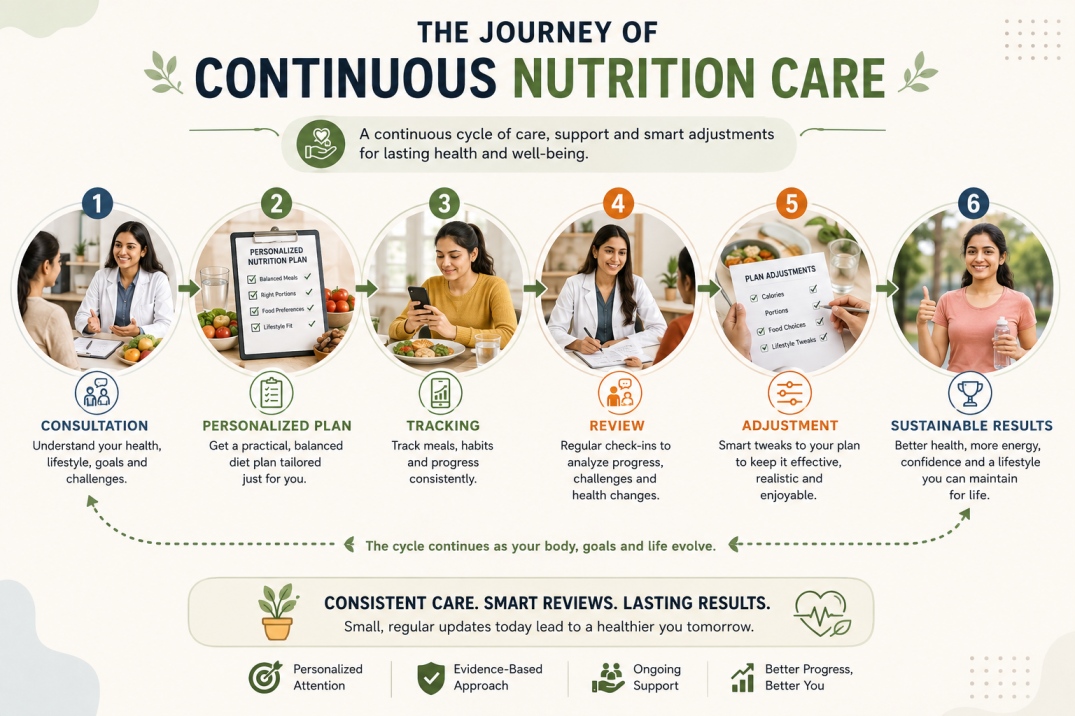
Many people think receiving a diet chart is the end of the process. In reality, follow-up consultations are where much of the long-term success happens.
Regular follow-ups allow your dietitian to:
· Evaluate your progress toward health goals.
· Identify barriers preventing success.
· Adjust calories and nutrient intake.
· Introduce new meal options.
· Monitor laboratory results.
· Address lifestyle or medication changes.
· Provide motivation and accountability.
These ongoing adjustments help ensure your nutrition plan remains practical, effective, and aligned with your current needs.
Signs Your Diet Plan Needs an Update
Even the most effective diet plan isn't designed to remain unchanged forever. As your body adapts, your health improves, or your lifestyle shifts, your nutritional needs evolve too.
Recognizing when it's time to review your diet plan can help you avoid stalled progress, nutrient deficiencies, and unnecessary frustration. Rather than waiting until you stop seeing results, it's better to identify the signs early and work with a qualified dietitian to make timely adjustments.
Here are some of the most common indicators that your diet plan may need an update.
1. Your Weight Loss Has Plateaued
One of the clearest signs your diet needs reviewing is when your weight loss stalls for several weeks despite following your plan consistently.
A weight loss plateau happens because:
· Your body now requires fewer calories after losing weight.
· Your metabolism adapts to a lower calorie intake.
· Physical activity levels may have changed.
· Portion sizes may gradually increase without realizing it.
Instead of drastically reducing calories, a dietitian can:
· Recalculate your calorie requirements.
· Adjust your protein intake.
· Modify meal timing.
· Recommend changes to your exercise routine.
· Introduce dietary variety to support continued progress.
Plateaus are normal and often indicate it's time for a structured review—not that your diet has failed.
2. You've Reached Your Goal
Many people stop working with a dietitian once they achieve their target weight.
However, reaching your goal is not the end of the journey.
For example:
· A weight-loss plan may no longer provide enough calories for maintenance.
· Muscle-building goals require different nutrient ratios than fat loss.
· Athletes may need increased energy intake during training seasons.
A maintenance diet helps:
· Prevent weight regain.
· Maintain muscle mass.
· Improve long-term eating habits.
· Support metabolic health.
Transitioning to maintenance is just as important as achieving the initial goal.https://wellorafit.com/services/nutrition-diet-planning/
3. You Have a New Medical Diagnosis
A new health condition often changes your nutritional requirements.
Conditions that commonly require diet adjustments include:
· Type 2 diabetes
· Prediabetes
· Hypertension
· High cholesterol
· Fatty liver disease
· Kidney disease
· Celiac disease
· Food allergies
· IBS or GERD
An updated nutrition plan can help manage symptoms, improve treatment outcomes, and reduce the risk of complications.
4. Your Physical Activity Has Changed
Exercise directly affects your body's energy and nutrient needs.
Your diet should be reviewed if you:
· Start going to the gym.
· Begin strength training.
· Increase cardio workouts.
· Train for a marathon.
· Become more sedentary.
· Recover from surgery or an injury.
Depending on your activity level, your dietitian may adjust:
· Calories
· Protein intake
· Carbohydrates
· Healthy fats
· Hydration
· Recovery meals
Matching nutrition to activity supports better performance and recovery.
5. Your Lifestyle or Work Schedule Has Changed
Life changes often affect your eating routine.
Examples include:
· Starting a new job
· Working night shifts
· Frequent business travel
· Moving to a new city
· Marriage
· Becoming a parent
· Increased work stress
A meal plan should fit your current routine—not your previous one.
Your dietitian may recommend:
· Faster meal-prep options
· Portable snacks
· Flexible meal timings
· Healthier dining-out strategies
· Easy recipes for busy schedules
Practical nutrition is easier to maintain than a plan that no longer fits your lifestyle.
6. You're Pregnant or Breastfeeding
Pregnancy and breastfeeding significantly increase nutritional demands.
Your diet should be reviewed to ensure adequate intake of:
· Protein
· Iron
· Folate
· Calcium
· Vitamin D
· Omega-3 fatty acids
· Fluids
Regular updates help support healthy fetal development, maternal health, and successful breastfeeding.https://wellorafit.com/services/nutrition-diet-planning/
7. You're Getting Older
As you age, your body naturally changes.
Older adults often experience:
· Reduced muscle mass
· Slower metabolism
· Changes in appetite
· Lower bone density
· Reduced nutrient absorption
Diet adjustments may include:
· Higher protein intake
· Calcium-rich foods
· Vitamin D
· Vitamin B12
· Adequate fiber
· Hydration strategies
Reviewing your diet helps maintain strength, mobility, and independence.
8. You're Feeling Tired or Low on Energy
Persistent fatigue isn't always caused by lack of sleep.
It may indicate that your current diet isn't meeting your nutritional needs.
Possible causes include:
· Inadequate calorie intake
· Low iron
· Vitamin B12 deficiency
· Poor hydration
· Insufficient protein
· Irregular meal timing
A diet review can identify nutritional gaps and recommend appropriate dietary changes to improve energy levels.
9. You're Experiencing Digestive Issues
Digestive symptoms that persist despite eating a healthy diet should not be ignored.
Examples include:
· Bloating
· Constipation
· Diarrhea
· Acid reflux
· Gas
· Abdominal discomfort
A dietitian can help identify potential dietary triggers, assess fiber intake, review hydration habits, and recommend evidence-based nutrition strategies tailored to your digestive health.
10. Your Blood Test Results Have Changed
Laboratory reports provide valuable insight into your overall health and nutritional status.
A diet review is especially important if your blood tests show changes in:
· Blood glucose or HbA1c
· Cholesterol or triglycerides
· Iron levels
· Vitamin D
· Vitamin B12
· Kidney function
· Liver enzymes
· Uric acid
Updating your nutrition plan based on these results can support better disease management and overall health.
What Happens During a Diet Plan Review?
A diet review is much more than checking your weight. It helps evaluate whether your current nutrition plan is still meeting your goals.
During a review, your dietitian may assess:
· Current body weight and body composition
· Waist circumference
· Progress toward your goals
· Food diary or meal patterns
· Hunger and fullness cues
· Physical activity levels
· Sleep quality
· Stress levels
· Medication changes
· Laboratory reports
· Challenges with following the meal plan
Based on this assessment, adjustments may be made to:
· Daily calorie intake
· Macronutrient distribution
· Portion sizes
· Meal timing
· Food choices
· Hydration goals
· Physical activity recommendations
Each review keeps your nutrition plan aligned with your current health status and lifestyle.
Benefits of Regular Diet Plan Reviews
Regular follow-ups provide much more than accountability—they help ensure your nutrition remains effective over time.
Key benefits include:
Better Progress Toward Your Goals
Adjusting your plan as your body changes helps you continue moving toward weight loss, muscle gain, or disease management goals.
Improved Nutritional Balance
Regular reviews help identify and correct nutrient deficiencies before they affect your health.
Greater Motivation
Introducing new meal ideas, seasonal foods, and practical strategies helps prevent boredom and keeps healthy eating enjoyable.
Better Management of Medical Conditions
For people with diabetes, PCOS, thyroid disorders, hypertension, kidney disease, and other chronic conditions, ongoing nutrition adjustments can improve symptom control and support medical treatment.
Long-Term Healthy Habits
Instead of relying on short-term diets, regular reviews encourage sustainable eating patterns that fit your changing lifestyle and health needs.
Common Mistakes, FAQs, Conclusion & Resources
Regularly reviewing your diet plan is one of the simplest ways to maintain progress and support long-term health. However, many people unintentionally make mistakes that reduce the effectiveness of even the best nutrition plan. Understanding these common pitfalls—and how to avoid them—can help you stay consistent and achieve sustainable results.
Common Mistakes to Avoid
1. Following the Same Diet Plan for Years
Many people continue using the same meal plan long after their goals, weight, or health have changed.
A diet that was effective for weight loss may not be suitable for weight maintenance, muscle gain, pregnancy, or managing a new medical condition.
Reviewing your nutrition plan regularly ensures it continues to meet your body's current needs.
2. Making Frequent Changes Without Professional Guidance
Switching diets every week based on social media trends or online advice can make it difficult to evaluate what's actually working.
Instead of constantly changing your meals:
· Follow your current plan consistently.
· Track your progress.
· Discuss concerns with a qualified dietitian before making major changes.
Consistency often produces better results than constantly trying new diets.
3. Ignoring Weight Plateaus
A temporary slowdown in weight loss is normal and doesn't always mean your diet has stopped working.
Many people respond by:
· Skipping meals
· Eating too few calories
· Eliminating carbohydrates completely
· Following crash diets
A structured diet review is a healthier and more effective way to overcome a plateau.
4. Not Tracking Progress Beyond the Scale
Body weight is only one measure of progress.
Other important indicators include:
· Waist circumference
· Body fat percentage
· Muscle mass
· Energy levels
· Fitness performance
· Blood sugar
· Cholesterol
· Blood pressure
· Sleep quality
Looking at multiple health markers provides a more complete picture of your progress.
5. Skipping Follow-Up Appointments
Many people stop seeing their dietitian once they receive a meal plan.
Without regular follow-ups:
· Nutritional deficiencies may go unnoticed.
· Meal plans may become outdated.
· Motivation may decrease.
· Health goals may change without corresponding nutrition adjustments.
Ongoing support helps keep your nutrition plan effective and realistic.
6. Expecting Quick Results
Healthy eating is a long-term investment rather than a short-term solution.
Weight loss, improved blood sugar, better cholesterol levels, and enhanced fitness all require time and consistency.
Small, sustainable improvements often lead to the most lasting results.
Tips to Stay Consistent Between Diet Reviews
Maintaining healthy habits between follow-up appointments is just as important as attending the reviews themselves.
Here are practical ways to stay on track:
· Plan your meals for the week.
· Keep healthy snacks available.
· Drink enough water throughout the day.
· Include protein with every main meal.
· Eat plenty of vegetables and whole grains.
· Monitor your progress using body measurements and health markers—not just body weight.
· Stay physically active most days of the week.
· Prioritize 7–9 hours of quality sleep.
· Practice mindful eating and avoid skipping meals.
· Record any changes in symptoms, medications, or lifestyle to discuss during your next review.
Building consistent habits makes it easier for your dietitian to fine-tune your nutrition plan over time.
Frequently Asked Questions (FAQs)
1. How often should I review my diet plan?
The ideal frequency depends on your goals and health status. Healthy adults may benefit from a review every 6–12 months, while people managing weight loss or chronic conditions often need follow-ups every 2–8 weeks or as advised by their dietitian.
2. Why can't I follow the same diet forever?
Your calorie and nutrient requirements change with age, body weight, activity level, lifestyle, medications, and medical conditions. Regular reviews help keep your nutrition plan aligned with these changes.
3. How do I know if my diet plan needs updating?
Signs include a weight loss plateau, low energy, changes in blood test results, digestive issues, pregnancy, increased physical activity, a new medical diagnosis, or major lifestyle changes.
4. Can reviewing my diet help break a weight loss plateau?
Yes. Adjusting calorie intake, protein requirements, meal timing, or physical activity can often help overcome plateaus while maintaining healthy, sustainable progress.
5. What happens during a diet plan review?
A dietitian may assess your weight, body composition, eating habits, physical activity, lifestyle changes, medications, laboratory reports, and progress toward your goals before recommending appropriate adjustments.
6. Should I review my diet even if I feel healthy?
Yes. Regular reviews can identify nutritional gaps, prevent future health problems, and ensure your eating habits continue to meet your changing needs.
7. Can I update my diet plan myself?
Minor adjustments are possible, but significant changes—especially if you have a medical condition—should be made with guidance from a qualified dietitian to ensure nutritional adequacy and safety.
8. Is it normal for my calorie needs to change?
Absolutely. Calorie requirements change with weight loss or gain, age, muscle mass, physical activity, pregnancy, and certain medical conditions.
9. Do blood test results affect my diet plan?
Yes. Changes in blood glucose, cholesterol, iron levels, vitamin deficiencies, kidney function, or liver health may require modifications to your nutrition plan.
10. What's the biggest benefit of regular diet reviews?
Regular reviews help your nutrition plan evolve with your body, improving long-term health, preventing nutrient deficiencies, supporting disease management, and making healthy eating easier to maintain.
Conclusion
A diet plan is not a one-time document—it's a dynamic roadmap that should evolve as your health, lifestyle, and goals change. Regular reviews ensure you're receiving the right amount of energy, protein, vitamins, and minerals while adapting your nutrition to new challenges and opportunities.
Whether your goal is weight loss, muscle gain, managing diabetes, improving heart health, or simply maintaining overall wellness, reviewing your diet at appropriate intervals helps prevent plateaus, correct nutritional deficiencies, and support sustainable progress.
Working with a qualified dietitian allows your meal plan to be personalized based on your current health status, laboratory results, medications, physical activity, and lifestyle. Rather than making drastic changes or following generic diets, periodic reviews ensure your nutrition remains practical, balanced, and effective.
Remember, successful nutrition isn't about following the same plan forever—it's about making the right adjustments at the right time. By reviewing your diet regularly, you give your body the support it needs to stay healthy, energized, and resilient throughout every stage of life.
Ready to Begin Your Health Journey?
Get a personalized, medically guided plan built around your unique biology.