Intermittent Fasting for Weight Loss Explained
Introduction
Intermittent fasting (IF) has become one of the most popular approaches to weight loss and healthy living. Unlike traditional diets that focus on what you eat, intermittent fasting focuses on when you eat. Millions of people worldwide have adopted this eating pattern to lose weight, improve metabolic health, and simplify their daily eating routine.
From celebrities and athletes to healthcare professionals and nutrition experts, intermittent fasting is widely discussed for its potential health benefits. Scientific research over the past decade suggests that intermittent fasting may help reduce body weight, improve insulin sensitivity, lower inflammation, and support overall metabolic health when practiced correctly.
However, intermittent fasting is often misunderstood. Many people believe it means starving yourself, skipping meals randomly, or eating whatever you want during the eating window. These misconceptions can lead to poor results and even health problems.
The truth is that intermittent fasting is not a miracle diet. It is simply an eating schedule that alternates between periods of eating and fasting. Success depends on consuming balanced, nutrient-rich meals, staying hydrated, getting adequate sleep, exercising regularly, and maintaining a healthy lifestyle.
For some individuals, intermittent fasting can make calorie control easier because it naturally reduces opportunities to eat. Others may experience improved appetite regulation, better blood sugar control, and increased fat burning. However, intermittent fasting is not suitable for everyone, and its effectiveness depends on individual health status, lifestyle, and consistency. https://www.who.int
This comprehensive guide explains everything you need to know about intermittent fasting for weight loss, including:
· What intermittent fasting is
· How fasting works inside the body
· Different intermittent fasting methods
· How it promotes fat loss
· Scientific evidence behind intermittent fasting
· Benefits and possible risks
· Who should and should not practice fasting
· Practical tips for beginners
· Common mistakes to avoid
By the end of this guide, you'll understand how intermittent fasting works and whether it may be the right approach for your weight-loss journey.
What Is Intermittent Fasting?
Intermittent fasting (IF) is an eating pattern that alternates between periods of eating and periods of fasting. Unlike traditional diets that specify which foods you should eat or avoid, intermittent fasting focuses primarily on the timing of meals.
During the fasting period, little to no calories are consumed, allowing the body to transition from using recently eaten food as its primary energy source to utilizing stored energy, including body fat.
It is important to understand that intermittent fasting is not starvation. Starvation occurs when food is unavailable or severely restricted for prolonged periods, whereas intermittent fasting is a structured, voluntary eating schedule with planned periods of fasting and balanced nutrition during eating windows.
Eating Window vs. Fasting Window
Intermittent fasting divides the day into two phases:
Eating Window
This is the period during which meals and calorie-containing beverages are consumed.
Example:
· 8-hour eating window
· Meals eaten between 12:00 PM and 8:00 PM
During this time, individuals should focus on consuming balanced meals containing:
· Lean proteins
· Whole grains
· Fruits
· Vegetables
· Healthy fats
· Adequate fluids
Fasting Window
This is the period during which no calorie-containing foods are consumed.
Water and certain non-caloric beverages are generally allowed.
Examples include:
· Plain water
· Sparkling water (unsweetened)
· Black coffee (without sugar or milk)
· Green tea
· Herbal tea (without sweeteners)
During fasting, the body gradually shifts toward utilizing stored energy reserves.
History of Fasting
Although intermittent fasting has recently gained popularity, fasting itself is not a new concept.
Humans have practiced fasting for thousands of years due to:
· Religious traditions
· Cultural customs
· Food scarcity
· Seasonal changes
· Hunting and gathering lifestyles
Major religions that include fasting practices include:
· Islam (Ramadan)
· Hinduism
· Christianity
· Buddhism
· Jainism
Historically, humans did not have constant access to food. Our ancestors often went many hours—or even days—between meals. As a result, the human body evolved mechanisms to store energy during times of abundance and utilize these reserves during periods without food.
Modern lifestyles, with frequent snacking and constant food availability, have significantly changed eating patterns. Intermittent fasting attempts to recreate some of these natural cycles in a structured way.https://www.nih.gov
Is Intermittent Fasting a Diet?
Technically, no.
Intermittent fasting is an eating schedule rather than a specific diet.
Unlike diets such as:
· Keto
· Mediterranean
· DASH
· Paleo
· Low-carb diets
Intermittent fasting does not prohibit specific food groups.
Instead, it determines when meals are eaten.
However, food quality still matters. Eating excessive amounts of fast food, sugary beverages, sweets, and highly processed foods during the eating window can prevent weight loss and negatively affect health.
A successful intermittent fasting plan should include:
· Balanced meals
· Adequate protein
· Whole grains
· Fruits
· Vegetables
· Healthy fats
· Sufficient fiber
· Proper hydration
How Intermittent Fasting Works
To understand why intermittent fasting may help with weight loss, it is helpful to understand how the body normally uses energy.
After Eating
Whenever you eat carbohydrates, proteins, or fats, your digestive system breaks them down into smaller molecules.
Carbohydrates are converted into glucose, which enters the bloodstream.
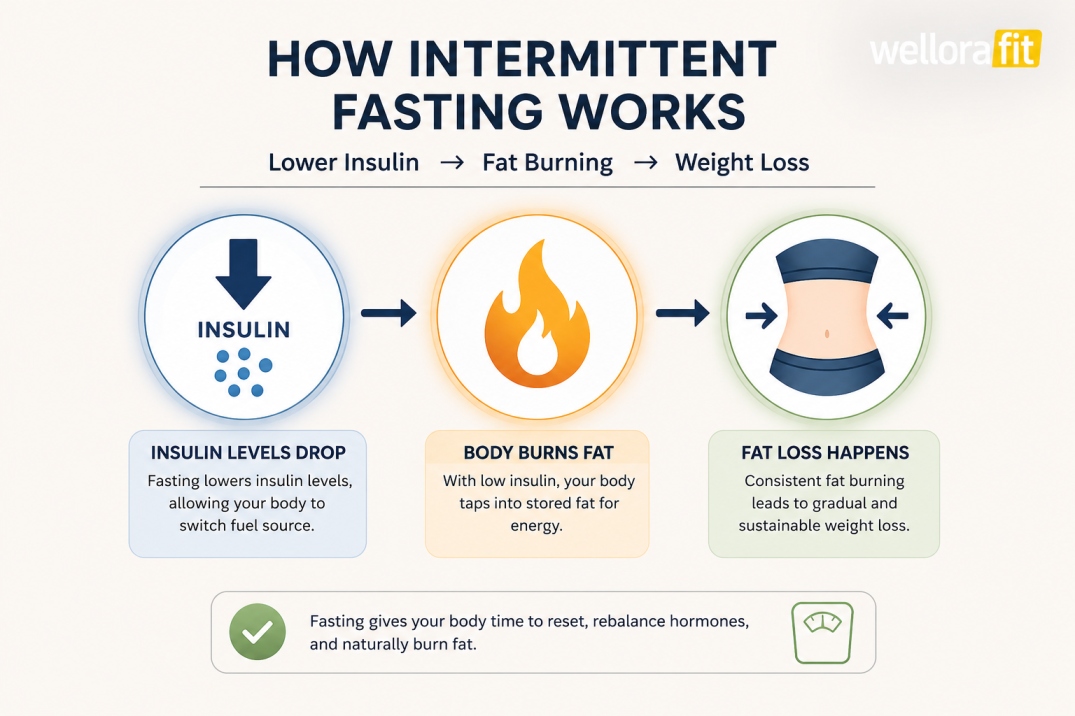
As blood glucose rises, the pancreas releases the hormone insulin.
Insulin helps:
· Move glucose into cells for energy
· Store excess glucose as glycogen in the liver and muscles
· Promote fat storage when energy intake exceeds the body's needs
During this "fed state," the body primarily uses glucose from recently consumed food as its main fuel source.
Several Hours After Eating
As time passes without additional food intake:
· Blood glucose gradually decreases
· Insulin levels begin to fall
· Stored glycogen becomes the body's primary energy source
The liver starts breaking down glycogen to maintain stable blood sugar levels.
Most people have enough glycogen stores to provide energy for several hours after their last meal.
During the Fasting State
Once glycogen stores begin to decline, the body gradually shifts toward using stored fat as an energy source.
This process is often referred to as metabolic switching.
Instead of relying primarily on glucose, the body begins breaking down stored triglycerides into fatty acids.
These fatty acids can be used directly by many tissues for energy.
The liver also converts some fatty acids into ketone bodies, which provide an alternative fuel source for the brain and other organs during prolonged fasting.
It is important to note that the timing of this shift varies among individuals depending on factors such as:
· Meal composition
· Physical activity
· Metabolic health
· Age
· Body composition
· Previous day's carbohydrate intake
Hormonal Changes During Intermittent Fasting
Several hormones respond to fasting, influencing appetite, metabolism, and energy use.
1. Insulin Decreases
Insulin is one of the body's most important metabolic hormones.
Its primary role is to move glucose from the bloodstream into cells.
During fasting:
· Blood sugar gradually decreases
· Insulin secretion declines
· Fat breakdown becomes easier
Lower insulin levels create an environment that favors the use of stored body fat for energy.
Improved insulin sensitivity is one reason intermittent fasting has attracted interest in obesity and metabolic health research. https://wellorafit.com/services/doctor-consultations/
2. Glucagon Increases
As insulin decreases, another hormone called glucagon increases.
Glucagon stimulates the liver to:
· Break down glycogen
· Release glucose
· Maintain blood sugar
This helps provide a steady supply of energy during fasting.
3. Growth Hormone Increases
Research suggests that fasting may temporarily increase secretion of human growth hormone (HGH).
Growth hormone plays important roles in:
· Preserving muscle mass
· Fat metabolism
· Tissue repair
· Exercise recovery
While increased HGH during fasting does not automatically lead to muscle growth, it may help reduce muscle breakdown when adequate protein intake and resistance training are maintained.
4. Norepinephrine (Noradrenaline)
Fasting may increase release of norepinephrine.
This hormone helps:
· Mobilize stored fat
· Improve alertness
· Support energy production
· Increase fat oxidation
Some studies suggest this contributes to the body's ability to use fat as fuel during fasting periods.
What Is Metabolic Switching?
One of the most discussed mechanisms of intermittent fasting is metabolic switching.
Normally, after meals, the body uses glucose as its primary fuel source.
During extended periods without food:
Food → Glucose → Glycogen Storage
↓
Glycogen Depletion
↓
Stored Fat Breakdown
↓
Fatty Acids
↓
Ketone Production
↓
Energy
This transition from glucose-based metabolism to fat-based metabolism is known as metabolic switching.
Researchers believe this shift may contribute to several of the metabolic benefits associated with intermittent fasting, including improved fat utilization and better metabolic flexibility.
However, the timing and extent of metabolic switching vary among individuals and should not be viewed as an instant fat-burning process.
Cellular Repair and Autophagy
One fascinating area of intermittent fasting research is autophagy.
Autophagy is a natural cellular process in which the body identifies and removes damaged or dysfunctional cellular components.
The term literally means "self-eating."
During autophagy, cells recycle old proteins and damaged structures, allowing healthier components to replace them.
Scientists believe autophagy plays an important role in:
· Cellular maintenance
· Healthy aging
· Immune function
· Brain health
· Protection against certain diseases
Most evidence for fasting-induced autophagy comes from laboratory and animal studies. Human research is still evolving, and the exact fasting duration required to significantly stimulate autophagy in humans remains uncertain.
Therefore, while autophagy is an exciting area of research, it should not be the primary reason to practice intermittent fasting.
Instead, individuals should focus on well-established benefits such as healthy eating, regular exercise, quality sleep, and sustainable weight management.
Why Intermittent Fasting May Support Weight Loss
Intermittent fasting does not magically burn fat. Instead, it may support weight loss through several mechanisms working together:
· Naturally reducing calorie intake by shortening the eating window
· Lowering insulin levels during fasting periods
· Increasing fat utilization for energy
· Reducing frequent snacking
· Improving appetite awareness in some individuals
· Encouraging structured eating habits
· Supporting better blood sugar regulation
· Helping some people maintain a calorie deficit more comfortably
However, intermittent fasting is not superior to other calorie-controlled diets when total calorie intake and nutrition quality are matched. The key to successful weight loss remains achieving a sustainable calorie deficit while meeting the body's nutritional needs.
Different Types of Intermittent Fasting, Benefits, Weight Loss Mechanism, Foods to Eat & Foods to Avoid
Different Types of Intermittent Fasting
One of the biggest advantages of intermittent fasting is its flexibility. There is no single fasting schedule that works for everyone. Different methods suit different lifestyles, work schedules, fitness levels, and health goals.
The best fasting method is the one you can follow consistently while maintaining balanced nutrition and a healthy lifestyle.
Below are the most popular intermittent fasting methods.
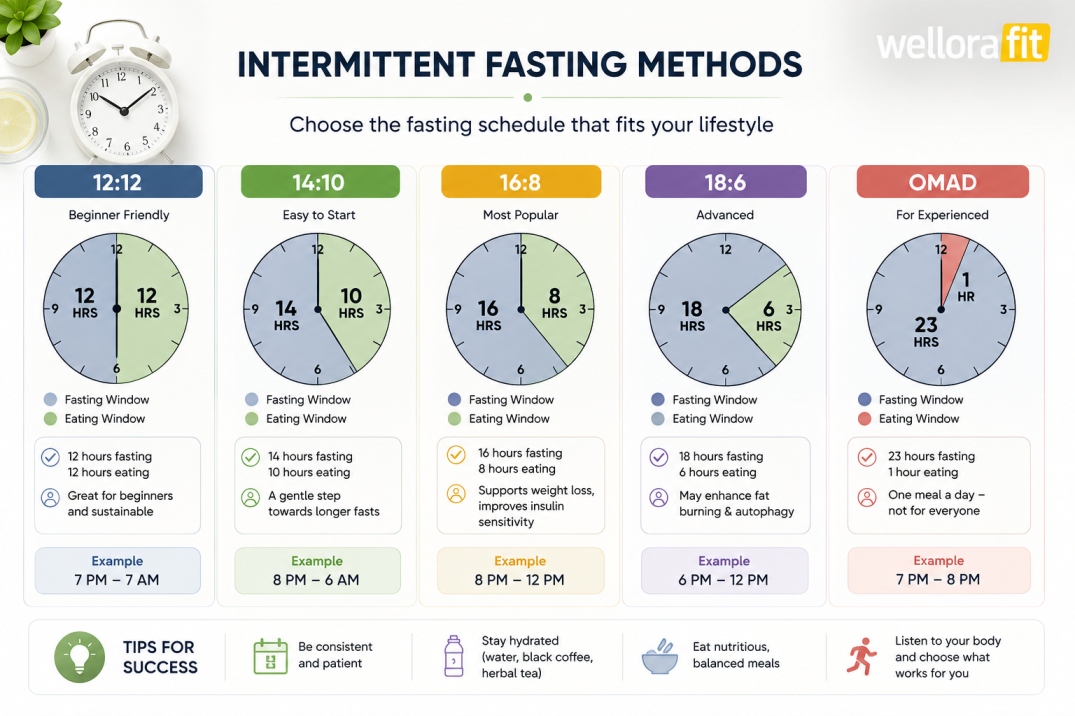
1. 12:12 Method
The 12:12 method is considered the easiest and most beginner-friendly fasting schedule.
How it Works
· Fast for 12 hours
· Eat during the remaining 12 hours
Example:
· Last meal: 8:00 PM
· Breakfast: 8:00 AM
This schedule closely resembles a normal overnight fast and is an excellent starting point for people who are new to intermittent fasting.
Benefits
· Easy to follow
· Minimal hunger
· Helps reduce late-night snacking
· Supports healthy eating habits
· Suitable for most adults
2. 14:10 Method
The 14:10 schedule extends the fasting period slightly.
Example
Fast:
8 PM –10 AM
Eat:
10 AM –8 PM
Many beginners transition from the 12:12 method to 14:10 after becoming comfortable with fasting.
Best For
· Beginners
· Busy professionals
· Individuals wanting gradual weight loss
· People sensitive to long fasting periods
3. 16:8 Method (Most Popular)
The 16:8 method is the most widely studied and commonly practiced form of intermittent fasting.
How it Works
Fast for:
16 hours
Eat during:
8 hours
Example
12 PM –8 PM
Meals
Lunch
Healthy Snack
Dinner
During the fasting window only non-caloric beverages are consumed.
Benefits
Research suggests the 16:8 approach may help:
· Reduce calorie intake
· Improve insulin sensitivity
· Increase fat utilization
· Support weight loss
· Simplify meal planning
Many people find this schedule easier because much of the fasting occurs overnight.
4. 18:6 Method
This method extends fasting to 18 hours.
Eating Window
6 hours
Example
Eat
1 PM –7 PM
Some experienced fasters choose this schedule after adapting to the 16:8 pattern.
Longer fasting periods may increase hunger initially, so gradual progression is recommended.
5. OMAD (One Meal A Day)
OMAD stands for One Meal A Day.
Individuals consume all daily calories in one meal within approximately one hour.
The remaining 23 hours are spent fasting.
Potential Challenges
Although OMAD has become popular on social media, it may not be suitable for most individuals.
Potential concerns include:
· Difficulty meeting protein needs
· Low fiber intake
· Nutrient deficiencies
· Fatigue
· Excessive hunger
· Overeating
Healthcare professionals generally recommend more balanced eating patterns for sustainable weight management.
6. 5:2 Diet
The 5:2 method differs from time-restricted eating.
Instead of fasting daily:
Five days
Eat normally
Two non-consecutive days
Reduce calorie intake to approximately:
500–600 kcal/day
Example
Monday
Normal
Tuesday
500 Calories
Wednesday
Normal
Thursday
Normal
Friday
500 Calories
Saturday
Normal
Sunday
Normal
7. Alternate-Day Fasting
Alternate-Day Fasting (ADF) alternates between:
Normal eating days
and
Very low calorie fasting days.
Some versions allow:
500 calories
while others recommend complete fasting.
This method may produce weight loss but is often difficult to maintain long term.
8. Eat Stop Eat
This method involves:
One or two
24-hour fasts
per week.
Example
Dinner Monday
↓
No Food
↓
Dinner Tuesday
While effective for some individuals, this schedule can be challenging for beginners.
Comparison of Popular Fasting Methods
Method
Fasting Hours
Eating Hours
Difficulty
12:12
12
12
Very Easy
14:10
14
10
Easy
16:8
16
8
Moderate
18:6
18
6
Moderate
OMAD
23
1
Difficult
5:2
2 Low-Calorie Days
5 Normal Days
Moderate
Alternate-Day Fasting
Every Other Day
Alternate
Difficult
Which Intermittent Fasting Method Is Best?
There is no universally "best" fasting schedule.
Research suggests that success depends more on:
· Consistency
· Nutrition quality
· Sustainable calorie intake
· Physical activity
· Sleep quality
For most beginners, healthcare professionals commonly recommend starting with:
12:12
↓
14:10
↓
16:8
rather than immediately attempting prolonged fasts.
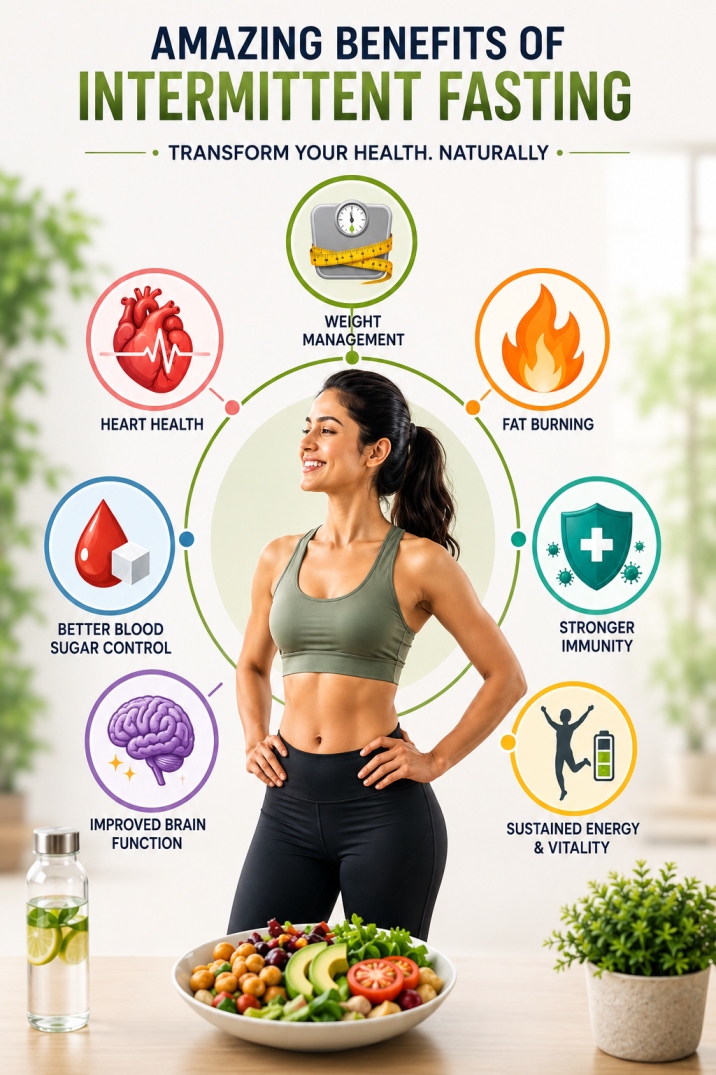
Benefits of Intermittent Fasting
Intermittent fasting offers several potential health benefits beyond weight loss. However, many of these benefits depend on overall lifestyle habits and the quality of the foods consumed during the eating window.
1. Supports Weight Loss
The primary reason people choose intermittent fasting is weight management.
Limiting the eating window often naturally reduces overall calorie intake.
Many individuals also report:
· Less snacking
· Reduced emotional eating
· Better portion control
These habits contribute to a calorie deficit, which is essential for weight loss.
2. Encourages Fat Burning
During fasting periods, insulin levels decrease, making stored fat more available for energy.
Although fat burning increases during fasting, long-term fat loss still depends on maintaining an overall calorie deficit over time.
3. Improves Insulin Sensitivity
Several studies suggest intermittent fasting may improve how the body responds to insulin.
Better insulin sensitivity allows cells to use glucose more effectively.
Potential benefits include:
· Better blood sugar regulation
· Lower insulin levels
· Reduced risk of metabolic syndrome
People with diabetes should only begin intermittent fasting under medical supervision.
4. Reduces Belly Fat
Many individuals notice reductions in waist circumference during weight loss achieved through intermittent fasting.
This occurs primarily because body fat decreases—not because fasting specifically targets belly fat.
Spot reduction is not possible.
5. Helps Reduce Mindless Snacking
One of the simplest benefits of intermittent fasting is reducing opportunities to snack throughout the day.
Many excess calories come from:
· Biscuits
· Chips
· Sweets
· Sugary beverages
· Late-night snacks
Restricting eating times naturally reduces these extra calories.
6. May Improve Heart Health
Some studies have found improvements in cardiovascular risk factors, including:
· Blood pressure
· LDL cholesterol
· Triglycerides
· Inflammation
These improvements are often linked to weight loss and healthier eating patterns.
7. Supports Better Metabolic Health
Intermittent fasting may improve:
· Blood sugar control
· Insulin sensitivity
· Body composition
· Fat oxidation
Together, these changes contribute to improved metabolic health.
8. Simplifies Meal Planning
Many people enjoy intermittent fasting because they prepare fewer meals each day.
This can:
· Save time
· Reduce food preparation
· Simplify grocery shopping
· Encourage structured eating habits
9. May Improve Appetite Awareness
Many individuals report learning the difference between:
Physical hunger
and
Habitual eating.
Intermittent fasting may encourage mindful eating rather than eating out of boredom or routine.
10. May Support Healthy Aging
Animal studies suggest fasting may activate cellular repair mechanisms associated with healthy aging.
Human evidence is still developing, and more research is needed before firm conclusions can be made.
How Intermittent Fasting Helps with Weight Loss
Intermittent fasting supports weight loss through several interconnected mechanisms rather than a single "fat-burning switch."
1. Creates a Calorie Deficit
Weight loss occurs when calorie intake is consistently lower than calorie expenditure.
Intermittent fasting often helps reduce calories by:
· Eating fewer meals
· Limiting snacking
· Reducing late-night eating
2. Lowers Insulin Levels
During fasting:
Insulin decreases
↓
Stored fat becomes easier to access
↓
Fat oxidation increases
3. Improves Appetite Regulation
Some individuals experience:
· Reduced hunger
· Fewer cravings
· Better fullness signals
These changes may help improve long-term adherence to healthy eating habits.
4. Reduces Emotional Eating
Having structured eating windows may reduce:
· Stress eating
· Mindless grazing
· Frequent snacking
5. Supports Better Food Choices
Many individuals become more intentional about meal quality because they consume fewer meals each day.https://wellorafit.com/services/nutrition-diet-planning/
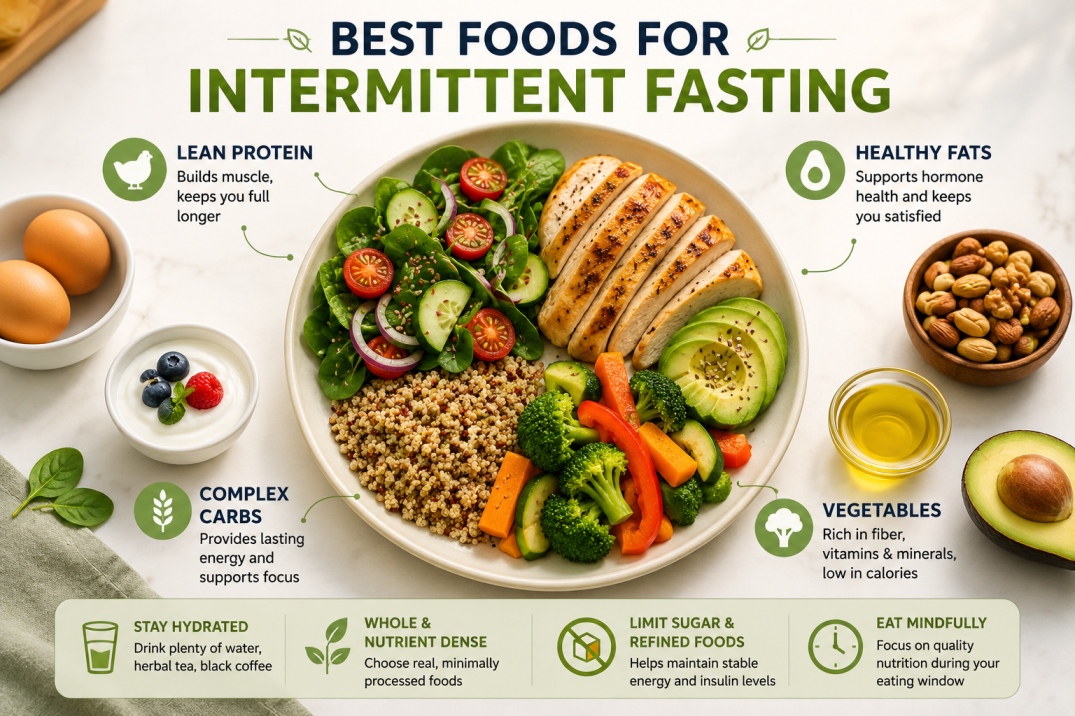
Best Foods to Eat During the Eating Window
Breaking a fast with balanced meals is essential for maintaining energy, preserving muscle, and supporting healthy weight loss.https://www.nin.res.in
Protein-Rich Foods
Protein helps preserve lean muscle mass and increases satiety.
Examples:
· Eggs
· Chicken breast
· Fish
· Paneer
· Greek yogurt
· Tofu
· Lentils
· Chickpeas
· Kidney beans
· Soybeans
Aim to include a quality protein source at every meal.
Whole Grains
Choose:
· Oats
· Brown rice
· Whole wheat
· Millets
· Quinoa
· Barley
These provide sustained energy and dietary fiber.
Fruits
Excellent options include:
· Apples
· Oranges
· Berries
· Guava
· Papaya
· Kiwi
· Pears
Vegetables
Fill half your plate with colorful vegetables such as:
· Spinach
· Broccoli
· Carrots
· Capsicum
· Tomatoes
· Cucumbers
· Cauliflower
· Beans
Healthy Fats
Healthy fats promote satiety and support hormone production.
Include:
· Almonds
· Walnuts
· Pistachios
· Flaxseeds
· Chia seeds
· Pumpkin seeds
· Olive oil
· Avocado
Dairy
Low-fat dairy products provide protein and calcium.
Examples:
· Milk
· Curd
· Buttermilk
· Greek yogurt
· Paneer
Hydration
Drink plenty of:
· Water
· Coconut water (during eating window)
· Lemon water (unsweetened)
· Soups
· Herbal teas
Foods to Limit
Intermittent fasting is not an excuse to eat unlimited junk food.
Try limiting:
· Sugary drinks
· Cakes
· Pastries
· White bread
· Deep-fried foods
· Fast food
· Processed snacks
· Candy
· Excess sweets
· Alcohol
· High-sugar breakfast cereals
Frequent consumption of these foods may reduce the health benefits of intermittent fasting and hinder weight loss.https://wellorafit.com/services/nutrition-diet-planning/
What Can You Drink While Fasting, Meal Plan, Exercise, Side Effects, Common Mistakes & Who Should Avoid Intermittent Fasting
What Can You Drink While Fasting?
One of the most common questions beginners ask is:
"Can I drink anything while fasting?"
The answer is yes—but only beverages that contain little or no calories.
The goal of the fasting period is to avoid foods and drinks that significantly increase blood sugar and insulin levels.
Staying hydrated during fasting is essential because your body continues to lose water through breathing, sweating, and urination. Proper hydration also helps reduce hunger, headaches, and fatigue.
1. Water (Best Choice)
Plain water should be your primary drink while fasting.
Benefits include:
· Prevents dehydration
· Helps control hunger
· Supports digestion
· Maintains energy levels
· Regulates body temperature
· Supports metabolism
Aim to drink 2–3 liters of water daily, or more if you exercise or live in a hot climate.
2. Black Coffee
Plain black coffee without sugar, milk, cream, or flavored syrups is generally considered acceptable during intermittent fasting.
Black coffee may:
· Improve alertness
· Reduce feelings of hunger
· Enhance exercise performance
· Support fat oxidation during workouts
However, avoid consuming excessive coffee, as too much caffeine may cause:
· Jitters
· Anxiety
· Increased heart rate
· Poor sleep
· Stomach irritation
Most healthy adults should limit caffeine intake to about 400 mg per day (approximately 3–4 cups of brewed coffee).
3. Green Tea
Green tea is one of the most popular beverages during fasting.
It contains antioxidants called catechins and a small amount of caffeine.
Potential benefits include:
· Supports hydration
· May slightly increase fat oxidation
· Rich in antioxidants
· Helps improve focus
· May reduce hunger in some individuals
Drink it without sugar, honey, or milk.
4. Black Tea
Plain black tea without milk or sugar is another fasting-friendly beverage.
It may:
· Improve concentration
· Provide mild caffeine
· Support hydration
Avoid adding:
· Sugar
· Honey
· Milk
· Cream
· Sweetened creamers
5. Herbal Tea
Caffeine-free herbal teas can make fasting easier.
Popular options include:
· Peppermint tea
· Chamomile tea
· Ginger tea
· Hibiscus tea
· Lemon grass tea
· Tulsi tea
Always choose unsweetened varieties.
6. Sparkling Water
Unsweetened sparkling water is generally acceptable during fasting.
Many people find carbonation helps reduce hunger.
Choose products without:
· Sugar
· Artificial sweeteners (if they trigger cravings)
· Fruit juice
7. Electrolytes
People performing long workouts or living in very hot climates may benefit from electrolyte replacement.
Choose electrolyte products that contain:
· Sodium
· Potassium
· Magnesium
without added sugars whenever possible.
Drinks That Break a Fast
Avoid these beverages during the fasting window:
· Fruit juice
· Soft drinks
· Milk
· Protein shakes
· Smoothies
· Sweetened coffee
· Milk tea
· Hot chocolate
· Energy drinks
· Alcohol
These drinks contain calories and typically stimulate an insulin response, ending the fasting period.
Sample 16:8 Intermittent Fasting Meal Plan
Fasting Window
8:00 PM –12:00 PM
Eating Window
12:00 PM –8:00 PM
Meal 1 (12:00 PM)
Vegetarian Option
· 2 Multigrain Rotis
· Mixed Vegetable Sabzi
· 1 Bowl Dal
· Salad
· 1 Bowl Curd
Non-Vegetarian Option
· Grilled Chicken Breast (120–150 g)
· Brown Rice (1 cup)
· Mixed Vegetables
· Salad
Mid-Afternoon Snack (3:30 PM)
Choose one:
· Greek yogurt with berries
· Roasted chana
· Fruit with nuts
· Buttermilk
· Apple with peanut butter
· Cottage cheese cubes
· Mixed sprouts salad
Evening Snack (5:30 PM)
Choose one:
· Handful of almonds and walnuts
· Green tea
· Boiled eggs
· Roasted makhana
· Hummus with cucumber
· Pumpkin seeds
· Unsweetened yogurt
Dinner (7:30 PM)
Vegetarian
· Paneer Bhurji
· 2 Rotis
· Stir-fried vegetables
· Salad
Non-Vegetarian
· Grilled Fish
· Mixed Vegetables
· Quinoa
· Soup
Finish dinner before the fasting window begins.
Protein Requirements During Intermittent Fasting
Many people mistakenly focus only on fasting hours while ignoring protein intake.
Adequate protein helps:
· Preserve muscle
· Improve fullness
· Support metabolism
· Enhance recovery
· Promote fat loss instead of muscle loss
Aim for 1.0–1.6 g of protein per kilogram of body weight, depending on activity level and health goals.
Good protein sources include:
· Eggs
· Chicken
· Fish
· Paneer
· Greek yogurt
· Lentils
· Tofu
· Soybeans
· Chickpeas
· Kidney beans
Best Exercises During Intermittent Fasting
Exercise and intermittent fasting can complement each other when planned appropriately.
The ideal workout depends on your:
· Fitness level
· Health condition
· Energy levels
· Personal preference
1. Walking
Walking is one of the safest and most effective forms of exercise while fasting.
Benefits include:
· Burns calories
· Improves heart health
· Reduces stress
· Supports fat loss
· Suitable for beginners
Aim for 30–45 minutes most days of the week.
2. Strength Training
Resistance training helps preserve muscle during weight loss.
Examples include:
· Squats
· Lunges
· Push-ups
· Deadlifts
· Resistance bands
· Weight machines
Aim for 2–4 sessions per week, targeting all major muscle groups.
3. Cardio
Moderate cardio can support cardiovascular health and increase calorie expenditure.
Examples:
· Brisk walking
· Cycling
· Swimming
· Jogging
· Dancing
Avoid excessive high-intensity cardio if it leaves you feeling fatigued during fasting.
4. Yoga
Yoga combines movement, flexibility, and stress reduction.
Benefits include:
· Improved mobility
· Better balance
· Stress management
· Enhanced recovery
Gentle yoga is especially suitable during fasting periods.
5. HIIT
High-Intensity Interval Training (HIIT) can be effective but is more demanding.
Beginners should avoid fasted HIIT until they are well adapted to intermittent fasting.
Best Time to Exercise
There is no universally perfect workout time.
Some individuals prefer exercising:
· Near the end of the fasting window before the first meal.
· Shortly after eating when energy levels are higher.
Listen to your body and choose a time that supports both performance and recovery.
Possible Side Effects of Intermittent Fasting
Many beginners experience temporary side effects during the first few days or weeks as the body adapts.
1. Hunger
The most common side effect is hunger, especially at your usual meal times.
Tips:
· Drink water
· Stay busy
· Eat enough protein and fiber during eating windows
2. Headaches
Headaches may occur due to:
· Dehydration
· Caffeine withdrawal
· Low calorie intake
Stay hydrated and reduce caffeine gradually if needed.
3. Fatigue
Some people feel tired initially as the body adjusts to a new eating schedule.
Adequate sleep and balanced meals usually improve energy levels over time.
4. Irritability
Changes in meal timing can temporarily affect mood.
This often improves after adaptation.
5. Constipation
Eating fewer meals may reduce fiber intake.
Prevent constipation by consuming:
· Fruits
· Vegetables
· Whole grains
· Plenty of water
6. Dizziness
Low blood sugar or dehydration can cause dizziness.
Break your fast if symptoms are severe and consult a healthcare professional.
Common Mistakes During Intermittent Fasting
Many people fail to achieve results because of avoidable mistakes.
1. Overeating During Eating Windows
Fasting does not provide permission to eat unlimited calories.
Weight loss still depends on maintaining a calorie deficit.
2. Eating Mostly Processed Foods
Meals should emphasize:
· Lean protein
· Whole grains
· Fruits
· Vegetables
· Healthy fats
Rather than:
· Pizza
· Burgers
· Cakes
· Chips
· Sugary drinks
3. Skipping Protein
Low protein intake may contribute to muscle loss during weight loss.
Include a quality protein source with every meal.
4. Poor Hydration
Drink sufficient fluids throughout the day.
Dehydration is a common cause of headaches and fatigue during fasting.
5. Sleeping Too Little
Adults should aim for 7–9 hours of sleep each night.
Poor sleep can increase hunger hormones and make fasting more difficult.
6. Starting Too Aggressively
Many beginners attempt 20-hour fasts or OMAD immediately.
Instead, gradually progress:
12:12
↓
14:10
↓
16:8
7. Ignoring Hunger Signals
Persistent weakness, dizziness, or illness should not be ignored.
Intermittent fasting should never compromise your health.
Who Should Avoid Intermittent Fasting?
Intermittent fasting is not appropriate for everyone.
Consult a healthcare professional before starting if you have any medical condition.
It is generally not recommended for:
Pregnant Women
Regular nutrient intake is essential for fetal growth and development.
Breastfeeding Mothers
Adequate calorie and fluid intake support milk production.
Children and Adolescents
Growing children require consistent nutrition to support development.
Individuals with Eating Disorders
People with a history of anorexia, bulimia, binge eating disorder, or other disordered eating patterns should avoid fasting unless under specialist care.
Underweight Individuals
Those with a low body weight may be at increased risk of nutrient deficiencies and muscle loss.
People with Certain Medical Conditions
Individuals with:
· Type 1 diabetes
· Insulin-treated Type 2 diabetes
· Chronic kidney disease
· Advanced liver disease
· Certain hormonal disorders
should only practice intermittent fasting under medical supervision.
Older Adults with Frailty
Older adults at risk of malnutrition or muscle loss may require individualized nutrition plans rather than prolonged fasting.
Tips for Success, Myths vs Facts, Scientific Evidence, Key Takeaways, Conclusion, FAQs, Internal & External Links, Image Suggestions
Tips for Successful Intermittent Fasting
Intermittent fasting is most effective when combined with healthy lifestyle habits rather than viewed as a quick fix. These practical tips can help you stay consistent and achieve sustainable results.
1. Start Gradually
One of the biggest mistakes beginners make is starting with long fasting periods.
Instead, allow your body time to adapt.
A good progression is:
12:12
↓
14:10
↓
16:8
↓
18:6 (only if comfortable)
Gradually increasing fasting duration helps reduce hunger, headaches, and fatigue.
2. Prioritize Protein at Every Meal
Protein is essential during weight loss because it helps:
· Preserve muscle mass
· Keep you feeling full longer
· Reduce cravings
· Support metabolism
· Improve recovery after exercise
Aim to include a high-quality protein source at every meal.
Examples include:
· Eggs
· Chicken
· Fish
· Paneer
· Greek yogurt
· Lentils
· Chickpeas
· Kidney beans
· Soy products
· Low-fat dairy
3. Eat Plenty of Vegetables
Vegetables provide:
· Fiber
· Vitamins
· Minerals
· Antioxidants
· Water
These nutrients help improve satiety while supporting digestive health.
Try filling at least half your plate with vegetables at lunch and dinner.
4. Stay Hydrated
Hydration is often overlooked during fasting.
Drink water regularly throughout the day.
Good options include:
· Plain water
· Green tea
· Herbal tea
· Black coffee (without sugar or milk)
· Sparkling water (unsweetened)
Adequate hydration may help reduce:
· Hunger
· Headaches
· Fatigue
· Constipation
5. Avoid Overeating
Some people assume fasting allows them to eat unlimited food.
This is one of the biggest reasons people fail to lose weight.
Remember:
Weight loss still depends on maintaining an overall calorie deficit.
Focus on balanced meals instead of "rewarding" yourself with excessive portions.
6. Exercise Regularly
Exercise enhances the benefits of intermittent fasting.
Aim for:
· 150 minutes of moderate-intensity activity each week
· 2–3 strength-training sessions weekly
A combination of cardio and resistance training supports both fat loss and muscle preservation.
7. Get Enough Sleep
Poor sleep increases hunger hormones such as ghrelin and decreases leptin, the hormone that promotes fullness.
Adults should aim for 7–9 hours of quality sleep each night.
Good sleep also supports recovery, hormone regulation, and overall health.
8. Manage Stress
Chronic stress can increase emotional eating and make weight management more difficult.
Healthy stress-management strategies include:
· Meditation
· Yoga
· Deep breathing
· Walking outdoors
· Reading
· Listening to calming music
· Journaling
· Spending time with loved ones
9. Be Consistent
Results take time.
Intermittent fasting is most effective when practiced consistently over weeks and months rather than only a few days.
Focus on long-term habits rather than quick fixes.
10. Listen to Your Body
Intermittent fasting should support your health—not make you feel unwell.
If you experience:
· Persistent dizziness
· Fainting
· Severe fatigue
· Repeated low blood sugar
· Significant weakness
stop fasting and consult a healthcare professional.
Common Myths About Intermittent Fasting
There are many misconceptions surrounding intermittent fasting. Let's separate myths from facts.
Myth 1: Fasting Means Starving Yourself
Fact
Intermittent fasting is a planned eating schedule, whereas starvation is an involuntary lack of food.
During intermittent fasting, you still consume enough nutritious food within your eating window.
Myth 2: You Can Eat Anything During the Eating Window
Fact
Food quality still matters.
Consuming excessive junk food, sugary drinks, and processed snacks can prevent weight loss despite fasting.
Myth 3: Skipping Breakfast Is Always Unhealthy
Fact
There is no universal rule that everyone must eat breakfast.
Some individuals feel better eating breakfast, while others successfully follow a later eating window.
The best meal timing depends on individual preferences, health conditions, and lifestyle.
Myth 4: Fasting Causes Muscle Loss
Fact
When combined with:
· Adequate protein intake
· Resistance training
· Sufficient calorie intake
intermittent fasting generally preserves lean muscle during weight loss.
Myth 5: Longer Fasts Always Produce Better Results
Fact
More is not always better.
Extremely long fasts may increase fatigue, nutrient deficiencies, and poor adherence.
Consistency is more important than fasting duration.
Myth 6: Coffee Breaks a Fast
Fact
Plain black coffee without sugar, milk, or cream is generally considered compatible with intermittent fasting.
However, sweetened coffee drinks do break a fast.
Myth 7: Intermittent Fasting Works for Everyone
Fact
People respond differently.
Age, medical history, medications, lifestyle, and personal preferences all influence whether intermittent fasting is appropriate.
Myth 8: Intermittent Fasting Is a Magic Weight Loss Solution
Fact
Intermittent fasting is simply one strategy for reducing calorie intake.
Long-term success still depends on:
· Healthy eating
· Physical activity
· Sleep
· Stress management
· Consistency
Scientific Evidence
Research on intermittent fasting has grown rapidly over the past decade.
Several clinical studies suggest intermittent fasting can support weight loss and improve metabolic health, particularly when it helps individuals maintain a calorie deficit.
Weight Loss
Studies show that intermittent fasting can lead to reductions in:
· Body weight
· Body fat
· Waist circumference
However, when total calorie intake is matched, intermittent fasting generally produces similar weight loss to other calorie-restricted diets.
Insulin Sensitivity
Research suggests intermittent fasting may improve insulin sensitivity in many individuals, allowing the body to use glucose more efficiently.
Improved insulin sensitivity may reduce the risk of:
· Prediabetes
· Type 2 diabetes
· Metabolic syndrome
Cardiovascular Health
Weight loss achieved through intermittent fasting may also improve:
· Blood pressure
· LDL cholesterol
· Triglycerides
· Inflammatory markers
These changes may lower long-term cardiovascular risk.
Inflammation
Some studies indicate fasting may reduce certain inflammatory markers.
However, more long-term human studies are needed.
Brain Health
Early research suggests fasting may support:
· Cognitive function
· Brain resilience
· Cellular repair mechanisms
Most of this evidence comes from animal studies, and further human research is required.
Autophagy
Autophagy is a natural process through which cells recycle damaged components.
While fasting appears to stimulate autophagy in laboratory and animal studies, the exact effects and required fasting duration in humans remain under investigation.
Is Intermittent Fasting Better Than Traditional Dieting?
Current evidence suggests:
The best diet is the one you can follow consistently.
Intermittent fasting is not necessarily superior to traditional calorie-controlled diets.
Instead, it offers an alternative eating pattern that some individuals find easier to maintain.
If intermittent fasting helps you:
· Eat balanced meals
· Reduce snacking
· Maintain a calorie deficit
· Stay consistent
it can be an effective weight-loss strategy.
Key Takeaways
· Intermittent fasting is an eating schedule, not a specific diet.
· It focuses on when you eat rather than what you eat.
· The 16:8 method is the most popular approach for beginners.
· Weight loss occurs because intermittent fasting often helps create a calorie deficit.
· Food quality remains just as important as meal timing.
· Protein intake is essential for preserving muscle during weight loss.
· Staying hydrated helps reduce common fasting side effects.
· Exercise, sleep, and stress management enhance fasting results.
· Longer fasts are not always better.
· Intermittent fasting is not suitable for everyone.
· Sustainable habits consistently produce better long-term results than extreme diets.
Conclusion
Intermittent fasting has become one of the most popular approaches to weight management because it is simple, flexible, and supported by a growing body of scientific research. Rather than focusing on eliminating specific foods, intermittent fasting encourages structured meal timing, which may naturally reduce calorie intake and support healthier eating habits.
For many individuals, intermittent fasting can improve weight management, insulin sensitivity, metabolic health, and appetite control when combined with balanced nutrition, regular physical activity, quality sleep, and effective stress management.
However, intermittent fasting is not a miracle solution. Lasting weight loss depends on creating sustainable lifestyle habits rather than relying solely on meal timing. Choosing whole, nutrient-rich foods, meeting your protein needs, staying hydrated, and maintaining an active lifestyle remain the foundation of long-term health.
It's also important to recognize that intermittent fasting is not appropriate for everyone. Pregnant or breastfeeding women, children, individuals with eating disorders, and people with certain medical conditions should seek professional medical advice before starting any fasting routine.
Ultimately, the best nutrition plan is the one that fits your lifestyle, supports your health, and can be maintained consistently over time. If practiced safely and combined with healthy daily habits, intermittent fasting can be a practical and effective tool for achieving sustainable weight loss and improving overall well-being.
Frequently Asked Questions (FAQ)
1. What is intermittent fasting?
Intermittent fasting is an eating pattern that alternates between periods of eating and fasting. It focuses on meal timing rather than restricting specific foods.
2. Does intermittent fasting help with weight loss?
Yes. Intermittent fasting may support weight loss by helping reduce calorie intake, improving appetite regulation, and encouraging fat utilization when combined with a balanced diet and healthy lifestyle.
3. Which intermittent fasting method is best for beginners?
The 12:12 or 14:10 method is often easiest for beginners. Many people gradually progress to the 16:8 schedule once they become comfortable.
4. Can I drink coffee while fasting?
Yes. Plain black coffee without sugar, milk, cream, or flavored syrups is generally acceptable during intermittent fasting.
5. What foods should I eat during intermittent fasting?
Choose nutrient-dense foods such as lean proteins, whole grains, fruits, vegetables, legumes, healthy fats, nuts, seeds, and low-fat dairy products.
6. How long does it take to see results?
Results vary depending on calorie intake, activity level, sleep, and consistency. Some people notice changes within a few weeks, while meaningful body composition changes typically take longer.
7. Can intermittent fasting reduce belly fat?
Intermittent fasting can contribute to overall body fat loss, including abdominal fat, but it does not specifically target belly fat.
8. Does intermittent fasting slow metabolism?
Current evidence suggests that short-term intermittent fasting does not significantly slow metabolism. Extremely prolonged calorie restriction, however, may reduce metabolic rate over time.
9. Is intermittent fasting safe for women?
Many women can practice intermittent fasting safely, but individual needs vary. Pregnant or breastfeeding women and those with certain medical conditions should consult a healthcare professional before starting.
10. Who should avoid intermittent fasting?
Intermittent fasting is generally not recommended for pregnant or breastfeeding women, children and adolescents, individuals with eating disorders, underweight individuals, and people with certain medical conditions unless supervised by a healthcare professional.
Ready to Begin Your Health Journey?
Get a personalized, medically guided plan built around your unique biology.