Iron Deficiency and Metabolism: Causes, Symptoms & Nutrition
Iron is an essential mineral that the body needs for several important functions, including oxygen transport, energy production, muscle function, and many enzyme-related processes. Because of these roles, maintaining adequate iron stores is important for overall health and normal physical function.
Iron deficiency occurs when the body's iron stores are insufficient to meet its needs. If deficiency becomes severe, it can contribute to iron-deficiency anemia, which reduces the blood's ability to carry oxygen to tissues.
This can affect how a person feels and functions. Fatigue, weakness, dizziness, and reduced exercise capacity can occur, particularly when anemia develops.
Iron deficiency is sometimes discussed in relation to a “slow metabolism.” However, it is important to be precise: iron deficiency does not simply switch off or permanently slow your metabolism. Instead, inadequate iron can interfere with processes involved in oxygen delivery and cellular energy metabolism, which may contribute to tiredness and reduced physical performance.
What Is Iron?
Iron is a mineral that the body uses in several proteins and enzymes.
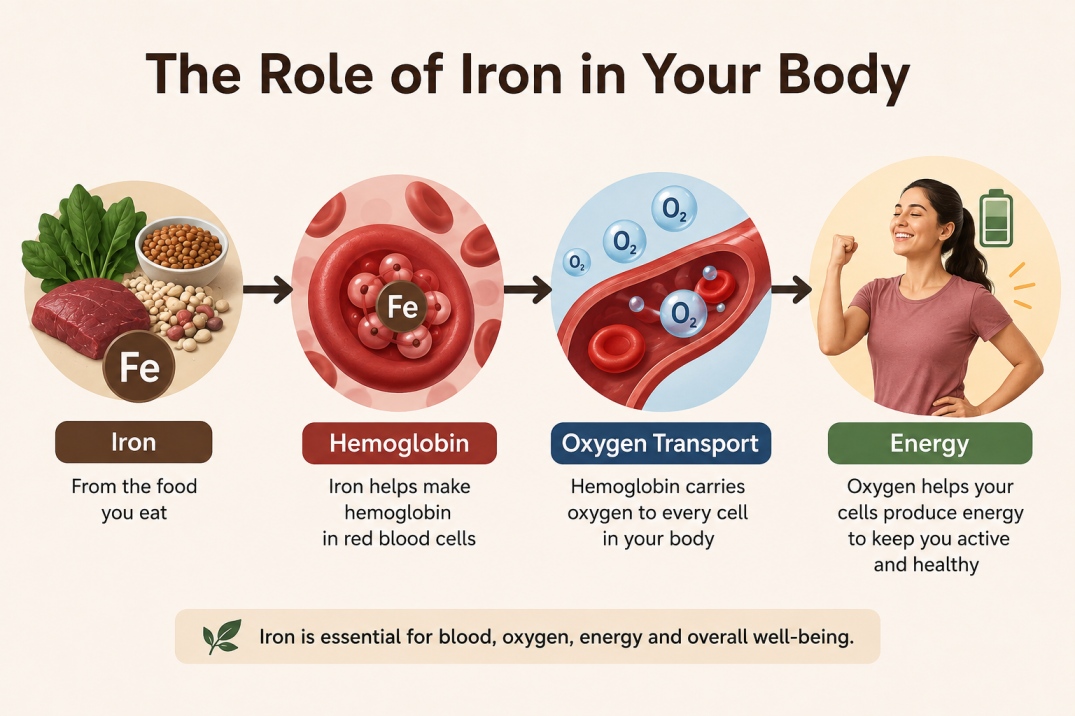
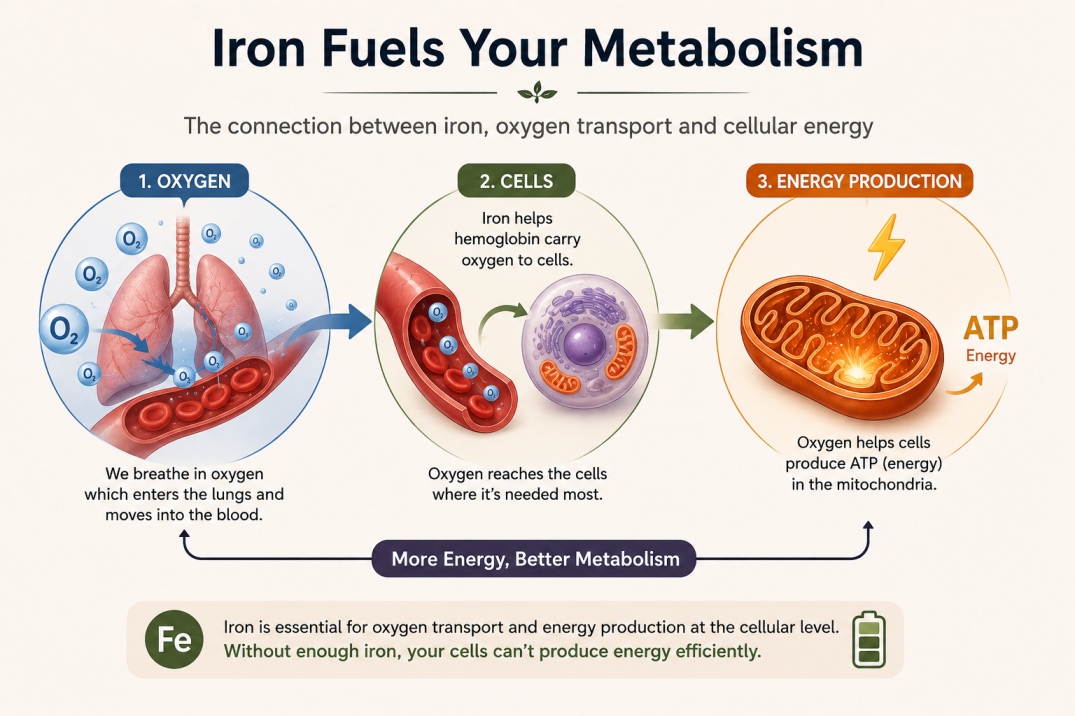
One of its best-known roles is in hemoglobin, the protein in red blood cells responsible for carrying oxygen from the lungs to tissues.
Iron is also involved in:
Oxygen transport
Muscle oxygen storage and use
Cellular energy production
Electron transport
DNA synthesis
Enzyme activity
Because iron participates in both oxygen transport and cellular energy pathways, adequate iron status is important for normal metabolic function.
What Is Iron Deficiency?
Iron deficiency means that the body's available iron stores are too low to adequately meet its needs.
It can occur because of:
Insufficient dietary iron intake
Poor absorption of iron
Increased iron requirements
Blood loss
Certain medical conditions
If iron deficiency becomes severe enough to reduce hemoglobin production, iron-deficiency anemia can develop.
Iron deficiency and iron-deficiency anemia are related, but they are not exactly the same thing. A person can have depleted iron stores before anemia develops.https://www.who.int/health-topics/anaemia
How Is Iron Connected to Metabolism?
The relationship between iron and metabolism is more complex than simply saying “low iron slows metabolism.”
Iron is involved in proteins that help transport oxygen and in cellular processes involved in energy production.
Oxygen is ultimately used by cells during aerobic energy production. Iron-containing proteins are part of the biological systems involved in these processes.
When iron availability is inadequate, these processes can be affected.
Research has found that iron deficiency can alter energy metabolism and exercise-related responses, including changes in how the body uses energy during physical activity.
This helps explain why some people with iron deficiency may experience fatigue, weakness, and reduced exercise tolerance.
Can Iron Deficiency Cause a Slow Metabolism?
Not necessarily.
Iron deficiency should not be presented as a direct cause of a permanently slow metabolic rate.
However, iron deficiency can contribute to symptoms that indirectly affect daily energy expenditure and weight-management efforts.
For example:
Iron Deficiency → Reduced Oxygen Delivery / Altered Energy Processes → Fatigue → Less Physical Activity
If someone feels unusually tired, they may naturally move less, exercise less, or find normal daily activities more difficult.
Therefore, the connection between iron status and weight management is often more complicated than simply “iron deficiency slows metabolism.”
Iron Deficiency and Energy Levels
One of the most common concerns associated with iron deficiency is fatigue.
When iron deficiency progresses to anemia, the blood may carry less oxygen to tissues. This can contribute to:
Tiredness
Weakness
Dizziness
Shortness of breath
Reduced exercise tolerance
Headaches
The World Health Organization recognizes tiredness, weakness, dizziness, and shortness of breath as possible symptoms of anemia.
However, these symptoms are not specific to iron deficiency. Many other conditions can cause similar symptoms.
Iron Deficiency and Exercise
Iron is particularly relevant to physical activity because exercise increases the body's demand for oxygen delivery and energy production.
Low iron stores or iron deficiency can be associated with reduced exercise performance and altered energy metabolism. Research has observed changes in oxygen utilization and energy metabolism in iron-deficient individuals, including some people without overt anemia.
This does not mean that every person with low iron will experience exercise problems.
However, unexplained fatigue or reduced exercise tolerance can be reasons to discuss iron status with a healthcare professional.https://www.nih.gov
Who Is More at Risk of Iron Deficiency?
Iron deficiency can affect different groups, but some people have higher requirements or greater risk of losing iron.
These can include:
Women who menstruate
Pregnant women
Postpartum women
People with heavy menstrual bleeding
People with inadequate dietary iron intake
Individuals with certain gastrointestinal conditions
People with conditions that affect iron absorption
Frequent blood donors
WHO identifies menstruating women, pregnant women, and postpartum women among groups particularly affected by anemia.
Common Symptoms of Iron Deficiency
Symptoms can vary depending on how severe the deficiency is.
Possible symptoms include:
Persistent fatigue
Weakness
Reduced exercise tolerance
Dizziness or light-headedness
Headaches
Shortness of breath during activity
Pale skin
Difficulty concentrating
However, symptoms alone cannot confirm iron deficiency.
If you suspect you may be deficient, appropriate blood testing and medical evaluation are more reliable than trying to diagnose yourself based on symptoms.
Iron Deficiency and Weight Loss
Iron deficiency should not be considered a weight-loss problem or treated as a metabolism-boosting opportunity.
If someone is struggling with weight management and also has symptoms of iron deficiency, both issues should be addressed appropriately.
Trying to lose weight through severe calorie restriction while iron intake is inadequate can make it harder to meet nutritional needs.
A better approach is to focus on:
Balanced meals
Adequate protein
Iron-rich foods
Fiber-rich foods
Regular physical activity as tolerated
Adequate sleep
Appropriate medical evaluation
Iron supplements should not be taken simply because weight loss is difficult. Iron supplementation is appropriate when deficiency or increased need has been identified and should be guided by a healthcare professional.
Causes, Symptoms & Risk Factors of Iron Deficiency
Iron deficiency can develop gradually, and some people may have few noticeable symptoms in the early stages. Understanding why iron deficiency occurs and who is more likely to develop it can help with prevention and appropriate treatment.
1. Inadequate Dietary Iron Intake
One common contributor is not getting enough iron from the diet.
This can happen when meals contain very few iron-rich foods or when the overall diet is highly restrictive.
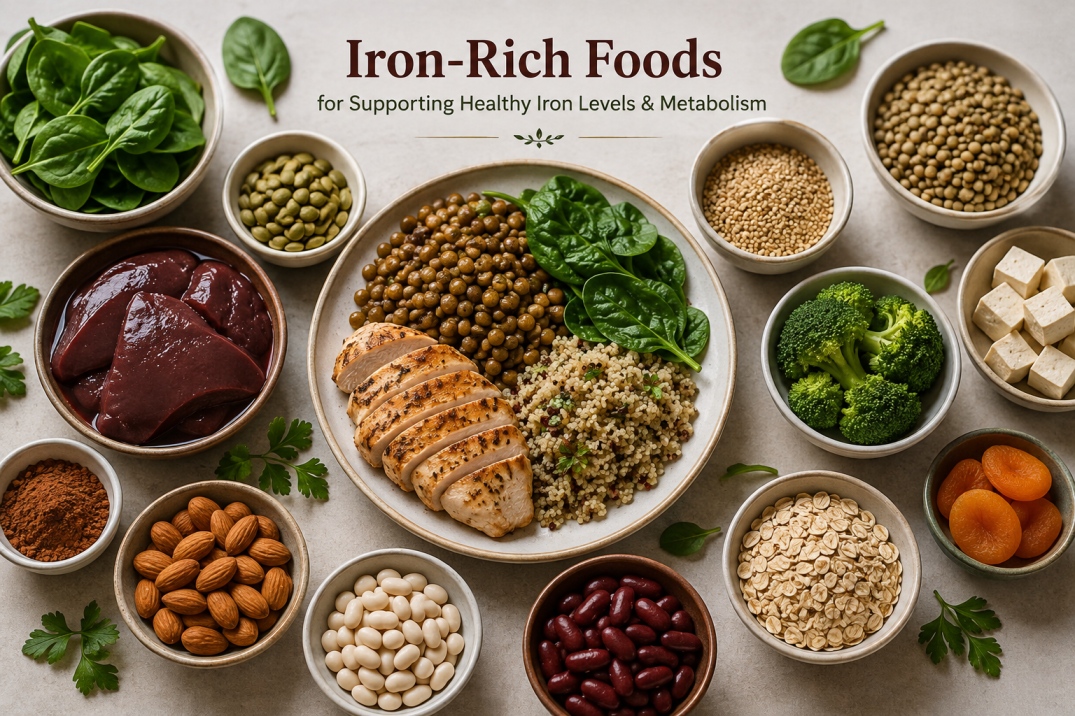
Iron-rich foods include:
Vegetarian Sources
· Lentils and dal
· Chickpeas
· Rajma
· Soybeans
· Tofu
· Sesame seeds
· Pumpkin seeds
· Spinach and other leafy greens
· Ragi
· Fortified cereals
Non-Vegetarian Sources
· Meat
· Chicken
· Fish
· Shellfish
· Eggs
A varied diet can help provide iron along with other nutrients needed for healthy blood production.https://wellorafit.com/services/nutrition-diet-planning/
2. Blood Loss
Blood loss is an important cause of iron deficiency.
For women who menstruate, heavy menstrual bleeding can increase iron losses over time.
Other causes of blood loss can include:
· Gastrointestinal bleeding
· Frequent blood donation
· Bleeding associated with certain medical conditions
· Blood loss during childbirth
If menstrual bleeding is unusually heavy or prolonged, it is important to discuss it with a healthcare professional rather than simply increasing iron supplements on your own.
3. Increased Iron Requirements
The body's need for iron can increase during certain stages of life.
This is particularly relevant during:
· Pregnancy
· Adolescence
· Menstruation
· Postpartum recovery
During pregnancy, iron requirements increase because the body needs to support increased blood volume and the developing baby.
This is one reason iron status is routinely considered as part of pregnancy care.
4. Reduced Iron Absorption
Eating enough iron does not always guarantee adequate iron status.
Certain digestive conditions can reduce the body's ability to absorb iron.
Examples can include conditions affecting:
· The stomach
· Small intestine
· Intestinal absorption
Some gastrointestinal surgeries and digestive disorders may also affect nutrient absorption.
If iron deficiency repeatedly returns despite appropriate dietary intake, an underlying absorption problem may need to be evaluated.
5. Heme vs. Non-Heme Iron
Iron from food exists in two main forms.
Heme Iron
Heme iron is primarily found in animal-based foods such as:
· Meat
· Chicken
· Fish
· Shellfish
It is generally more readily absorbed by the body.
Non-Heme Iron
Non-heme iron is found mainly in plant foods such as:
· Dal
· Beans
· Chickpeas
· Soy
· Nuts
· Seeds
· Leafy vegetables
· Whole grains
Non-heme iron absorption is more affected by the overall meal composition.
This is particularly relevant for people following vegetarian or vegan diets.https://wellorafit.com/services/nutrition-diet-planning/
6. Vitamin C Can Support Iron Absorption
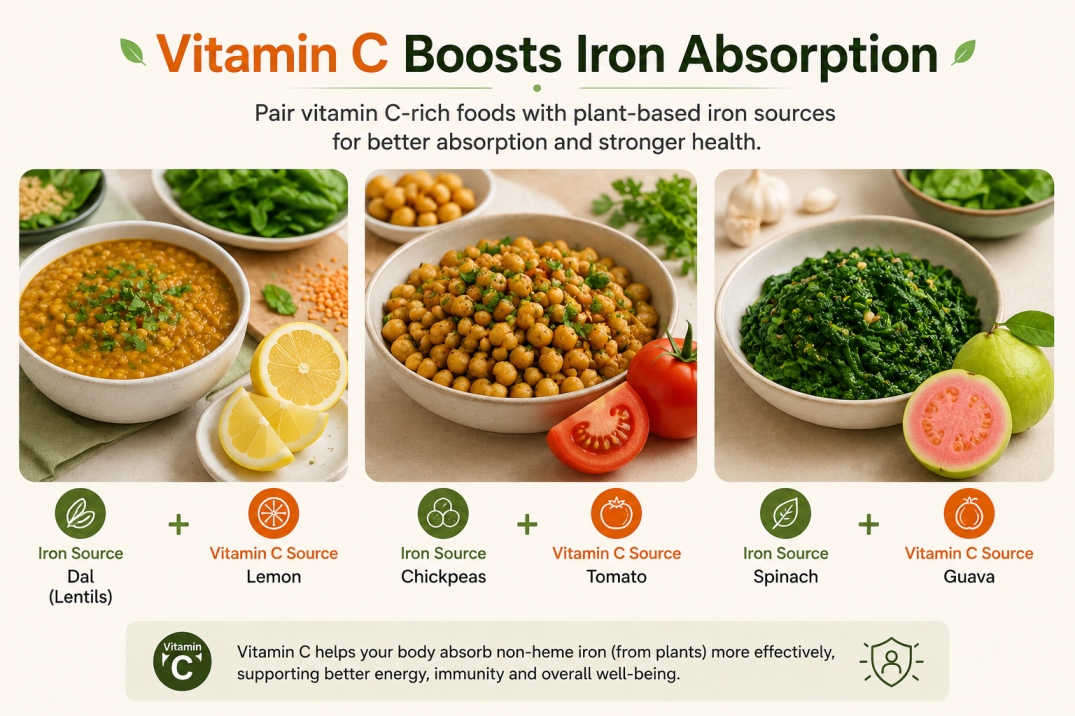
Vitamin C can improve the absorption of non-heme iron.
A simple strategy is to combine plant-based iron sources with vitamin-C-rich foods.
For example:
Dal + lemon
Chickpea salad + tomatoes
Rajma + bell peppers
Spinach + lemon
Iron-rich meal + guava or orange
This doesn't mean every iron-containing meal needs a large amount of vitamin C. It is simply a useful dietary strategy.
7. Certain Foods and Beverages Can Affect Iron Absorption
Some components of foods and beverages can reduce the absorption of non-heme iron when consumed with an iron-rich meal.
For example, tea and coffee contain compounds that can inhibit non-heme iron absorption.
If iron deficiency is present, spacing tea or coffee away from iron-rich meals may be helpful.
This is particularly relevant for people who regularly drink tea or coffee immediately after meals.
8. Common Symptoms of Iron Deficiency
Symptoms can vary depending on the severity and duration of deficiency.
Possible symptoms include:
· Fatigue
· Weakness
· Dizziness
· Headaches
· Reduced exercise tolerance
· Shortness of breath during activity
· Pale skin
· Difficulty concentrating
· Feeling unusually tired
When iron deficiency progresses to anemia, symptoms may become more noticeable.
However, these symptoms are not specific to iron deficiency. Similar symptoms can occur with other nutritional deficiencies, thyroid disorders, sleep problems, infections, and other medical conditions.
9. Iron Deficiency Without Anemia
Iron deficiency and iron-deficiency anemia are not exactly the same.
A person can have depleted iron stores before their hemoglobin becomes low enough to meet the definition of anemia.
This is why relying only on hemoglobin may not always provide the complete picture of iron status.
Healthcare professionals may consider additional blood tests, such as serum ferritin, along with other clinical information when evaluating possible iron deficiency.
The appropriate tests depend on the individual situation.
10. Who Should Pay Particular Attention to Iron Status?
Some groups have a higher risk of iron deficiency.
These can include:
· Women with heavy menstrual bleeding
· Pregnant women
· Postpartum women
· Adolescents
· Frequent blood donors
· People following restrictive diets
· Individuals with certain gastrointestinal conditions
· People with conditions associated with chronic blood loss
Being in a higher-risk group does not automatically mean that you have iron deficiency.
Testing and clinical evaluation are needed when deficiency is suspected.
11. Iron Deficiency and Fatigue
Fatigue is one of the symptoms most commonly associated with iron deficiency and anemia.
When iron deficiency progresses to anemia, reduced hemoglobin can decrease the amount of oxygen transported to tissues.
This can make everyday activities feel more tiring.
For example, someone may notice:
Walking → Feels unusually tiring
Exercise → Reduced endurance
Daily tasks → Increased fatigue
However, fatigue has many possible causes.
If persistent tiredness is affecting daily life, it is better to investigate the underlying cause rather than assuming that iron is responsible.
12. Iron Deficiency and Exercise Performance
Adequate iron status is important for normal oxygen transport and energy metabolism.
People with iron deficiency or anemia may experience reduced exercise tolerance.
Possible signs include:
· Becoming tired quickly
· Reduced endurance
· Breathlessness during activity
· Difficulty maintaining previous exercise intensity
· Longer recovery after exercise
If exercise performance suddenly declines without an obvious explanation, discussing the symptoms with a healthcare professional may be appropriate.
13. Iron Deficiency and Weight Management
Iron deficiency should not be used as an explanation for every difficulty with weight loss.
A person may have low energy because of iron deficiency and consequently become less physically active. This can indirectly influence overall energy expenditure.
However:
Iron deficiency ≠ automatic weight gain
and
Iron supplements ≠ a weight-loss treatment
If both iron deficiency and weight-management concerns are present, they should be addressed separately and appropriately.
When Should You See a Healthcare Professional?
Consider medical evaluation if you have:
· Persistent unexplained fatigue
· Frequent dizziness
· Shortness of breath with routine activity
· Very heavy menstrual bleeding
· Recurrent iron deficiency
· Unexplained changes in weight
· Symptoms that persist despite improving your diet
A healthcare professional can determine whether blood tests are appropriate and identify the underlying cause of iron deficiency.
Iron-Rich Foods & Nutrition Strategies
Managing iron deficiency starts with identifying the underlying cause, but nutrition can play an important role in maintaining adequate iron intake and supporting healthy iron status.
A well-planned diet should provide iron along with protein, vitamin C, folate, vitamin B12, and other nutrients involved in healthy blood production.
1. Include Iron-Rich Foods Regularly
Iron can be obtained from both animal and plant foods.
Vegetarian Sources
· Lentils and dal
· Chickpeas
· Rajma
· Soybeans
· Tofu
· Ragi
· Sesame seeds
· Pumpkin seeds
· Spinach and other leafy greens
· Fortified cereals
Non-Vegetarian Sources
· Lean meat
· Chicken
· Fish
· Shellfish
· Eggs
Including a variety of these foods can help improve the overall nutritional quality of the diet.
2. Combine Plant-Based Iron With Vitamin C
Vitamin C can enhance absorption of non-heme iron from plant foods.
Simple combinations include:
Dal + lemon
Chana + tomato
Rajma + capsicum
Spinach + lemon
Ragi meal + guava
Beans + fresh vegetables
You don't need to make every meal complicated. Adding a vitamin-C-rich food to an iron-containing meal can be a simple nutritional strategy.
3. Choose Iron-Rich Indian Meals
Iron-rich foods can easily be included in familiar Indian meals.
Breakfast
· Ragi dosa + sambar
· Besan chilla + vegetables
· Moong dal chilla + chutney
· Vegetable poha with peanuts
· Iron-fortified cereal + milk, where appropriate
Lunch
· Rajma + rice + salad with lemon
· Dal + roti + spinach sabzi
· Chole + roti + vegetables
· Soybean curry + roti + salad
Dinner
· Dal + roti + leafy vegetable
· Tofu/paneer + vegetables + roti
· Fish + vegetables + whole grain
· Chicken + vegetables + roti
Portions should be adjusted according to individual energy and nutritional requirements.
4. Don't Forget Other Blood-Building Nutrients
Iron is important, but it is not the only nutrient involved in healthy red blood cell production.
A balanced diet should also provide nutrients such as:
· Folate
· Vitamin B12
· Vitamin B6
· Protein
· Vitamin C
Food Sources
Folate:
Leafy greens, legumes, beans, citrus fruits
Vitamin B12:
Milk, curd, eggs, fish, chicken, meat, and fortified foods
Vitamin B6:
Potatoes, bananas, chickpeas, fish, poultry
Protein:
Dal, beans, dairy, eggs, soy, fish, chicken
A varied diet is therefore more useful than focusing exclusively on iron.
5. Be Mindful of Tea and Coffee Timing
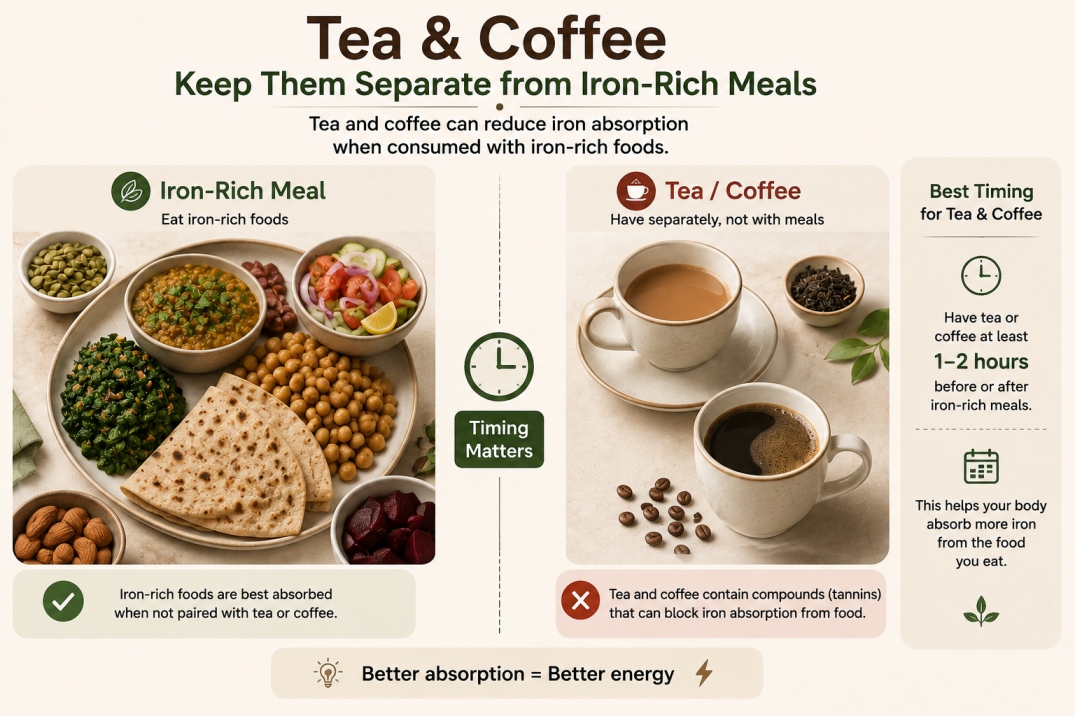
Tea and coffee contain compounds that can reduce the absorption of non-heme iron when consumed around meals.
If you have iron deficiency, consider having tea or coffee away from iron-rich meals rather than immediately with them.
For example:
Lunch → Iron-rich meal
Later → Tea or coffee
This simple timing adjustment may help improve dietary iron absorption.
6. Don't Rely Only on Spinach
Spinach is often described as an excellent iron food, but it shouldn't be your only strategy.
A better approach is to eat a variety of iron-containing foods:
Dal + beans + chickpeas + soy + seeds + leafy vegetables + fortified foods
Variety improves the overall nutritional quality of the diet and provides additional nutrients.
7. Vegetarian Diets Can Provide Iron
People following vegetarian diets can obtain iron from many plant foods.
Useful choices include:
· Dal
· Rajma
· Chole
· Soybeans
· Tofu
· Ragi
· Sesame seeds
· Pumpkin seeds
· Spinach
· Whole grains
Because plant-based iron is less readily absorbed than heme iron, paying attention to meal combinations can be useful.
Pairing these foods with vitamin-C-rich vegetables or fruits is one practical strategy.
8. Iron and Weight-Loss Diets
If you're trying to lose weight, avoid making your diet unnecessarily restrictive.
Very limited diets can make it harder to obtain adequate iron and other essential nutrients.
Instead of:
Very low-calorie diet → Fewer nutrients
Aim for:
Balanced calorie intake → Adequate protein → Iron-rich foods → Vegetables & fruits → Sustainable weight management
Weight loss should never come at the expense of essential nutrition.
9. Iron Supplements Are Not a Replacement for Evaluation
If blood tests confirm iron deficiency, a healthcare professional may recommend iron supplementation.
However, taking iron supplements without determining whether you actually need them is not recommended.
Excess iron can also be harmful.
The appropriate form, dose, and duration of supplementation depend on the individual's:
· Iron status
· Hemoglobin
· Ferritin
· Cause of deficiency
· Age
· Pregnancy status
· Medical history
If supplementation has been prescribed, follow the healthcare professional's instructions.
10. Don't Ignore the Cause of Iron Deficiency
Eating more iron-rich foods is useful, but nutrition alone may not correct an ongoing problem if iron is continuously being lost or poorly absorbed.
For example, persistent deficiency could be associated with:
· Heavy menstrual bleeding
· Gastrointestinal blood loss
· Poor absorption
· Increased nutritional requirements
· Inadequate dietary intake
Finding and addressing the underlying cause is an important part of treatment.
11. Support Energy With Balanced Meals
If iron deficiency is contributing to fatigue, simply increasing caffeine intake is not a solution.
Instead, build meals that provide:
Protein + Iron + Fiber + Whole-food Carbohydrates + Vegetables/Fruits
For example:
Dal + roti + spinach + lemon + curd
or
Chickpeas + whole grains + vegetables + citrus fruit
These combinations provide several nutrients rather than focusing on one nutrient alone.
12. A Simple Daily Iron-Focused Eating Pattern
Early Morning
Water + balanced breakfast later
Breakfast
Ragi dosa + sambar + vegetables
Mid-Morning
Guava/orange
Lunch
2 rotis + dal + spinach sabzi + salad with lemon + curd
Evening
Roasted chana + fruit
Dinner
Rajma/chickpea/tofu curry + roti + vegetables
Optional
Milk or another suitable snack depending on individual requirements
This is only an example. A personalized diet should consider age, sex, activity level, dietary pattern, medical conditions, laboratory results, and individual nutritional needs.
Iron Deficiency, Metabolism & Long-Term Health
Iron deficiency should be approached as a health and nutrition concern, not simply as a weight-management issue. Improving iron status can support normal oxygen transport, energy production, physical performance, and overall well-being when deficiency is present.
The most important step is to identify why the deficiency is occurring and then address it through appropriate medical care and nutrition.
How to Support Healthy Iron Status Long Term
A sustainable approach can focus on four areas:
Iron-Rich Foods → Better Absorption → Identifying the Cause → Appropriate Treatment
Nutrition can help, but confirmed iron deficiency may require medical treatment depending on its severity and underlying cause.
1. Make Iron-Rich Foods Part of Your Regular Diet
Rather than eating a large amount of iron-rich food occasionally, include suitable sources regularly.
Vegetarian options include:
· Dal
· Chickpeas
· Rajma
· Soybeans
· Tofu
· Ragi
· Sesame seeds
· Pumpkin seeds
· Leafy vegetables
· Fortified foods
Non-vegetarian options include:
· Meat
· Chicken
· Fish
· Shellfish
· Eggs
Choose foods according to your dietary preferences and nutritional needs.
2. Improve Iron Absorption
Food combinations can make a difference, particularly with non-heme iron.
A simple pattern is:
Iron-Rich Food + Vitamin C Source
For example:
Dal + lemon
Chole + tomato
Rajma + capsicum
Ragi + guava
Leafy vegetables + lemon
At the same time, avoid drinking tea or coffee immediately with iron-rich meals if you are trying to improve iron absorption.
3. Don't Use Iron to "Boost" Metabolism
Iron is involved in energy metabolism, but taking extra iron does not automatically increase metabolic rate.
Iron supplementation should not be used as a metabolism-boosting or weight-loss strategy.
If your iron status is normal, taking additional iron unnecessarily can be harmful.
The appropriate approach is:
Test → Identify Deficiency → Find the Cause → Treat Appropriately
4. Support Energy With Overall Nutrition
Iron is only one component of a healthy diet.
For sustained energy and metabolic health, meals should also provide:
· Protein
· Fiber
· Whole-food carbohydrates
· Healthy fats
· Vegetables
· Fruits
· Adequate fluids
For example:
Dal + roti + vegetables + curd + lemon
provides a combination of protein, carbohydrates, fiber, iron-containing foods, and other nutrients.
5. Maintain a Healthy Activity Level
If iron deficiency is causing significant fatigue, exercise may feel more difficult.
Don't force intense workouts when you're experiencing unexplained exhaustion or reduced exercise tolerance.
Once the underlying issue has been appropriately evaluated and treated, gradually return to your normal physical activity.
Regular activity can support:
· Cardiovascular fitness
· Muscle health
· Energy expenditure
· Metabolic health
· Overall well-being
6. Monitor Iron Status When Appropriate
If you have previously had iron deficiency, monitoring may be appropriate depending on the cause and treatment.
Healthcare professionals may use blood tests such as:
· Hemoglobin
· Serum ferritin
· Other iron-related markers
The appropriate tests and timing depend on the individual.
Do not assume that fatigue automatically means your iron levels are low.
7. Women Should Pay Attention to Menstrual Blood Loss
For women who menstruate, heavy menstrual bleeding can contribute to ongoing iron loss.
If you regularly experience:
· Very heavy periods
· Prolonged periods
· Frequent bleeding
· Significant fatigue during or after menstruation
discuss this with a healthcare professional.
Simply taking iron repeatedly without addressing ongoing blood loss may not solve the underlying problem.
8. Postpartum Women May Need Extra Attention
Iron needs and iron status can be particularly relevant after pregnancy and childbirth.
Blood loss during delivery can contribute to iron deficiency, while postpartum recovery also increases nutritional demands.
Women who experience significant fatigue, dizziness, or other symptoms after delivery should discuss them with their healthcare professional rather than assuming they are simply part of being a new mother.
9. Don't Confuse Fatigue With a Slow Metabolism
Feeling tired does not necessarily mean that your metabolism is slow.
Fatigue can have many possible causes, including:
· Iron deficiency or anemia
· Poor sleep
· Stress
· Inadequate calorie intake
· Other nutritional deficiencies
· Thyroid problems
· Infections
· Other medical conditions
If persistent fatigue is affecting your daily life, identifying the underlying cause is more useful than trying to “boost metabolism.”
When to Seek Medical Advice
Speak with a healthcare professional if you experience:
· Persistent or unexplained fatigue
· Frequent dizziness
· Shortness of breath
· Reduced exercise tolerance
· Very heavy menstrual bleeding
· Recurrent iron deficiency
· Unexplained weight changes
· Symptoms that continue despite improving your diet
Medical evaluation is especially important when iron deficiency keeps returning.
Common Mistakes to Avoid
1. Taking Iron Without Testing
Iron supplements are not appropriate for everyone.
2. Assuming Fatigue Means Low Iron
Fatigue has many possible causes.
3. Eating Only One "Iron-Rich" Food
A varied diet is more useful than relying on spinach, dates, or another single food.
4. Drinking Tea or Coffee With Iron-Rich Meals
This can reduce absorption of non-heme iron.
5. Using Iron Supplements for Weight Loss
Iron is not a fat burner or metabolism-boosting supplement.
6. Ignoring Ongoing Blood Loss
If blood loss is causing deficiency, treating the underlying cause is essential.
Key Takeaways
· Iron supports oxygen transport and normal cellular energy processes.
· Iron deficiency can contribute to fatigue and reduced exercise tolerance.
· It is not accurate to describe iron deficiency simply as a permanently slow metabolism.
· Include iron-rich foods regularly.
· Pair plant-based iron sources with vitamin-C-rich foods.
· Keep tea and coffee away from iron-rich meals when appropriate.
· Don't use iron supplements as a weight-loss or metabolism-boosting strategy.
· Persistent iron deficiency requires investigation of the underlying cause.
· Women with heavy menstrual bleeding and postpartum women may need particular attention to iron status.
· Balanced nutrition, appropriate physical activity, and medical care work together to support long-term health.
Conclusion
Iron plays an important role in oxygen transport, energy production, muscle function, and overall health. When iron levels are too low, fatigue and reduced physical performance can make everyday life and exercise more difficult.
However, iron deficiency should not be viewed simply as a “slow metabolism” problem.
The better approach is to understand the cause, improve dietary iron intake, support absorption, and use supplementation only when medically appropriate.
If you are experiencing persistent fatigue or other symptoms of possible iron deficiency, don't rely on supplements or internet “metabolism boosters” alone. A proper medical evaluation can help identify the real cause and guide appropriate treatment.
Healthy metabolism starts with adequate nutrition, regular movement, good recovery, and addressing nutritional deficiencies when they occur.
FAQ Schema
1. Can iron deficiency affect metabolism?
Iron is involved in oxygen transport and cellular energy production. Iron deficiency can affect these processes and may contribute to fatigue and reduced exercise capacity. However, it should not simply be described as causing a permanently “slow metabolism.”
2. What are the symptoms of iron deficiency?
Possible symptoms include fatigue, weakness, dizziness, headaches, shortness of breath during activity, pale skin, and reduced exercise tolerance. Symptoms alone cannot confirm iron deficiency.
3. Can iron deficiency cause weight gain?
Iron deficiency is not considered a direct cause of weight gain. However, fatigue and reduced physical activity associated with iron deficiency may indirectly affect energy expenditure and weight-management efforts.
4. What foods are high in iron?
Iron-rich foods include dal, lentils, chickpeas, rajma, soybeans, tofu, ragi, sesame seeds, leafy vegetables, meat, chicken, fish, shellfish, and some fortified foods.
5. How can I improve iron absorption?
Pairing plant-based iron sources with vitamin-C-rich foods can improve absorption of non-heme iron. For example, combine dal with lemon or chickpeas with tomatoes.
6. Does tea reduce iron absorption?
Tea contains compounds that can reduce the absorption of non-heme iron when consumed with meals. If you have iron deficiency, consider having tea away from iron-rich meals.
7. Should I take iron supplements if I feel tired?
Not necessarily. Fatigue can have many causes. Iron supplementation should ideally be based on appropriate medical evaluation and testing rather than symptoms alone.
8. Who is at higher risk of iron deficiency?
Women who menstruate, pregnant women, postpartum women, adolescents, frequent blood donors, people following restrictive diets, and individuals with certain gastrointestinal conditions may have a higher risk.
9. Can iron supplements help with weight loss?
No. Iron supplements are not weight-loss or metabolism-boosting products. They should be used to treat confirmed or suspected deficiency under appropriate medical guidance.
10. When should I see a doctor about possible iron deficiency?
Seek medical advice if you have persistent fatigue, dizziness, shortness of breath, reduced exercise tolerance, very heavy menstrual bleeding, recurrent iron deficiency, or other unexplained symptoms.
Ready to Begin Your Health Journey?
Get a personalized, medically guided plan built around your unique biology.