Menopause Weight Gain Tips & Guide Daily
Menopause Weight Gain: A Complete Guide to Managing Weight During and After Menopause
Many women notice that maintaining their weight becomes much more difficult during their 40s and 50s. Clothes may feel tighter, body fat tends to accumulate around the abdomen, and weight increases even when eating habits haven't changed significantly.
This is one of the most common concerns during menopause.
The reason isn't simply getting older. Menopause brings major hormonal changes that affect metabolism, fat distribution, muscle mass, appetite, sleep, and energy expenditure. Together, these changes make weight gain more likely and weight loss more challenging.
The good news is that menopause-related weight gain is not inevitable. With the right nutrition, exercise, sleep habits, and lifestyle changes, women can lose excess body fat, preserve muscle, improve energy levels, and reduce their risk of chronic diseases.
In this comprehensive guide, you'll learn:
Why menopause causes weight gain
How hormones affect metabolism
Why belly fat increases
Best foods for menopause
Exercise strategies that work
Lifestyle habits that improve weight loss
Common mistakes to avoid
Practical tips for maintaining a healthy weight after menopausehttps://www.who.int
What Is Menopause?
Menopause is the natural stage of life that marks the end of menstrual periods. It is officially diagnosed after a woman has gone 12 consecutive months without a menstrual cycle.
Most women experience menopause between the ages of 45 and 55 years, although timing varies.
The years leading up to menopause are called perimenopause, during which hormone levels fluctuate considerably. Many women begin experiencing symptoms and gradual weight gain during this stage.
After menopause, estrogen and progesterone levels remain permanently lower, leading to changes throughout the body. https://www.womenshealth.gov
Stages of Menopause
Perimenopause
This transition phase may last 4–10 years before menopause.
Common symptoms include:
Irregular periods
Hot flashes
Mood swings
Sleep disturbances
Weight gain
Increased belly fat
Menopause
Occurs after 12 months without menstruation.
Hormone production declines significantly, especially estrogen.
Postmenopause
Begins after menopause and continues for the rest of life.
During this stage women have a higher risk of:
Osteoporosis
Heart disease
Weight gain
Muscle loss
Type 2 diabetes
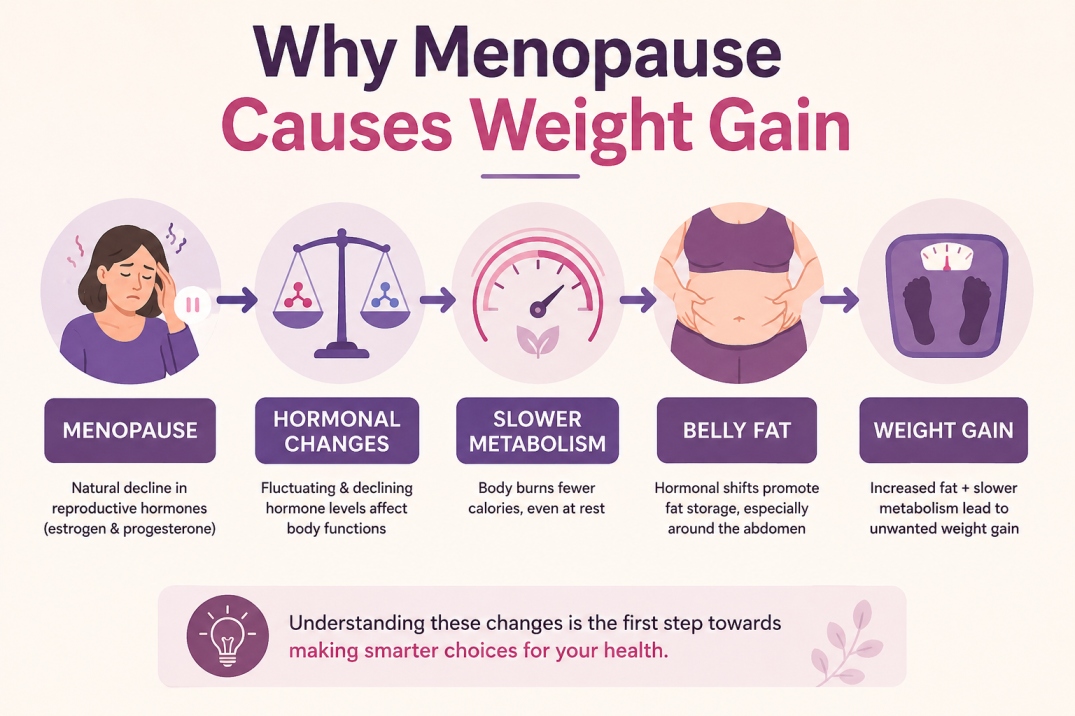
Why Does Menopause Cause Weight Gain?
Many women believe menopause automatically causes weight gain.
In reality, weight gain occurs because several biological changes happen at the same time.
These include:
Falling estrogen levels
Slower metabolism
Muscle loss
Increased insulin resistance
Reduced physical activity
Poor sleep
Higher stress levels
Together, these changes make storing fat easier while burning calories becomes more difficult.
1. Declining Estrogen Levels
Estrogen plays an important role in regulating body weight.
Healthy estrogen levels help:
Control appetite
Maintain muscle
Improve insulin sensitivity
Regulate fat storage
Support healthy metabolism
As estrogen declines:
Fat storage increases
Muscle mass decreases
Calories burned at rest decline
Fat shifts toward the abdomen
This explains why many women notice increased waist circumference despite maintaining the same body weight.
2. Slower Metabolism
As women age, resting metabolic rate naturally declines.
Factors include:
Less muscle mass
Hormonal changes
Reduced daily movement
Lower calorie requirements
This means the body burns fewer calories than it did in younger years.
Without adjusting food intake or increasing activity, gradual weight gain often occurs.
3. Loss of Muscle Mass
Beginning around age 30, adults naturally lose muscle.
During menopause, this process accelerates.
Since muscle burns more calories than fat—even at rest—losing muscle reduces daily calorie expenditure.
Strength training and adequate protein intake become increasingly important during menopause.
4. Increased Belly Fat
One of the biggest body changes after menopause is the shift in fat distribution.
Instead of storing fat around the hips and thighs, women tend to accumulate more fat around the abdomen.
This type of fat, called visceral fat, surrounds internal organs and is associated with a higher risk of:
Type 2 diabetes
High blood pressure
Heart disease
Fatty liver disease
Metabolic syndrome
5. Insulin Resistance
Lower estrogen levels may reduce insulin sensitivity.
As insulin resistance develops:
Blood sugar rises more easily
Fat storage increases
Hunger becomes more frequent
Sugar cravings become stronger
Weight loss becomes more difficult
Improving insulin sensitivity through healthy eating and exercise can significantly improve weight management.
6. Sleep Problems
Many women experience:
Night sweats
Hot flashes
Insomnia
Frequent waking
Poor sleep affects hormones that regulate hunger and fullness.
As a result:
Appetite increases
Cravings become stronger
Energy decreases
Physical activity often declines
7. Stress and Cortisol
Midlife often comes with additional stress from work, family, caregiving, or health concerns.
Chronic stress raises cortisol levels.
High cortisol may contribute to:
Belly fat
Emotional eating
Sugar cravings
Fatigue
Poor sleep
Managing stress is an important part of long-term weight control.
Common Symptoms of Menopause
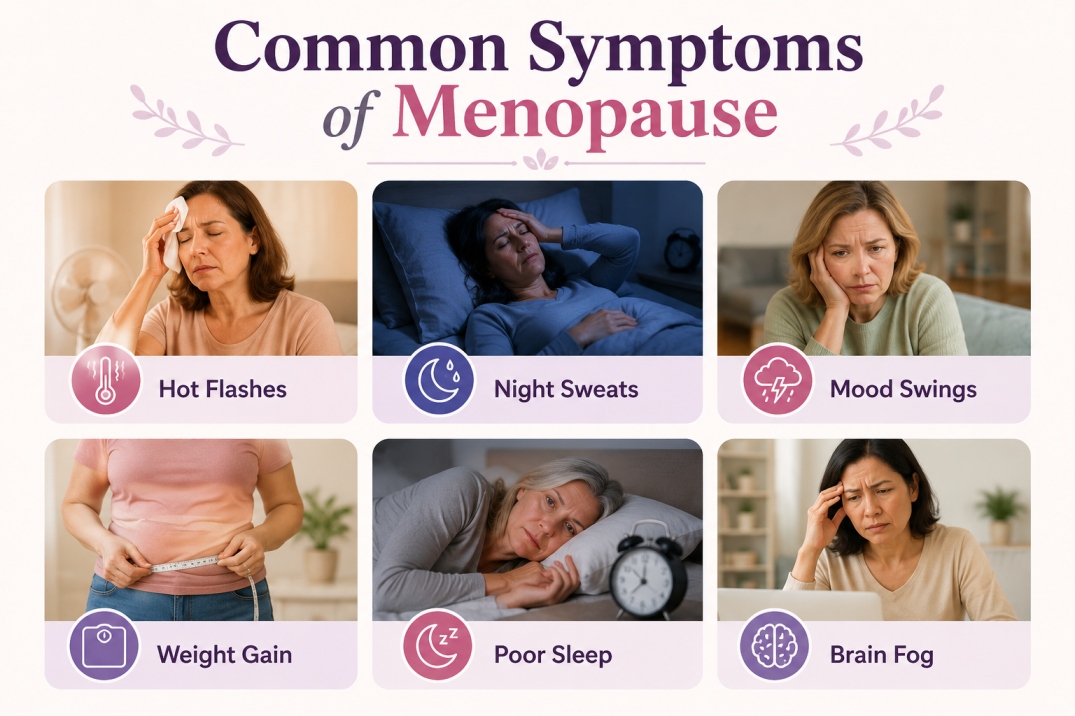
Menopause affects every woman differently. Some experience only mild symptoms, while others notice significant physical and emotional changes that can impact daily life. These symptoms are primarily caused by declining estrogen levels and hormonal fluctuations.
Physical Symptoms
The most common physical symptoms include:
Weight gain, especially around the abdomen
Increased belly fat
Hot flashes
Night sweats
Fatigue
Joint and muscle pain
Headaches
Dry skin
Hair thinning
Breast tenderness
Vaginal dryness
Reduced libido
Emotional Symptoms
Hormonal changes can also affect emotional well-being.
Many women experience:
Mood swings
Anxiety
Depression
Irritability
Difficulty concentrating
Memory lapses ("brain fog")
Low motivation
Reduced confidence
Sleep-Related Symptoms
Poor sleep is extremely common during menopause.
Women may experience:
Difficulty falling asleep
Frequent awakenings
Night sweats
Early morning waking
Poor sleep quality
Daytime fatigue
Sleep disturbances often worsen weight gain by increasing hunger hormones and reducing energy for physical activity.
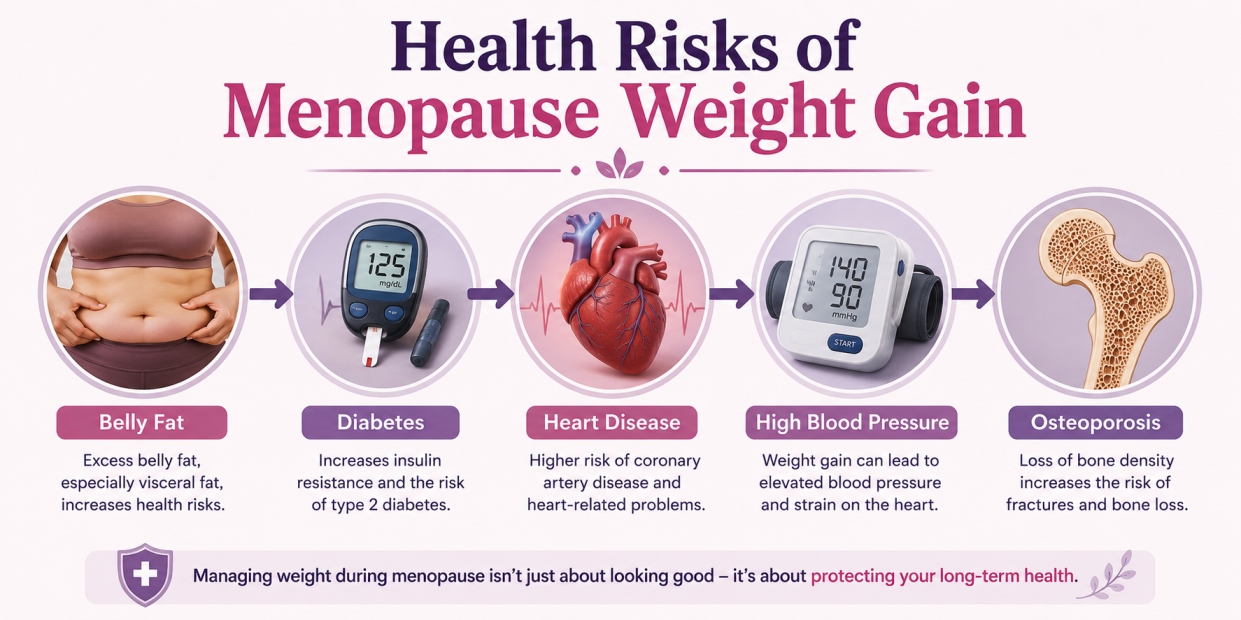
Health Risks of Menopause Weight Gain
Weight gain during menopause is not only a cosmetic concern. Increased body fat—especially around the waist—can increase the risk of several chronic diseases.
1. Type 2 Diabetes
Reduced estrogen levels and increased insulin resistance make blood sugar harder to control.
Women who gain excess abdominal fat have a greater risk of developing:
Prediabetes
Type 2 diabetes
Poor glucose tolerance
2. Heart Disease
Heart disease becomes one of the leading health concerns after menopause.
Risk factors include:
High blood pressure
Elevated cholesterol
Increased belly fat
Insulin resistance
Physical inactivity
Maintaining a healthy weight significantly reduces cardiovascular risk.
3. Osteoporosis
Estrogen helps protect bone density.
After menopause:
Bone loss accelerates
Fracture risk increases
Muscle weakness becomes more common
Strength training and adequate calcium and vitamin D intake are essential.
4. Metabolic Syndrome
Metabolic syndrome is a combination of health conditions that increase the risk of diabetes and heart disease.
It includes:
Increased waist circumference
High blood pressure
Elevated blood sugar
High triglycerides
Low HDL ("good") cholesterol
Weight management can greatly improve these risk factors.
5. Fatty Liver Disease
Excess abdominal fat increases the risk of non-alcoholic fatty liver disease (NAFLD).
Lifestyle changes such as healthy eating, regular exercise, and gradual weight loss can help prevent or improve fatty liver.
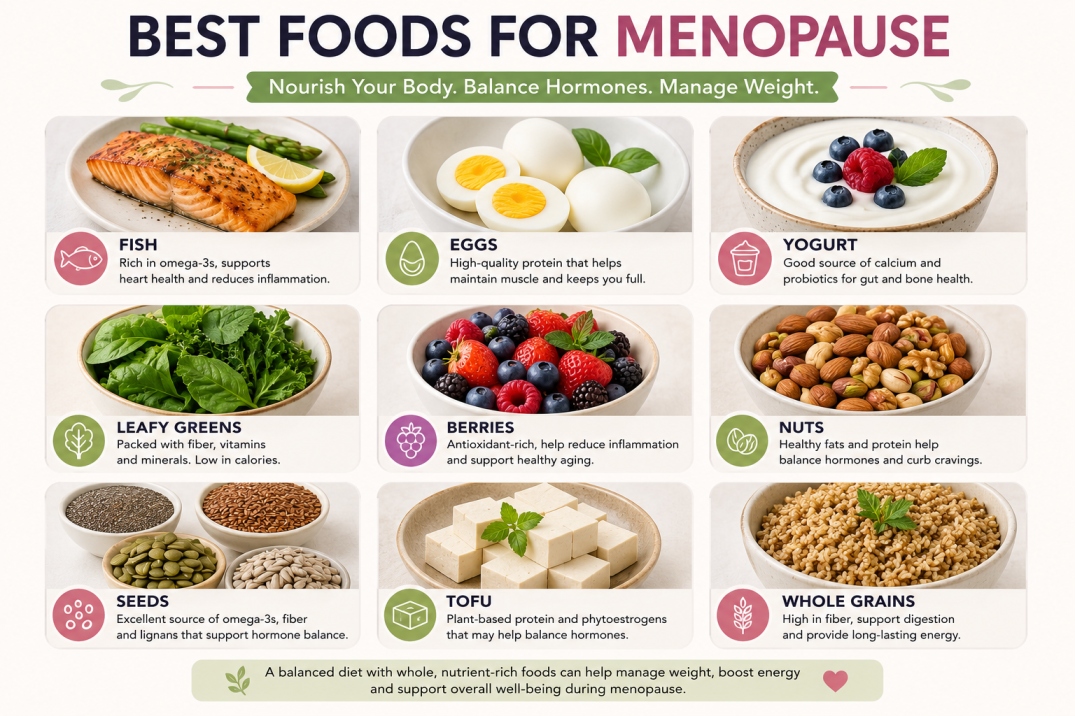
Best Diet for Menopause Weight Loss
There is no single "menopause diet," but research consistently shows that eating nutrient-dense, minimally processed foods helps control weight, preserve muscle, and reduce disease risk.https://www.nin.res.in
A healthy menopause diet should focus on:
Lean protein
High-fiber carbohydrates
Healthy fats
Plenty of vegetables
Fruits
Whole grains
Adequate calcium
Vitamin D-rich foods
The goal is not crash dieting but creating a sustainable calorie deficit while meeting nutritional needs.
Foods to Include
1. Lean Protein
Protein becomes increasingly important after menopause because it helps preserve muscle mass, supports metabolism, and improves satiety.
Good protein sources include:
Eggs
Chicken breast
Fish
Turkey
Paneer
Greek yogurt
Low-fat milk
Tofu
Tempeh
Lentils
Chickpeas
Kidney beans
Soybeans
Aim to include protein with every meal.
2. High-Fiber Foods
Fiber supports digestion, blood sugar control, and fullness while reducing overeating.
Choose foods such as:
Oats
Brown rice
Quinoa
Millets
Whole wheat
Broccoli
Spinach
Cauliflower
Carrots
Cucumber
Apples
Pears
Berries
Beans
Chia seeds
Flaxseeds
Aim for 25–30 grams of fiber daily.
3. Healthy Fats
Healthy fats support hormone production, brain function, and heart health.
Include:
Almonds
Walnuts
Pistachios
Pumpkin seeds
Sunflower seeds
Olive oil
Avocados
Fatty fish
Unsweetened peanut butter
Consume in moderation because fats are calorie-dense.
4. Calcium-Rich Foods
Bone health becomes a priority after menopause.
Excellent calcium sources include:
Milk
Yogurt
Paneer
Cheese (in moderation)
Tofu
Sesame seeds
Ragi
Green leafy vegetables
5. Vitamin D Sources
Vitamin D helps calcium absorption and supports bone and immune health.
Sources include:
Fatty fish
Egg yolk
Fortified milk
Mushrooms exposed to sunlight
Many women may also require supplements after consulting their healthcare provider.
6. Anti-Inflammatory Foods
Chronic inflammation increases with age and may contribute to weight gain.
Eat more:
Tomatoes
Turmeric
Ginger
Garlic
Green leafy vegetables
Berries
Citrus fruits
Olive oil
Green tea
Nuts
Foods to Limit
Reducing highly processed foods helps improve weight management and metabolic health.
Limit:
Sugary drinks
Soft drinks
Sweetened fruit juices
Cakes
Pastries
Cookies
Candy
White bread
Refined flour products
Chips
Instant noodles
Deep-fried foods
Fast food
Processed meats
Excess alcohol
Foods high in trans fat
These foods provide excess calories with minimal nutrition and may worsen insulin resistance.
Portion Control
Even healthy foods can contribute to weight gain if portions are too large.
Simple strategies include:
Fill half the plate with vegetables.
One-quarter of the plate should be lean protein.
One-quarter should contain whole grains or healthy carbohydrates.
Eat slowly.
Avoid distractions while eating.
Stop eating when comfortably satisfied.
Avoid eating directly from food packages.
Plan meals ahead of time.
Why Protein Is Essential After Menopause
Protein needs increase with age due to natural muscle loss.
Benefits of adequate protein include:
Preserves lean muscle
Boosts metabolism
Reduces hunger
Improves recovery after exercise
Supports healthy bones
Helps maintain strength
Aim for 20–30 grams of protein per meal, depending on individual needs and activity levels. https://wellorafit.com/services/nutrition-diet-planning/
The Importance of Fiber
Fiber offers numerous health benefits during menopause.
It helps:
Improve digestion
Reduce constipation
Stabilize blood sugar
Lower cholesterol
Increase fullness
Reduce calorie intake
Support healthy gut bacteria
A diet rich in vegetables, fruits, legumes, and whole grains naturally increases fiber intake.
Hydration During Menopause
Hormonal changes can increase the risk of dehydration.
Stay hydrated by:
Drinking 2–3 liters of water daily
Carrying a reusable water bottle
Drinking water before meals
Replacing sugary beverages with water or herbal tea
Including water-rich fruits and vegetables
Proper hydration also supports metabolism, digestion, and exercise performance.
Does Meal Timing Matter?
Current research suggests that overall diet quality, calorie balance, and consistency are more important than eating at specific times.
Helpful habits include:
Eat breakfast daily.
Include protein in every meal.
Avoid skipping meals.
Space meals evenly throughout the day.
Limit late-night overeating.
Choose balanced meals containing protein, fiber, and healthy fats.
Following these habits helps maintain stable blood sugar levels and reduces unnecessary snacking.https://wellorafit.com/services/nutrition-diet-planning/
Best Exercise for Menopause Weight Loss
Exercise becomes even more important during and after menopause. While healthy eating creates the foundation for weight loss, regular physical activity helps preserve muscle, increase metabolism, reduce body fat, improve bone health, and lower the risk of chronic diseases.
Research consistently shows that combining strength training, cardiovascular exercise, and daily movement provides the best results for women experiencing menopause.https://wellorafit.com/services/fitness-training/
1. Strength Training
Strength training is one of the most effective forms of exercise during menopause because it helps counteract the natural loss of muscle mass caused by aging and declining estrogen levels.
Benefits
Preserves lean muscle mass
Increases resting metabolism
Burns body fat
Improves insulin sensitivity
Strengthens bones
Improves posture
Reduces the risk of osteoporosis
Enhances balance and mobility
Examples
Squats
Lunges
Deadlifts
Dumbbell rows
Chest press
Shoulder press
Resistance band exercises
Step-ups
Glute bridges
Aim for 2–4 strength-training sessions per week, targeting all major muscle groups.
2. Walking
Walking is one of the safest, simplest, and most sustainable exercises for women during menopause.
It requires no special equipment and can easily become part of a daily routine.
Benefits
Burns calories
Improves heart health
Reduces stress
Supports weight management
Improves blood sugar control
Enhances mood
Reduces hot flash severity in some women
Aim for 8,000–10,000 steps daily or 30–45 minutes of brisk walking most days of the week.
3. Cardiovascular Exercise
Cardio exercises improve cardiovascular fitness while increasing calorie expenditure.
Examples include:
Brisk walking
Cycling
Swimming
Dancing
Jogging
Rowing
Elliptical training
Aerobic classes
Benefits
Supports fat loss
Improves endurance
Reduces blood pressure
Improves cholesterol levels
Enhances heart health
Boosts energy
Aim for 150–300 minutes of moderate-intensity cardio per week, as recommended by health organizations.
4. High-Intensity Interval Training (HIIT)
HIIT involves alternating short bursts of high-intensity activity with periods of recovery.
For example:
30 seconds of fast walking
60 seconds of slow walking
Repeated for 20–30 minutes.
Benefits
Burns calories efficiently
Improves cardiovascular fitness
Enhances insulin sensitivity
Helps reduce abdominal fat
Saves time
Women new to exercise should begin gradually and seek professional guidance if they have existing medical conditions.
5. Yoga
Yoga provides both physical and mental health benefits during menopause.
Benefits
Reduces stress
Improves flexibility
Improves balance
Enhances sleep quality
Helps manage anxiety
Supports joint mobility
May reduce hot flashes in some women
Popular styles include:
Hatha Yoga
Yin Yoga
Restorative Yoga
Gentle Flow Yoga
Practicing yoga 2–3 times weekly can complement strength training and cardio.
6. Pilates
Pilates focuses on controlled movements that strengthen the core while improving posture and flexibility.
Benefits include:
Stronger abdominal muscles
Better posture
Improved balance
Reduced back pain
Enhanced flexibility
Improved coordination
Pilates is especially beneficial for maintaining mobility as women age.
Weekly Workout Plan
Monday
Full-Body Strength Training
Tuesday
40-minute Brisk Walk
Wednesday
Upper Body Strength + Core Exercises
Thursday
Yoga or Pilates
Friday
Lower Body Strength Training
Saturday
Cycling, Swimming, or Cardio Workout
Sunday
Active Recovery
Examples:
Leisure walk
Stretching
Mobility exercises
Light yoga
Rest and recovery are equally important for muscle repair and preventing injury.
Lifestyle Changes That Help Prevent Menopause Weight Gain
Healthy weight management during menopause extends beyond diet and exercise. Daily lifestyle habits significantly influence hormones, metabolism, appetite, and long-term health.
Prioritize Quality Sleep
Many women struggle with sleep during menopause due to hot flashes and hormonal changes.
Poor sleep may:
Increase hunger hormones
Slow metabolism
Increase cravings for sugary foods
Reduce exercise performance
Promote belly fat accumulation
Aim for 7–9 hours of quality sleep every night.
Tips for Better Sleep
Maintain a regular sleep schedule.
Keep the bedroom cool.
Avoid caffeine late in the day.
Limit screen time before bed.
Practice relaxation techniques before sleeping.
Manage Stress
Long-term stress increases cortisol, which encourages fat storage—particularly around the waist.
Healthy stress-management strategies include:
Meditation
Yoga
Deep breathing
Journaling
Spending time outdoors
Reading
Listening to music
Talking with supportive friends or family
Even 10–15 minutes daily of stress management can positively impact overall well-being.
Stay Physically Active Throughout the Day
Exercise sessions alone cannot offset prolonged sitting.
Simple ways to stay active include:
Take the stairs.
Walk after meals.
Stretch every hour.
Stand while talking on the phone.
Park farther away.
Perform household chores.
Increasing daily movement contributes to greater calorie expenditure.
Maintain Healthy Eating Habits
Rather than following restrictive diets:
Eat balanced meals.
Include protein in every meal.
Fill half your plate with vegetables.
Choose whole grains.
Stay hydrated.
Practice mindful eating.
Consistency matters far more than perfection.
Build Muscle
Preserving muscle becomes increasingly important after menopause.
Higher muscle mass:
Burns more calories
Improves insulin sensitivity
Supports healthy aging
Protects bone health
Improves physical function
Strength training combined with adequate protein intake is the most effective strategy.
Practical Weight Loss Tips During Menopause
Small, sustainable habits often lead to the greatest long-term success.
Healthy Habits
Eat protein at every meal.
Include vegetables in every lunch and dinner.
Eat whole fruits instead of fruit juice.
Drink plenty of water.
Strength train regularly.
Walk daily.
Limit sugary beverages.
Reduce highly processed foods.
Sleep 7–9 hours.
Manage stress consistently.
Track waist circumference as well as body weight.
Celebrate non-scale victories such as increased strength, better energy, and improved fitness.
Remember that weight loss during menopause may occur more slowly than in earlier years. Consistency and patience are the keys to lasting success.
Can Losing Weight Improve Menopause Symptoms?
Although menopause is a natural stage of life and cannot be prevented, maintaining a healthy weight can significantly reduce many menopause-related symptoms and improve overall health.
Research shows that even a 5–10% reduction in body weight can lead to meaningful health improvements.
For example, if a woman weighs 80 kg, losing just 4–8 kg can improve several aspects of health.
Benefits of Healthy Weight Loss During Menopause
1. Reduces Belly Fat
Abdominal fat is one of the most noticeable changes during menopause.
Losing weight helps:
Reduce waist circumference
Lower visceral (deep abdominal) fat
Improve body composition
Reduce inflammation
2. Improves Blood Sugar Control
Healthy weight loss improves insulin sensitivity, helping the body regulate blood sugar more effectively.
Benefits include:
Lower risk of prediabetes
Reduced risk of Type 2 diabetes
Fewer sugar cravings
Better energy levels
3. Supports Heart Health
Maintaining a healthy weight lowers the risk of cardiovascular disease by improving:
Blood pressure
Cholesterol levels
Triglycerides
Blood circulation
Heart disease risk increases after menopause, making healthy lifestyle habits especially important.
4. Improves Mobility and Joint Health
Excess body weight places additional stress on joints.
Weight loss can help:
Reduce knee pain
Improve mobility
Increase flexibility
Make daily activities easier
5. Enhances Sleep Quality
Weight loss combined with regular exercise often improves:
Sleep quality
Energy levels
Daytime alertness
Recovery
Better sleep also supports long-term weight management.
6. Boosts Confidence and Mental Well-Being
Healthy lifestyle changes frequently lead to:
Improved mood
Greater self-confidence
Reduced anxiety
Better quality of life
Increased independence
Weight management is about much more than appearance—it supports overall physical and emotional well-being.

Common Mistakes Women Make During Menopause
Many women become frustrated by slower weight loss and unknowingly adopt habits that make losing weight even harder.
1. Following Crash Diets
Very low-calorie diets may produce rapid weight loss initially but often lead to:
Muscle loss
Slower metabolism
Nutrient deficiencies
Fatigue
Weight regain
Choose a balanced eating pattern instead of restrictive diets.
2. Skipping Meals
Skipping meals may increase hunger later in the day, making overeating more likely.
Regular, balanced meals help stabilize appetite and blood sugar levels.
3. Eating Too Little Protein
Protein requirements increase with age.
Insufficient protein intake may contribute to:
Muscle loss
Slower metabolism
Increased hunger
Reduced strength
Include protein with every meal.
4. Avoiding Strength Training
Many women rely only on cardio for weight loss.
However, strength training is essential because it:
Preserves muscle
Increases metabolism
Supports bone health
Improves body composition
5. Ignoring Sleep
Poor sleep can:
Increase hunger hormones
Increase cravings
Reduce motivation to exercise
Slow recovery
Aim for 7–9 hours of quality sleep every night.
6. Sitting Too Much
Even regular exercise cannot completely offset prolonged sitting.
Increase daily movement by:
Walking more
Taking stretch breaks
Using stairs
Standing periodically
7. Expecting Quick Results
Weight loss after menopause is often slower than in younger years.
Focus on long-term progress rather than rapid weight loss.
Celebrate improvements such as:
Better energy
Increased strength
Smaller waist circumference
Improved fitness
Better blood test results
How to Maintain Weight Loss After Menopause
Reaching your goal weight is only the beginning.
Long-term success depends on maintaining healthy habits consistently.
Continue Eating Balanced Meals
Base meals around:
Lean protein
Vegetables
Whole grains
Healthy fats
High-fiber foods
Avoid returning to previous unhealthy eating habits.
Stay Active
Aim for:
150–300 minutes of moderate physical activity weekly
Strength training 2–3 times per week
Daily walking
Regular stretching
Consistency matters more than perfection.
Monitor Progress Beyond the Scale
Body weight is only one indicator of health.
Also monitor:
Waist circumference
Clothing fit
Energy levels
Strength gains
Blood pressure
Blood sugar
Cholesterol levels
Plan Ahead
Successful long-term weight management often includes:
Weekly meal planning
Grocery shopping with a list
Healthy snacks available at home
Preparing meals in advance
Planning reduces impulsive food choices.
Be Flexible
No one eats perfectly every day.
Enjoying occasional treats in moderation is part of a sustainable lifestyle.
Healthy eating is about consistency—not perfection.
Key Takeaways
Menopause naturally changes hormone levels, making weight management more challenging.
Declining estrogen contributes to increased belly fat, slower metabolism, and muscle loss.
Strength training is one of the most effective ways to preserve muscle and support metabolism.
A balanced diet rich in protein, fiber, vegetables, whole grains, and healthy fats supports long-term weight management.
Sleep, stress management, hydration, and regular physical activity are equally important.
Avoid crash diets, meal skipping, and unrealistic expectations.
Sustainable lifestyle habits produce lasting results and improve overall health.
Conclusion
Weight gain during menopause is common, but it is not unavoidable. Understanding how hormonal changes affect metabolism, muscle mass, and fat distribution allows women to make informed choices that support long-term health.
Rather than focusing on quick fixes, prioritize habits that you can maintain for life. Eating a balanced diet, staying physically active, building muscle through strength training, getting enough sleep, and managing stress are the foundations of successful weight management during and after menopause.
Remember that success is not measured only by the number on the scale. Increased strength, improved energy, better mobility, healthier blood sugar levels, and enhanced confidence are equally valuable indicators of progress.
With patience, consistency, and the right support, women can successfully manage menopause-related weight gain and enjoy a healthier, more active future.
FAQ Schema
1. Why do women gain weight during menopause?
Declining estrogen levels, slower metabolism, muscle loss, poor sleep, and reduced physical activity all contribute to weight gain during menopause.
2. Is belly fat common after menopause?
Yes. Lower estrogen levels shift fat storage from the hips and thighs to the abdominal area, increasing belly fat.
3. Can menopause weight gain be reversed?
Yes. A healthy diet, regular strength training, cardio exercise, good sleep, and stress management can help reduce menopause-related weight gain.
4. What is the best diet for menopause?
A balanced diet rich in lean protein, vegetables, fruits, whole grains, healthy fats, calcium-rich foods, and fiber is recommended.
5. Which exercise is best for menopause weight loss?
Strength training combined with walking, cardiovascular exercise, and flexibility training offers the greatest benefits.
6. How much protein should women eat during menopause?
Most women benefit from consuming approximately 20–30 grams of protein per meal, depending on age, activity level, and overall health.
7. Does menopause slow metabolism?
Yes. Aging, declining estrogen levels, and reduced muscle mass contribute to a slower metabolism, making weight management more challenging.
8. Can losing weight reduce hot flashes?
Some studies suggest that maintaining a healthy weight may reduce the frequency and severity of hot flashes in some women.
9. How much exercise is recommended during menopause?
Aim for at least 150–300 minutes of moderate-intensity exercise each week, along with 2–3 strength-training sessions.
10. Is it possible to lose weight after menopause?
Absolutely. Although weight loss may be slower, consistent healthy eating, exercise, adequate sleep, and stress management can lead to sustainable results.
Ready to Begin Your Health Journey?
Get a personalized, medically guided plan built around your unique biology.