Metabolism: How It Works and How to Boost It Naturally
What Is Metabolism?
Metabolism refers to all the chemical processes that occur within the body to maintain life. These processes convert food and beverages into energy that supports breathing, circulation, digestion, cell repair, hormone production, and physical activity.
Your metabolism operates continuously, even while resting or sleeping.
According to the https://www.nih.gov, metabolism includes all the chemical reactions that help the body convert food into energy.
How Metabolism Works
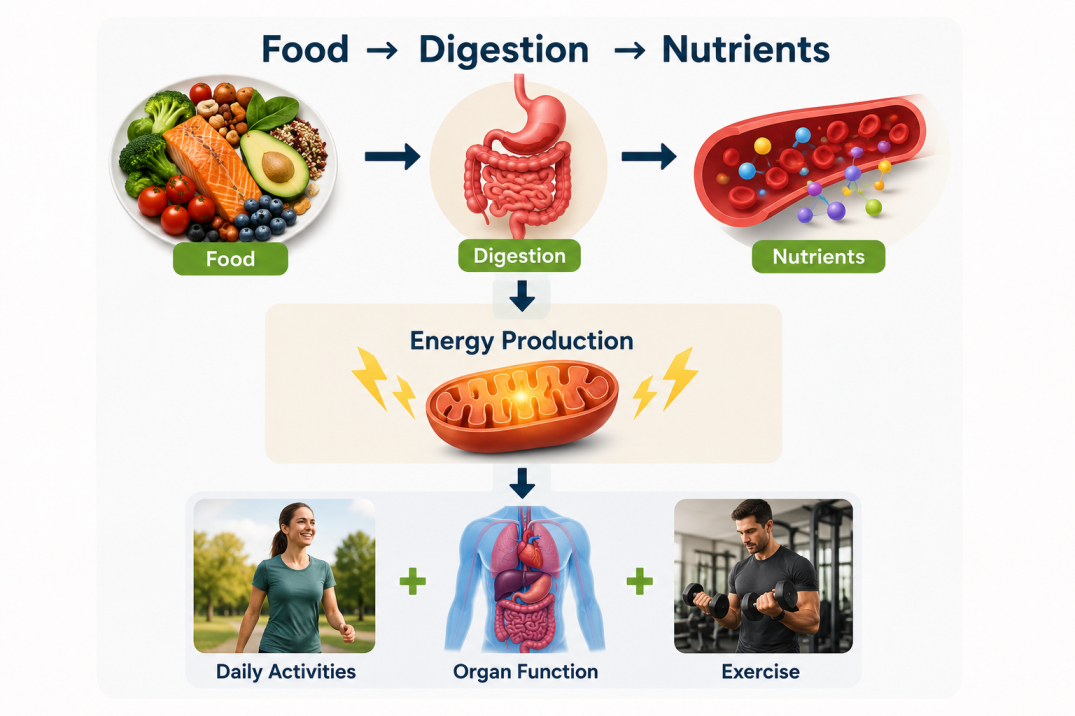
The body converts food into energy through several metabolic processes.
MedlinePlus https://medlineplus.gov/metabolism.html explains that metabolism involves converting nutrients from food into energy required for growth, repair, and daily bodily functions.
Components of Metabolism
Basal Metabolic Rate (BMR)
Energy used to maintain vital body functions at rest.
Physical Activity
Calories burned during exercise and daily movement.
Thermic Effect of Food (TEF)
Energy required to digest, absorb, and process nutrients.
Common Signs of a Slow Metabolism
Physical Symptoms
Unexplained weight gain
Difficulty losing weight
Constant fatigue
Low energy levels
Feeling cold frequently
Reduced stamina
Increased body fat
Other Signs
Dry skin
Hair thinning
Slow recovery from exercise
Increased hunger
Major Factors That Affect Metabolism
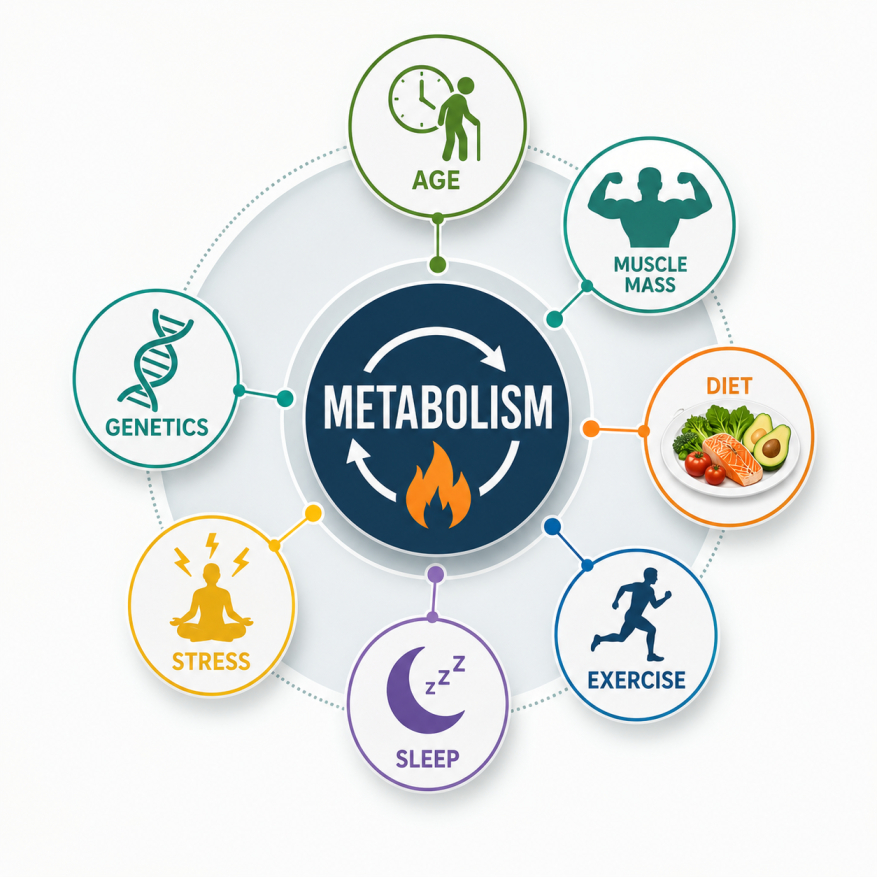
1. Age
Metabolic rate gradually declines with age due to loss of muscle mass.
2. Muscle Mass
More muscle tissue burns more calories, even at rest.
3. Physical Activity
Regular exercise increases calorie expenditure.
4. Diet Quality
Balanced nutrition supports efficient energy production.
5. Sleep Quality
Poor sleep can negatively affect metabolic hormones.
6. Stress
Chronic stress may increase cortisol levels and impact metabolism.
7. Genetics
Some individuals naturally have faster or slower metabolic rates.
Risk Factors for a Slow Metabolism
You may be at greater risk if you:
Lead a sedentary lifestyle
Have low muscle mass
Frequently skip meals
Experience chronic stress
Sleep less than 7 hours
Follow restrictive diets repeatedly
Health Effects of Poor Metabolic Health
Weight Gain
Reduced calorie expenditure may promote fat accumulation.
Obesity
Long-term energy imbalance can increase obesity risk.
Insulin Resistance
Poor metabolic health may affect blood sugar regulation. https://wellorafit.com/services/doctor-consultations/
Fatty Liver Disease
Excess calorie intake may contribute to fat accumulation in the liver.
https://wellorafit.com/services/nutrition-diet-planning/
Metabolic Syndrome
Multiple metabolic abnormalities can increase cardiovascular risk.
How Metabolism Is Assessed
Healthcare professionals may evaluate:
Body Composition
Muscle mass
Body fat percentage
Laboratory Markers
Blood glucose
HbA1c
Lipid profile
Thyroid function tests
Best Diet for Supporting Metabolism
Foods to Include
Protein-Rich Foods
Eggs
Fish
Chicken
Paneer
Greek yogurt
Tofu
Lentils
Beans
https://wellorafit.com/services/nutrition-diet-planning/
High-Fiber Foods
Oats
Vegetables
Fruits
Whole grains
Chia seeds
Healthy Fats
Nuts
Seeds
Olive oil
Avocado
Foods to Limit
Sugary beverages
Excess alcohol
Ultra-processed foods
Fried foods
Refined carbohydrates
Excess sweets
Exercise for Improving Metabolism
Strength Training
2–4 sessions weekly.
Walking
8,000–10,000 steps daily.
Cardio Exercise
150 minutes weekly.
HIIT Workouts
1–2 sessions per week.
Daily Movement
Take regular movement breaks throughout the day.
Lifestyle Habits That Support Metabolism
Prioritize Sleep
Aim for 7–9 hours nightly.
Manage Stress
Meditation
Yoga
Deep breathing
Stay Hydrated
Adequate hydration supports metabolic processes.
Build Muscle Mass
Strength training helps maintain a higher metabolic rate.
Metabolism Myths You Need to Stop Believing
Myth 1
Eating late at night destroys metabolism.
Myth 2
Certain foods dramatically boost metabolism.
Myth 3
Skipping meals speeds up fat loss.
Myth 4
A slow metabolism is the only reason for weight gain.
Myth 5
Metabolism cannot be improved.
Can You Boost Your Metabolism Naturally?
Yes. Healthy habits can support metabolic efficiency:
Strength training
Adequate protein intake
Quality sleep
Daily physical activity
Stress management
Healthy body weight
Key Takeaways
Metabolism is the body's energy-producing system.
Muscle mass plays a major role in calorie burning.
Sleep, nutrition, exercise, and stress influence metabolic health.
Strength training is one of the most effective ways to support metabolism.
Healthy lifestyle habits contribute to long-term weight management.
Conclusion
Metabolism affects how efficiently the body uses energy and plays a significant role in overall health and weight management. While genetics influence metabolic rate, lifestyle factors such as nutrition, exercise, sleep, and stress management can significantly support a healthy metabolism and improve long-term wellbeing.
FAQ Schema
What is metabolism?
Metabolism is the process by which the body converts food into energy required for daily functions.
Does metabolism slow down with age?
Yes, metabolism generally slows with age due to reduced muscle mass and lower activity levels.
What foods help boost metabolism?
Protein-rich foods, fiber-rich foods, and nutrient-dense whole foods can support metabolic health.
Does exercise increase metabolism?
Yes. Strength training and regular physical activity can help increase calorie expenditure.
Can metabolism affect weight loss?
Yes. Metabolism influences how many calories your body burns each day, affecting weight management.
Ready to Begin Your Health Journey?
Get a personalized, medically guided plan built around your unique biology.