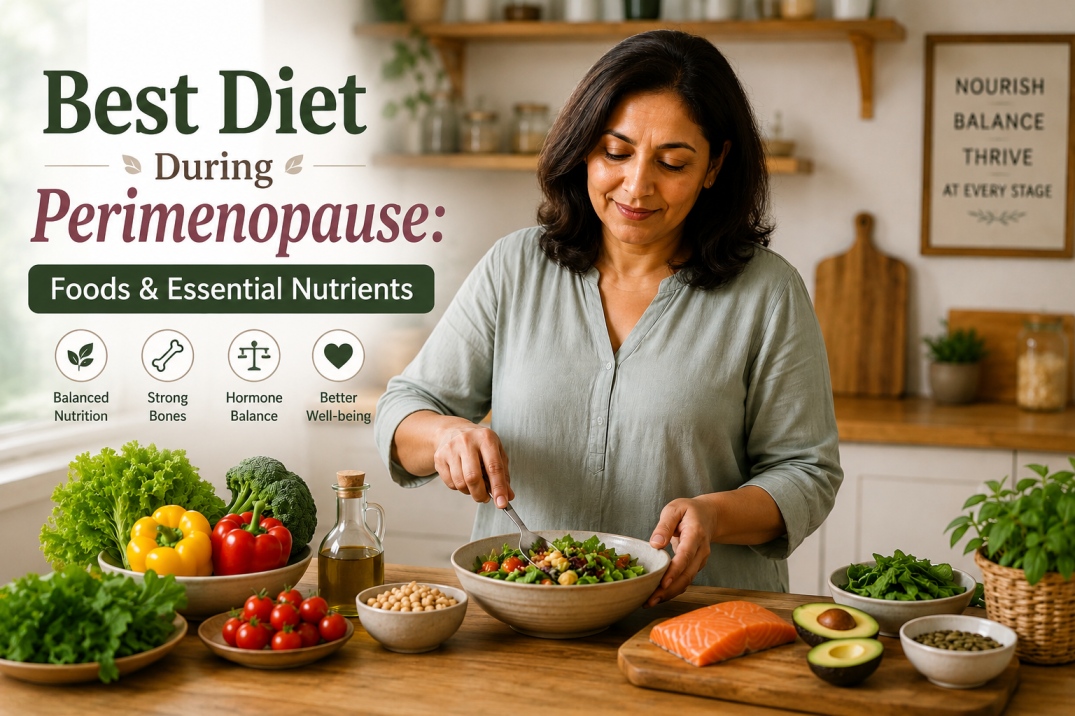
Best Diet During Perimenopause: Foods & Essential Nutrients
Perimenopause is a natural stage of life when the body begins transitioning toward menopause. During this period, changing hormone levels can be accompanied by changes in menstrual cycles, sleep, appetite, energy levels, body composition, and overall well-being.
Nutrition becomes particularly important during this stage because the body's nutritional priorities can change with age and hormonal transition.
A balanced diet can help support muscle health, bone health, energy levels, digestive health, healthy weight management, and overall well-being.
However, nutrition during perimenopause does not mean following a special or highly restrictive diet. Instead, the focus should be on eating a varied diet that provides adequate protein, fiber, vitamins, minerals, healthy fats, and other essential nutrients.
Small and consistent improvements in food choices can make a healthy eating pattern easier to maintain throughout perimenopause and beyond.https://womenshealth.gov
What Is Perimenopause?
Perimenopause is the period leading up to menopause, during which ovarian hormone levels become more variable and menstrual cycles may become irregular.
Women may experience different symptoms during this transition, including:
· Irregular periods
· Changes in menstrual flow
· Hot flashes
· Night sweats
· Sleep disturbances
· Mood changes
· Fatigue
· Changes in appetite
· Difficulty concentrating
· Changes in body composition
The timing and experience of perimenopause can vary considerably between individuals.
Because nutritional needs and lifestyle factors can also change during midlife, maintaining a balanced eating pattern becomes an important part of healthy aging.https://www.who.int
Why Does Nutrition Matter During Perimenopause?
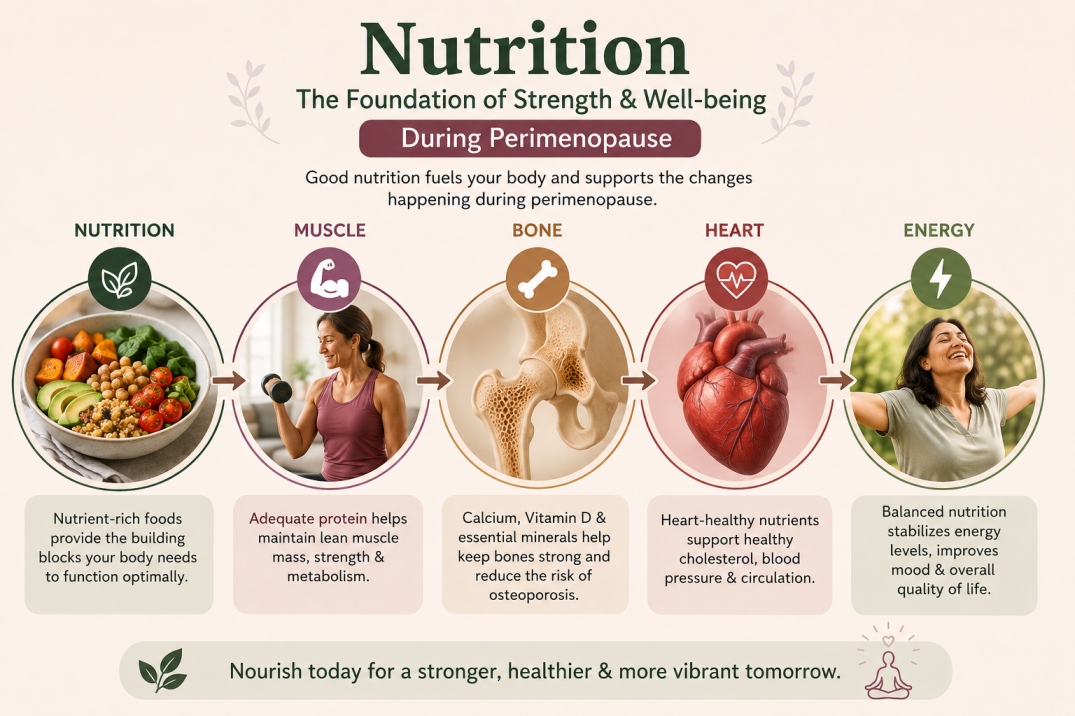
Nutrition provides the building blocks your body needs to maintain health during this transition.
A well-balanced eating pattern can help support:
Muscle Health
Adequate protein combined with physical activity, particularly resistance training, can help support muscle maintenance.
Bone Health
Calcium, vitamin D, protein, and other nutrients contribute to maintaining healthy bones.
Heart Health
Choosing vegetables, fruits, whole grains, legumes, nuts, seeds, and healthy fats can support an overall heart-healthy eating pattern.
Digestive Health
Fiber-rich foods can support normal digestion and bowel regularity.
Healthy Weight Management
Balanced meals and appropriate portions can help support a healthy body weight and body composition.
Energy Levels
Regular, nutrient-dense meals can help provide the energy and nutrients needed for daily activities.
How Hormonal Changes Can Affect Nutrition and Eating Habits
Hormonal fluctuations during perimenopause can occur alongside changes in appetite, sleep, mood, and body composition.
For some women, these changes may affect eating habits.
You may notice:
· Increased cravings
· Changes in appetite
· More frequent snacking
· Eating when stressed or tired
· Changes in food preferences
Poor sleep can also make healthy eating more challenging because fatigue may increase the desire for convenient or highly palatable foods.
This is why nutrition should be considered together with sleep, physical activity, stress management, and overall lifestyle.
What Should a Perimenopause Diet Include?
There is no single diet that is appropriate for every woman during perimenopause.
Instead, focus on building meals around nutrient-rich foods.
A balanced eating pattern can include:
· Protein-rich foods
· Vegetables
· Whole fruits
· Whole grains
· Legumes
· Dairy or suitable alternatives
· Nuts and seeds
· Healthy fats
· Adequate fluids
The exact amount required will depend on individual factors such as age, activity level, body size, dietary preferences, and health conditions.https://wellorafit.com/services/nutrition-diet-planning/
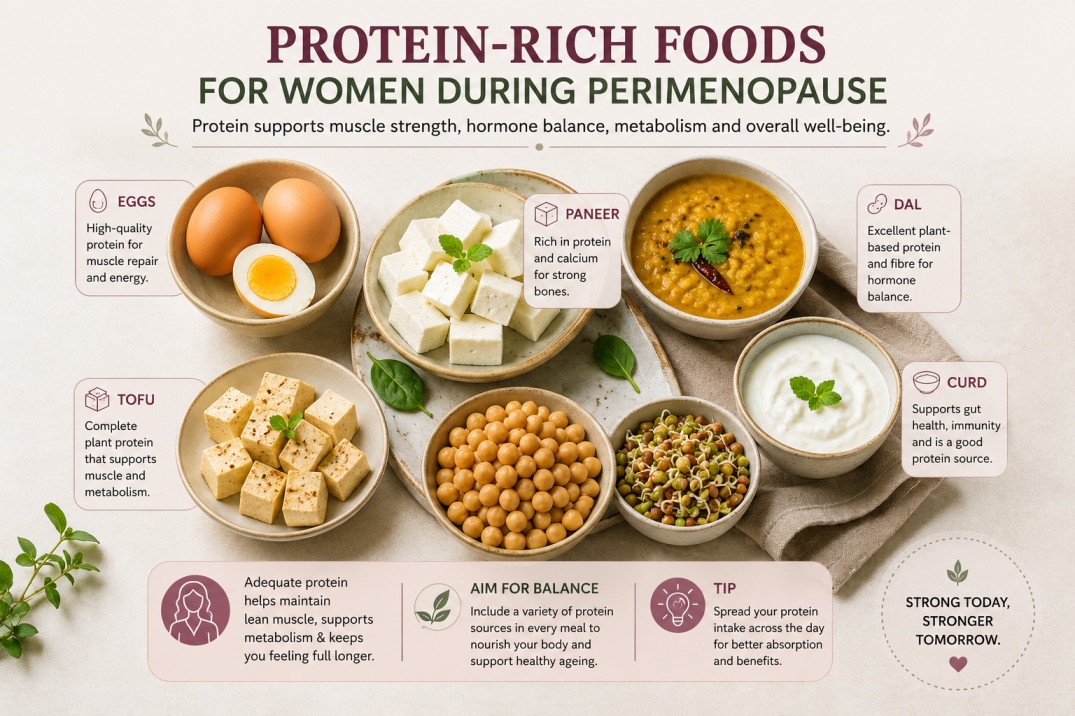
Protein: An Important Nutrient During Perimenopause
Protein is particularly important during midlife because maintaining muscle becomes increasingly important with age.
Protein-rich foods include:
· Eggs
· Milk
· Curd
· Greek yogurt
· Paneer
· Dal
· Chickpeas
· Rajma
· Soybeans
· Tofu
· Fish
· Chicken
Rather than consuming most protein in one meal, try to include a protein source across your main meals.
For example:
Breakfast: Moong dal chilla + curd
Lunch: Dal + roti + vegetables
Snack: Greek yogurt or roasted chana
Dinner: Paneer/tofu/fish/chicken + vegetables + whole grain
Individual protein needs vary, so women with specific health conditions or dietary requirements should seek personalized guidance from a qualified dietitian or healthcare professional.
Fiber: Important for Digestive and Metabolic Health
Fiber is an important part of a balanced diet and is found naturally in plant foods.
Good sources include:
· Vegetables
· Whole fruits
· Oats
· Whole wheat
· Millets
· Barley
· Dal
· Beans
· Chickpeas
· Nuts
· Seeds
Increasing fiber gradually can support digestive health and help meals feel more satisfying.
A simple way to increase fiber is to add vegetables to lunch and dinner, choose whole fruits instead of juices, and include legumes or whole grains regularly.
Essential Nutrients During Perimenopause
Nutrition during perimenopause should focus on providing the nutrients needed to support muscle, bones, heart health, energy, digestion, and healthy aging. Rather than focusing on individual “superfoods,” aim for a varied eating pattern that includes different food groups throughout the day.
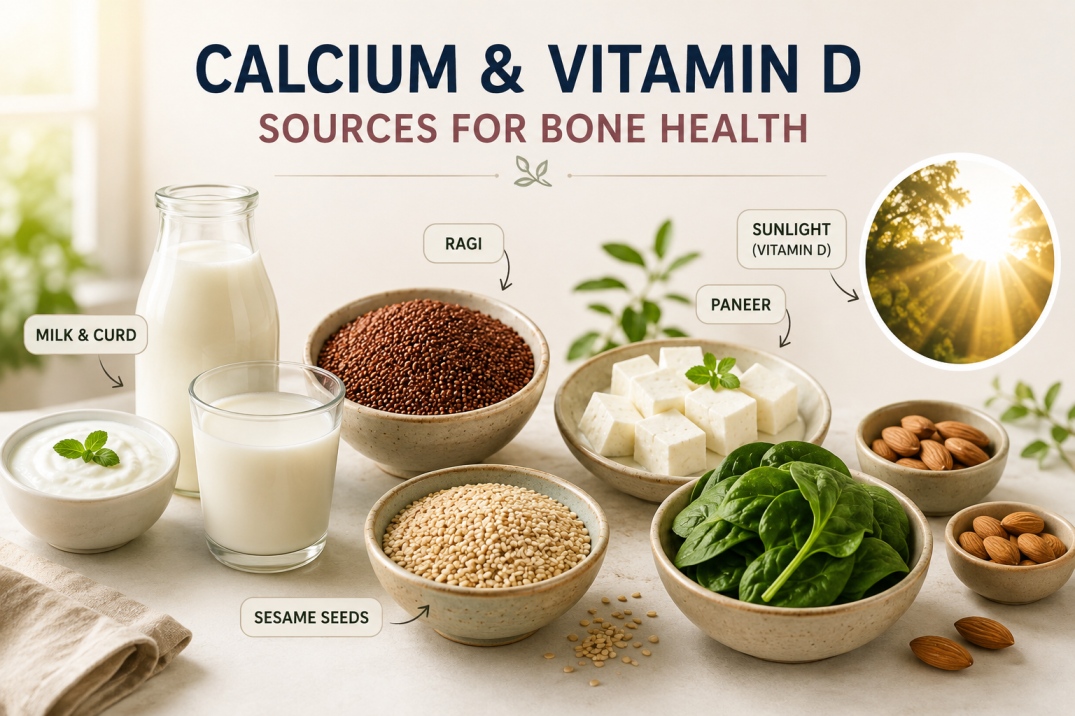
1. Calcium
Calcium is an important nutrient for maintaining healthy bones and teeth.
Bone health becomes particularly important during and after the menopause transition because declining estrogen levels can contribute to changes in bone density.
Good food sources of calcium include:
· Milk
· Curd
· Paneer
· Ragi
· Sesame seeds
· Tofu made with calcium salts
· Green leafy vegetables
· Calcium-fortified foods
Including calcium-rich foods regularly can help support overall bone health.
2. Vitamin D
Vitamin D helps the body absorb calcium and plays an important role in bone and muscle health.
Sources of vitamin D include:
· Sunlight exposure
· Egg yolks
· Fatty fish
· Fortified milk and other fortified foods
Food alone may not always provide sufficient vitamin D, depending on diet and individual circumstances.
If you are concerned about vitamin D deficiency, discuss testing and supplementation with a healthcare professional rather than taking high-dose supplements without guidance.
3. Protein
Protein is essential for maintaining muscle, repairing tissues, and supporting overall health.
As muscle mass can gradually decline with age, adequate protein becomes particularly important during midlife.
Useful protein sources include:
Vegetarian Sources
· Dal
· Rajma
· Chickpeas
· Soybeans
· Tofu
· Paneer
· Curd
· Greek yogurt
· Milk
· Eggs
Non-Vegetarian Sources
· Fish
· Chicken
· Eggs
Try to include a protein source in each main meal.
4. Fiber
Fiber supports digestive health and can help make meals more filling.
Good sources include:
· Vegetables
· Fruits
· Oats
· Whole wheat
· Millets
· Barley
· Dal
· Beans
· Chickpeas
· Nuts
· Seeds
A practical approach is to include vegetables in your main meals and choose whole fruits instead of fruit juice.
Increase fiber gradually and drink adequate fluids to support digestive comfort.
5. Healthy Fats
Not all dietary fats need to be avoided.
Healthy fats can be included in moderate amounts as part of a balanced diet.
Sources include:
· Walnuts
· Almonds
· Peanuts
· Flaxseeds
· Chia seeds
· Sesame seeds
· Avocado
· Vegetable oils
Fat is calorie-dense, so portion awareness is still important, particularly when weight management is a goal.
6. Omega-3 Fatty Acids
Omega-3 fatty acids are important components of a healthy diet.
Food sources include:
· Fatty fish such as salmon and sardines
· Walnuts
· Flaxseeds
· Chia seeds
For vegetarians, flaxseeds, chia seeds, and walnuts can provide plant-based omega-3 fats.
If considering an omega-3 supplement, discuss whether it is appropriate for you with a healthcare professional.
7. Iron
Iron is needed for the production of hemoglobin, which helps carry oxygen throughout the body.
Iron needs can vary during perimenopause, particularly while menstrual periods are still occurring.
Food sources include:
· Lentils
· Beans
· Chickpeas
· Soybeans
· Spinach and other leafy greens
· Sesame seeds
· Eggs
· Meat and fish
Plant-based sources of iron are better absorbed when eaten alongside vitamin-C-rich foods such as lemon, guava, oranges, tomatoes, or bell peppers.
Women experiencing unusually heavy menstrual bleeding should discuss this with a healthcare professional, as iron deficiency may require evaluation.
8. Magnesium
Magnesium contributes to normal muscle and nerve function and is involved in many processes within the body.
Food sources include:
· Nuts
· Seeds
· Whole grains
· Legumes
· Leafy green vegetables
Including a variety of whole foods can help provide magnesium as part of a balanced diet.
9. Potassium
Potassium is an important mineral that supports normal muscle and nerve function and contributes to healthy blood pressure regulation.
Good food sources include:
· Bananas
· Oranges
· Guava
· Coconut water
· Potatoes
· Sweet potatoes
· Beans
· Lentils
· Spinach
· Tomatoes
Most people can obtain potassium through a varied diet. Individuals with kidney disease or certain medical conditions may need specific potassium guidance from their healthcare professional.
10. Antioxidant-Rich Foods
Fruits and vegetables provide vitamins, minerals, fiber, and various plant compounds that contribute to overall health.
Include a variety of colorful foods such as:
· Berries
· Guava
· Citrus fruits
· Tomatoes
· Carrots
· Spinach
· Broccoli
· Bell peppers
· Papaya
Instead of focusing on one “best” fruit or vegetable, aim for variety throughout the week.
11. Hydration
Water is essential for normal body functions and should be the primary source of hydration for most people.
Helpful habits include:
· Drinking water throughout the day
· Carrying a water bottle
· Drinking water with meals
· Increasing fluids during hot weather or exercise
· Choosing water instead of sugary beverages
Individual fluid requirements vary according to factors such as activity, climate, diet, and health status.
12. Foods to Limit During Perimenopause
There is no universal list of foods that must be completely eliminated during perimenopause.
However, limiting frequent consumption of highly processed foods can improve overall diet quality.
Try to reduce excessive intake of:
· Sugary beverages
· Highly processed snacks
· Sweets and desserts
· Refined-flour foods
· Deep-fried foods
· Excessively salty packaged foods
· Alcohol
The focus should be on overall dietary patterns, not perfection.
A Simple Perimenopause Nutrition Plate
A practical meal structure can be:
½ Plate → Vegetables
¼ Plate → Protein
¼ Plate → Whole grains or other carbohydrate source
Add a moderate portion of healthy fat where appropriate.
Example Indian Meal
2 whole-wheat rotis + dal + mixed vegetable sabzi + curd + salad
Another option:
Controlled portion of rice + rajma + vegetables + salad
This approach provides a simple framework for creating balanced meals without following a complicated diet.
Practical Nutrition Strategies During Perimenopause
Knowing which nutrients are important is only the first step. The next step is turning that information into simple eating habits that fit your everyday routine.
Nutrition during perimenopause should be practical, flexible, and sustainable. You do not need a complicated meal plan or a list of foods you can never eat.https://wellorafit.com/services/nutrition-diet-planning/
1. Build Balanced Meals
Try to include multiple food groups in your main meals.
A simple structure is:
½ Plate → Vegetables
¼ Plate → Protein
¼ Plate → Whole grains or other carbohydrate foods
Add a moderate amount of healthy fat when appropriate.
Example
Lunch:
· 2 whole-wheat rotis
· Dal
· Mixed vegetable sabzi
· Curd
· Salad
Or:
· Controlled portion of rice
· Rajma
· Mixed vegetables
· Salad
This approach provides a combination of protein, fiber, carbohydrates, vitamins, minerals, and other nutrients.
2. Include Protein at Every Main Meal
Instead of eating most of your protein at dinner, try distributing protein throughout the day.
Breakfast
· Moong dal chilla with curd
· Besan chilla with paneer
· Eggs with whole-wheat toast
· Greek yogurt with nuts and seeds
Lunch
· Dal with roti and vegetables
· Rajma with controlled rice portion
· Paneer with vegetables and roti
· Chicken or fish with vegetables and whole grains
Dinner
· Tofu or paneer with vegetables
· Dal with roti and sabzi
· Fish with vegetables
· Chicken with a controlled portion of whole grains
This can make meals more satisfying while supporting muscle maintenance.
3. Choose Whole Foods More Often
A healthy perimenopause diet doesn't require completely avoiding processed foods.
Instead, make minimally processed and nutrient-rich foods the foundation of your diet.
Choose more often:
· Vegetables
· Whole fruits
· Dal and legumes
· Whole grains
· Nuts and seeds
· Dairy or suitable alternatives
· Eggs
· Fish
· Chicken
· Soy foods
Highly processed foods can still be enjoyed occasionally, but they should not make up most of the diet.
4. Make Breakfast More Balanced
Breakfast can be an opportunity to include protein and fiber rather than relying mainly on refined carbohydrates.
Better-balanced options include:
· Vegetable oats + eggs
· Moong dal chilla + curd
· Besan chilla + paneer
· Vegetable poha + peanuts + curd
· Vegetable upma + sprouts
· Greek yogurt + fruit + nuts
· Eggs + whole-wheat toast + vegetables
A breakfast containing protein and fiber may be more satisfying than one based primarily on refined carbohydrates or added sugar.
5. Choose Whole Fruits Instead of Fruit Juice
Whole fruits provide natural sugars along with fiber, vitamins, minerals, and other plant compounds.
Good options include:
· Guava
· Apple
· Orange
· Papaya
· Pear
· Kiwi
· Berries
· Pomegranate
Fruit juice is easier to consume quickly and generally contains less fiber than whole fruit.
For everyday hydration, choose water rather than relying on juices or sweetened beverages.
6. Plan Healthy Snacks
Snacking isn't automatically unhealthy.
The goal is to choose snacks that fit your hunger, activity level, and overall eating pattern.
Useful options include:
· Fruit + handful of nuts
· Roasted chana
· Curd
· Greek yogurt
· Sprouts
· Boiled eggs
· Makhana
· Vegetable sticks with hummus
· Buttermilk
Planning a few convenient options can reduce reliance on highly processed snacks when you're busy.
7. Practice Portion Awareness
Even nutrient-rich foods can contribute excess calories when portions are consistently larger than your body's needs.
You don't necessarily need to weigh every food.
Instead, use practical strategies such as:
· Use a balanced plate.
· Serve food rather than eating directly from packets.
· Eat slowly.
· Pay attention to hunger and fullness.
· Avoid automatically taking second servings.
· Keep portions of calorie-dense foods such as nuts, oils, and sweets moderate.
Portion awareness is particularly useful when healthy weight management is a goal.
8. Don't Skip Meals to Compensate
Skipping meals after eating more than planned can sometimes lead to excessive hunger later.
For example:
Large lunch → Skip dinner → Very hungry at night → Overeating
Instead, return to your normal balanced eating pattern.
One larger meal does not need to be “corrected” through extreme restriction.
Consistency across the week matters more than one meal.
9. Manage Sugar Cravings
Cravings can become more noticeable when you're tired, stressed, or going long periods without eating.
Rather than completely banning sweets, focus on the overall pattern.
Helpful strategies include:
· Eat regular balanced meals.
· Include adequate protein.
· Choose high-fiber foods.
· Get adequate sleep.
· Stay hydrated.
· Identify emotional or stress-related eating triggers.
· Keep highly processed snacks less accessible.
You can still enjoy desserts occasionally while maintaining an overall nutrient-rich diet.
10. Support Bone Health Through Food
Bone health becomes increasingly important during midlife.
Include calcium-rich foods such as:
· Milk
· Curd
· Paneer
· Ragi
· Sesame seeds
· Calcium-fortified foods
· Calcium-set tofu
Vitamin D is also important for calcium absorption and bone health.
If you are concerned about vitamin D status or bone health, discuss your individual needs with a healthcare professional.
11. Combine Nutrition With Strength Training
Nutrition works best alongside appropriate physical activity.
A protein-rich diet alone cannot replace resistance exercise when the goal is to maintain or improve muscle strength.
A practical routine can combine:
Balanced Nutrition + Protein + Strength Training + Regular Movement
Strength exercises can include:
· Squats
· Lunges
· Resistance-band exercises
· Dumbbell exercises
· Bodyweight exercises
· Machine-based resistance training
Start at an appropriate level and gradually progress.
12. Stay Hydrated
Keep hydration simple.
Helpful habits include:
· Carry a reusable water bottle.
· Drink water with meals.
· Keep water at your workplace.
· Drink water during and after exercise.
· Choose water instead of sugary drinks.
Fluid needs vary between individuals, so there is no single amount that is appropriate for everyone.
13. Limit Alcohol and Sugary Beverages
Regular intake of sugary beverages can add calories without providing much nutritional value.
Examples include:
· Soft drinks
· Sweetened juices
· Energy drinks
· Sweetened tea or coffee
· Flavored sugary beverages
Alcohol can also contribute additional calories and may affect sleep and overall health.
If you drink alcohol, moderation and individual medical guidance are important.
14. Use a Sustainable Approach to Weight Management
Nutrition during perimenopause should not become another source of stress.
Avoid focusing on:
· Extreme calorie restriction
· Detox diets
· Completely eliminating carbohydrates
· Skipping meals
· “Fat-burning” foods
· Unnecessary supplement combinations
· Very restrictive food rules
Instead, focus on:
Balanced meals → Regular activity → Adequate sleep → Stress management → Consistency
This approach supports long-term health rather than short-term results.
Sample Day of Balanced Eating
A simple example of how these principles can fit into an Indian eating pattern:
Early Morning:
Water + a few nuts if desired
Breakfast:
2 moong dal chillas + curd + vegetables
Mid-Morning:
One whole fruit
Lunch:
2 whole-wheat rotis + dal + mixed vegetable sabzi + salad + curd
Evening:
Roasted chana + unsweetened tea
Dinner:
Paneer/tofu/chicken/fish + vegetables + controlled portion of roti or rice
Bedtime:
Milk if appropriate for individual needs
This is only an example. Portion sizes and food choices should be personalized according to individual energy needs, activity level, dietary preferences, and health conditions.
Common Nutrition Mistakes During Perimenopause
1. Eating Too Little
Severe restriction can make it difficult to meet nutritional needs and maintain a sustainable eating pattern.
2. Avoiding All Carbohydrates
Carbohydrates can be part of a balanced diet.
3. Focusing Only on Supplements
Supplements cannot replace a varied, nutrient-rich diet.
4. Ignoring Protein
Adequate protein is important for maintaining muscle.
5. Eating Too Few Vegetables and Fruits
These foods provide fiber and a wide range of vitamins, minerals, and plant compounds.
6. Following Every Trending Perimenopause Diet
There is no single diet that works for every woman.
Your eating pattern should fit your health needs, culture, preferences, budget, and lifestyle.
Nutrition for Long-Term Health During Perimenopause
Nutrition during perimenopause should not be viewed as a short-term diet. The goal is to develop an eating pattern that can support healthy weight management, muscle and bone health, energy, heart health, and overall well-being throughout midlife.
Building a Sustainable Perimenopause Diet
A sustainable eating pattern should be:
· Balanced
· Nutrient-dense
· Flexible
· Practical
· Enjoyable
· Suitable for your lifestyle
Rather than completely eliminating foods, focus on making nutrient-rich foods the foundation of your meals.
Focus More On
· Vegetables
· Whole fruits
· Dal and legumes
· Whole grains
· Protein-rich foods
· Nuts and seeds
· Dairy or suitable alternatives
· Healthy fats
Limit Frequent Intake Of
· Sugary beverages
· Highly processed snacks
· Deep-fried foods
· Refined-flour products
· Excess sweets
· Highly processed packaged foods
You can still enjoy these foods occasionally. A healthy diet does not require perfection.
Nutrition and Healthy Weight Management
Weight management during perimenopause should focus on sustainable habits rather than rapid weight loss.
Helpful habits include:
· Build balanced meals.
· Include protein regularly.
· Eat plenty of vegetables.
· Choose high-fiber foods.
· Practice portion awareness.
· Stay physically active.
· Include strength training.
· Prioritize sleep.
· Manage stress.
· Stay adequately hydrated.
The objective is to support healthy body composition while meeting your nutritional needs.
Don't Focus Only on the Weighing Scale
Nutrition improvements may produce benefits that aren't immediately reflected by body weight.
You may notice:
· Better energy
· Improved digestion
· Better meal consistency
· Improved strength
· Better sleep
· Improved fitness
· Reduced cravings
· Better appetite control
Body weight can naturally fluctuate, so looking at multiple indicators can provide a more complete picture of progress.
A Practical Weekly Nutrition Approach
Instead of planning every meal perfectly, create a few simple habits that you can repeat throughout the week.
Every Day
Aim to:
· Include vegetables in main meals.
· Eat adequate protein.
· Include whole fruits.
· Drink water regularly.
· Choose mostly minimally processed foods.
Several Times a Week
Include:
· Dal and legumes
· Whole grains or millets
· Nuts and seeds
· Calcium-rich foods
· Fish or other omega-3-rich foods, if part of your diet
Regularly
Combine your nutrition routine with:
· Strength training
· Walking or other cardiovascular activity
· Adequate sleep
· Stress-management practices
This creates a more complete approach to healthy aging.
Common Mistakes to Avoid
1. Following Extreme Diets
Very restrictive diets may be difficult to maintain and can make balanced nutrition challenging.
2. Cutting Out Entire Food Groups
Unless medically necessary, completely eliminating carbohydrates or other food groups is generally unnecessary.
3. Relying Heavily on Supplements
Supplements should not replace a varied diet. Use them when medically or nutritionally appropriate and preferably with professional guidance.
4. Ignoring Muscle Health
Nutrition and exercise should work together. Adequate protein and resistance training are important components of maintaining muscle.
5. Expecting Food to Fix Every Symptom
Nutrition can support overall health, but persistent or severe perimenopause symptoms may require medical evaluation.
When to Seek Professional Guidance
Individual nutritional needs can vary considerably during perimenopause.
A qualified dietitian or healthcare professional can help personalize nutrition if you have:
· Diabetes or prediabetes
· High cholesterol
· High blood pressure
· Thyroid conditions
· Anemia
· Osteoporosis or low bone density
· Kidney or liver disease
· Significant digestive problems
· Food allergies or intolerances
· Unexplained weight changes
Medical advice is particularly important if symptoms are severe, persistent, or affecting daily life.
Key Takeaways
· There is no single perfect perimenopause diet.
· Focus on balanced, nutrient-rich meals.
· Protein supports muscle health.
· Calcium and vitamin D are important for bone health.
· Fiber supports digestive health and overall diet quality.
· Healthy fats can be included in appropriate portions.
· Whole fruits, vegetables, legumes, and whole grains should form an important part of the diet.
· Stay hydrated and limit sugary beverages.
· Combine nutrition with strength training and regular physical activity.
· Avoid crash diets and unnecessary restrictions.
· Focus on sustainable habits rather than quick fixes.
· Personalized guidance may be helpful when medical conditions or specific nutritional concerns are present.
Conclusion
Nutrition during perimenopause is about supporting your body through change—not fighting against it.
Hormonal fluctuations, aging, changes in muscle mass, sleep, appetite, and body composition can make this stage feel different from earlier years. A balanced and nutrient-rich eating pattern can help you meet your nutritional needs while supporting healthy aging.
Focus on protein, fiber, vegetables, fruits, whole grains, calcium-rich foods, healthy fats, and adequate hydration. Combine these choices with strength training, regular movement, quality sleep, and stress management.
You don't need a perfect diet or a long list of forbidden foods.
Small, consistent nutrition habits can help support strength, energy, healthy weight management, and overall well-being throughout perimenopause and beyond.
FAQ Schema
1. What should I eat during perimenopause?
Focus on a balanced diet containing vegetables, fruits, protein-rich foods, whole grains, legumes, nuts, seeds, calcium-rich foods, and healthy fats. The exact diet should be adapted to your individual nutritional needs and health conditions.
2. What are the best foods for perimenopause?
There is no single “best” food. A varied diet including vegetables, whole fruits, dal, beans, whole grains, dairy or suitable alternatives, eggs, fish, nuts, and seeds can provide a wide range of important nutrients.
3. How much protein do I need during perimenopause?
Protein requirements vary depending on age, body size, activity level, dietary pattern, and health status. Including a protein source with each main meal can be a practical approach to supporting muscle health.
4. Is calcium important during perimenopause?
Yes. Calcium is important for maintaining healthy bones. Foods such as milk, curd, paneer, ragi, sesame seeds, and calcium-fortified foods can contribute to calcium intake.
5. Should I avoid carbohydrates during perimenopause?
No. Carbohydrates can be part of a balanced diet. Prefer nutrient-rich, higher-fiber sources such as whole grains, oats, millets, fruits, vegetables, and legumes, while paying attention to portions.
6. Can nutrition help with perimenopause weight gain?
A balanced eating pattern can support healthy weight management, particularly when combined with regular physical activity, strength training, adequate sleep, and stress management.
7. Are supplements necessary during perimenopause?
Not necessarily. Nutritional needs vary between individuals. Supplements may be appropriate when a deficiency or specific medical need is identified, but they should not replace a varied diet.
8. What should I eat for better bone health during perimenopause?
Include calcium-rich foods along with adequate protein and vitamin-D sources. Regular weight-bearing and resistance exercise can also support bone health.
9. How can I manage sugar cravings during perimenopause?
Regular balanced meals containing protein and fiber, adequate sleep, hydration, and stress management may help make cravings easier to manage. Completely banning sweets is not necessary for everyone.
10. Should I follow a special perimenopause diet?
There is no single diet that works for every woman. A balanced eating pattern should be personalized according to nutritional needs, health conditions, dietary preferences, culture, and lifestyle.

Ready to Begin Your Health Journey?
Get a personalized, medically guided plan built around your unique biology.