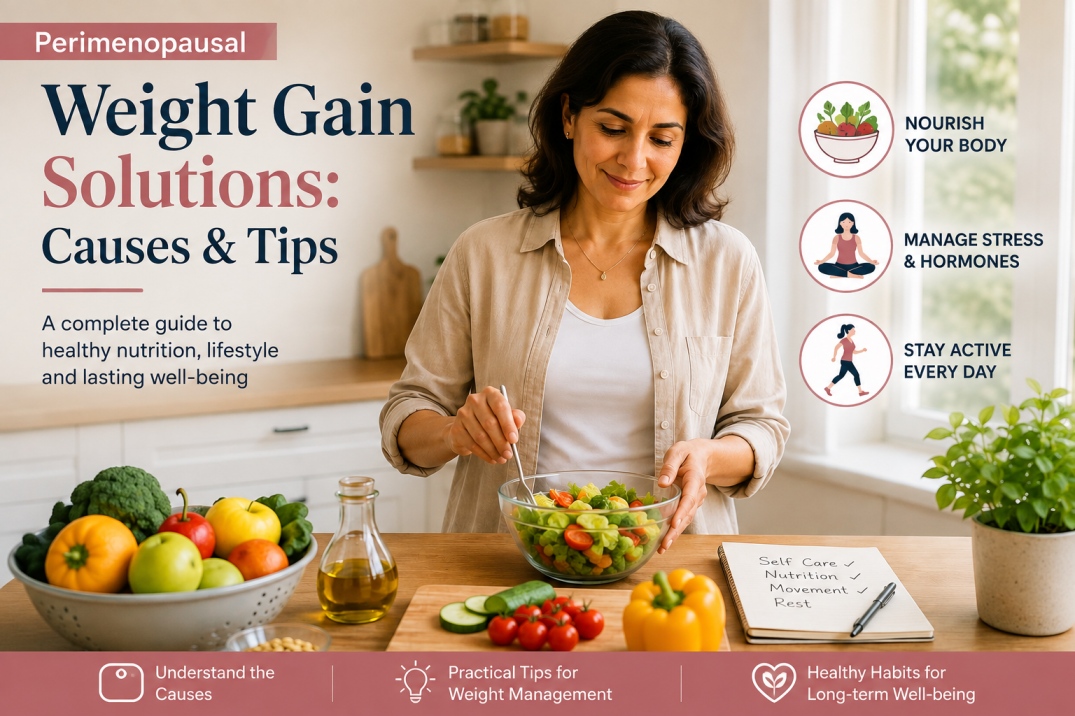
Perimenopausal Weight Gain Solutions: Causes & Tips
Introduction
Perimenopause is the stage of life when the body begins transitioning toward menopause. During this time, hormonal fluctuations can bring changes in menstrual cycles, sleep, mood, appetite, energy levels, and body composition.
One concern many women experience during this stage is unexplained or gradual weight gain, particularly around the abdomen.
It can be frustrating when eating and activity habits seem unchanged but the body begins responding differently. However, weight changes during perimenopause are influenced by several factors—not hormones alone.
Changes in estrogen and other hormones can occur alongside changes in muscle mass, metabolism, sleep, stress, appetite, and physical activity. Together, these factors can make weight management more challenging.
The good news is that perimenopause does not mean weight gain is unavoidable. Understanding what is changing and adjusting nutrition, exercise, sleep, and lifestyle habits can help support a healthy weight and better overall health.
In this guide, you'll learn why weight gain can occur during perimenopause, how hormonal changes affect body composition, and which sustainable lifestyle habits can support healthy weight management.
What Is Perimenopause?
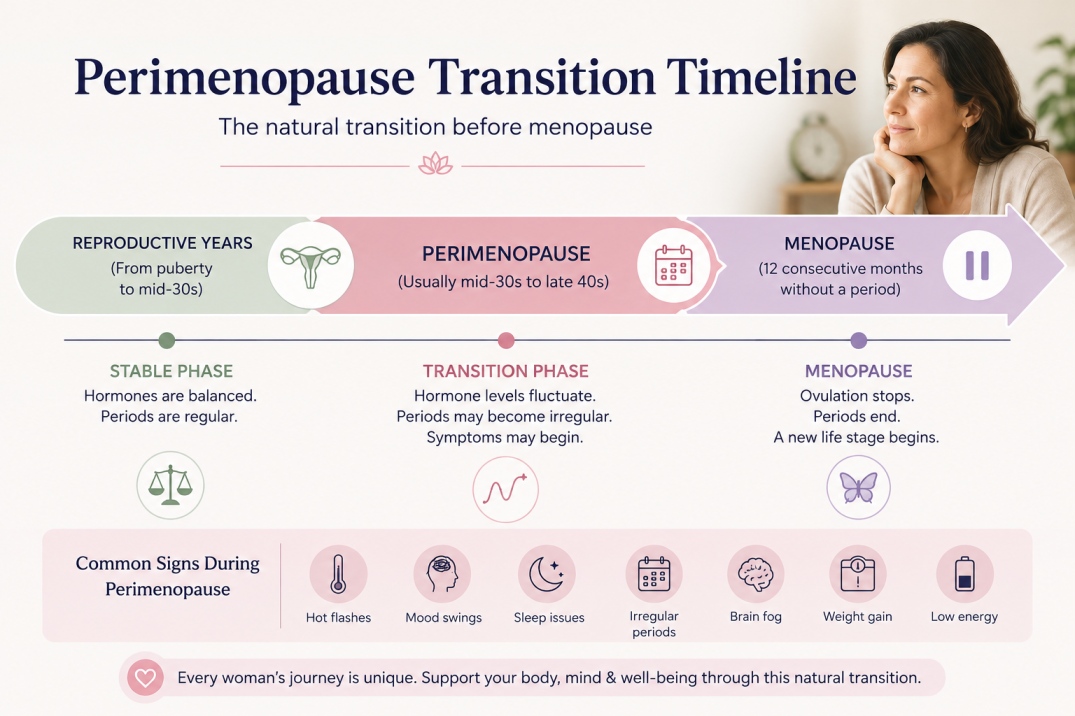
Perimenopause is the transitional period before menopause.
During this stage, ovarian hormone production becomes more variable, particularly estrogen and progesterone. Menstrual cycles may become irregular, and symptoms can vary significantly from one woman to another.
Perimenopause may involve:
· Irregular menstrual cycles
· Changes in menstrual flow
· Hot flashes
· Night sweats
· Sleep disturbances
· Mood changes
· Increased fatigue
· Changes in appetite
· Difficulty concentrating
· Changes in body composition
· Gradual weight changes
Perimenopause does not happen at exactly the same age or follow the same pattern for everyone.
Some women experience noticeable symptoms, while others experience relatively few changes.https://www.nia.nih.gov
Perimenopause vs. Menopause
Perimenopause and menopause are not the same thing.
Perimenopause is the transition leading up to menopause, during which hormone levels fluctuate and menstrual cycles may become irregular.
Menopause is reached when a woman has gone 12 consecutive months without a menstrual period, assuming there is no other medical explanation.
After menopause, estrogen levels remain lower than they were during the reproductive years.
Understanding the difference is important because weight and body-composition changes can begin during perimenopause and may continue after menopause.
Why Does Weight Gain Happen During Perimenopause?
Weight gain during perimenopause is usually influenced by multiple factors rather than one single cause.
Important contributors can include:
· Hormonal fluctuations
· Loss of muscle mass with age
· Reduced physical activity
· Changes in sleep
· Increased stress
· Changes in appetite
· Changes in body-fat distribution
· Lifestyle changes
· Age-related changes in energy needs
These factors can occur at the same time, making weight management more difficult.
It is also important to understand that not every change on the scale represents body-fat gain. Water retention, digestion, hormonal fluctuations, and other short-term factors can also affect body weight.
How Hormonal Changes Can Affect Body Composition
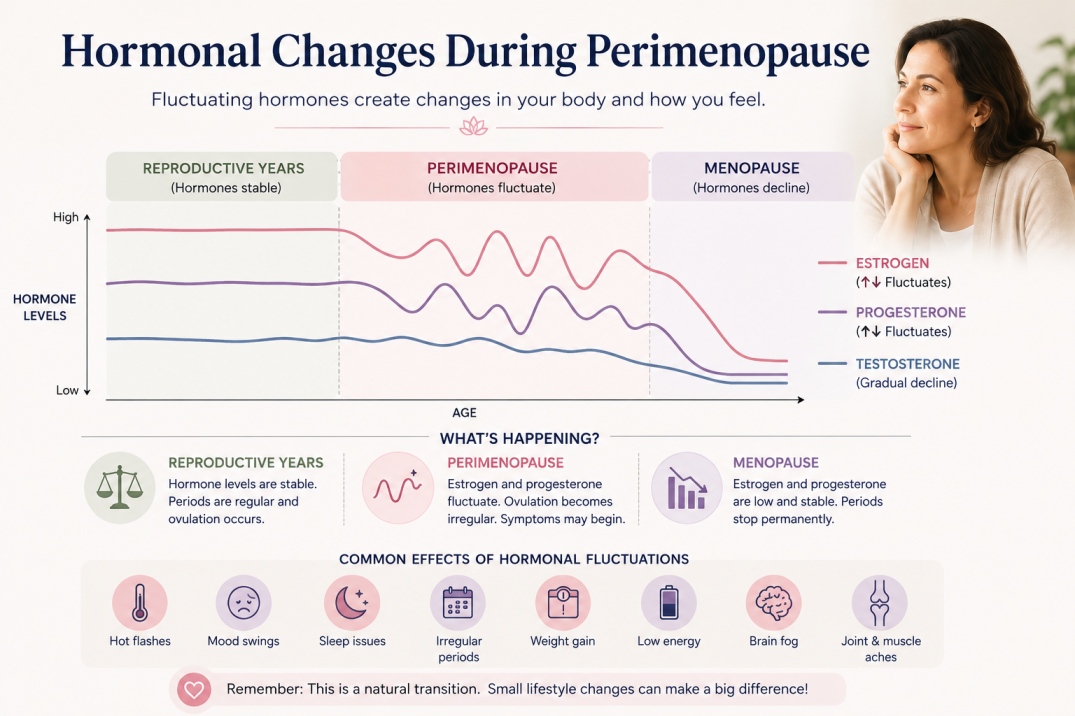
Hormonal changes during the menopause transition can influence where the body stores fat.
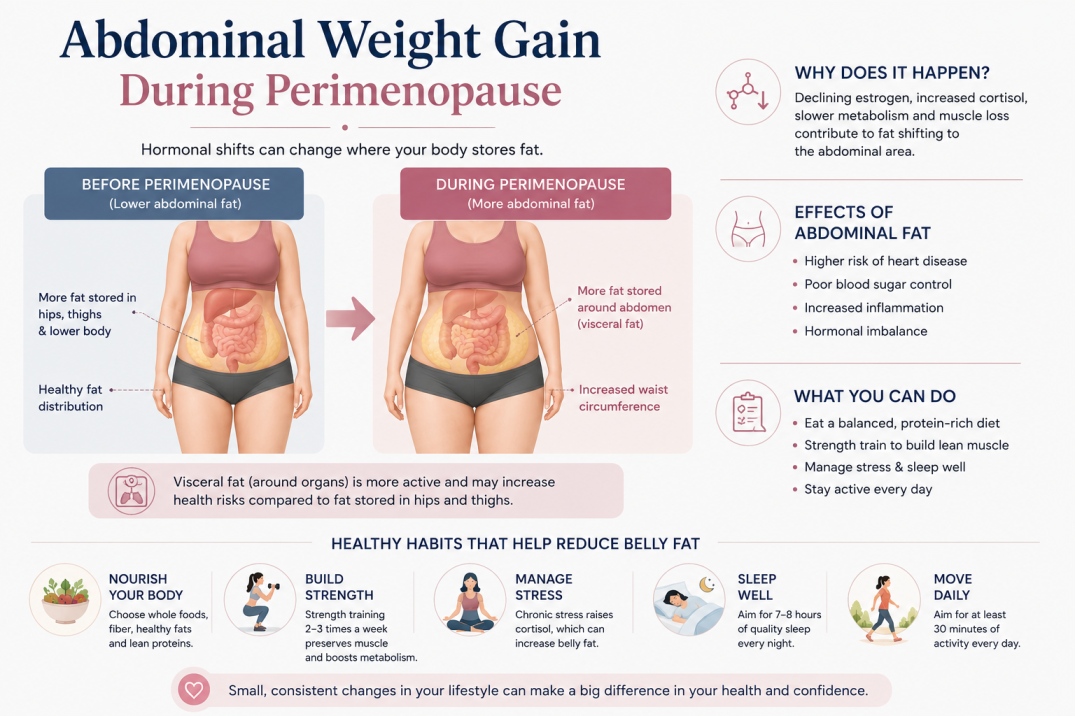
Many women notice that fat distribution changes, with a greater tendency toward abdominal fat accumulation compared with earlier adulthood.
At the same time, muscle mass may gradually decline with age, particularly when resistance training and adequate protein intake are lacking.
Because muscle is metabolically active tissue, maintaining muscle through regular physical activity—especially strength training—is an important part of healthy aging and body-composition management.
Perimenopause and Belly Fat
One of the most noticeable changes for some women during perimenopause is increased abdominal fat.
Several factors can contribute to this change, including:
· Hormonal changes
· Aging
· Reduced muscle mass
· Lower physical activity
· Sleep problems
· Chronic stress
· Changes in eating patterns
· Overall energy balance
This doesn't mean that belly fat is caused by one specific food or hormone.
Instead, abdominal fat accumulation is generally the result of several factors interacting over time.
Rather than focusing on quick fixes for belly fat, it is more useful to focus on improving overall body composition and metabolic health.
Does Perimenopause Automatically Cause Weight Gain?
No.
Perimenopause can make weight management more challenging, but weight gain is not inevitable.
Lifestyle, genetics, physical activity, nutrition, sleep, stress, medications, and other health factors can all influence changes in body weight.
Some women may gain weight during this stage, while others may maintain relatively stable weight.
The goal should not be to fight every natural change in the body, but to support healthy body composition, strength, energy, and overall well-being.
How Aging Can Affect Weight During Perimenopause
Hormonal changes are only part of the picture.
As women get older, several lifestyle and physiological changes can occur.
For example:
· Muscle mass may gradually decrease.
· Daily movement may decrease.
· Exercise patterns may change.
· Energy requirements may change.
· Work and family responsibilities may increase.
· Sleep may become more disrupted.
If daily energy expenditure decreases while food intake remains unchanged, gradual weight gain can occur.
This is one reason maintaining muscle and staying physically active becomes particularly important during midlife.
The Role of Sleep
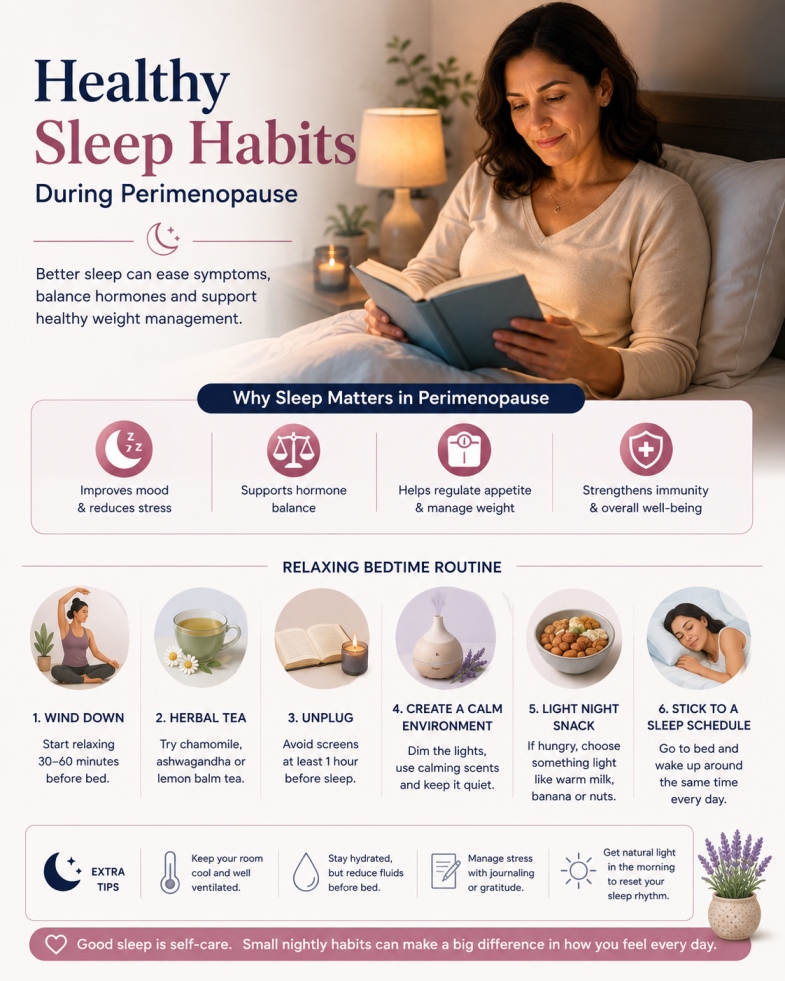
Sleep problems are common during the menopause transition.
Hot flashes, night sweats, hormonal changes, stress, and changes in sleep patterns can all interfere with restful sleep.
Poor sleep may make weight management more difficult by affecting:
· Hunger
· Appetite
· Food cravings
· Energy levels
· Exercise motivation
· Stress levels
Improving sleep should therefore be considered part of a healthy weight-management strategy—not an optional extra.
The Role of Stress
Perimenopause can coincide with significant life changes and responsibilities.
Work, family, relationships, financial concerns, and changes associated with aging can contribute to stress.
Chronic stress can influence eating behaviors, sleep, physical activity, and overall well-being.
Some women may notice increased cravings or emotional eating during stressful periods.
Learning healthy ways to manage stress can therefore support both physical and emotional health.
Perimenopause and Metabolism
Many women describe feeling that their metabolism has “slowed down” during perimenopause.
While metabolism does not simply stop because of menopause, several factors can affect energy expenditure during midlife.
Reduced muscle mass, lower physical activity, aging, and changes in body composition can all influence how much energy the body uses.
This is why simply eating less may not always be the best strategy.
A better approach is to focus on:
· Maintaining muscle
· Eating adequate protein
· Staying physically active
· Including strength training
· Managing portions
· Getting adequate sleep
· Managing stress
The focus should be on supporting metabolic health rather than searching for a metabolism-boosting shortcut.https://womenshealth.gov
Weight gain during perimenopause is rarely caused by one single factor. Hormonal fluctuations occur alongside changes in muscle mass, physical activity, sleep, appetite, stress, and daily energy needs.
Understanding these changes can help you approach weight management realistically rather than blaming yourself or following extreme diets.
1. Hormonal Fluctuations
During perimenopause, estrogen and progesterone levels can fluctuate considerably.
These hormonal changes can affect several aspects of health, including:
· Menstrual cycles
· Sleep
· Appetite
· Mood
· Energy levels
· Body-fat distribution
Changes in estrogen are also associated with changes in where the body tends to store fat. Some women may notice more fat accumulating around the abdomen compared with earlier adulthood.
However, hormones are only one part of the picture.
2. Loss of Muscle Mass
Muscle mass naturally tends to decline with age, particularly when regular resistance exercise is lacking.
Because muscle tissue contributes to daily energy expenditure, losing muscle can reduce the amount of energy your body uses at rest and during everyday activities.
This doesn't mean that your metabolism suddenly stops during perimenopause.
Instead, gradual changes in muscle mass and activity can contribute to changes in overall energy balance.
Maintaining muscle through strength training and adequate nutrition becomes increasingly important during midlife.
3. Changes in Physical Activity
Physical activity can decrease as responsibilities and lifestyle patterns change.
Busy work schedules, family responsibilities, fatigue, joint discomfort, or poor sleep may make it harder to exercise regularly.
Even small reductions in daily movement can add up over time.
For example, you may:
· Walk less during the day.
· Spend more time sitting.
· Exercise less frequently.
· Stop participating in activities you previously enjoyed.
Maintaining regular movement can help support fitness, muscle mass, and healthy weight management.
4. Poor Sleep and Night-Time Disturbances
Sleep problems are common during perimenopause.
Hot flashes, night sweats, hormonal changes, stress, and difficulty falling or staying asleep can all affect sleep quality.
Poor sleep can influence:
· Hunger
· Appetite
· Food cravings
· Energy
· Mood
· Physical activity
· Food choices
When you're tired, it may become harder to prepare healthy meals or exercise regularly.
This creates a cycle:
Poor Sleep → Fatigue → Less Activity → Changes in Appetite → More Difficult Weight Management
Improving sleep can therefore be an important part of managing weight during perimenopause.
5. Increased Stress
Perimenopause can occur during a busy stage of life.
Work, family responsibilities, relationships, financial concerns, and changes associated with aging can all contribute to stress.
Chronic stress may affect eating behaviors and sleep.
Some women may experience:
· Increased cravings
· Emotional eating
· More frequent snacking
· Reduced motivation to exercise
· Poorer sleep
Stress management should therefore be considered part of a complete approach to healthy weight management.
6. Changes in Appetite and Food Cravings
Hormonal and lifestyle changes can influence appetite and eating patterns.
You may notice:
· Increased hunger
· Stronger cravings
· More frequent snacking
· Greater preference for sweet foods
· Eating in response to stress or fatigue
This doesn't mean that cravings are simply a matter of willpower.
Instead of completely restricting foods, focus on building satisfying meals that contain protein, fiber, vegetables, and appropriate portions of carbohydrates and healthy fats.
Balanced meals can make it easier to maintain a consistent eating pattern.https://wellorafit.com/services/nutrition-diet-planning/
7. Changes in Body-Fat Distribution
During the reproductive years, women commonly store more fat around the hips and thighs.
During and after the menopause transition, body-fat distribution may shift toward the abdomen.
This can make the body look and feel different even when total body weight has not changed dramatically.
It's important to remember that where fat is stored can change independently of the number on the scale.
For this reason, waist measurements, body composition, strength, fitness, and other health markers can provide useful information alongside body weight.
8. Changes in Daily Energy Needs
Energy requirements can change with age and changes in body composition.
If your activity level decreases while your food intake remains the same, your body may gradually store more energy as body fat.
This doesn't mean you need to drastically reduce your food intake.
Instead, focus on improving the quality and balance of your meals while maintaining regular physical activity.
Small adjustments are often more sustainable than severe calorie restriction.
9. Insulin Sensitivity and Metabolic Changes
Midlife can also bring changes in metabolic health.
Insulin sensitivity can be influenced by factors such as:
· Age
· Body composition
· Physical activity
· Sleep
· Diet
· Stress
· Genetics
Reduced insulin sensitivity can make blood glucose regulation more difficult and may occur alongside changes in abdominal fat.
Regular physical activity, strength training, adequate sleep, and a balanced eating pattern can support metabolic health.
10. Lifestyle Changes During Midlife
Perimenopause often occurs alongside significant changes in daily life.
You may have:
· More work responsibilities
· Less time for exercise
· Changes in family responsibilities
· Increased stress
· Less time for meal preparation
· Changes in social routines
These factors can indirectly contribute to weight gain.
For example:
Busy Schedule → Less Meal Preparation → More Convenience Foods
or
Stress + Poor Sleep → Fatigue → Less Exercise
Recognizing these patterns can help you identify practical solutions instead of focusing only on hormones.
Can You Prevent Perimenopause Weight Gain?
You cannot completely control hormonal changes or the natural aging process.
However, you can influence many of the lifestyle factors that contribute to weight gain.
Helpful strategies include:
· Eating balanced meals
· Including adequate protein
· Increasing fiber-rich foods
· Practicing portion awareness
· Performing regular strength training
· Staying physically active
· Prioritizing sleep
· Managing stress
· Limiting highly processed foods
· Monitoring changes in weight and waist circumference
The goal is not to prevent every change in your body.
The goal is to support healthy body composition, metabolic health, strength, and quality of life throughout the menopause transition.
When Weight Gain May Need Medical Evaluation
Not every change in weight during perimenopause is caused by hormonal changes.
Rapid or unexplained weight gain may have other causes, including certain medications or medical conditions.
Speak with a healthcare professional if you experience:
· Rapid unexplained weight gain
· Significant swelling or fluid retention
· Severe fatigue
· Major changes in appetite
· Persistent symptoms that concern you
· Other new or unusual symptoms
A healthcare professional can help determine whether additional evaluation is appropriate.
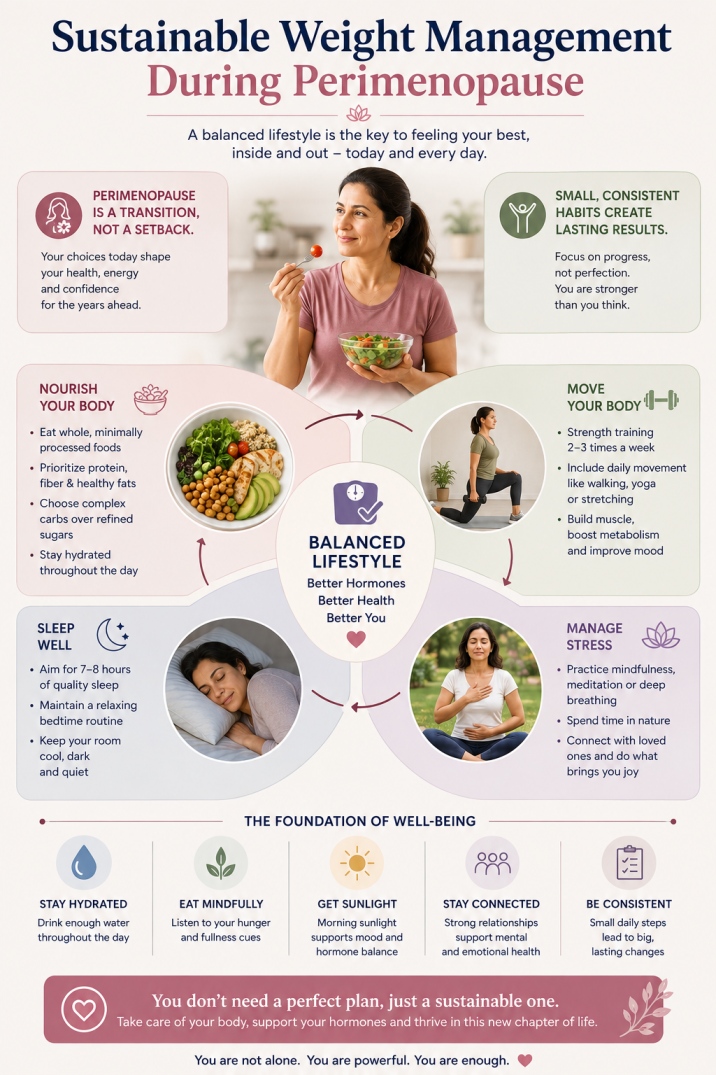
Managing weight during perimenopause is not about following a strict diet or trying to reverse every hormonal change. The focus should be on protecting muscle mass, supporting metabolic health, maintaining a balanced diet, staying active, and building sustainable lifestyle habits.
Small changes made consistently can be more useful than short-term restrictive approaches.
1. Build Balanced Meals
A balanced meal can help provide the nutrients your body needs while supporting fullness and stable energy.
Try to include a combination of:
· Vegetables
· Protein-rich foods
· Whole grains or other high-fiber carbohydrates
· Healthy fats
· Whole fruits
For example, an Indian meal could include:
2 whole-wheat rotis + dal + mixed vegetable sabzi + curd + salad
Another option could be:
Controlled portion of rice + rajma/dal + vegetables + salad
The exact portions should be adjusted according to individual energy needs, activity level, health conditions, and weight-management goals. https://wellorafit.com/services/nutrition-diet-planning/
2. Prioritize Protein
Adequate protein becomes particularly important during midlife because maintaining muscle mass supports strength, physical function, and healthy body composition.
Protein-rich foods can include:
· Dal
· Beans
· Chickpeas
· Soy and tofu
· Paneer
· Curd or Greek yogurt
· Eggs
· Fish
· Chicken
Try to distribute protein across meals rather than consuming most of it in just one meal.
For example:
Breakfast: Moong dal chilla with curd
Lunch: Dal + roti + vegetables
Snack: Greek yogurt or roasted chana
Dinner: Paneer/tofu/chicken + vegetables + whole grain
Individual protein requirements vary, so women with specific medical or dietary needs should discuss appropriate intake with a qualified dietitian or healthcare professional.
3. Increase Fiber-Rich Foods
Fiber can support digestive health and fullness while helping create a nutrient-rich eating pattern.
Good sources include:
· Vegetables
· Whole fruits
· Oats
· Whole-wheat foods
· Millets
· Barley
· Dal
· Beans
· Chickpeas
· Nuts and seeds
Instead of relying heavily on refined carbohydrates, gradually replace some refined foods with higher-fiber alternatives.
For example:
White bread → Whole-grain bread
Refined-flour snacks → Roasted chana or nuts
Fruit juice → Whole fruit
Refined grains → Whole grains or millets
4. Don't Eliminate Carbohydrates
Carbohydrates are an important source of energy and do not need to be completely removed during perimenopause.
The focus should be on quality, portion size, and overall meal balance.
Better choices can include:
· Whole wheat
· Oats
· Millets
· Brown rice
· Barley
· Fruits
· Vegetables
· Legumes
Combining carbohydrates with protein, vegetables, and healthy fats can create a more balanced meal.
Extreme carbohydrate restriction may make a diet difficult to maintain and may not be appropriate for everyone.
5. Include Strength Training
Strength training is one of the most valuable forms of exercise during midlife.
It can help support:
· Muscle mass
· Strength
· Physical function
· Bone health
· Body composition
· Metabolic health
Exercises can include:
· Squats
· Lunges
· Rows
· Push-ups
· Resistance-band exercises
· Dumbbell exercises
· Machine-based strength exercises
If you're new to strength training, start with an appropriate level and gradually increase resistance.
Women with injuries, osteoporosis, significant joint problems, or other health conditions should seek professional guidance before beginning a new exercise program.
6. Stay Physically Active Throughout the Day
Exercise is important, but everyday movement also matters.
Try to reduce prolonged sitting by:
· Taking short walking breaks
· Walking while talking on the phone
· Taking stairs when appropriate
· Doing household activities
· Walking after meals
· Moving around during work breaks
You don't need to complete all your activity in one session.
Small amounts of movement throughout the day can contribute to your overall activity level.
7. Add Cardiovascular Exercise
Cardiovascular activity can support heart health, fitness, and energy expenditure.
Options include:
· Brisk walking
· Cycling
· Swimming
· Dancing
· Jogging, if appropriate
· Aerobic classes
· Hiking
Choose activities that you enjoy.
An exercise routine is more sustainable when it fits your interests and physical abilities.
8. Prioritize Sleep
Sleep should be treated as an important part of weight management during perimenopause.
Try to create a consistent sleep routine by:
· Going to bed at a regular time.
· Waking up around the same time.
· Keeping the bedroom cool and comfortable.
· Reducing screen use before bed.
· Limiting caffeine later in the day.
· Creating a relaxing bedtime routine.
If hot flashes, night sweats, insomnia, or other symptoms are consistently disrupting sleep, discuss them with a healthcare professional.
9. Manage Stress
Stress management is an important part of overall well-being during perimenopause.
Try simple activities such as:
· Deep breathing
· Meditation
· Yoga
· Walking outdoors
· Journaling
· Reading
· Listening to music
· Spending time with family or friends
The best stress-management habit is one that you can realistically practice on a regular basis.
10. Stay Hydrated
Adequate hydration supports normal body functions and can help maintain a healthy daily routine.
Simple strategies include:
· Keep a water bottle nearby.
· Drink water with meals.
· Drink water after waking up.
· Carry water when travelling.
· Choose water instead of sugary beverages.
Hydration needs vary depending on factors such as climate, activity level, diet, and health status.
11. Limit Highly Processed Foods
Highly processed foods can be easy to overconsume and may provide significant amounts of added sugar, refined carbohydrates, sodium, or calories.
Instead of completely eliminating these foods, focus on eating them less frequently and building most meals around nutrient-dense foods.
Choose more often:
· Vegetables
· Fruits
· Whole grains
· Dal and legumes
· Nuts and seeds
· Dairy or suitable alternatives
· Eggs, fish, chicken, or other protein sources
This approach is generally more sustainable than strict food restrictions.
12. Avoid Crash Diets
Rapid weight-loss diets may seem appealing when weight gain becomes frustrating.
However, extreme restriction can be difficult to maintain and may result in cycles of dieting and overeating.
Instead of asking:
“How quickly can I lose weight?”
Focus on:
“What healthy habits can I maintain for the next year?”
A sustainable approach should support adequate nutrition, muscle preservation, physical activity, and overall health.
A Simple Perimenopause-Friendly Plate
A practical way to build balanced meals is:
½ Plate → Vegetables
¼ Plate → Protein
¼ Plate → Whole grains or other carbohydrate source
Add a moderate amount of healthy fat where appropriate.
For example:
Vegetables + Dal/Paneer/Chicken + Roti
or
Vegetables + Fish + Controlled portion of brown rice
This provides a simple framework without requiring complicated calorie counting at every meal.
Lifestyle Habits That Support Healthy Weight
Along with nutrition and exercise, focus on daily habits such as:
· Eat regular balanced meals.
· Include protein throughout the day.
· Choose fiber-rich foods.
· Stay physically active.
· Perform strength training regularly.
· Prioritize sleep.
· Manage stress.
· Drink adequate fluids.
· Limit highly processed foods.
· Monitor your progress over time.
These habits support more than weight management—they can also contribute to healthy aging and overall well-being.
How to Create a Sustainable Perimenopause Weight-Loss Plan
A sustainable plan should focus on several areas rather than one specific diet or exercise strategy.
1. Focus on Balanced Nutrition
Build most meals around:
· Vegetables
· Protein-rich foods
· Whole grains or other high-fiber carbohydrates
· Fruits
· Healthy fats
Avoid making your diet unnecessarily restrictive.
2. Protect Muscle Mass
Include regular strength training and adequate protein to support muscle health.
Maintaining muscle can help support strength, physical function, and healthy body composition as you age.
3. Stay Physically Active
Combine structured exercise with regular movement throughout the day.
Walking, strength training, cycling, swimming, yoga, and other activities can all contribute to an active lifestyle.
4. Prioritize Recovery
Sleep and rest are important parts of a sustainable routine.
If symptoms such as night sweats or hot flashes are affecting your sleep, addressing those symptoms with a healthcare professional may help.
5. Manage Stress
Stress can influence eating patterns, sleep, and motivation.
Build simple stress-management activities into your routine rather than waiting until stress becomes overwhelming.
How to Track Progress During Perimenopause
The weighing scale is only one way to monitor progress.
Consider tracking several indicators, including:
· Body weight
· Waist circumference
· Strength
· Fitness
· Energy levels
· Sleep quality
· Eating consistency
· Physical activity
· How your clothes fit
Body weight can fluctuate because of hydration, digestion, hormonal changes, and other factors.
Looking at longer-term trends can provide a more useful picture than focusing on individual daily measurements.
What If Your Weight Isn't Changing?
Weight loss may not always occur at the same rate throughout perimenopause.
If your weight has remained unchanged despite consistent efforts, review your routine.
Consider:
· Are portions larger than you realize?
· Are you getting enough protein?
· Are you eating enough fiber?
· Has your physical activity decreased?
· Are you doing resistance training?
· Are you sleeping well?
· Are stress levels high?
· Has your routine changed recently?
If you have made consistent lifestyle changes but experience unexplained or significant weight changes, discuss the situation with a healthcare professional.
Common Mistakes to Avoid
1. Blaming Everything on Hormones
Hormonal changes can influence body composition, but nutrition, activity, sleep, stress, muscle mass, medications, and other factors also matter.
2. Eating Too Little
Severely restricting food can make it difficult to meet nutritional needs and maintain a sustainable routine.
3. Avoiding All Carbohydrates
Carbohydrates can be part of a balanced diet. Focus on food quality, portions, and overall meal balance.
4. Doing Only Cardio
Cardiovascular exercise is valuable, but strength training is also important for maintaining muscle.
5. Focusing Only on the Scale
Changes in strength, waist circumference, fitness, and energy can also indicate progress.
6. Expecting Quick Results
Body-composition changes take time. Consistency is more important than rapid results.
When Should You Speak With a Healthcare Professional?
Perimenopause symptoms can vary significantly, and not every symptom should automatically be attributed to menopause.
Consider speaking with a healthcare professional if you experience:
· Rapid or unexplained weight gain
· Severe or persistent fatigue
· Significant changes in menstrual bleeding
· Persistent sleep problems
· Severe mood changes
· Symptoms that interfere with daily life
· Concerns about blood pressure, blood glucose, or cholesterol
· Any new or unusual symptoms
A healthcare professional can help determine whether symptoms are related to perimenopause or whether another condition needs to be evaluated.
Key Takeaways
· Weight gain during perimenopause can have multiple causes.
· Hormonal changes can influence body-fat distribution and other aspects of body composition.
· Aging, muscle loss, reduced activity, poor sleep, and stress can also contribute.
· Balanced nutrition is more sustainable than restrictive dieting.
· Protein and strength training are important for maintaining muscle.
· Regular movement supports fitness and healthy weight management.
· Sleep and stress management should be part of the overall plan.
· Track progress using more than body weight alone.
· Avoid crash diets and extreme restrictions.
· Seek professional guidance for rapid, unexplained, or concerning changes.
Conclusion
Perimenopause is a natural stage of life, but the changes that come with it can sometimes make weight management feel more challenging.
Hormonal fluctuations, changes in body-fat distribution, muscle loss, sleep disturbances, stress, and changes in daily activity can all contribute to changes in weight and body composition.
However, weight gain is not inevitable.
The most effective approach is not to fight your body with extreme diets or unrealistic exercise routines. Instead, focus on sustainable habits that support your health through this transition.
Build balanced meals, include adequate protein and fiber, stay physically active, prioritize strength training, get quality sleep, manage stress, and give your body time to adapt.
Most importantly, remember that health during perimenopause is about more than a number on the scale.
The goal is to build strength, support metabolic health, maintain a healthy body composition, and feel your best through every stage of life.
FAQ Schema
1. Why does weight gain happen during perimenopause?
Weight gain during perimenopause can be influenced by hormonal fluctuations, changes in body-fat distribution, loss of muscle mass, reduced physical activity, poor sleep, stress, and changes in eating patterns.
2. Does perimenopause automatically cause weight gain?
No. Weight gain is not inevitable during perimenopause. Lifestyle, genetics, physical activity, nutrition, sleep, medications, and other factors can all influence changes in body weight.
3. Why am I gaining belly fat during perimenopause?
Hormonal changes during the menopause transition can influence body-fat distribution, with some women noticing a greater tendency to store fat around the abdomen. Aging, reduced muscle mass, physical activity, diet, sleep, and stress can also contribute.
4. How can I lose weight during perimenopause?
Focus on sustainable habits such as balanced meals, adequate protein and fiber, regular physical activity, strength training, adequate sleep, stress management, and portion awareness rather than extreme diets.
5. Should I avoid carbohydrates during perimenopause?
No. Carbohydrates can be part of a balanced diet. Choose nutrient-rich, high-fiber sources such as whole grains, oats, millets, fruits, vegetables, and legumes, while paying attention to portions and overall meal balance.
6. Is strength training important during perimenopause?
Yes. Strength training can help maintain muscle mass, strength, physical function, and healthy body composition as you age.
7. Does poor sleep contribute to perimenopause weight gain?
Poor sleep can make weight management more difficult by affecting hunger, appetite, cravings, energy levels, stress, and physical activity.
8. How can I reduce belly fat during perimenopause?
There is no reliable way to target belly fat through one specific food or exercise. Focus on overall healthy weight management, regular strength and cardiovascular exercise, balanced nutrition, adequate sleep, and stress management.
9. Why am I not losing weight despite exercising?
Weight changes are influenced by several factors, including food intake, activity level, muscle mass, sleep, stress, hormones, medications, and overall health. If weight changes are unexplained or persistent, discuss them with a healthcare professional.
10. When should I see a doctor about perimenopause weight gain?
Speak with a healthcare professional if you experience rapid or unexplained weight gain, significant swelling, severe fatigue, major changes in appetite, persistent sleep problems, or other new or concerning symptoms.
Ready to Begin Your Health Journey?
Get a personalized, medically guided plan built around your unique biology.