Portion Control for Weight Loss Guide
Portion Control for Weight Loss: The Complete Guide to Eating the Right Amount
Have you ever wondered why you still struggle to lose weight even though you're eating healthy foods? The answer may not always be what you're eating, but how much you're eating.
Many people assume that eating healthy automatically leads to weight loss. While choosing nutritious foods is essential, consuming large portions—even of healthy foods—can still result in excess calorie intake and slow your progress. Nuts, avocados, whole grains, fruit smoothies, and even homemade meals can contribute to weight gain when eaten in oversized portions.
This is where portion control for weight loss becomes one of the most effective and sustainable strategies. Portion control simply means eating the amount of food your body needs—not too little and not too much. Unlike restrictive diets that eliminate favorite foods, portion control allows you to enjoy a balanced diet while maintaining a calorie intake that supports healthy weight loss.
Research consistently shows that larger portion sizes encourage people to eat more without realizing it. Modern restaurant servings, packaged foods, and even home-cooked meals have gradually increased in size over the years, making it easy to consume hundreds of extra calories each day.
The good news is that portion control doesn't require expensive meal plans, calorie-counting apps, or extreme dieting. Small, practical changes—such as using smaller plates, following the healthy plate method, eating mindfully, and understanding serving sizes—can make a significant difference over time.
In this comprehensive guide, you'll learn the science behind portion control, how portion sizes affect calorie intake, practical methods to estimate portions without a weighing scale, common mistakes to avoid, and expert strategies to help you lose weight without feeling deprived.https://www.who.int
What Is Portion Control?
Portion control is the practice of managing the amount of food you eat during each meal or snack to match your body's nutritional needs and energy requirements.
It does not mean starving yourself or skipping meals. Instead, it focuses on eating appropriate amounts of food that provide enough nutrients while preventing excess calorie consumption.
A balanced portion should include:
Lean protein
Whole grains or healthy carbohydrates
Plenty of vegetables
Healthy fats
Water or other low-calorie beverages
Portion control is one of the easiest lifestyle habits to adopt because it doesn't require eliminating entire food groups. Instead, it teaches you how to enjoy all foods in moderation.https://www.cdc.gov
Why Portion Control Matters
Many people eat based on habit, emotions, plate size, or food availability rather than actual hunger.
Examples include:
Finishing everything on the plate even when already full.
Eating directly from large snack packets.
Taking second servings automatically.
Eating while watching television or using a mobile phone.
Ordering oversized restaurant meals.
These habits often lead to mindless overeating, where calorie intake increases without conscious awareness.
Learning portion control helps you:
Reduce daily calorie intake naturally.
Improve hunger and fullness awareness.
Prevent overeating.
Support healthy digestion.
Improve blood sugar control.
Maintain long-term weight loss.
Build a healthier relationship with food.
Unlike crash diets, portion control is sustainable because it can be practiced for life.
Portion Size vs Serving Size
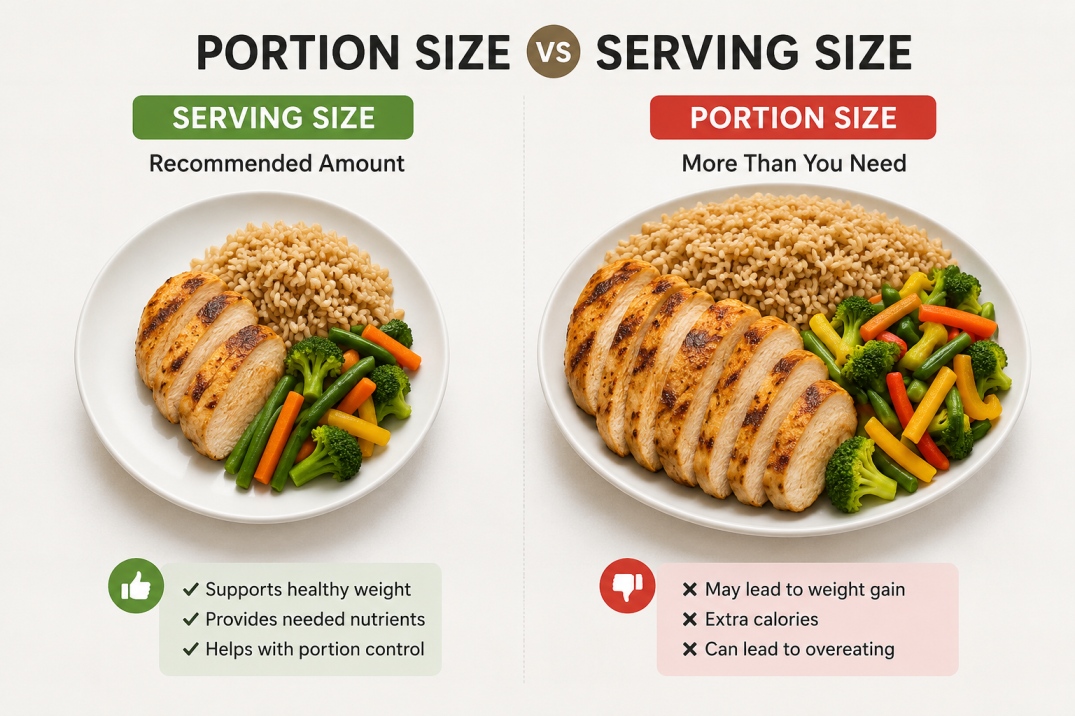
Many people use the terms portion size and serving size interchangeably, but they are not the same.
Serving Size
Portion Size
A standardized amount defined on food labels or dietary guidelines
The amount of food you actually choose to eat
Fixed quantity
Varies from person to person
Used for nutrition information
Depends on appetite and eating habits
Helps compare nutrient values
Determines total calorie intake
Example
A cereal box may list:
Serving Size = 30 grams
However, if you pour 90 grams into your bowl, your portion size is three servings.
That means you're consuming three times the calories, carbohydrates, sugar, and other nutrients listed on the nutrition label.
Understanding this difference is one of the first steps toward successful weight management.
How Portion Control Supports Weight Loss
Weight loss occurs when your body consistently burns more calories than it consumes, creating a calorie deficit.
Portion control helps create this deficit naturally by reducing excess calorie intake without eliminating nutritious foods.
Instead of avoiding carbohydrates or fats completely, portion control encourages balanced eating while keeping calories in check.https://wellorafit.com/services/nutrition-diet-planning/
Benefits include:
Reduces unnecessary calorie intake.
Prevents overeating.
Supports fat loss while preserving muscle mass.
Improves meal satisfaction.
Makes healthy eating easier to maintain.
Reduces the likelihood of weight regain.
Because portion control is flexible, it is often easier to follow long-term than restrictive diets.
The Science Behind Portion Sizes
Research has consistently shown that larger portions encourage people to eat more, even when they are not hungry.
This phenomenon is known as the portion size effect.
People tend to eat:
More when larger portions are served.
More when using larger plates or bowls.
More when food is easily accessible.
More when distracted during meals.
Interestingly, most people do not compensate by eating less later in the day. As a result, these extra calories accumulate over time and may contribute to gradual weight gain.
Studies also show that reducing portion sizes—even slightly—can lower daily calorie intake without significantly increasing hunger, making it an effective strategy for sustainable weight management.
Common Reasons People Overeat
Understanding why people overeat can help you build healthier eating habits.
1. Large Plate Sizes
Using oversized plates often makes normal portions appear too small, encouraging you to serve and eat more.
2. Eating Too Quickly
It takes about 20 minutes for the brain to receive fullness signals from the stomach.
Eating too fast often leads to consuming more food before feeling satisfied.
3. Emotional Eating
Many people eat in response to:
Stress
Anxiety
Loneliness
Boredom
Sadness
Celebration
This type of eating is driven by emotions rather than physical hunger.
4. Distracted Eating
Watching TV, working on a laptop, scrolling through social media, or using a phone while eating can reduce awareness of how much food you're consuming.
5. Restaurant Portions
Restaurant meals are often much larger than recommended serving sizes and may contain hidden calories from oils, butter, sauces, and sugar.
6. Unlimited Buffets
Having unlimited food available encourages people to continue eating beyond fullness simply because the food is accessible.
7. Skipping Meals
Skipping breakfast or lunch can lead to excessive hunger later in the day, making overeating more likely.
Eating balanced meals at regular intervals helps regulate appetite and supports better portion control.
The Healthy Plate Method
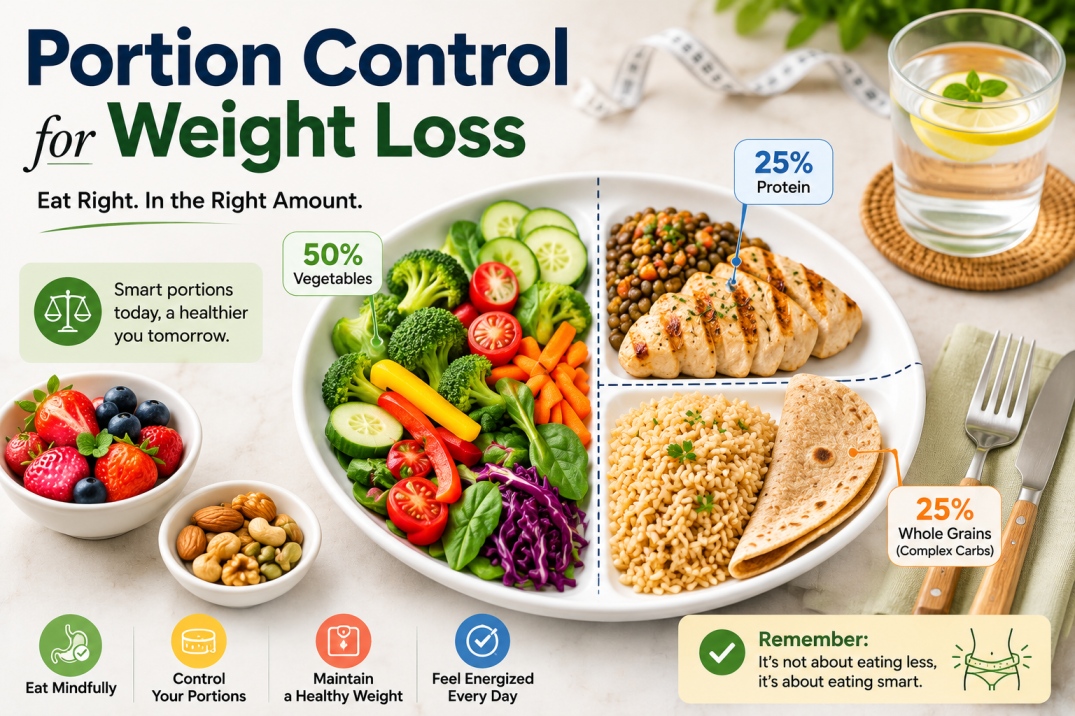
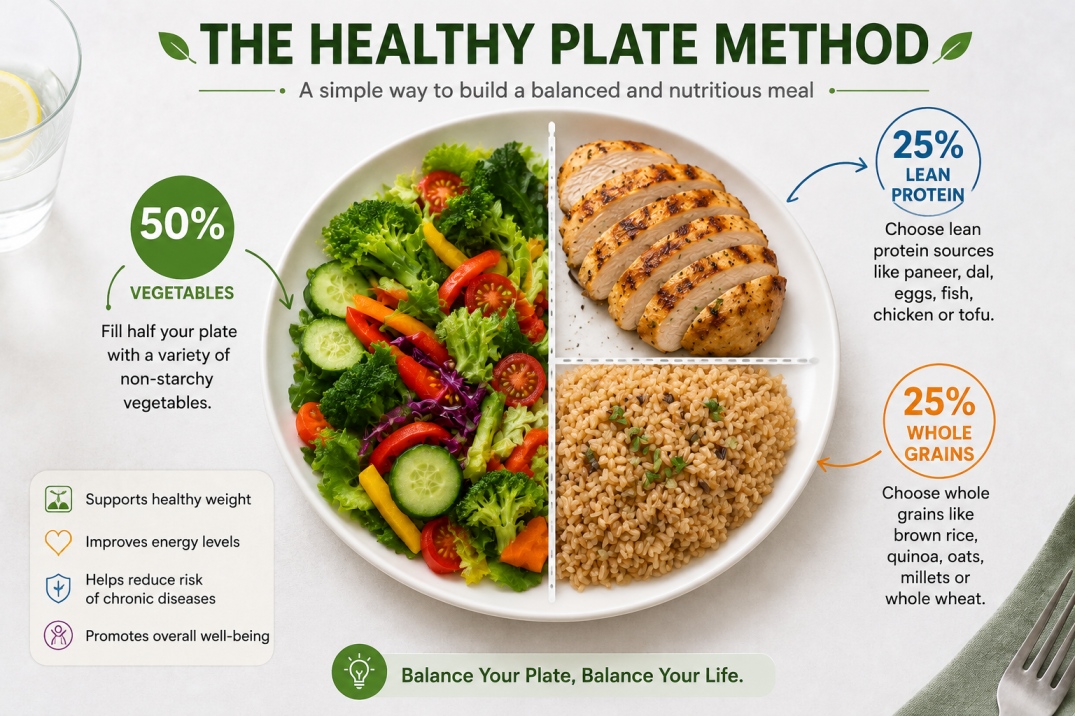
One of the easiest ways to practice portion control for weight loss is by using the Healthy Plate Method. Instead of counting calories or weighing every ingredient, this method helps you build balanced meals with the right proportions of protein, carbohydrates, vegetables, and healthy fats.
Nutrition experts recommend this approach because it naturally reduces calorie intake while ensuring your body gets essential nutrients.
How to Build a Healthy Plate
🥗 Half Your Plate (50%) – Non-Starchy Vegetables
Fill half of your plate with colorful vegetables.
Examples include:
Spinach
Broccoli
Cauliflower
Cabbage
Carrots
Bell peppers
Tomatoes
Cucumbers
Beans
Bottle gourd
Ridge gourd
Okra
These foods are:
Low in calories
High in fiber
Rich in vitamins and minerals
Filling and satisfying
🍗 One-Quarter of the Plate (25%) – Lean Protein
Protein helps control hunger and preserve muscle while losing weight.
Healthy protein options include:
Vegetarian
Paneer (low-fat)
Tofu
Soy chunks
Lentils
Chickpeas
Kidney beans
Sprouts
Greek yogurt
Non-Vegetarian
Chicken breast
Fish
Eggs
Turkey
Prawns
Protein helps:
Increase satiety
Reduce cravings
Support metabolism
Preserve lean muscle mass
Aim to include 20–30 grams of protein in every main meal.
🌾 One-Quarter of the Plate (25%) – Healthy Carbohydrates
Carbohydrates are an important energy source, but choosing the right type and amount is essential.
Healthy carbohydrate choices include:
Brown rice
Whole wheat roti
Millets
Oats
Quinoa
Sweet potato
Barley
These foods provide:
Long-lasting energy
Fiber
Vitamins
Better blood sugar control
🥜 Healthy Fats
Include small amounts of healthy fats such as:
Almonds
Walnuts
Flaxseeds
Chia seeds
Olive oil
Avocado
Peanut butter (unsweetened)
Healthy fats improve satiety and support hormone production.
🥛 Add Dairy (Optional)
A serving of:
Low-fat yogurt
Buttermilk
Milk
can improve calcium intake while supporting digestion.
The Hand Portion Guide
You don't always need measuring cups or a food scale. Your hand can serve as a simple and convenient tool for estimating portion sizes wherever you are.
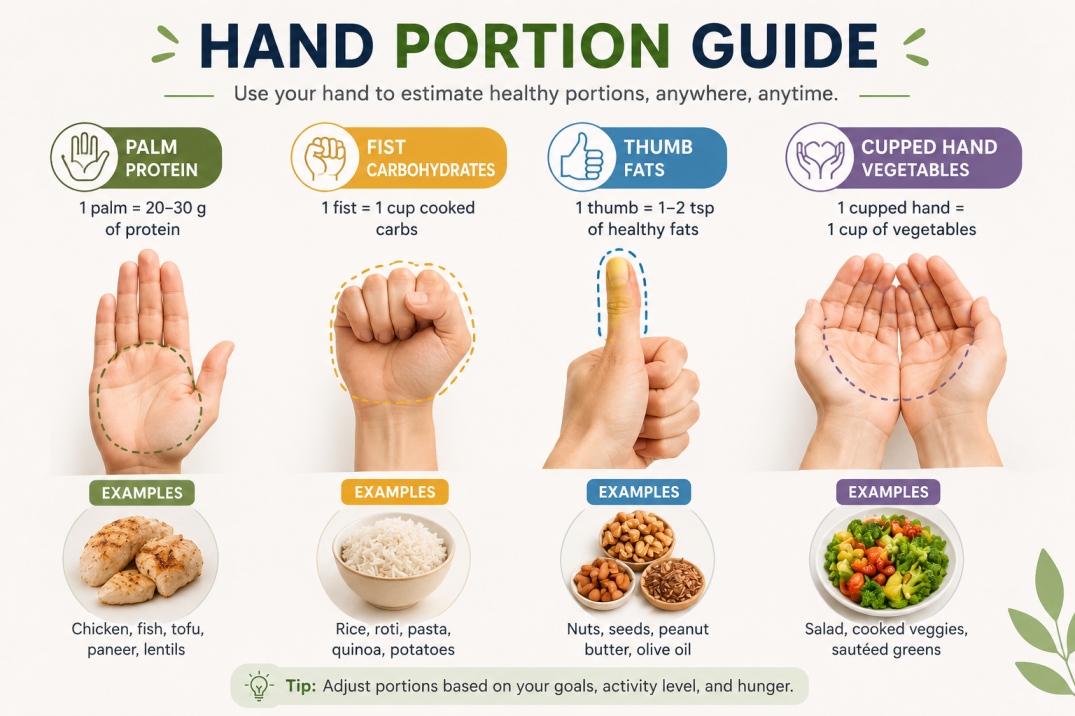
Protein = Palm of Your Hand
One palm-sized serving equals approximately:
Chicken
Fish
Paneer
Tofu
Eggs
Soy chunks
Approximate portion:
80–120 grams cooked
Carbohydrates = One Cupped Hand
One cupped hand equals approximately:
Cooked rice
Oats
Pasta
Quinoa
Poha
Upma
Approximate portion:
½–1 cup cooked
Vegetables = Two Fists
Aim for:
Salad
Cooked vegetables
Leafy greens
Vegetables should occupy the largest portion of every meal.
Healthy Fats = Thumb
One thumb-sized portion equals:
Peanut butter
Olive oil
Butter
Nuts
Seeds
Because fats are calorie-dense, small amounts are sufficient.
Fruit = One Fist
One fist-sized fruit serving equals:
Apple
Orange
Pear
Guava
Or approximately one cup of chopped fruit.
Measuring Portions Without a Food Scale
Not everyone owns a kitchen scale, but everyday household utensils work well for estimating portions.https://wellorafit.com/services/nutrition-diet-planning/
Food
Approximate Portion
Cooked rice
½–1 cup
Dal
1 medium bowl
Cooked vegetables
1–2 bowls
Curd
1 small bowl
Milk
1 glass (200–250 ml)
Nuts
One small handful
Seeds
1–2 tablespoons
Peanut butter
1 tablespoon
Oil
1 teaspoon
Chapati
1–2 medium chapatis
These simple measurements make portion control practical for daily life.
Recommended Portion Sizes for Different Food Groups
Vegetables
Recommended:
2–3 cups daily
Examples:
Spinach
Broccoli
Cabbage
Cauliflower
Pumpkin
Bottle gourd
Carrots
Vegetables should be the largest part of your meals because they provide fiber and volume with relatively few calories.
Fruits
Recommended:
2 servings daily
Examples:
Apple
Orange
Papaya
Watermelon
Guava
Berries
Pear
Choose whole fruits instead of fruit juices whenever possible.
Protein
Recommended per meal:
80–120 g chicken or fish
2 eggs
75–100 g paneer
100 g tofu
1 bowl dal
1 bowl chickpeas
1 bowl rajma
Protein helps you stay full longer and supports muscle maintenance.
Whole Grains
Recommended:
1–2 chapatis
½–1 cup cooked rice
½ cup quinoa
½ cup oats
Adjust portions based on your activity level, age, and calorie needs.
Healthy Fats
Daily recommendations:
1 teaspoon oil per meal
10–15 almonds
5–6 walnut halves
1 tablespoon chia or flaxseeds
Healthy fats are nutritious but energy-dense, so moderation is important.
Best Foods for Portion Control
Certain foods naturally help you feel full while providing fewer calories.
High-Protein Foods
These promote satiety and reduce hunger.
Examples:
Eggs
Greek yogurt
Chicken breast
Fish
Tofu
Paneer
Lentils
Soybeans
High-Fiber Foods
Fiber slows digestion and increases fullness.
Examples:
Oats
Brown rice
Whole wheat
Apples
Pears
Broccoli
Beans
Chickpeas
Water-Rich Foods
These add volume without many calories.
Examples:
Cucumber
Watermelon
Tomatoes
Lettuce
Zucchini
Mushrooms
Bottle gourd
Soup Before Meals
A bowl of vegetable soup before lunch or dinner may help reduce overall calorie intake by increasing fullness before the main meal.
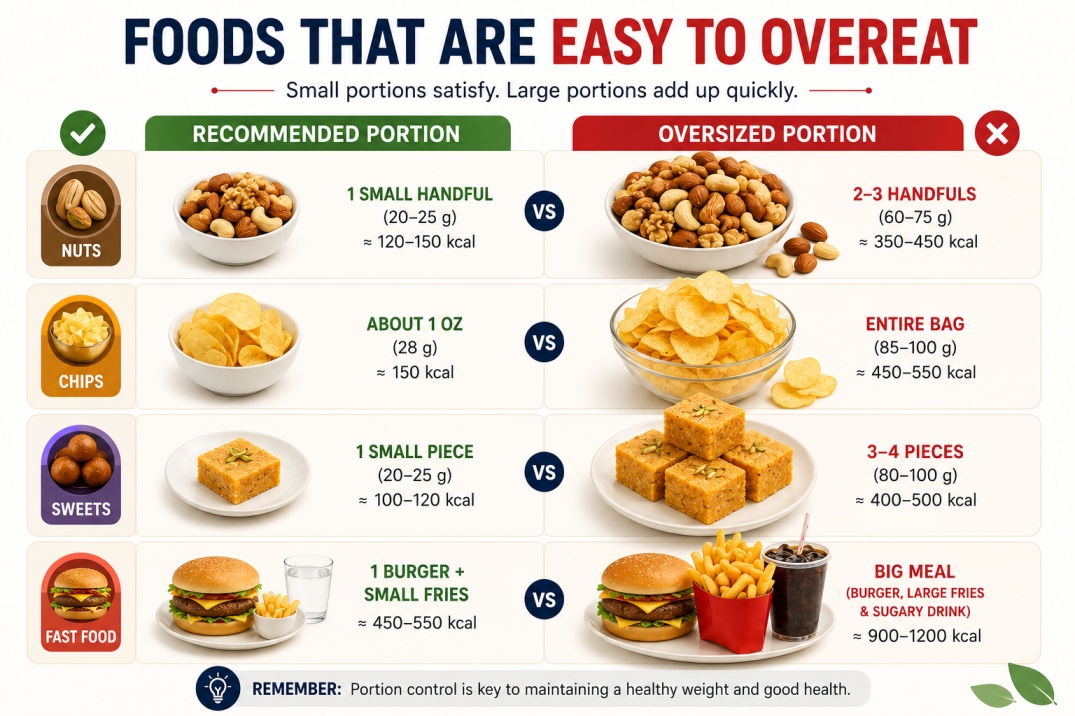
Foods That Are Easy to Overeat
Some foods are healthy but calorie-dense, making portion control especially important.
Examples include:
Nuts
Nut butters
Cheese
Dried fruits
Granola
Trail mix
Fruit juices
Smoothies
Dark chocolate
Avocados
These foods can absolutely fit into a healthy diet, but they should be enjoyed in appropriate portions.
Portion Control While Eating Out
Restaurant meals are often much larger than what your body actually needs.
Here are some practical strategies:
Before Ordering
Review the menu in advance.
Choose grilled, baked, or steamed dishes.
Avoid oversized combo meals.
During the Meal
Share a main course with someone.
Ask for a half portion if available.
Request sauces and dressings on the side.
Eat slowly and stop when comfortably satisfied.
Pack half the meal to take home if portions are large.
Drinks
Choose:
Water
Lemon water (without added sugar)
Unsweetened tea
Sparkling water
Limit:
Sugary beverages
Milkshakes
Sweetened mocktails
Large soft drinks
Smart Portion Control Tips
Use smaller plates and bowls to make portions appear larger.
Serve meals in the kitchen instead of placing serving dishes on the table.
Avoid eating directly from large packets or containers.
Read nutrition labels to understand serving sizes.
Pause halfway through your meal and check if you're still hungry.
Wait 10–15 minutes before taking a second serving.
Fill up on vegetables before eating calorie-dense foods.
Keep healthy snacks in pre-portioned containers instead of large bags.
Mindful Eating: The Secret to Better Portion Control
Portion control isn't only about how much food is on your plate—it's also about how you eat. Many people eat quickly, while working, watching television, or scrolling through their phones. This often leads to consuming more food than the body actually needs.
Mindful eating is the practice of paying full attention to your food, your hunger, and your body's fullness signals. It helps you enjoy meals more, recognize when you're satisfied, and naturally reduce overeating.
Research suggests that mindful eating can improve portion control, reduce emotional eating, and support long-term weight management.
Benefits of Mindful Eating
Practicing mindful eating can help you:
Eat appropriate portions
Recognize true hunger and fullness
Reduce emotional eating
Improve digestion
Prevent overeating
Enjoy meals more
Build a healthier relationship with food
Simple Mindful Eating Habits
Eat without distractions like TV or mobile phones.
Sit at a dining table instead of eating while standing.
Take small bites.
Chew each bite thoroughly (about 20–30 times).
Put your spoon or fork down between bites.
Appreciate the taste, texture, and aroma of your food.
Stop eating when you're comfortably satisfied—not overly full.
These small habits help your brain register fullness before you overeat.
Understanding Hunger vs Appetite
Many people eat because food is available—not because they're physically hungry.
Understanding the difference can make portion control much easier.
Physical Hunger
Emotional Appetite
Develops gradually
Appears suddenly
Can wait
Feels urgent
Any food satisfies
Craves specific foods
Stops after fullness
Continues despite fullness
Driven by the body's energy needs
Triggered by emotions, stress, or boredom
Before eating, ask yourself:
"Am I physically hungry, or am I eating because I'm bored, stressed, or emotional?"
This simple question can prevent unnecessary snacking.
Tips to Reduce Portion Sizes Without Feeling Hungry
Many people worry that eating smaller portions will leave them feeling hungry. Fortunately, there are effective ways to reduce calorie intake while staying satisfied.
1. Eat Protein First
Protein is the most filling macronutrient.
Including protein at every meal helps:
Reduce hunger
Control cravings
Preserve muscle during weight loss
Increase meal satisfaction
Good choices include:
Eggs
Paneer
Tofu
Fish
Chicken
Lentils
Greek yogurt
2. Fill Up on Vegetables
Vegetables are naturally low in calories but high in fiber and water.
Eating vegetables first can help reduce the amount of calorie-dense foods consumed later in the meal.
Aim for half your plate to be vegetables.
3. Drink Water Before Meals
Drinking 1–2 glasses of water about 20–30 minutes before meals may help reduce hunger and prevent overeating.
Avoid confusing thirst with hunger.
4. Eat Slowly
Your brain takes approximately 20 minutes to receive fullness signals from your stomach.
Eating slowly gives your body enough time to recognize when you've had enough.
5. Choose High-Fiber Foods
Fiber increases fullness and slows digestion.
Excellent sources include:
Oats
Fruits
Vegetables
Lentils
Beans
Whole grains
Chia seeds
Flaxseeds
6. Avoid Eating Directly From Large Packages
It's easy to lose track of how much you're eating when snacking from family-size packets.
Instead:
Portion snacks into a small bowl.
Store leftovers immediately.
Keep serving sizes visible.
7. Don't Skip Meals
Skipping meals often leads to intense hunger later in the day.
Regular, balanced meals help regulate appetite and improve portion control.
Portion Control for Indian Meals
Portion control doesn't mean giving up traditional Indian foods. It simply means balancing your plate and choosing appropriate serving sizes.
Breakfast
Examples:
2 vegetable idlis + sambar
1 bowl vegetable poha
2 moong dal chillas + curd
Vegetable oats upma
Vegetable besan chilla
Add a protein source whenever possible.
Lunch
A balanced lunch may include:
1–2 whole wheat chapatis
1 bowl dal
1 bowl seasonal vegetable
Salad
Low-fat curd
OR
½–1 cup brown rice
Rajma or chole
Mixed vegetables
Salad
Dinner
Keep dinner lighter than lunch.
Examples:
Grilled paneer with vegetables
Dal and sautéed vegetables
Vegetable khichdi with curd
Mixed vegetable soup with tofu
Stir-fried vegetables with grilled chicken
Healthy Snack Portions
Food
Recommended Portion
Almonds
10–12
Walnuts
4–5 halves
Roasted chana
1 small bowl
Fruit
1 medium
Greek yogurt
1 small bowl
Seeds
1 tablespoon
Popcorn (air-popped)
2–3 cups
Meal Prep for Better Portion Control
Planning meals in advance reduces the chances of overeating and making unhealthy food choices.
Meal Prep Tips
Prepare meals for 2–3 days at a time.
Store food in portion-sized containers.
Wash and chop vegetables in advance.
Cook healthy snacks ahead of time.
Carry homemade meals to work.
Avoid shopping when hungry.
Meal preparation makes healthy choices easier and helps maintain consistent portion sizes.
Common Portion Control Mistakes
Even with healthy intentions, many people unknowingly make mistakes that slow weight loss.
1. Eating Healthy Foods in Unlimited Quantities
Healthy foods still contain calories.
Examples:
Nuts
Peanut butter
Cheese
Avocados
Olive oil
Dry fruits
Moderation remains important.
2. Using Oversized Plates
Large plates make normal portions appear smaller, encouraging larger servings.
Choose:
8–9 inch plates
Medium bowls
Smaller serving spoons
3. Eating Too Fast
Fast eating often leads to overeating because fullness signals haven't reached the brain.
Slow down and enjoy every bite.
4. Drinking Calories
Calories from beverages add up quickly.
Limit:
Soft drinks
Sweetened coffee
Bubble tea
Milkshakes
Packaged fruit juices
Choose water, buttermilk, or unsweetened beverages instead.
5. Weekend Overeating
Many people follow healthy eating during weekdays but consume excessive portions on weekends.
Consistency matters more than perfection.
Enjoy treats occasionally, but avoid turning one meal into an entire weekend of overeating.
Common Myths About Portion Control
Myth 1: Portion control means eating tiny meals.
Fact: Portion control means eating the right amount—not starving yourself.
Myth 2: Healthy foods don't need portion control.
Fact: Even healthy foods can contribute excess calories if eaten in very large amounts.
Myth 3: You must count every calorie.
Fact: Simple methods like the Healthy Plate Method and the Hand Portion Guide are often sufficient.
Myth 4: Skipping meals helps portion control.
Fact: Skipping meals often increases hunger and leads to overeating later.
Myth 5: Portion control is only for weight loss.
Fact: Portion control also supports blood sugar management, heart health, digestion, and long-term weight maintenance.
Daily Habits That Make Portion Control Easier
Build these habits into your routine:
✔ Eat meals at regular times.
✔ Start meals with vegetables or salad.
✔ Include protein with every meal.
✔ Drink water throughout the day.
✔ Avoid eating while distracted.
✔ Use smaller plates and bowls.
✔ Keep unhealthy snacks out of sight.
✔ Read food labels to understand serving sizes.
✔ Sleep 7–9 hours every night.
✔ Stay physically active.
✔ Allow yourself occasional treats without guilt—balance is key.
Healthy eating isn't about perfection; it's about making consistent choices that support your long-term goals.
Key Takeaways
Portion control is one of the simplest and most effective strategies for sustainable weight loss.
Eating healthy foods in excessive amounts can still lead to weight gain.
Understanding the difference between portion size and serving size helps prevent overeating.
The Healthy Plate Method and Hand Portion Guide make portion control easy without counting calories.
Protein, fiber, and vegetables help you feel full while naturally reducing calorie intake.
Mindful eating improves awareness of hunger and fullness signals.
Restaurant meals and processed foods often contain larger portions than necessary.
Small, consistent changes in portion sizes can lead to long-term weight management and better overall health.
Conclusion
Successful weight loss isn't about eliminating your favorite foods or following restrictive diets—it's about creating healthy habits that you can maintain for life. One of the most practical and sustainable habits is portion control.
Learning to eat the right amount of food allows you to enjoy balanced meals while naturally reducing excess calorie intake. By paying attention to portion sizes, choosing nutrient-dense foods, eating mindfully, and recognizing your body's hunger and fullness signals, you can lose weight without feeling deprived.
Remember that portion control is not about perfection. Some days you may eat more than planned, and that's completely normal. What matters most is your overall eating pattern and consistency over time.
Simple strategies such as using smaller plates, filling half your plate with vegetables, including protein at every meal, drinking enough water, and planning meals ahead can make a significant difference in your weight-loss journey.
Healthy eating isn't about eating less—it's about eating smart. With patience, consistency, and mindful choices, portion control can help you achieve lasting weight loss while improving your overall health and relationship with food.
Frequently Asked Questions (FAQ Schema)
1. What is portion control for weight loss?
Portion control for weight loss is the practice of eating the right amount of food to meet your body's needs while avoiding excess calorie intake. It helps create a calorie deficit without eliminating entire food groups.
2. Does portion control really help with weight loss?
Yes. Portion control helps reduce daily calorie intake, making it easier to achieve and maintain a calorie deficit, which is essential for weight loss.
3. What is the difference between a portion size and a serving size?
A serving size is a standardized amount listed on food labels or dietary guidelines, while a portion size is the amount of food you actually choose to eat.
4. Can I eat my favorite foods while practicing portion control?
Yes. Portion control focuses on moderation rather than restriction. You can enjoy your favorite foods in appropriate portions as part of a balanced diet.
5. How can I estimate portion sizes without a food scale?
You can use your hand as a guide:
Palm = Protein
Cupped hand = Carbohydrates
Fist = Vegetables or Fruit
Thumb = Healthy fats
This method is practical and easy to use anywhere.
6. Which foods help with portion control?
Foods rich in protein, fiber, and water help increase fullness. Examples include vegetables, fruits, whole grains, legumes, eggs, lean meats, fish, tofu, paneer, and Greek yogurt.
7. Should I skip meals to reduce portion sizes?
No. Skipping meals can increase hunger and make overeating more likely later in the day. Eating regular, balanced meals supports better appetite control.
8. How can I control portions when eating at restaurants?
Choose smaller portions, share meals, request dressings and sauces on the side, eat slowly, and stop eating when comfortably full. Packing leftovers is another effective strategy.
9. Is portion control better than counting calories?
For many people, portion control is a simpler and more sustainable approach. It encourages balanced eating habits without the need to track every calorie.
10. How long does it take to see results from portion control?
Results vary depending on your overall diet, physical activity, and consistency. Many people notice improvements in eating habits within a few weeks, while healthy weight loss typically occurs gradually over several months.
Ready to Begin Your Health Journey?
Get a personalized, medically guided plan built around your unique biology.