How to Recover Muscles After a Workout: Recovery Days
When people start a fitness routine, it is easy to believe that more workouts mean faster results. But exercise is only one part of the process. Your body also needs time to recover from the physical stress of training.
Recovery days are planned periods when you reduce or pause structured exercise to allow your body to repair and adapt.
During exercise, muscles experience stress and temporary fatigue. Recovery gives the body time to restore energy, repair tissues, and adapt to the demands of training.https://www.cdc.gov
That is why progress is not simply:
Workout → Workout → Workout
It is:
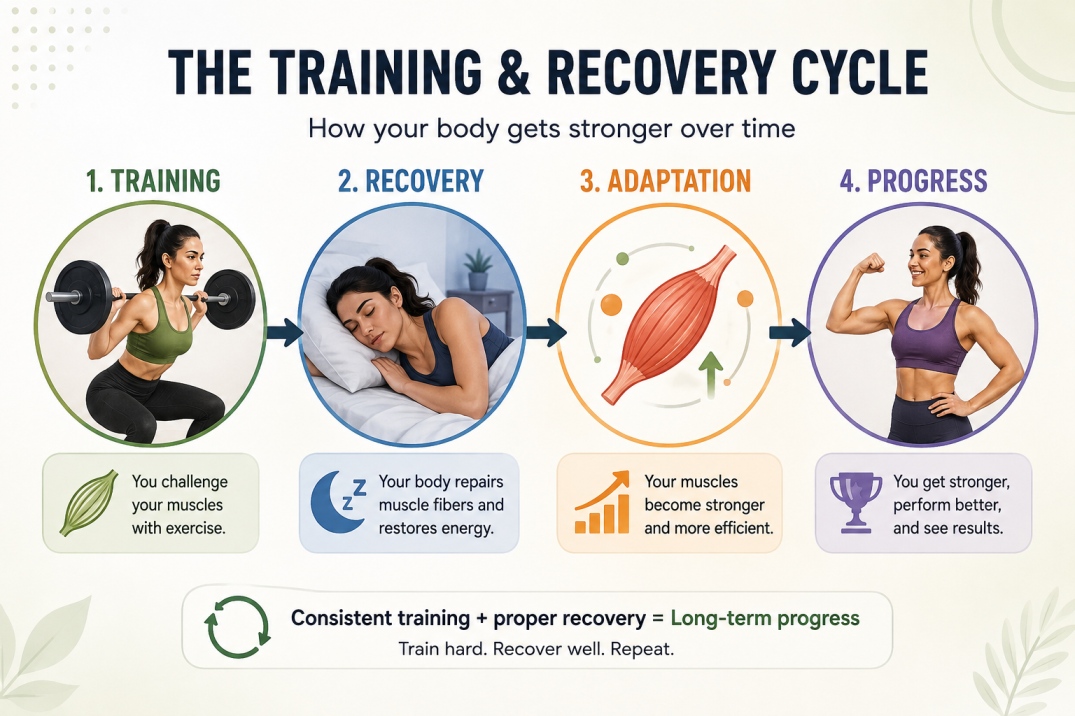
Training → Recovery → Adaptation → Progress
Recovery is therefore not wasted time. It is an important part of a sustainable fitness routine.
What Is a Recovery Day?
A recovery day is a day when you intentionally reduce training intensity or take a break from structured exercise.
Depending on your fitness routine, a recovery day may involve:
· Complete rest
· Gentle walking
· Light stretching
· Mobility exercises
· Easy cycling
· Relaxing physical activity
A recovery day does not necessarily mean staying in bed all day.
For some people, gentle movement may feel better than complete inactivity. This is often referred to as active recovery.
Why Does Your Body Need Recovery?
Exercise places stress on the body.
During a workout, particularly strength training or high-intensity exercise, muscles are challenged and energy stores are used.
Recovery allows your body to respond to this training stress.
It supports processes such as:
· Muscle repair
· Restoration of energy
· Reduction of exercise-related fatigue
· Adaptation to training
· Preparation for future workouts
Without enough recovery, repeatedly training hard can make it difficult to maintain exercise quality and consistency.https://www.who.int
Exercise Is the Stimulus — Recovery Is Where Adaptation Happens
A useful way to think about fitness is:
Training provides the stimulus.
Recovery allows the body to adapt.
Consistent training plus recovery produces progress.
For example, after a strength-training session, your muscles may feel tired or sore.
Rather than immediately training the same muscles hard again, allowing appropriate recovery gives your body time to repair and adapt.
Over time, this can help you become stronger and better able to handle your workouts.
Recovery Days and Muscle Recovery
Muscle recovery is particularly important after resistance training.
Strength training creates a training stimulus that the body needs to recover from.
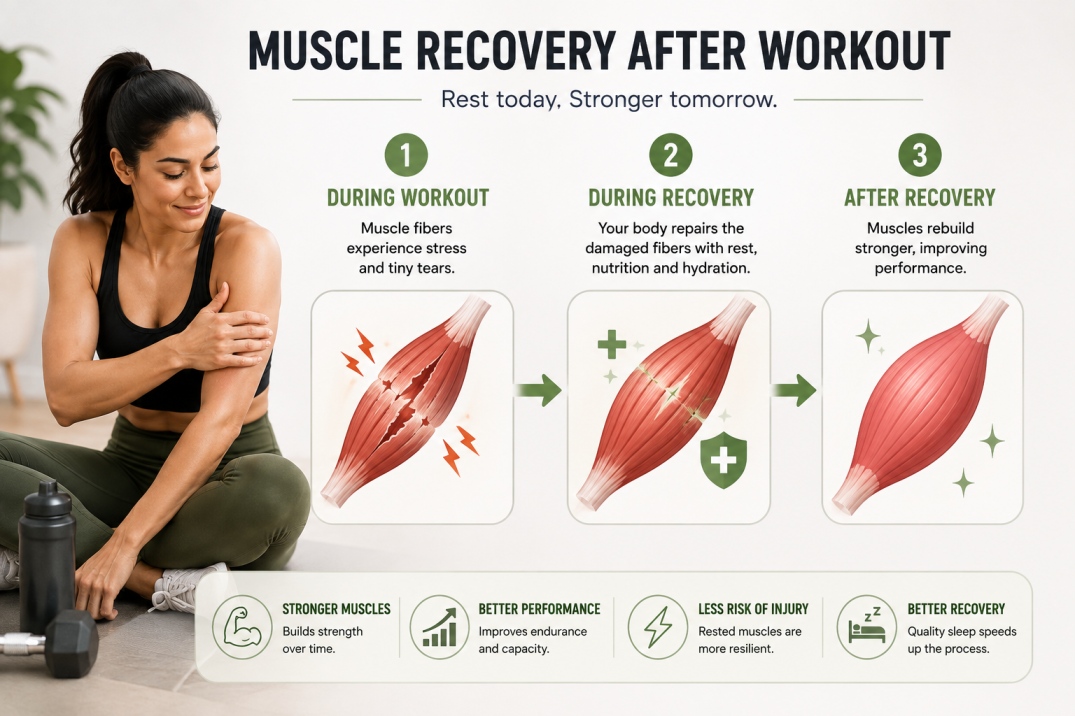
During recovery, the body works to repair muscle tissue and restore the resources needed for future activity.
This is why training the same muscle groups intensely every day is not necessarily the best approach.
A well-designed routine balances:
Training Stress + Recovery
rather than maximizing training volume every day.
Recovery Days Are Not Only for Beginners
Recovery is important regardless of fitness level.
Beginners
New exercisers may experience more soreness and fatigue because their bodies are adapting to unfamiliar activity.
Intermediate Exercisers
As workout intensity and volume increase, planned recovery becomes increasingly useful.
Advanced Exercisers
Higher training loads can create substantial physical stress, making appropriate recovery an important part of performance and consistency.
The more demanding your training, the more important it becomes to manage recovery appropriately.
Signs You May Need More Recovery
Your body can provide clues when your training load is exceeding your ability to recover.
Possible signs include:
· Persistent muscle soreness
· Unusual fatigue
· Reduced workout performance
· Feeling unusually tired before training
· Decreased motivation to exercise
· Difficulty sleeping
· Increased irritability
· Feeling that normal workouts are suddenly much harder
One difficult workout does not necessarily mean you need a rest day.
However, if several of these signs continue, it may be worth reducing training intensity or volume and reviewing your recovery habits.
Recovery vs. Laziness
Taking a recovery day does not mean you are being lazy.
There is an important difference between:
Avoiding exercise because you don't feel like doing it
and
Taking planned recovery because your body needs time to adapt.
A recovery day can actually help you return to your next workout feeling more prepared and capable.
Rest is part of the training plan—not a failure to follow it.
How Often Should You Take a Recovery Day?
There is no universal number of recovery days that works for everyone.
Your recovery needs depend on factors such as:
· Training intensity
· Workout frequency
· Exercise type
· Fitness level
· Age
· Sleep
· Nutrition
· Stress
· Work and daily activity
· Overall health
Someone doing light exercise may need less planned recovery than someone completing frequent high-intensity or heavy strength workouts.
Instead of following a fixed rule, consider your overall training load and how well you are recovering.
Recovery Days and Weight Loss
Taking a recovery day does not stop your weight-loss progress.
In fact, recovery can help you maintain a consistent exercise routine over time.
Trying to exercise intensely every day may increase fatigue and make it harder to stay consistent.
A sustainable weight-management approach combines:
Balanced Nutrition + Regular Exercise + Recovery + Sleep + Consistency
The goal is not to burn as many calories as possible every day.
The goal is to create habits you can maintain for months and years.
What Happens During Recovery?
Recovery is more than simply taking a day away from the gym. It is the period when your body restores the resources used during exercise and adapts to the training stress you placed on it.
A good recovery routine combines rest, nutrition, hydration, sleep, and appropriate movement.
1. Muscle Repair and Adaptation
During exercise, particularly resistance training, muscles are exposed to stress.
After the workout, your body begins the process of repairing and adapting to that training stimulus.
This is one reason why constantly training the same muscles at high intensity without adequate recovery is not necessarily better.
A balanced routine gives your body enough time to recover before the next demanding session.
2. Restores Energy
Exercise uses energy stored in the body.
Recovery gives your body time to replenish these energy stores so that you can perform well during your next workout.
If you repeatedly train without adequate recovery, you may notice:
· Lower energy
· Reduced workout performance
· Difficulty completing your usual routine
· Greater feelings of fatigue
A recovery day can help you return to training feeling more prepared.
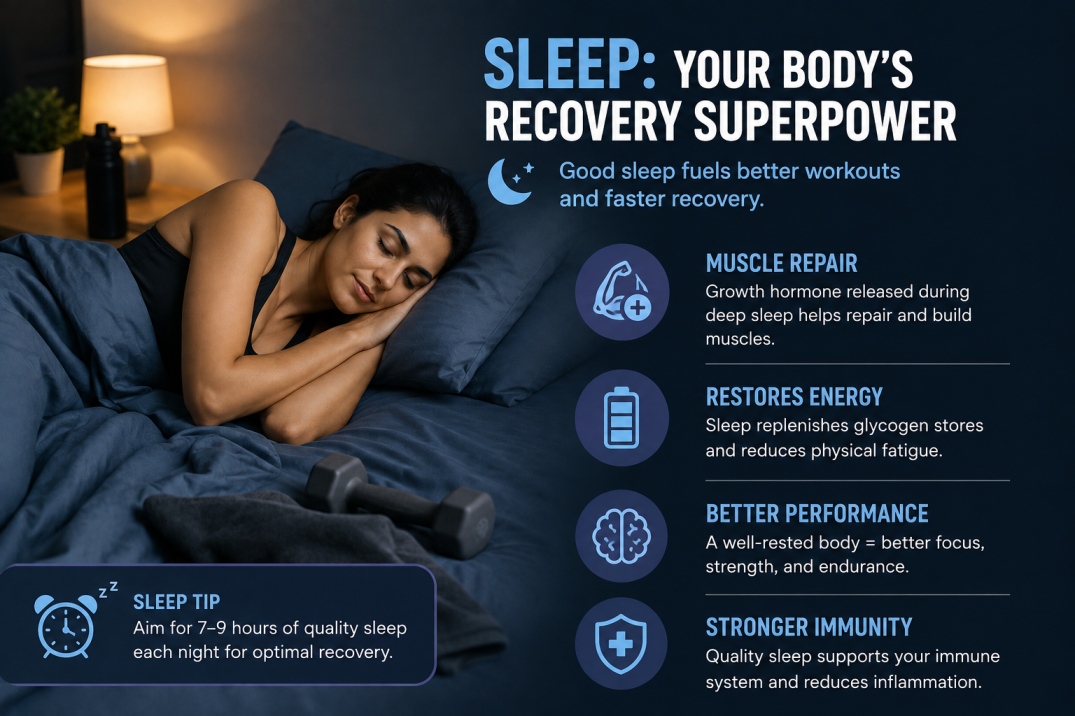
3. Sleep Is a Major Part of Recovery
A recovery day cannot completely compensate for consistently poor sleep.
Sleep is important for physical and mental recovery and can influence:
· Energy
· Exercise performance
· Mood
· Concentration
· Appetite
· Overall well-being
Try to maintain a consistent sleep routine whenever possible.
If your schedule allows, prioritize sleep on both training and recovery days.
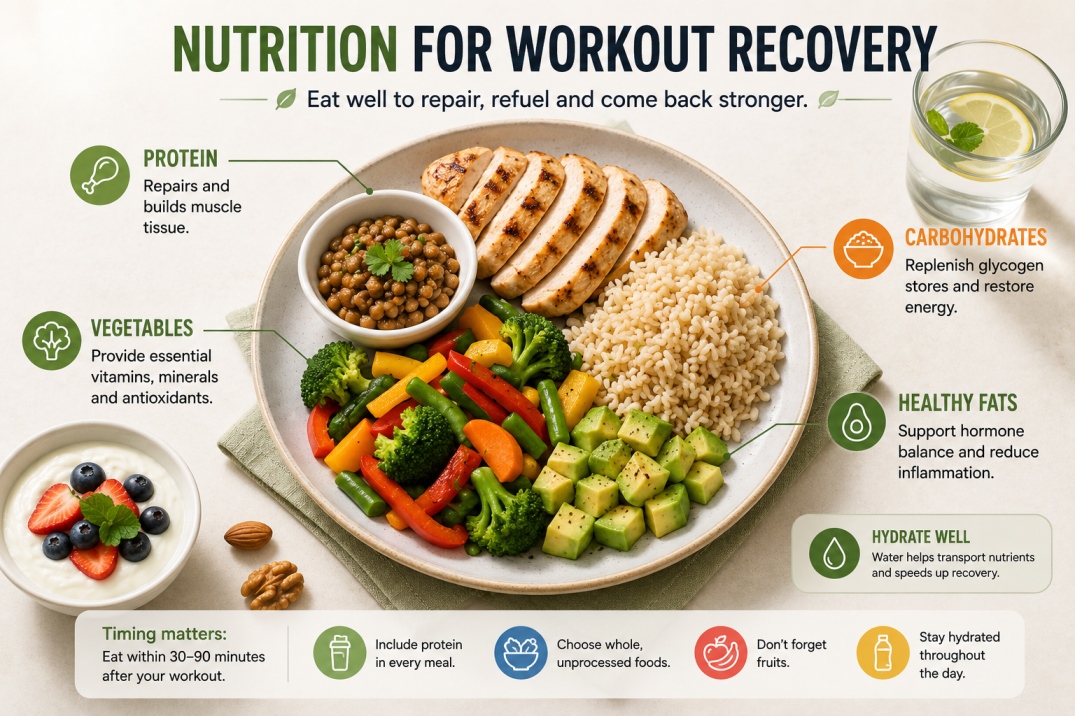
4. Nutrition Supports Recovery
Your body needs adequate nutrients to recover from exercise.
A balanced recovery diet should provide:
· Protein
· Carbohydrates
· Healthy fats
· Vitamins and minerals
· Adequate fluids
Protein
Protein provides amino acids needed for muscle repair and maintenance.
Useful sources include:
· Dal
· Beans
· Chickpeas
· Soy
· Tofu
· Paneer
· Curd
· Eggs
· Fish
· Chicken
Carbohydrates
Carbohydrates help provide energy for exercise and support replenishment of muscle glycogen.
Good options include:
· Oats
· Rice
· Whole-wheat roti
· Potatoes
· Sweet potatoes
· Fruits
· Millets
· Other whole grains
Recovery nutrition should therefore not be reduced to protein alone.https://wellorafit.com/services/nutrition-diet-planning/
5. Hydration Matters
Fluid losses through sweat need to be replaced, particularly after longer or more intense workouts or in hot environments.
Make hydration a regular habit rather than waiting until you feel extremely thirsty.
Useful habits include:
· Drinking water throughout the day
· Keeping a water bottle nearby
· Drinking before and after exercise
· Increasing fluids appropriately in hot weather
For most everyday workouts, water is sufficient.
Longer or very intense exercise sessions may require a more individualized hydration and electrolyte strategy.
6. Active Recovery
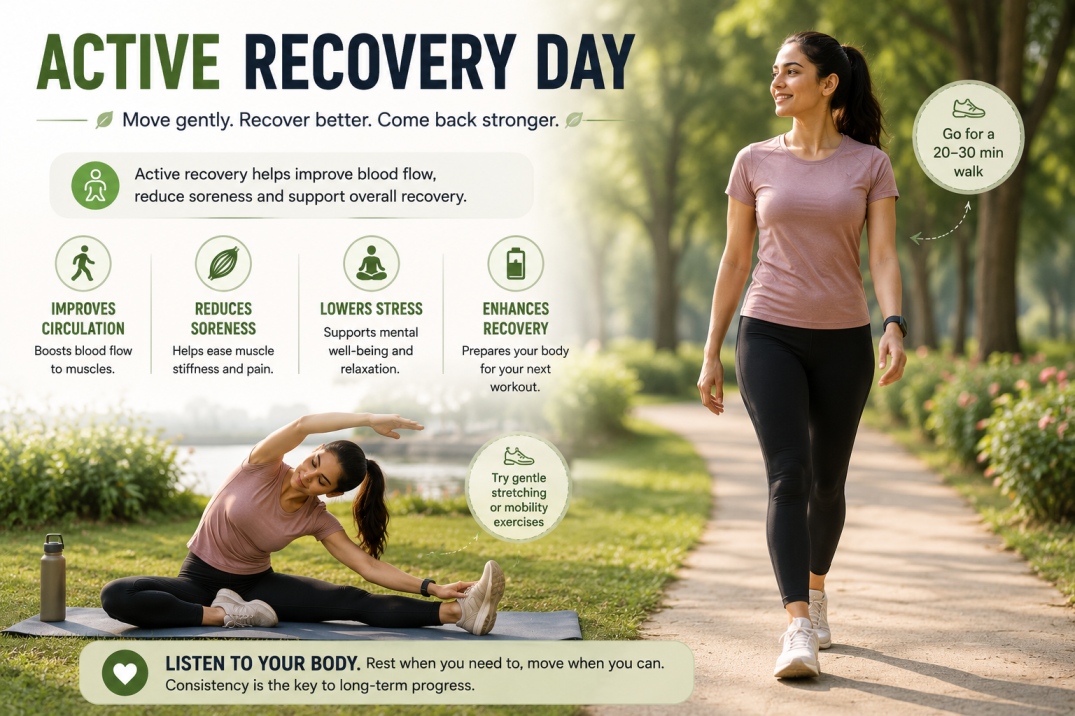
A recovery day does not always have to mean complete inactivity.
Active recovery involves low-intensity movement that is easier than your normal workout.
Examples include:
· Easy walking
· Gentle cycling
· Light stretching
· Mobility exercises
· Relaxed swimming
· Gentle yoga
The intensity should remain low enough that it does not feel like another demanding workout.
7. Stretching and Mobility
Gentle mobility work can be useful on recovery days, particularly if you feel stiff after training.
You might include:
· Gentle hip mobility
· Shoulder movements
· Light hamstring stretching
· Ankle mobility
· Gentle back movements
Stretching should feel comfortable rather than painful.
You don't need a long stretching routine for recovery to be effective.
8. Recovery Helps Maintain Workout Quality
When you recover appropriately, you may be better able to maintain the quality of your next workout.
For example:
Training without recovery
→ Fatigue
→ Reduced performance
→ Poorer workout quality
→ Greater difficulty maintaining consistency
Whereas:
Training + Recovery
→ Better readiness
→ Higher-quality sessions
→ Consistent training
→ Long-term progress
The goal is not to maximize the number of workouts. It is to maximize the quality and consistency of your training over time.
9. Recovery and Injury Risk
Fatigue can affect movement quality, coordination, and exercise technique.
Continuing to push through significant fatigue may make it harder to maintain good form.
Appropriate recovery can therefore be part of a broader strategy for managing training load and reducing unnecessary physical stress.
However, recovery days cannot guarantee injury prevention. Proper exercise technique, appropriate progression, suitable equipment, and professional guidance when needed are also important.
10. Mental Recovery Matters Too
Fitness can create mental fatigue as well as physical fatigue.
Taking a break from structured training can give you an opportunity to:
· Relax
· Spend time with family
· Enjoy hobbies
· Get outdoors
· Focus on other activities
· Return to exercise with renewed motivation
A sustainable fitness routine should support your overall life rather than becoming another source of constant pressure.
11. Recovery During Weight Loss
When you're trying to lose weight, it can be tempting to exercise as much as possible.
But more exercise is not automatically better.
Your weight-management plan should include:
Nutrition → Exercise → Recovery → Sleep → Consistency
Recovery days allow you to maintain a sustainable activity routine without making every day physically demanding.
12. Recovery Is Individual
Two people can complete the same workout and require different amounts of recovery.
Recovery can be affected by:
· Age
· Training experience
· Workout intensity
· Exercise volume
· Sleep
· Nutrition
· Stress
· Daily physical activity
· Health conditions
For example, someone who works a physically demanding job may need more recovery than someone who spends most of the day sitting.
This is why recovery should be personalized rather than based on a rigid rule.
How to Know You're Recovering Well
Signs that your routine may be providing adequate recovery can include:
· Normal energy levels
· Stable workout performance
· Manageable muscle soreness
· Good motivation to exercise
· Reasonably good sleep
· Ability to complete planned workouts
· Feeling physically prepared for your next session
These are not strict medical indicators, but they can help you assess how your training routine feels.
When to Take More Time Off
Consider reducing exercise intensity or taking additional rest when you experience persistent:
· Severe muscle soreness
· Unusual fatigue
· Declining performance
· Poor sleep
· Loss of motivation
· Pain that does not improve
Pain should not automatically be treated as normal workout soreness.
If you have persistent or significant pain, swelling, weakness, dizziness, chest pain, or other concerning symptoms, seek appropriate medical advice.
How to Make Recovery Days Effective
Recovery days work best when they are treated as part of your fitness plan rather than as completely unstructured days. The goal is to give your body enough time to recover while still maintaining healthy movement and daily habits.
1. Plan Your Recovery Days
Don't wait until you're completely exhausted before taking a break.
Consider scheduling recovery days based on:
· Workout intensity
· Training frequency
· Muscle groups being trained
· Your fitness level
· Sleep quality
· Daily stress
· How your body feels
For example, someone following a strength-training routine several days a week may schedule one or more lower-intensity days depending on their training program.
There is no universal number of recovery days that is right for everyone.
2. Choose Between Complete Rest and Active Recovery
Not every recovery day needs to look the same.
Complete Rest
You may choose complete rest when you feel particularly fatigued or when your training schedule calls for it.
Your day might simply include:
· Normal daily activities
· Relaxation
· Adequate meals
· Hydration
· Good sleep
Active Recovery
If you feel well enough to move, choose gentle activities such as:
· Walking
· Light cycling
· Gentle yoga
· Mobility exercises
· Easy stretching
The key is to keep the intensity low.
A recovery day should not turn into another hard workout.
3. Keep Movement Gentle
The purpose of active recovery is to stay lightly active without creating significant additional training stress.
A useful guideline is:
You should finish feeling refreshed—not exhausted.
If a recovery walk leaves you feeling as tired as a workout, reduce the intensity or duration.
4. Prioritize Protein
Recovery nutrition should provide enough protein to support muscle maintenance and repair.
Good options include:
· Dal
· Paneer
· Tofu
· Curd
· Greek yogurt
· Eggs
· Fish
· Chicken
· Soybeans
· Chickpeas
· Rajma
Try distributing protein across your meals instead of relying on one large serving at the end of the day.
5. Don't Avoid Carbohydrates on Rest Days
Some people reduce carbohydrates dramatically on recovery days because they are not exercising.
This isn't necessary for everyone.
Carbohydrates are an important energy source and can be part of a balanced diet on both training and recovery days.
Choose options such as:
· Whole grains
· Oats
· Rice
· Roti
· Millets
· Potatoes
· Sweet potatoes
· Fruits
· Legumes
Your overall calorie and carbohydrate needs depend on your individual goals and activity level.
6. Eat Plenty of Nutrient-Rich Foods
Recovery is a good opportunity to focus on overall diet quality.
Include:
Vegetables + Fruits + Protein + Whole Grains + Healthy Fats
For example:
Dal + roti + vegetables + curd + salad
or
Paneer/tofu + vegetables + controlled rice portion + salad
A balanced meal provides much more than protein alone.https://wellorafit.com/services/nutrition-diet-planning/
7. Stay Hydrated
Continue drinking water on recovery days.
You don't need to drastically reduce your fluid intake simply because you're not exercising.
Hydration needs depend on:
· Weather
· Activity
· Sweat losses
· Diet
· Body size
· Health status
Keep water easily accessible and drink regularly according to your needs.
8. Prioritize Sleep
A recovery day is a good opportunity to focus on sleep quality.
Helpful habits include:
· Maintain a consistent sleep schedule.
· Reduce unnecessary screen time before bed.
· Keep your sleeping environment comfortable.
· Avoid excessive caffeine late in the day.
· Give yourself enough time in bed.
If your training load is high but sleep is consistently poor, increasing training volume may not be the best next step.
9. Use Recovery Days to Reduce Stress
Your body is affected by more than exercise.
Work stress, poor sleep, long working hours, and emotional stress can all contribute to how recovered you feel.
Use recovery days to slow down when possible.
You might:
· Go for a relaxed walk.
· Spend time outdoors.
· Read.
· Practice breathing exercises.
· Spend time with family.
· Enjoy a hobby.
· Take time away from structured workouts.
Mental recovery is part of sustainable fitness.
10. Avoid Turning Recovery Into a "Cheat Day"
A recovery day does not mean you need to eat excessively because you aren't working out.
You also don't need to severely restrict food because you aren't exercising.
Continue following your normal balanced eating pattern.
Think:
Recovery Day ≠ Cheat Day
and
Recovery Day ≠ Starvation Day
It is simply another day of supporting your overall health.
11. Don't Use Recovery Days to Compensate for Food
Avoid thinking:
“I ate more yesterday, so I need to exercise today.”
or:
“I'm not exercising today, so I should skip meals.”
Food and exercise should not become a punishment-and-reward system.
Instead, maintain a consistent eating pattern that supports your overall goals.
12. Listen to Your Body
Your body can provide useful information about your recovery.
Pay attention to:
· Muscle soreness
· Energy
· Sleep
· Motivation
· Workout performance
· General physical comfort
If you feel unusually tired, reducing training intensity may be more appropriate than forcing another hard session.
13. Don't Confuse Soreness With Progress
Muscle soreness is not a requirement for an effective workout.
You don't need to be extremely sore after every training session to know that your workout was productive.
Similarly, constantly training until you're exhausted is not a measure of fitness progress.
Better indicators include:
· Improved strength
· Better endurance
· Improved technique
· Greater workout consistency
· Better movement quality
· Improved fitness
14. Recovery Is Especially Important During Busy Periods
Your recovery needs may increase when life becomes more demanding.
For example:
· Poor sleep
· Work stress
· Travel
· Increased daily activity
· Illness
· Higher training volume
During these periods, reducing workout intensity or adding recovery time may be more appropriate than forcing yourself to maintain the same training schedule.
15. Create a Simple Recovery-Day Routine
A practical recovery day could look like:
Morning
Hydration + light mobility
Breakfast
Protein-rich balanced meal
Daytime
Normal daily movement + short easy walk
Lunch
Balanced meal with protein, vegetables, and whole grains
Evening
Gentle stretching or relaxed walk
Dinner
Nutrient-rich balanced meal
Night
Relaxation + adequate sleep
The exact routine can vary according to your lifestyle and training program.
Recovery Days for Long-Term Fitness Progress
Recovery should not be treated as something you do only when you are tired. It is a regular part of a sustainable fitness routine.
When training, nutrition, sleep, and recovery work together, you can build a routine that supports strength, fitness, energy, and long-term consistency.
1. Recovery Helps You Stay Consistent
One of the biggest benefits of recovery days is that they can help you maintain your workout routine over time.
Trying to train intensely every day may lead to excessive fatigue and make it harder to stay consistent.
A sustainable approach looks like:
Train → Recover → Train → Recover → Progress
Consistency over months is more valuable than pushing yourself excessively for a few weeks.
2. Recovery Supports Long-Term Performance
Your goal should not be to have the hardest workout every day.
Instead, aim to perform your workouts well when you train.
Adequate recovery can help you return to your next session with:
· Better energy
· Better concentration
· Improved workout quality
· Greater readiness
· More motivation
This can make your overall training program more productive.
3. Recovery and Muscle Growth
Muscle growth is influenced by several factors, including:
Resistance Training + Adequate Protein + Energy Intake + Recovery
Training provides the stimulus, while nutrition and recovery provide the conditions needed for adaptation.
This is why adding more workouts is not always the answer when progress slows.
Sometimes the better approach is to review your:
· Training volume
· Exercise intensity
· Protein intake
· Overall nutrition
· Sleep
· Recovery time
4. Recovery and Healthy Weight Management
Recovery days are also relevant when your goal is weight loss.
A common mistake is thinking:
“More exercise = faster weight loss.”
Weight management is influenced by your overall energy intake and expenditure, but sustainable progress also depends on your ability to maintain healthy habits consistently.
A balanced approach combines:
Nutrition + Exercise + Recovery + Sleep + Consistency
You do not need to exercise intensely every day to make progress.
5. Recovery Can Support Mental Well-Being
Fitness should improve your quality of life rather than create constant pressure.
Recovery days can give you time to:
· Relax
· Spend time with family
· Enjoy hobbies
· Get outdoors
· Reduce workout-related pressure
· Focus on other responsibilities
Taking a break from structured exercise can help keep your relationship with fitness positive and sustainable.
6. Adjust Recovery as Your Life Changes
Your recovery needs are not fixed.
You may need additional recovery when:
· Training volume increases
· Work becomes more demanding
· Sleep decreases
· You are travelling
· Daily physical activity increases
· You are experiencing high stress
· You are returning after illness
· Your body feels unusually fatigued
Your workout plan should be flexible enough to accommodate these changes.
7. Recovery Is Not the Same for Everyone
There is no universal rule such as “everyone needs exactly two rest days.”
One person may recover well with one recovery day, while another may need more frequent lower-intensity days.
Consider:
· How hard you train
· How often you train
· Your fitness level
· Your age
· Your sleep
· Your nutrition
· Your daily activity
· Your stress level
· Your overall health
The right amount of recovery is the amount that allows you to train effectively while maintaining good overall well-being.
8. Know When to Seek Professional Guidance
Normal post-workout fatigue is different from persistent or concerning symptoms.
Seek appropriate medical or professional advice if you experience:
· Persistent or severe pain
· Recurrent injuries
· Significant weakness
· Dizziness or fainting
· Chest pain
· Unusual shortness of breath
· Persistent exhaustion
· Major decline in exercise performance
A qualified fitness professional can also help structure training and recovery appropriately for your goals.
Common Recovery Mistakes to Avoid
1. Training Hard Every Day
More training is not automatically better.
2. Ignoring Persistent Fatigue
Constant exhaustion should not be treated as a sign that you need to “push harder.”
3. Under-Eating
Insufficient nutrition can make recovery more difficult.
4. Neglecting Protein
Adequate protein supports muscle maintenance and repair.
5. Sacrificing Sleep
Poor sleep can affect recovery, energy, and exercise performance.
6. Turning Every Recovery Day Into Complete Inactivity
Gentle movement can be appropriate for some people.
7. Feeling Guilty About Rest
Rest is not a failure. It is part of a structured training plan.
A Simple Weekly Fitness Framework
A routine might look something like:
Monday: Strength Training
Tuesday: Cardio or Moderate Activity
Wednesday: Recovery / Light Movement
Thursday: Strength Training
Friday: Cardio or Moderate Activity
Saturday: Strength Training or Active Recovery
Sunday: Rest
This is only an example. The ideal schedule depends on your fitness level, goals, training program, and recovery capacity.
Key Takeaways
· Recovery is an essential part of long-term fitness.
· It helps your body adapt to training.
· Adequate recovery can support workout quality and consistency.
· Muscle development depends on training, nutrition, and recovery together.
· Recovery days can fit into weight-management plans.
· Sleep and nutrition are major components of recovery.
· Recovery needs change with training and lifestyle demands.
· There is no single number of recovery days that works for everyone.
· Persistent pain, severe fatigue, or unusual symptoms should not be ignored.
· Taking a recovery day does not mean you are losing progress.
Conclusion
Recovery days are not a break from your fitness journey—they are part of the journey.
Exercise challenges your body, but recovery gives it the opportunity to repair, adapt, and become better prepared for your next workout.
Instead of measuring progress by how many days you can train without stopping, focus on whether you can maintain a balanced routine over the long term.
Train with purpose. Eat well. Sleep enough. Recover intentionally. Then train again.
That balance is what makes fitness sustainable.
FAQ Schema
1. What is a recovery day?
A recovery day is a planned period when you reduce or pause structured exercise to allow your body to recover from training. It can involve complete rest or gentle activities such as walking and mobility work.
2. Why are recovery days important?
Recovery days give the body time to repair tissues, restore energy, and adapt to exercise. They can also help you maintain workout quality and consistency.
3. How many recovery days should I take each week?
There is no universal number. Recovery needs depend on workout intensity, training frequency, fitness level, sleep, nutrition, stress, daily activity, and overall health.
4. Is walking okay on a recovery day?
Yes. Gentle walking can be a form of active recovery when it feels comfortable and does not create significant additional fatigue.
5. Should I completely stop exercising on a recovery day?
Not necessarily. Some people benefit from complete rest, while others prefer gentle movement. The right choice depends on how your body feels and your training routine.
6. Can recovery days help with muscle growth?
Recovery is an important part of adapting to resistance training. Muscle development depends on the combination of appropriate training, adequate nutrition, and recovery.
7. Should I eat less on rest days?
Not automatically. Your nutritional needs depend on your overall activity and goals. Recovery days should still include balanced, nutrient-rich meals.
8. What should I eat on a recovery day?
Focus on balanced meals containing protein, carbohydrates, vegetables, fruits, healthy fats, and adequate fluids. There is no need for a special “recovery-day diet.”
9. How do I know if I need more recovery?
Persistent soreness, unusual fatigue, declining workout performance, poor sleep, or reduced motivation may indicate that your training load and recovery need to be reassessed.
10. Can I lose weight while taking recovery days?
Yes. Recovery days can be part of a healthy weight-management routine. Sustainable weight management involves nutrition, physical activity, recovery, sleep, and consistency rather than exercising intensely every day.
Ready to Begin Your Health Journey?
Get a personalized, medically guided plan built around your unique biology.