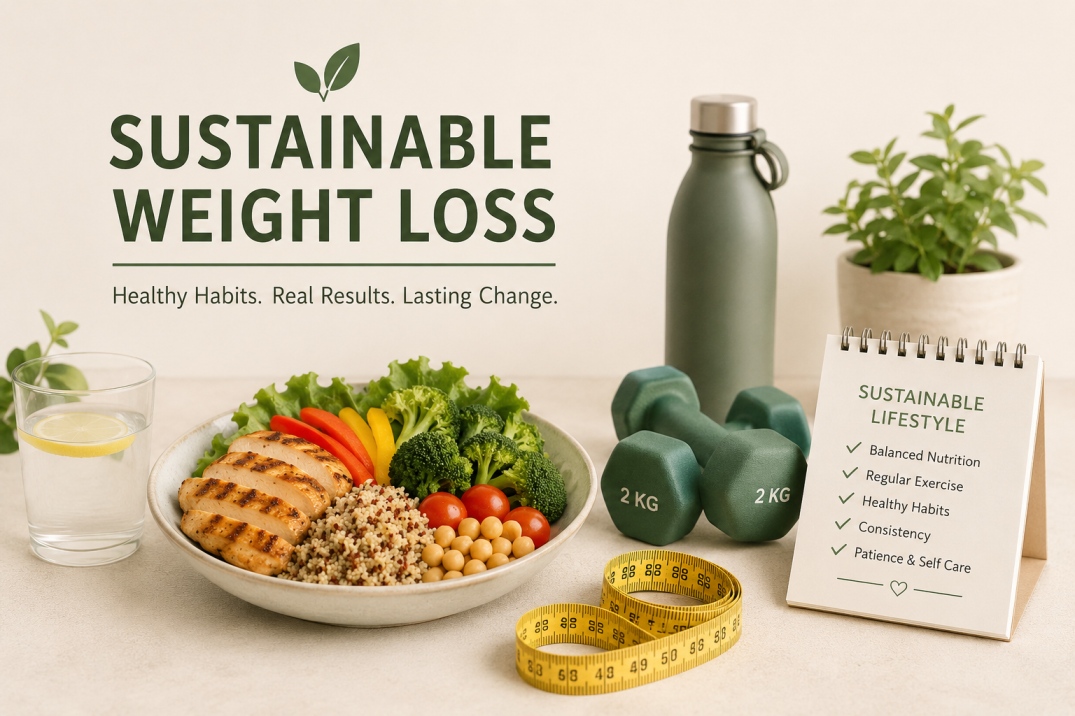
Sustainable Weight Loss: Healthy Weight Loss That Lasts
Sustainable Weight Loss: A Complete Guide to Losing Weight and Keeping It Off
Losing weight is one of the most common health goals, yet many people struggle to keep the weight off. Quick-fix diets, detox plans, and extreme workout routines may promise rapid results, but they rarely lead to lasting success. Instead, they often result in weight regain, frustration, and an unhealthy relationship with food.
Sustainable weight loss focuses on gradual, realistic, and healthy lifestyle changes that help you lose excess body fat while maintaining muscle mass, improving overall health, and supporting long-term success. Rather than relying on restrictive diets, sustainable weight loss emphasizes balanced nutrition, regular physical activity, quality sleep, stress management, and consistency.
Whether your goal is to improve your health, reduce the risk of chronic diseases, or simply feel more confident, adopting sustainable habits can help you achieve results that last. https://www.nih.gov
What Is Sustainable Weight Loss?
Sustainable weight loss refers to losing weight gradually through healthy habits that can be maintained over the long term. It focuses on reducing body fat while preserving muscle mass and supporting overall well-being.
Unlike crash diets or extreme exercise programs, sustainable weight loss does not rely on starvation, skipping meals, or eliminating entire food groups. Instead, it encourages making realistic lifestyle changes that fit into your daily routine.
Healthy weight loss usually occurs at a rate of 0.5 to 1 kg per week, depending on individual factors such as age, body composition, activity level, and overall health.
The goal is not just to lose weight but also to develop habits that prevent weight regain and improve long-term health.https://www.who.int
Why Sustainable Weight Loss Matters
Many people lose weight quickly but regain it within months because the methods they use are difficult to maintain. Sustainable weight loss addresses the root causes of weight gain rather than offering temporary solutions.
Benefits include:
Better heart health
Reduced risk of Type 2 diabetes
Lower blood pressure
Improved cholesterol levels
Increased energy levels
Better mobility and joint health
Improved sleep quality
Better mental well-being
Increased confidence
Easier weight maintenance
Small, consistent changes often produce better long-term outcomes than dramatic short-term efforts. https://wellorafit.com/services/doctor-consultations/
Healthy Weight Loss vs. Crash Diets
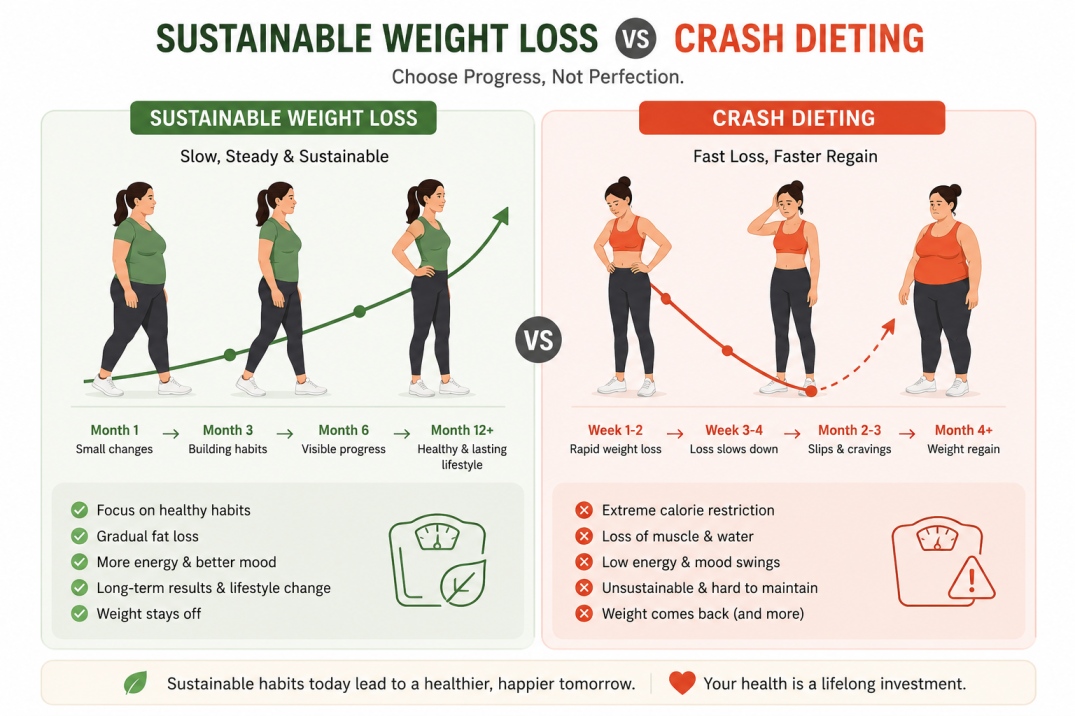
Many popular diets promise dramatic weight loss in a short period. While these approaches may lead to temporary results, they often involve severe calorie restriction, nutrient deficiencies, and muscle loss.
Sustainable Weight Loss
Balanced nutrition
Realistic calorie deficit
Preserves muscle mass
Improves metabolism
Easy to maintain
Encourages healthy habits
Long-lasting results
Crash Diets
Extremely low calories
Eliminate food groups
Muscle loss
Slower metabolism
Difficult to follow
Nutrient deficiencies
Rapid weight regain
Crash diets often trigger the "yo-yo effect," where repeated cycles of weight loss and regain can negatively affect metabolism and overall health.
How Much Weight Loss Is Safe Per Week?
Health experts generally recommend losing 0.5–1 kg (1–2 pounds) per week. This rate allows your body to adapt while minimizing muscle loss and nutritional deficiencies.
Safe weight loss depends on:
Starting weight
Body composition
Calorie intake
Physical activity
Sleep quality
Stress levels
Medical conditions
Trying to lose weight too quickly may increase the risk of fatigue, muscle loss, gallstones, nutrient deficiencies, and weight regain.
Remember that healthy progress is not always reflected by the number on the scale. Improvements in body composition, fitness, strength, and energy are equally important.
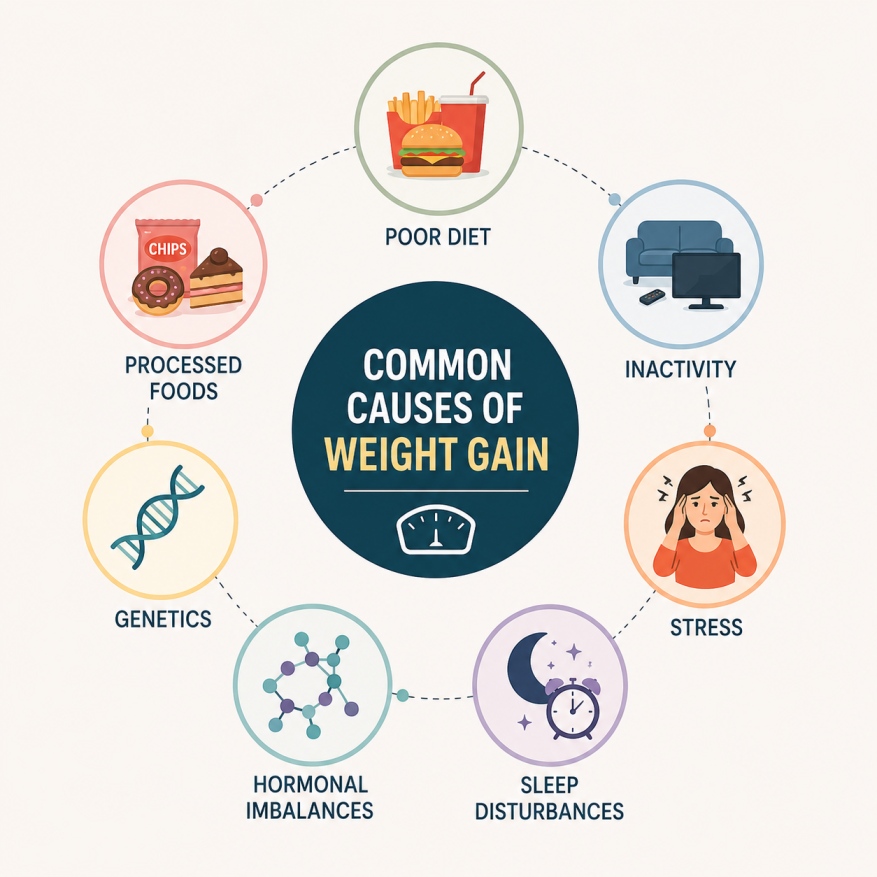
Common Causes of Weight Gain
Weight gain usually develops over time due to multiple lifestyle, environmental, and biological factors rather than a single cause.
1. Excess Calorie Intake
Regularly consuming more calories than your body burns leads to fat storage. Large portion sizes, sugary drinks, fast food, and processed snacks are common contributors.
2. Physical Inactivity
Modern lifestyles involve prolonged sitting, reduced walking, and limited physical activity. Lower energy expenditure makes weight gain more likely.
3. Poor Dietary Choices
Frequent consumption of highly processed foods that are high in sugar, unhealthy fats, and refined carbohydrates can increase calorie intake without providing adequate nutrition.
4. Inadequate Sleep
Poor sleep affects hormones such as ghrelin and leptin, increasing hunger and reducing feelings of fullness. Sleep deprivation may also lead to cravings for high-calorie foods.
5. Chronic Stress
Long-term stress increases cortisol levels, which may contribute to increased appetite, emotional eating, and fat accumulation around the abdomen.
6. Hormonal Changes
Conditions such as hypothyroidism, polycystic ovary syndrome (PCOS), menopause, and insulin resistance can influence body weight and metabolism.
7. Genetics
Genetics can affect body composition, appetite regulation, metabolism, and fat distribution. However, healthy lifestyle habits remain important regardless of genetic predisposition.
8. Certain Medications
Some medications, including corticosteroids, antidepressants, and certain diabetes medications, may contribute to weight gain. Consult your healthcare provider if you have concerns.
Signs You're Losing Weight the Healthy Way
Healthy weight loss is about more than just seeing lower numbers on the scale. Positive lifestyle changes often produce improvements throughout the body.
Signs include:
Gradual weight reduction
Decreased waist circumference
Increased energy
Better sleep
Improved fitness
Stronger muscles
Better digestion
Stable mood
Reduced cravings
Improved blood sugar control
Better cholesterol levels
Lower blood pressure
These improvements indicate that your body is adapting positively to healthier habits.
Common Weight Loss Mistakes to Avoid
Many people unknowingly slow their progress by following ineffective or unsustainable strategies.
Skipping Meals
Skipping meals often leads to excessive hunger and overeating later in the day.
Eating Too Little
Severely restricting calories can slow metabolism, reduce muscle mass, and increase fatigue.
Ignoring Protein
Protein helps preserve muscle during weight loss while increasing satiety.
Drinking Calories
Sugary beverages, specialty coffees, and alcohol can contribute significant calories without making you feel full.
Relying Only on Cardio
Cardio burns calories, but strength training helps preserve muscle and supports long-term metabolism.
Unrealistic Expectations
Healthy weight loss takes time. Expecting dramatic weekly changes often leads to disappointment and quitting early.
Inconsistent Habits
Healthy habits practiced consistently are far more effective than extreme efforts followed by long periods of inactivity.
Best Diet for Sustainable Weight Loss
Nutrition is one of the most important factors in achieving sustainable weight loss. While there is no single "best" diet for everyone, a balanced eating pattern that includes nutrient-rich foods, appropriate portion sizes, and a moderate calorie deficit is most effective for long-term success.
The goal is not to eliminate foods you enjoy but to create healthy eating habits that you can maintain for life. A sustainable diet provides enough energy, protein, vitamins, minerals, and fiber while helping you gradually lose body fat.
Rather than following restrictive fad diets, focus on eating whole foods, controlling portions, staying hydrated, and choosing meals that keep you satisfied. https://wellorafit.com/services/nutrition-diet-planning/
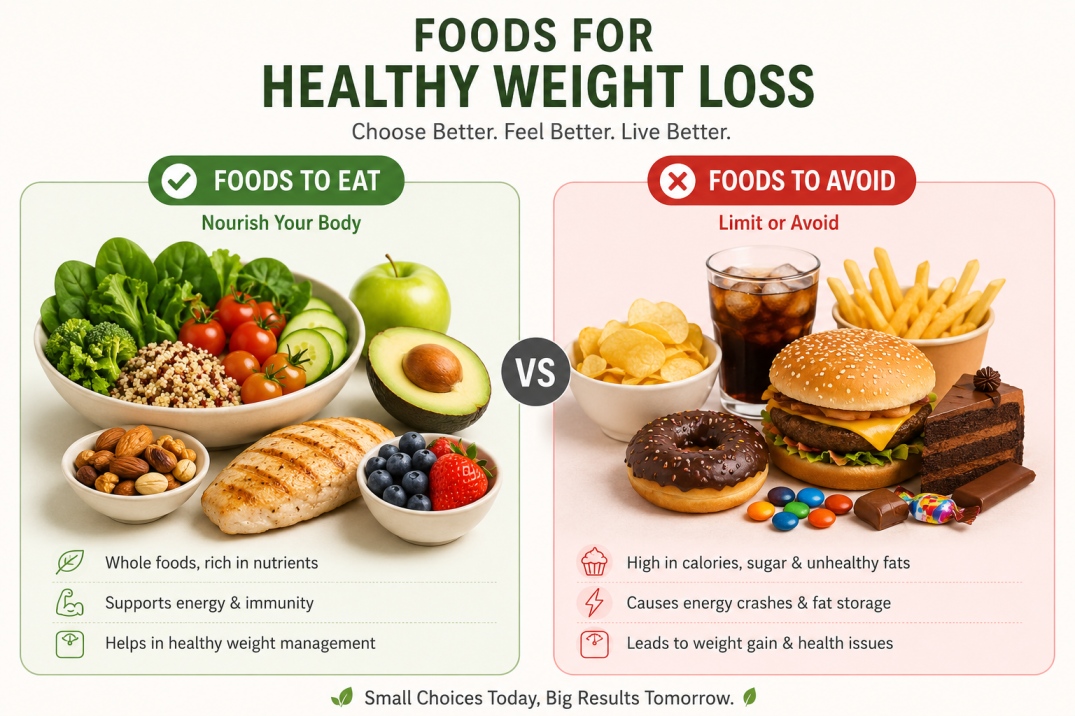
Foods to Include
Choosing nutrient-dense foods helps you stay full for longer, maintain muscle mass, and provide your body with essential nutrients during weight loss.
Protein-Rich Foods
Protein is essential for preserving lean muscle mass, reducing hunger, and increasing satiety.
Include:
Eggs
Chicken breast
Fish
Paneer
Tofu
Greek yogurt
Lentils
Chickpeas
Kidney beans
Low-fat milk
Cottage cheese
Aim to include a source of protein with every meal.
High-Fiber Foods
Fiber slows digestion, improves fullness, supports digestive health, and may help regulate blood sugar levels.
Good sources include:
Oats
Whole wheat
Brown rice
Millets
Quinoa
Apples
Berries
Oranges
Pears
Broccoli
Carrots
Spinach
Cucumber
Beans
Chia seeds
Flaxseeds
Adults should aim for approximately 25–35 grams of fiber daily.
Healthy Fats
Healthy fats support hormone production, brain function, and heart health while helping you feel satisfied after meals.
Choose:
Almonds
Walnuts
Pistachios
Pumpkin seeds
Sunflower seeds
Olive oil
Avocados
Fatty fish like salmon
Peanut butter (in moderation)
Although healthy fats are nutritious, they are calorie-dense, so portion control is important.
Healthy Carbohydrates
Carbohydrates provide energy for daily activities and exercise. Choose minimally processed, high-fiber carbohydrates over refined options.
Examples include:
Brown rice
Whole wheat roti
Millets
Sweet potatoes
Oats
Quinoa
Whole-grain bread
Fresh fruits
Vegetables
Legumes
These foods provide sustained energy and help prevent sudden spikes in blood sugar.
Foods to Limit
No food needs to be completely banned, but limiting highly processed and calorie-dense foods can make weight management easier.
Reduce intake of:
Sugary beverages
Soft drinks
Energy drinks
White bread
Pastries
Cakes
Cookies
Candy
Ice cream
Chips
Deep-fried foods
Fast food
Processed meats
Excess alcohol
Sugary breakfast cereals
Occasional treats are perfectly acceptable when enjoyed in moderation. Sustainable weight loss is about balance, not perfection.
Portion Control Strategies
Even healthy foods can contribute to weight gain if eaten in excessive amounts. Learning portion control is one of the most effective habits for long-term weight management.
Practical Portion Tips
Use smaller plates and bowls.
Fill half your plate with vegetables.
Reserve one-quarter of the plate for lean protein.
Fill the remaining quarter with whole grains or healthy carbohydrates.
Eat slowly and chew thoroughly.
Avoid eating directly from large packages.
Serve food in the kitchen rather than placing serving dishes on the table.
Stop eating when comfortably satisfied rather than overly full.
Read food labels to understand serving sizes.
Mindful eating can help reduce unnecessary calorie intake without feeling deprived.
Importance of Protein for Weight Loss
Protein plays a crucial role in sustainable weight loss because it helps preserve muscle while your body burns fat.
Benefits of Protein
Reduces hunger and cravings
Increases feelings of fullness
Preserves lean muscle mass
Supports metabolism
Helps recovery after exercise
Stabilizes blood sugar levels
Many adults benefit from consuming 20–30 grams of protein per meal, depending on individual needs.
Including protein at breakfast can help reduce hunger throughout the day.
Importance of Fiber
Fiber is often overlooked but is essential for healthy weight management.
Benefits of Fiber
Promotes fullness
Supports healthy digestion
Helps regulate blood sugar
May reduce cholesterol levels
Supports gut health
Helps control calorie intake naturally
A diet rich in vegetables, fruits, legumes, and whole grains is one of the simplest ways to increase daily fiber intake.
Hydration and Weight Loss
Water is essential for nearly every function in the body, including metabolism, digestion, temperature regulation, and exercise performance.
Sometimes thirst is mistaken for hunger, leading to unnecessary snacking.
Tips for Staying Hydrated
Drink water regularly throughout the day.
Start your morning with a glass of water.
Drink water before meals to help with portion control.
Carry a reusable water bottle.
Choose water instead of sugary drinks.
Include water-rich foods such as cucumbers, watermelon, and oranges.
Most adults should aim for approximately 2–3 liters of fluids daily, although individual needs vary depending on climate and activity level.
Meal Timing: Myths vs. Facts
Many people believe that eating after a certain time automatically causes weight gain. In reality, total calorie intake and food quality matter more than the clock.
Myth: Eating After 8 PM Causes Weight Gain
Fact: Weight gain occurs when you consistently consume more calories than you burn, regardless of meal timing.
Myth: Skipping Breakfast Helps Weight Loss
Fact: Some people may benefit from eating breakfast, while others may not. The best approach depends on personal preference and hunger patterns. https://wellorafit.com/services/nutrition-diet-planning/
Myth: Eating Small Meals Every Two Hours Boosts Metabolism
Fact: Meal frequency has little effect on metabolism. Choose a meal schedule that fits your lifestyle and helps you control hunger.
The most sustainable eating pattern is one you can comfortably maintain over time.
Exercise for Sustainable Weight Loss
While nutrition plays the largest role in weight loss, regular physical activity supports fat loss, preserves muscle mass, improves cardiovascular health, and makes long-term weight maintenance easier.
A combination of strength training, cardiovascular exercise, and daily movement provides the greatest health benefits.
Strength Training
Strength training helps build and maintain muscle while increasing the number of calories your body burns at rest.
Examples include:
Bodyweight exercises
Dumbbells
Resistance bands
Weight machines
Free weights
Aim for 2–4 sessions per week, focusing on all major muscle groups.
Walking
Walking is one of the simplest and most effective forms of exercise.
Benefits include:
Burns calories
Improves heart health
Reduces stress
Supports fat loss
Suitable for most fitness levels
Aim for 8,000–10,000 steps daily, or start with your current level and gradually increase.
Cardiovascular Exercise
Cardio improves heart health and increases calorie expenditure.
Examples include:
Brisk walking
Cycling
Swimming
Jogging
Dancing
Rowing
Adults should aim for at least 150 minutes of moderate-intensity aerobic activity per week.
Daily Movement (NEAT)
Non-Exercise Activity Thermogenesis (NEAT) refers to the calories burned through everyday movement outside structured workouts.
Increase NEAT by:
Taking the stairs
Walking during phone calls
Standing more often
Gardening
Household chores
Parking farther away
Stretching during work breaks
Small increases in daily movement can significantly contribute to overall calorie expenditure.
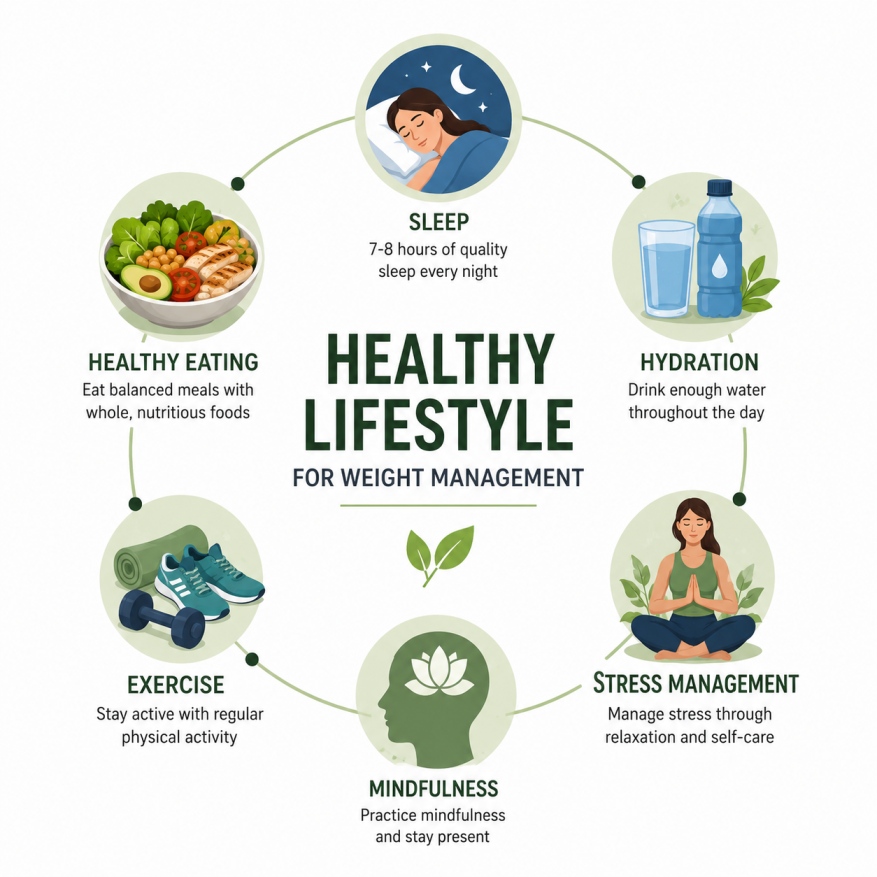
Lifestyle Habits That Support Sustainable Weight Loss
Weight loss is influenced by more than just diet and exercise. Daily habits play an essential role in maintaining healthy body weight.
Prioritize Quality Sleep
Aim for 7–9 hours of sleep each night.
Good sleep supports:
Appetite regulation
Hormone balance
Recovery
Energy levels
Better food choices
Manage Stress
Chronic stress can increase emotional eating and make weight management more challenging.
Healthy stress-management techniques include:
Meditation
Deep breathing exercises
Yoga
Journaling
Spending time outdoors
Talking with supportive friends or family
Practice Mindful Eating
Mindful eating encourages paying attention to hunger and fullness cues.
Tips include:
Eat without distractions.
Chew food slowly.
Enjoy flavors and textures.
Stop when comfortably satisfied.
Avoid emotional eating whenever possible.
Be Consistent
Consistency is the foundation of sustainable weight loss.
Rather than aiming for perfection, focus on making healthy choices most of the time. Missing one workout or enjoying an occasional treat does not ruin your progress.
Long-term success comes from maintaining healthy habits over months and years rather than following short periods of extreme dieting.
How to Prevent Weight Regain
Losing weight is a significant achievement, but maintaining that weight loss can be equally challenging. Many people regain weight because they return to old eating habits, reduce physical activity, or follow overly restrictive diets that are difficult to maintain.
The key to preventing weight regain is making lifestyle changes that become part of your daily routine rather than temporary fixes.
Tips to Maintain Weight Loss
Continue Eating Balanced Meals
Avoid the temptation to return to unhealthy eating patterns after reaching your goal. Continue including lean proteins, whole grains, fruits, vegetables, healthy fats, and high-fiber foods in your meals.
Stay Physically Active
Exercise should remain a regular part of your routine. Aim for at least 150–300 minutes of moderate-intensity physical activity each week, along with strength training 2–3 times weekly.
Monitor Your Progress
Regularly checking your weight, waist circumference, or how your clothes fit can help identify small changes before they become larger problems.
Set New Health Goals
Instead of focusing only on the number on the scale, aim to improve strength, endurance, flexibility, or overall fitness. New goals help maintain motivation.
Plan Ahead
Preparing healthy meals, carrying nutritious snacks, and scheduling workouts reduce the likelihood of making unhealthy choices during busy days.
Allow Occasional Treats
Completely avoiding favorite foods often leads to cravings and overeating. Enjoy treats occasionally while maintaining balance throughout the week.
Stay Consistent
Healthy habits practiced consistently over time are more effective than periods of strict dieting followed by unhealthy eating.
30-Day Sustainable Weight Loss Checklist
Use this checklist to build long-lasting healthy habits:
Daily Habits
-Eat three balanced meals
-Include protein with every meal
-Eat at least two servings of fruit
-Eat three or more servings of vegetables
-Drink 2–3 liters of water
-Walk for at least 30 minutes or achieve 8,000–10,000 steps
-Avoid sugary drinks
-Sleep 7–9 hours
-Practice mindful eating
-Manage stress through relaxation techniques
Weekly Habits
-Complete 2–4 strength training sessions
-Perform 150 minutes of moderate cardio
-Plan meals for the week
-Grocery shop with a healthy food list
-Limit restaurant and fast-food meals
-Track your progress without obsessing over the scale
Key Takeaways
Sustainable weight loss focuses on gradual, long-term lifestyle changes rather than quick fixes.
Losing 0.5–1 kg per week is generally considered safe and realistic.
A balanced diet rich in protein, fiber, whole grains, fruits, vegetables, and healthy fats supports healthy fat loss.
Portion control and mindful eating are essential for managing calorie intake.
Regular exercise, including strength training and cardiovascular activity, improves fat loss and preserves muscle.
Good sleep, stress management, hydration, and consistency are equally important for long-term success.
Weight maintenance requires ongoing healthy habits rather than temporary diets.
Sustainable weight loss improves overall health, reduces the risk of chronic diseases, and enhances quality of life.
Conclusion
Sustainable weight loss is not about following the latest diet trend or achieving rapid results. It is about creating healthy habits that support your body for the long term. By focusing on balanced nutrition, regular physical activity, adequate sleep, stress management, and realistic goals, you can lose weight safely while improving your overall health.
Remember that every person's weight loss journey is different. Progress may not always be linear, and occasional setbacks are a normal part of the process. The most important factor is consistency. Small, positive changes practiced every day can lead to lasting improvements in body composition, fitness, energy levels, and overall well-being.
Rather than striving for perfection, aim for progress. Sustainable habits will help you not only reach your ideal weight but also maintain it for years to come.
FAQ Schema
1. What is sustainable weight loss?
Sustainable weight loss is the gradual reduction of body weight through healthy eating, regular exercise, and lifestyle changes that can be maintained long term.
2. How much weight can I safely lose in a week?
Most health experts recommend losing 0.5–1 kg (1–2 pounds) per week for safe and sustainable results.
3. Why do crash diets fail?
Crash diets are difficult to maintain, often lead to muscle loss, slow metabolism, and increase the likelihood of regaining lost weight.
4. What foods help with sustainable weight loss?
Lean proteins, vegetables, fruits, whole grains, legumes, healthy fats, and high-fiber foods support healthy weight loss.
5. Is walking enough for weight loss?
Yes. Walking combined with a healthy diet and strength training can significantly contribute to sustainable weight loss.
6. Do I need to avoid carbohydrates completely?
No. Whole grains, fruits, vegetables, and legumes provide healthy carbohydrates that are important for energy and overall health.
7. How important is sleep for weight loss?
Adequate sleep helps regulate hunger hormones, supports metabolism, and improves energy levels, making weight management easier.
8. Can I lose weight without going to the gym?
Yes. Home workouts, walking, cycling, bodyweight exercises, and other physical activities can effectively support weight loss.
9. How do I prevent regaining lost weight?
Maintain healthy eating habits, stay physically active, monitor your progress, and continue practicing sustainable lifestyle habits.
10. How long does sustainable weight loss take?
The timeline varies for each individual. Consistent healthy habits over several months typically lead to lasting results.
Ready to Begin Your Health Journey?
Get a personalized, medically guided plan built around your unique biology.