Walking for Weight Loss: A Complete Guide to Burning Fat
Walking for Weight Loss: A Complete Guide to Burning Fat and Improving Your Health
Walking is one of the easiest, safest, and most effective forms of exercise for people of all ages and fitness levels. Unlike intense workout routines or expensive gym memberships, walking requires minimal equipment and can easily become part of your daily routine. Whether you are just beginning your weight loss journey or looking for a sustainable way to stay active, walking offers numerous physical and mental health benefits.
Many people underestimate the power of walking because it seems simple. However, regular walking can help burn calories, improve cardiovascular health, strengthen muscles, increase energy levels, reduce stress, and support healthy weight management. When combined with a balanced diet and other healthy lifestyle habits, walking can play a significant role in achieving long-term weight loss.
One of the greatest advantages of walking is that it is easy to maintain. Unlike extreme exercise programs that many people abandon after a few weeks, walking can become a lifelong habit. Consistency is one of the most important factors for successful weight management, and walking provides an enjoyable and practical way to stay active every day.
In this guide, you'll learn how walking supports weight loss, how many calories it burns, the benefits of walking regularly, and how to build a walking routine that fits your lifestyle. https://www.who.int
What Is Walking for Weight Loss?
Walking for weight loss involves using regular walking as a form of physical activity to increase calorie expenditure and support fat loss. While walking alone may not produce rapid results, it becomes highly effective when combined with healthy eating and consistent lifestyle habits.
Walking is considered a moderate-intensity aerobic exercise. It increases your heart rate, improves circulation, strengthens muscles, and encourages your body to use stored fat and carbohydrates for energy.
Unlike high-impact exercises, walking places less stress on the joints, making it suitable for beginners, older adults, and individuals recovering from injury (when medically appropriate).
Walking can be done almost anywhere, including:
Parks
Sidewalks
Walking tracks
Treadmills
Shopping malls
Nature trails
Residential neighborhoods
Because it is accessible and low-cost, walking is one of the most sustainable forms of exercise for long-term health.
How Walking Helps Burn Fat
Weight loss occurs when your body burns more calories than it consumes over time. Walking contributes to this calorie deficit by increasing daily energy expenditure.
Although walking burns fewer calories per minute than running, its biggest advantage is consistency. Many people can comfortably walk for 30–60 minutes most days of the week, making it easier to maintain over the long term.
Walking supports fat loss in several ways.
1. Burns Calories
Every step requires energy. The longer and faster you walk, the more calories you burn.
Walking for 45–60 minutes most days of the week can significantly increase your total daily calorie expenditure.https://wellorafit.com/services/nutrition-diet-planning/
2. Increases Fat Utilization
During moderate-intensity walking, the body uses a combination of carbohydrates and stored fat for energy.
As your fitness improves, your body becomes more efficient at using fat as a fuel source during longer walks.
3. Preserves Lean Muscle
Unlike extreme dieting alone, combining walking with adequate protein intake and strength training helps preserve lean muscle mass while reducing body fat.
Maintaining muscle is important because muscle tissue burns more calories than fat tissue, even at rest.
4. Improves Insulin Sensitivity
Walking helps muscles absorb glucose more efficiently, reducing blood sugar levels and improving insulin sensitivity.
Better insulin sensitivity supports healthy metabolism and may reduce the risk of developing Type 2 diabetes. https://wellorafit.com/services/doctor-consultations/
5. Encourages Daily Movement
Many people spend most of the day sitting at work, while commuting, or watching television.
Adding regular walks increases daily movement and contributes to higher overall calorie expenditure.
Even short walks throughout the day can make a meaningful difference.
Benefits of Walking for Weight Loss
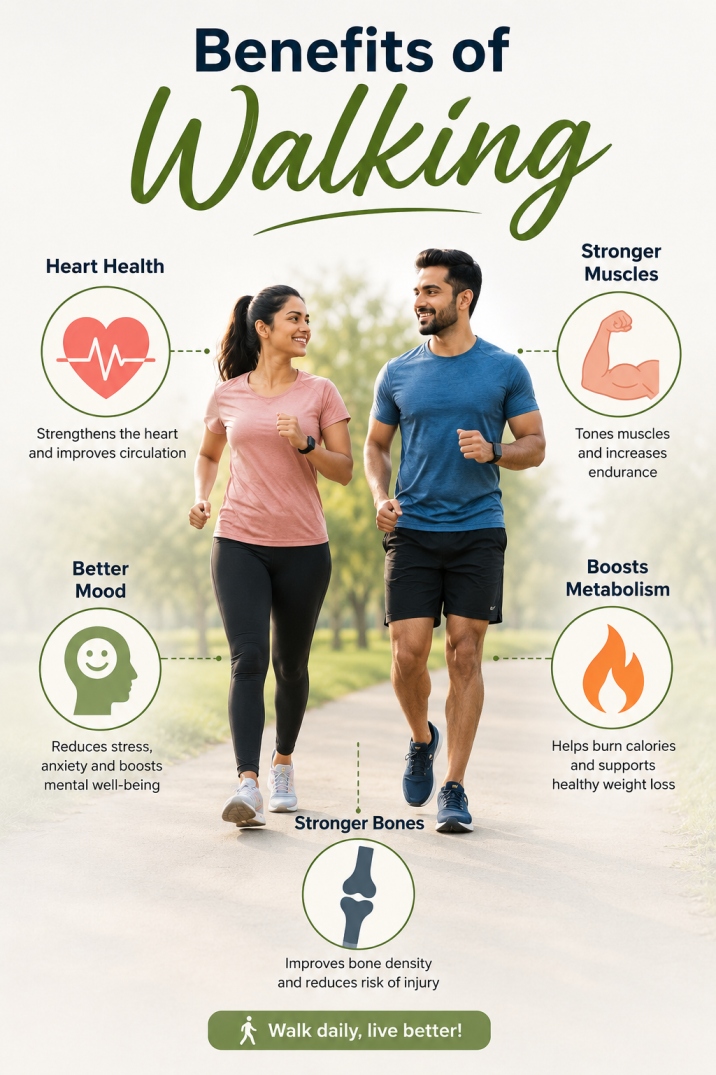
Walking offers far more than just calorie burning. It improves multiple aspects of physical and mental health. https://www.cdc.gov/physicalactivity
Supports Healthy Weight Loss
Regular walking helps create a calorie deficit while being gentle enough to perform consistently.
Unlike extreme workouts, walking is sustainable for most people.https://wellorafit.com/services/nutrition-diet-planning/
Improves Heart Health
Walking strengthens the heart and improves circulation.
Regular walking may help:
Lower blood pressure
Improve cholesterol levels
Reduce the risk of heart disease
Improve cardiovascular fitness
Boosts Mental Health
Walking stimulates the release of endorphins, often called the body's "feel-good" hormones.
Benefits include:
Reduced stress
Improved mood
Lower anxiety
Better emotional well-being
Walking outdoors in green spaces may provide additional mental health benefits.
Improves Energy Levels
Although it may seem surprising, regular walking often reduces fatigue rather than causing it.
Improved circulation and cardiovascular fitness help the body deliver oxygen more efficiently, leading to increased energy.
Supports Better Sleep
Regular physical activity can improve sleep quality and help you fall asleep more easily.
Good sleep is important because it helps regulate hunger hormones and supports healthy weight management.
Strengthens Muscles and Bones
Walking primarily works the:
Calves
Hamstrings
Quadriceps
Glutes
Core muscles
Weight-bearing activities such as walking also support bone health and may reduce the risk of osteoporosis.
Reduces Stress
Stress is a common trigger for emotional eating and weight gain.
Walking provides an opportunity to relax, clear your mind, and reduce cortisol levels.
Walking with family or friends can also improve social well-being.
How Many Calories Does Walking Burn?
The number of calories burned while walking depends on several factors, including body weight, walking speed, duration, terrain, and fitness level.
Approximate calorie expenditure during one hour of brisk walking:
Body Weight and there Calories Burned (Approx.)
60 kg: 220–280 calories
70 kg: 260–330 calories
80 kg: 300–380 calories
90 kg: 340–430 calories
100 kg: 380–480 calories
Walking uphill, increasing speed, or carrying light weights can increase calorie expenditure.
Remember that these values are estimates and vary between individuals.https://wellorafit.com/services/fitness-training/
Factors That Affect Calorie Burn
Several factors influence how many calories you burn while walking.
Walking Speed
Brisk walking burns more calories than slow walking because it increases heart rate and energy expenditure.
Body Weight
People with higher body weight generally burn more calories during the same walking session because moving a larger body requires more energy.
Walking Duration
Longer walks naturally burn more calories.
Walking for 60 minutes generally burns about twice as many calories as walking for 30 minutes.
Terrain
Walking uphill, on trails, or on uneven surfaces requires more effort than walking on flat ground.
Incline walking can significantly increase calorie burn while also strengthening the lower body.
Fitness Level
As fitness improves, walking becomes easier and more efficient.
To continue progressing, you may gradually increase your walking speed, duration, or intensity.
Common Mistakes People Make While Walking for Weight Loss
Walking is one of the safest and most effective exercises for weight loss, but certain habits can reduce its effectiveness. Avoiding these mistakes can help you achieve better results while staying motivated.
1. Walking Inconsistently
Walking once or twice a week is beneficial for general health, but it is usually not enough for meaningful weight loss.
Instead: Aim for 30–60 minutes of walking, at least 5 days per week. Consistency is more important than walking long distances occasionally.
2. Walking Too Slowly
A leisurely stroll is relaxing, but it may not elevate your heart rate enough to maximize calorie burning.
Instead: Walk at a brisk pace where you can still hold a conversation but find it difficult to sing.
3. Ignoring Nutrition
Walking burns calories, but overeating afterward can easily replace the calories you've burned.
Instead: Pair your walking routine with a balanced diet rich in protein, vegetables, fruits, whole grains, and healthy fats.
4. Wearing the Wrong Shoes
Unsupportive footwear may cause foot pain, blisters, or injuries.
Instead: Invest in comfortable walking shoes with good cushioning and proper arch support.
5. Not Increasing the Challenge
Walking the same distance at the same pace every day may eventually slow your progress.
Instead: Gradually increase:
Walking distance
Walking speed
Walking duration
Incline
Step count
Progressive improvement keeps your body challenged.
6. Poor Walking Posture
Incorrect posture can reduce walking efficiency and cause discomfort.
Maintain good posture by:
Looking straight ahead
Relaxing your shoulders
Keeping your back straight
Engaging your core
Swinging your arms naturally
7. Depending Only on Walking
Walking is excellent, but combining it with strength training provides even better long-term results.
Strength training helps:
Preserve muscle
Increase metabolism
Improve body composition
Reduce the risk of weight regain
How to Stay Motivated
Long-term success comes from making walking an enjoyable part of your daily routine.
Set Realistic Goals
Instead of focusing only on weight loss, aim for goals like:
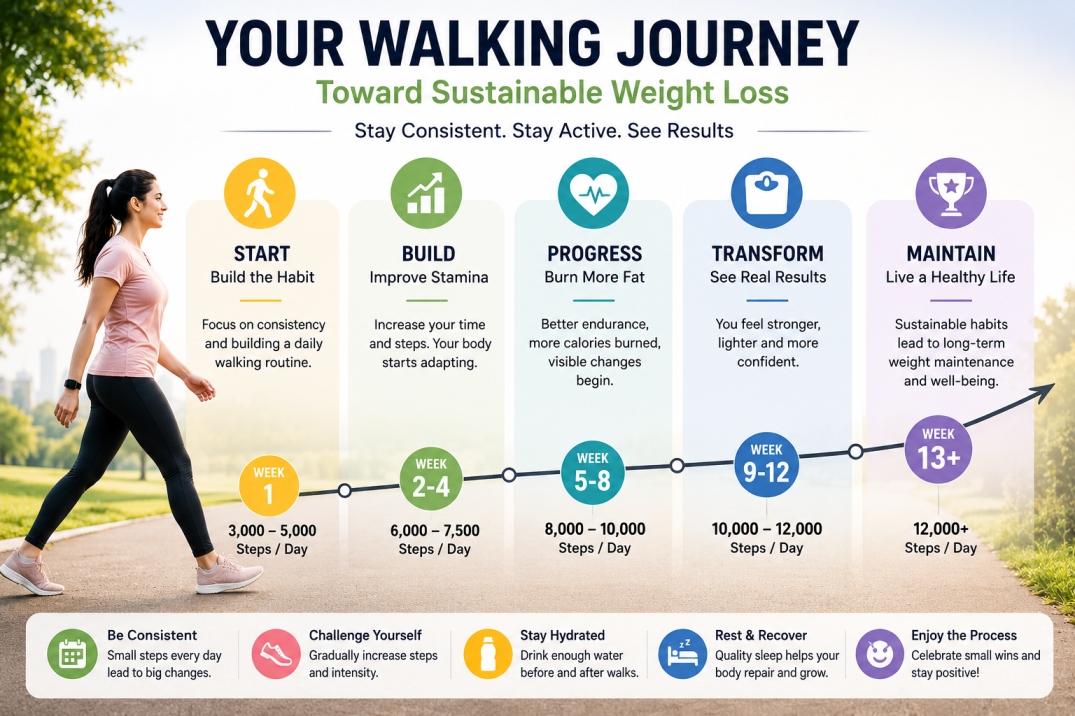
Walking 8,000–10,000 steps daily
Completing five walks each week
Increasing walking distance gradually
Improving walking pace
Track Your Progress
Use a smartwatch, fitness tracker, or mobile app to monitor:
Steps
Distance
Calories burned
Walking time
Weekly consistency
Watching your progress improve can be highly motivating.
Walk with Others
Walking with friends, family, or a local walking group can make exercise more enjoyable and help you stay accountable.
Make Walking Fun
Keep your routine interesting by:
Exploring new walking routes
Walking in parks or nature trails
Listening to music
Listening to podcasts
Taking photos during walks
Celebrate Small Wins
Don't wait until you reach your final weight-loss goal.
Celebrate achievements like:
Walking every day for a week
Increasing your daily steps
Completing your first 5 km walk
Feeling more energetic
Improving endurance
Small milestones build long-term motivation.
Key Takeaways
Walking is one of the safest and most sustainable forms of exercise for weight loss.
Regular walking helps burn calories, improve heart health, reduce stress, and support fat loss.
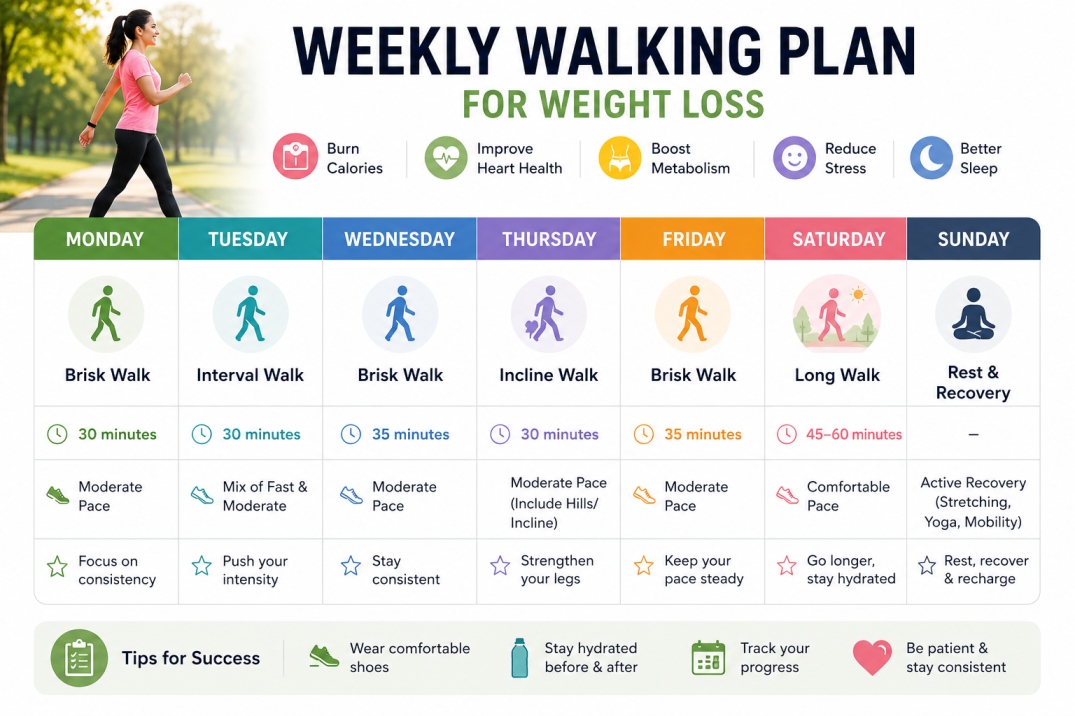
Brisk walking for 30–60 minutes, 5–6 days per week, is ideal for most people.
Combining walking with healthy eating and strength training produces better results than relying on walking alone.
Consistency, proper nutrition, adequate sleep, hydration, and stress management are essential for long-term success.
Small daily habits often lead to the biggest improvements over time.
Conclusion
· Walking is a simple yet powerful way to improve your health and support long-term weight loss. Unlike extreme exercise programs, walking is accessible, affordable, and suitable for nearly everyone, regardless of age or fitness level.
· The key to success is consistency. Regular walking, combined with a balanced diet, adequate sleep, hydration, and strength training, can help you burn calories, preserve muscle, improve metabolism, and maintain a healthy weight.
· Remember that weight loss is not about finding the quickest solution—it is about building habits you can maintain for life. Every step you take contributes to better physical health, improved mental well-being, and greater confidence.
· Whether you're walking around your neighborhood, in a park, or on a treadmill, making walking a daily habit is one of the best investments you can make in your long-term health. https://www.nih.gov
FAQ
1. Is walking good for weight loss?
Yes. Walking burns calories, improves cardiovascular health, and supports fat loss when combined with a balanced diet and healthy lifestyle.
2. How much should I walk to lose weight?
Aim for 30–60 minutes of brisk walking, 5–6 days per week, along with healthy eating.
3. Is 10,000 steps a day necessary?
Not necessarily. Many people see health benefits with 8,000–10,000 steps daily. The best goal is one you can maintain consistently.
4. Is walking better than running for weight loss?
Running burns more calories per minute, but walking is easier to sustain and has a lower risk of injury. Consistency matters more than intensity.
5. Can walking reduce belly fat?
Walking helps reduce overall body fat when combined with a calorie-controlled diet. Spot reduction of belly fat is not possible.
6. Should I walk before or after meals?
Both are beneficial. A short walk after meals may help with blood sugar control and digestion.
7. Do I need strength training if I walk daily?
Yes. Strength training helps preserve muscle, improve metabolism, and support long-term weight management.
8. What should I eat before a walk?
A light snack containing carbohydrates and protein, such as a banana with peanut butter or yogurt with fruit, can provide energy for longer walks.
9. How long does it take to see results from walking?
Many people notice improvements in energy and fitness within a few weeks. Weight loss depends on consistency, diet, and overall calorie balance.
10. Can beginners start walking for weight loss?
Absolutely. Walking is one of the best beginner-friendly exercises and can be adapted to almost any fitness level.

Ready to Begin Your Health Journey?
Get a personalized, medically guided plan built around your unique biology.