Weight Regain After Dieting: What to Do
Weight Regain After Dieting: Why It Happens and How to Maintain Weight Loss for Life
Losing weight is a major achievement, but for many people, keeping the weight off is an even greater challenge. You may have followed a strict diet, exercised consistently, and celebrated reaching your goal weight—only to notice the number on the scale slowly increasing again over the following months.
This experience is known as weight regain after dieting, and it is more common than many people realize. Studies suggest that a significant number of individuals regain some or most of the weight they lose within a few years, especially if the weight loss was achieved through highly restrictive diets or unsustainable habits.
Weight regain is not simply a result of a lack of willpower. It is influenced by a combination of biological, hormonal, psychological, and lifestyle factors. When you lose weight, your body naturally adapts by slowing energy expenditure, increasing hunger hormones, and trying to restore its previous weight. These natural responses can make maintaining weight loss more challenging than losing the weight in the first place.
The encouraging news is that weight regain is not inevitable. By understanding why it happens and adopting sustainable habits, you can maintain your results and continue improving your health over the long term.
In this guide, you'll learn why weight regain occurs, the science behind it, common mistakes people make after dieting, and practical strategies to maintain a healthy weight for life. https://www.who.int
What Is Weight Regain?
Weight regain refers to gaining back some or all of the weight that was previously lost after completing a diet or weight-loss program.
A small increase in weight after reaching your goal is normal and can occur because of:
Changes in hydration
Glycogen storage
Increased food intake
Reduced physical activity
Hormonal fluctuations
However, continual weight gain over weeks or months may indicate that previous healthy habits have gradually been replaced by less sustainable behaviors.
Weight regain often occurs because many diets focus only on losing weight rather than teaching people how to maintain it.
Successful long-term weight management involves adopting eating patterns and lifestyle habits that can be maintained for years—not just until the target weight is reached.
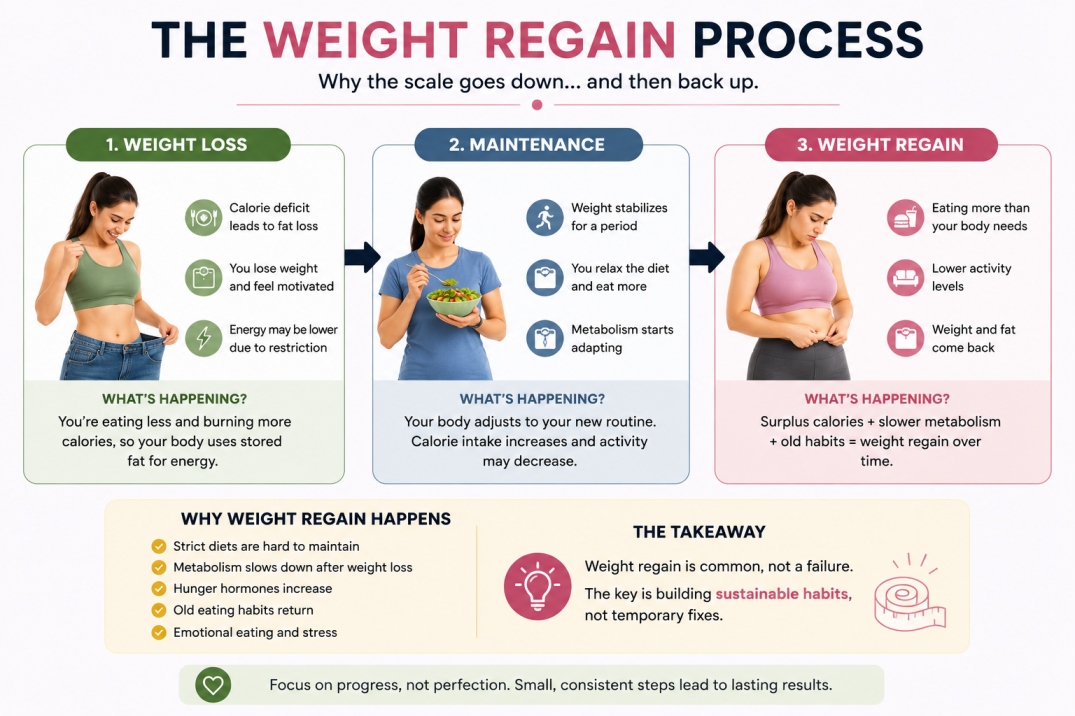
Why Does Weight Regain Happen After Dieting?
Many people assume that weight regain happens because they lack motivation or discipline. In reality, the body undergoes several biological changes after weight loss that make maintaining a lower weight more difficult.
These changes are part of the body's natural survival mechanisms. https://www.nih.gov
1. Your Body Tries to Protect Its Energy Stores
Throughout human history, food shortages were common. As a result, the body developed mechanisms to conserve energy during periods of reduced food intake.
When you lose weight, your body interprets the calorie deficit as a potential threat to survival. In response, it tries to restore lost weight by:
Increasing hunger
Reducing calorie expenditure
Encouraging fat storage
Conserving energy
These adaptations can persist even after reaching your goal weight.
2. Appetite Hormones Change
Weight loss affects hormones that regulate hunger and fullness.
Ghrelin Increases
Ghrelin is often called the "hunger hormone."
After dieting, ghrelin levels increase, making you feel hungrier than before.
This can lead to:
Larger portion sizes
Frequent snacking
Increased cravings
Difficulty sticking to healthy eating habits
Leptin Decreases
Leptin is produced by fat cells and signals the brain that you have enough stored energy.
As body fat decreases, leptin levels fall.
Lower leptin levels may cause:
Increased appetite
Reduced feelings of fullness
Increased food cravings
This combination of higher ghrelin and lower leptin makes maintaining weight loss challenging.
3. Metabolism Slows Down
Another important factor is adaptive thermogenesis, commonly referred to as metabolic adaptation.
When body weight decreases, your body requires fewer calories to function because there is less tissue to maintain.
In addition, the body often becomes more energy-efficient, meaning it burns fewer calories during daily activities.
This does not mean your metabolism is "broken," but it does mean that maintaining weight loss usually requires ongoing attention to nutrition and physical activity.
4. Muscle Loss During Dieting
Many restrictive diets result in the loss of both fat and muscle.
Muscle tissue burns more calories than fat tissue, even at rest.
Losing muscle may:
Lower resting metabolic rate
Reduce strength
Decrease exercise performance
Make long-term weight maintenance more difficult
Including adequate protein and strength training during weight loss helps preserve lean muscle mass.
5. Returning to Previous Eating Habits
One of the biggest reasons for weight regain is returning to the same eating habits that contributed to weight gain in the first place.
Examples include:
Large portion sizes
Sugary beverages
Frequent fast food
Mindless snacking
Emotional eating
Skipping meal planning
Healthy habits should continue even after reaching your target weight.
The Science Behind Weight Regain
Weight loss triggers several biological adaptations designed to help the body regain lost weight.
These include:
Lower Energy Expenditure
The body burns fewer calories because:
Body weight is lower.
Daily movement often decreases.
Metabolic efficiency improves.
Increased Hunger
Hormonal changes increase appetite while reducing feelings of fullness.
This can make it harder to maintain healthy eating habits over time.
Increased Food Reward
Research suggests that after dieting, the brain becomes more responsive to highly palatable foods such as:
Chocolate
Pizza
Ice cream
Chips
Sugary beverages
These foods become more rewarding, increasing the temptation to overeat.
Reduced Spontaneous Activity
Some people unknowingly move less after losing weight.
Examples include:
Sitting more
Walking less
Taking elevators instead of stairs
Reduced fidgeting
Even small reductions in daily movement can influence long-term weight maintenance.
Common Causes of Weight Regain
Weight regain usually results from several factors rather than one single cause.
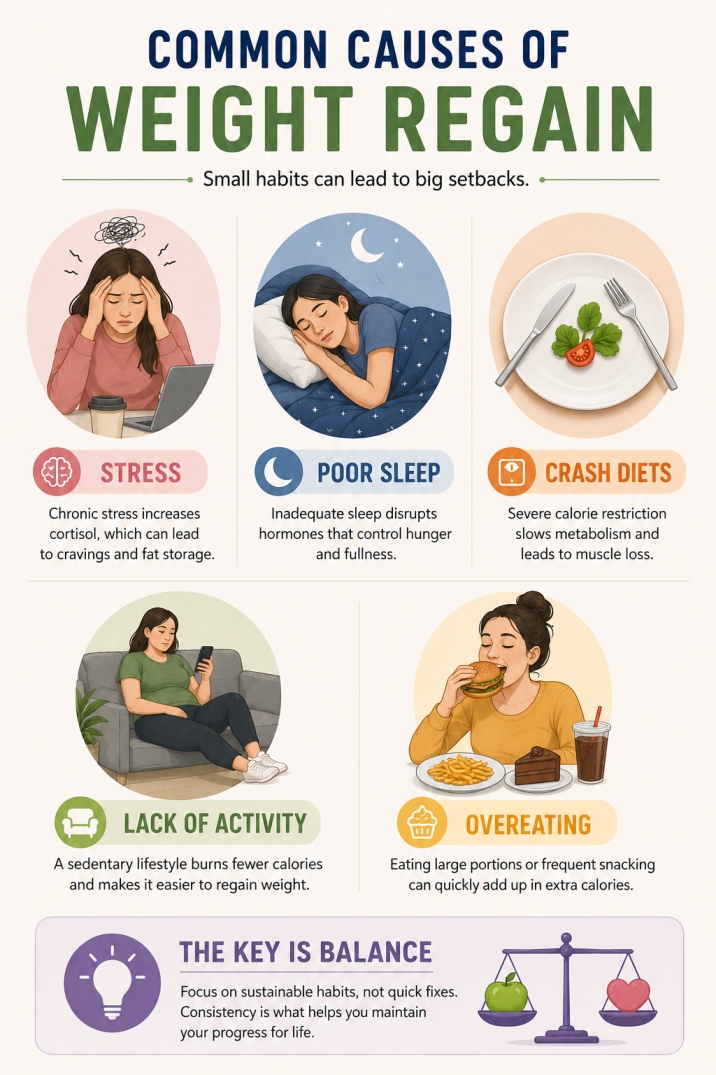
1. Crash Dieting
Very low-calorie diets often produce rapid weight loss, but much of that loss may come from water and muscle instead of body fat.
Once normal eating resumes, weight often returns quickly.
2. Losing Muscle Instead of Fat
Without sufficient protein intake and resistance training, muscle loss is more likely.
Maintaining muscle is essential for preserving metabolism and supporting long-term weight management.
3. Stopping Exercise
Many people stop exercising after reaching their target weight.
Regular physical activity remains essential for:
Burning calories
Maintaining muscle
Supporting metabolism
Improving overall health
4. Emotional Eating
Stress, boredom, sadness, and anxiety can all trigger emotional eating.
Food is sometimes used as a coping mechanism rather than to satisfy physical hunger.
Recognizing emotional triggers and developing healthier coping strategies can help prevent overeating.
5. Poor Sleep
Sleeping fewer than 7 hours per night may:
Increase hunger hormones
Reduce leptin levels
Increase cravings for high-calorie foods
Reduce energy for exercise
Good sleep is one of the most overlooked aspects of successful weight maintenance.
6. Chronic Stress
Long-term stress increases cortisol levels, which may encourage:
Increased appetite
Abdominal fat storage
Emotional eating
Reduced motivation for physical activity
Managing stress is an important part of preventing weight regain.
7. Unrealistic Dieting
Highly restrictive diets that eliminate favorite foods or entire food groups are difficult to maintain.
Eventually, many people return to previous eating patterns, leading to weight regain.
The most successful approach is one that can be maintained for life rather than for a few weeks.
8. Lack of Long-Term Planning
Many weight-loss programs focus on reaching a target weight but do not teach people how to maintain it.
Successful weight maintenance requires:
Meal planning
Regular exercise
Ongoing monitoring
Healthy habits
Realistic expectations
Weight maintenance is a lifelong process, not the final step after dieting.
Best Diet to Prevent Weight Regain
One of the biggest misconceptions about weight loss is that once you reach your target weight, you can return to your old eating habits. In reality, maintaining weight loss requires continuing many of the healthy behaviors that helped you lose weight in the first place.
A sustainable diet should be balanced, enjoyable, and easy to follow for life. Instead of focusing on strict calorie restriction, the goal should be to nourish your body with nutrient-dense foods that keep you satisfied, maintain muscle mass, and support a healthy metabolism.
A successful weight maintenance diet should include:
Lean protein at every meal
High-fiber carbohydrates
Healthy fats
Plenty of vegetables and fruits
Adequate hydration
Mindful portion control
Avoid viewing foods as "good" or "bad." Instead, aim for an eating pattern where nutritious foods make up most of your meals while allowing room for occasional treats in moderation. https://wellorafit.com/services/nutrition-diet-planning/
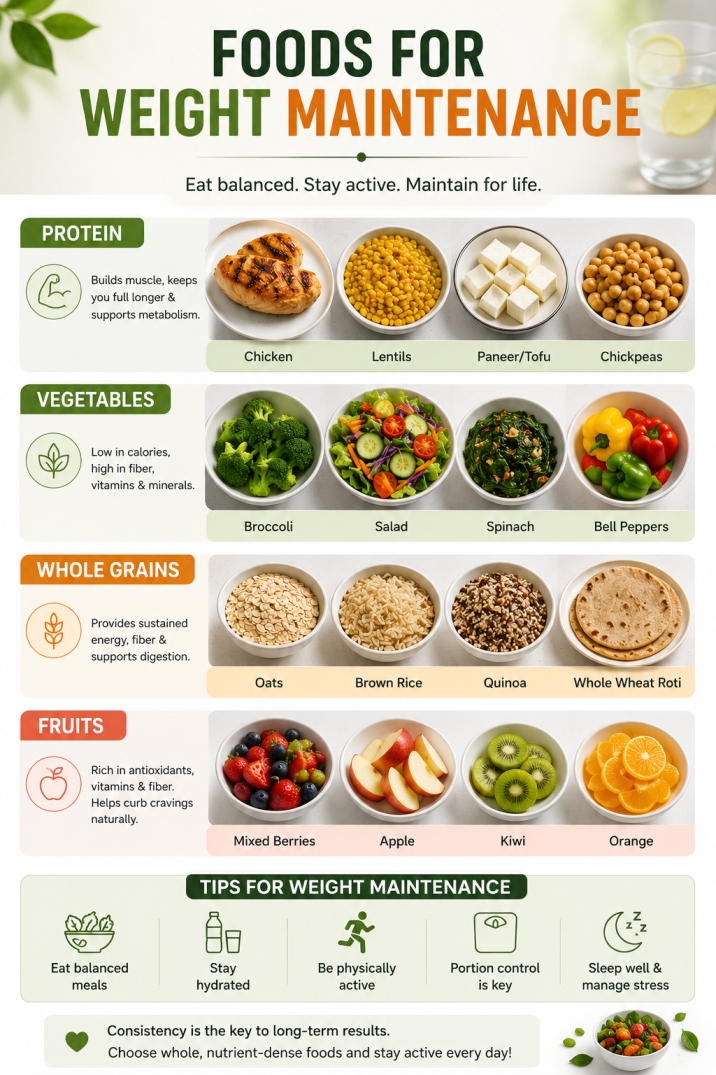
Foods to Include
Choosing nutrient-rich foods helps control hunger, stabilize blood sugar, and reduce the likelihood of overeating.
1. Lean Protein
Protein is one of the most important nutrients for preventing weight regain because it promotes fullness and helps preserve muscle mass.
Excellent sources include:
Eggs
Chicken breast
Turkey
Fish
Paneer
Greek yogurt
Cottage cheese
Tofu
Lentils
Chickpeas
Kidney beans
Low-fat dairy
Including protein at every meal can help reduce hunger throughout the day.
2. High-Fiber Foods
Fiber slows digestion, improves gut health, and helps you stay full longer.
Choose foods such as:
Oats
Brown rice
Whole wheat
Millets
Quinoa
Apples
Pears
Berries
Oranges
Broccoli
Spinach
Carrots
Beans
Chia seeds
Flaxseeds
Aim for 25–35 grams of fiber daily.
3. Healthy Fats
Healthy fats improve satiety and support hormone production.
Include:
Almonds
Walnuts
Pistachios
Olive oil
Avocados
Pumpkin seeds
Sunflower seeds
Fatty fish
Although healthy fats are beneficial, they are calorie-dense, so portion control remains important.
4. Complex Carbohydrates
Carbohydrates are not the enemy. Whole-food carbohydrate sources provide energy while supporting overall health.
Choose:
Whole wheat roti
Brown rice
Sweet potatoes
Oats
Quinoa
Millets
Legumes
Fresh fruits
These foods digest more slowly than refined carbohydrates and help maintain stable energy levels.
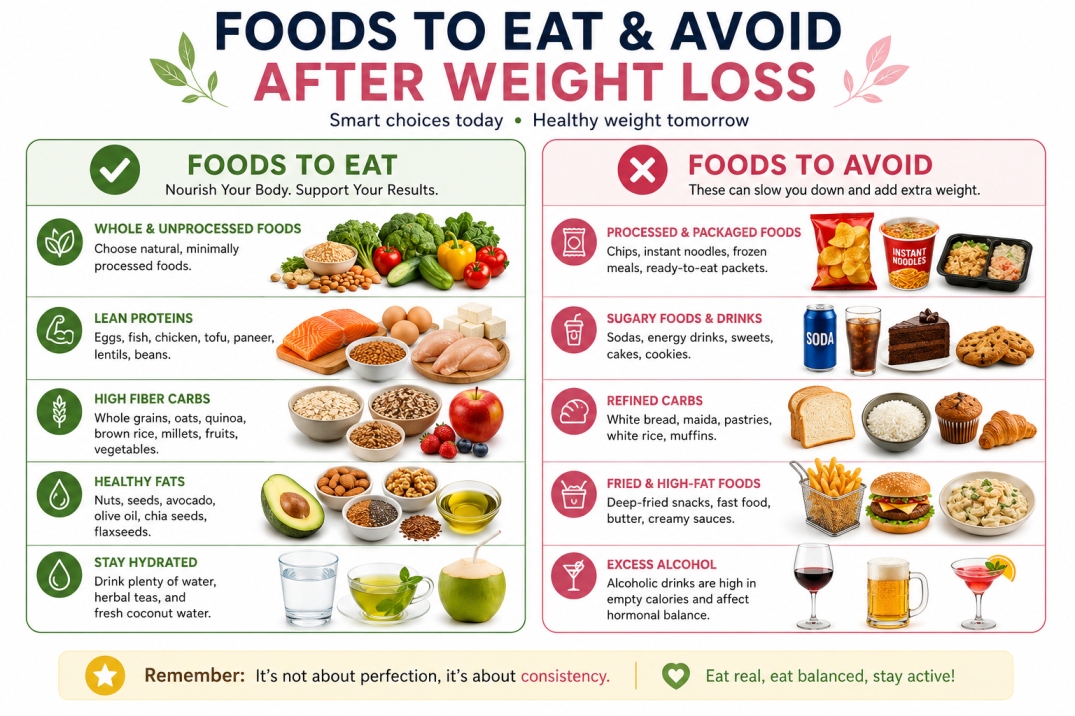
Foods to Limit
No food needs to be permanently eliminated, but limiting highly processed foods can make maintaining weight easier.
Reduce intake of:
Sugary drinks
Cakes
Cookies
Candy
Chips
Fried foods
Fast food
White bread
Refined cereals
Processed meats
Excess alcohol
Enjoy these foods occasionally while keeping your overall eating pattern balanced.
Portion Control: The Key to Weight Maintenance
After dieting, appetite may increase due to hormonal changes. Learning portion control helps prevent overeating without feeling deprived.
Practical Tips
Use smaller plates.
Fill half your plate with vegetables.
Include protein at every meal.
Eat slowly.
Stop eating when comfortably satisfied.
Avoid distractions while eating.
Measure high-calorie foods like oils, nuts, and nut butters.
Mindful eating can help you recognize true hunger and fullness cues.
Importance of Protein After Weight Loss
Many people reduce protein intake after reaching their goal weight. However, protein remains essential for long-term success.
Protein helps:
Preserve muscle mass
Increase fullness
Support metabolism
Reduce cravings
Improve recovery from exercise
Maintain healthy body composition
Aim for 20–30 grams of protein per meal, depending on your age, activity level, and individual needs.
Strength Training: Your Best Defense Against Weight Regain
Strength training is one of the most effective ways to maintain weight loss.
Unlike dieting alone, resistance training helps preserve lean muscle mass, which supports a healthy metabolism and improves body composition.
Benefits include:
Maintains muscle
Burns calories
Improves insulin sensitivity
Increases strength
Improves bone health
Reduces body fat percentage
Examples include:
Squats
Lunges
Push-ups
Deadlifts
Dumbbell rows
Shoulder presses
Resistance band exercises
Aim for 2–4 sessions each week.
Cardiovascular Exercise
Cardio remains important for maintaining heart health and increasing calorie expenditure.
Examples:
Walking
Jogging
Cycling
Swimming
Dancing
Hiking
Aim for 150–300 minutes of moderate-intensity aerobic activity each week.https://wellorafit.com/services/fitness-training/
Increase Daily Movement (NEAT)
Non-Exercise Activity Thermogenesis (NEAT) refers to calories burned during everyday activities.
Simple ways to increase NEAT include:
Taking the stairs
Walking while talking on the phone
Parking farther away
Gardening
Housework
Standing more often
Stretching during work breaks
These small habits can significantly increase daily energy expenditure.
Lifestyle Habits That Prevent Weight Regain
Healthy weight maintenance depends on daily habits—not just food and exercise.
Prioritize Sleep
Adults should aim for 7–9 hours of sleep each night.
Adequate sleep helps regulate hunger hormones, supports recovery, and improves energy levels.
Poor sleep may increase cravings for sugary and high-fat foods.
Manage Stress
Chronic stress can increase cortisol levels, making it easier to regain weight.
Healthy stress-management strategies include:
Meditation
Yoga
Deep breathing
Journaling
Spending time outdoors
Listening to music
Talking with supportive friends or family
Stay Hydrated
Water supports digestion, metabolism, and appetite regulation.
Tips:
Drink 2–3 liters of water daily
Carry a reusable water bottle
Drink water before meals
Replace sugary beverages with water or unsweetened tea
Monitor Your Progress
Monitoring your progress helps identify small changes before they become significant.
Instead of focusing only on the scale, monitor:
Waist circumference
Clothing fit
Energy levels
Strength gains
Physical activity
Continue Meal Planning
Many people regain weight because they stop planning meals after reaching their goal.
Meal planning helps:
Reduce impulsive eating
Save time
Improve nutrition
Control portions
Reduce reliance on fast food
Preparing healthy snacks and meals in advance makes it easier to stay consistent.
Adopt an 80/20 Approach
Healthy eating doesn't require perfection.
A practical strategy is to eat nutritious foods about 80% of the time while allowing flexibility for favorite foods the remaining 20%.
This balanced approach is easier to maintain than strict dieting and reduces the likelihood of binge eating or feelings of deprivation.
Practical Tips to Maintain Weight Loss
Eat regular, balanced meals.
Include protein with every meal.
Stay physically active most days of the week.
Strength train regularly.
Limit sugary beverages.
Get enough sleep.
Manage stress effectively.
Continue monitoring your progress.
Plan meals ahead of time.
Celebrate healthy habits instead of only focusing on the number on the scale.
Long-term success comes from building routines that fit your lifestyle rather than relying on temporary diets.
Common Mistakes After Losing Weight
Reaching your goal weight is a major accomplishment, but maintaining it requires continued effort. Many people unknowingly return to habits that contributed to weight gain in the first place. Understanding these common mistakes can help you stay on track.
1. Returning to Old Eating Habits
After reaching a goal weight, some people celebrate by eating larger portions, consuming more processed foods, or frequently dining out. While occasional indulgences are perfectly normal, consistently returning to previous eating habits often leads to gradual weight regain.
Instead: Continue eating balanced meals and practice portion control while allowing flexibility for occasional treats.
2. Stopping Exercise
Many people stop exercising after reaching their weight-loss goal. Physical activity is essential not only for burning calories but also for maintaining muscle mass and supporting a healthy metabolism.
Instead: Continue strength training 2–4 times per week and aim for 150–300 minutes of moderate aerobic activity each week.
3. Ignoring Portion Sizes
Healthy foods can still contribute to weight gain if eaten in excessive amounts.
Instead: Use smaller plates, measure calorie-dense foods when needed, and pay attention to hunger and fullness cues.
4. Eating Too Little Protein
Protein remains important after weight loss because it helps preserve lean muscle, supports metabolism, and keeps you feeling full.
Instead: Include a source of protein with every meal, such as eggs, fish, chicken, paneer, tofu, lentils, or Greek yogurt.
5. Skipping Meals
Skipping meals may lead to intense hunger later in the day, increasing the likelihood of overeating.
Instead: Eat regular, balanced meals that include protein, fiber, and healthy fats.
6. Neglecting Sleep
Poor sleep affects hunger hormones, increases cravings, and reduces energy levels.
Instead: Aim for 7–9 hours of quality sleep every night.
7. Emotional Eating
Stress, boredom, loneliness, or anxiety can trigger emotional eating.
Instead: Develop healthy coping strategies such as walking, journaling, meditation, yoga, or talking with supportive friends and family.
How to Successfully Maintain Weight Loss
Maintaining weight loss is about creating habits that become part of your daily life.
Continue Healthy Eating
Focus on:
Lean protein
Whole grains
Vegetables
Fruits
Healthy fats
High-fiber foods
Avoid following another restrictive diet unless recommended by a healthcare professional.
Stay Active Every Week
Include:
Strength training
Walking
Cycling
Swimming
Yoga
Stretching
Regular movement supports both physical and mental health.
Monitor Your Progress
Check your progress every few weeks by tracking:
Body weight
Waist circumference
Clothing fit
Strength improvements
Energy levels
Small adjustments are easier than trying to reverse significant weight regain.
Set New Health Goals
Instead of focusing only on body weight, aim to:
Improve strength
Increase endurance
Build muscle
Improve flexibility
Sleep better
Eat more vegetables
Reduce stress
These goals help maintain motivation beyond the scale.
Build Sustainable Habits
Healthy weight maintenance is not about perfection.
Remember:
One unhealthy meal will not cause weight regain.
One missed workout will not ruin your progress.
Consistency over months and years matters more than perfection on any single day.
Key Takeaways
Weight regain after dieting is common but not inevitable.
Biological changes such as increased hunger and a slower metabolism can make maintaining weight more challenging.
Crash diets, muscle loss, poor sleep, stress, and returning to old habits increase the risk of regaining weight.
A balanced diet rich in protein, fiber, fruits, vegetables, and whole grains supports long-term success.
Strength training and regular physical activity help preserve muscle and maintain metabolism.
Good sleep, stress management, hydration, and meal planning are essential for preventing weight regain.
Sustainable lifestyle habits are more effective than temporary diets.
Conclusion
Weight loss is only one part of the journey toward better health. Maintaining your results requires ongoing commitment to healthy eating, regular exercise, quality sleep, stress management, and realistic expectations.
Rather than viewing your diet as something that eventually ends, think of healthy habits as a long-term lifestyle. This mindset reduces the risk of weight regain and supports better overall well-being.
Remember that small fluctuations in body weight are normal. Focus on consistent habits rather than daily changes on the scale. Every healthy meal, workout, and positive choice contributes to your long-term success.
If you're struggling to maintain your weight or need personalized guidance, working with a qualified healthcare professional or registered dietitian can help you create a plan that fits your lifestyle and health goals.
FAQ Schema
1. Why do people regain weight after dieting?
Weight regain often occurs because of hormonal changes, slower metabolism, loss of muscle mass, and returning to previous eating habits.
2. Is weight regain after dieting normal?
Yes. Small fluctuations are normal, but consistent healthy habits can reduce the risk of significant weight regain.
3. What is yo-yo dieting?
Yo-yo dieting refers to repeated cycles of losing weight and regaining it, often caused by restrictive diets that are difficult to maintain.
4. Does metabolism slow after weight loss?
Yes. After losing weight, the body requires fewer calories and may become more energy-efficient, making weight maintenance more challenging.
5. How can I prevent weight regain?
Maintain a balanced diet, stay physically active, prioritize protein, strength train regularly, sleep well, and manage stress.
6. Is strength training important for maintaining weight?
Yes. Strength training preserves lean muscle mass, supports metabolism, and helps prevent weight regain.
7. How much protein should I eat after losing weight?
Most adults benefit from including 20–30 grams of protein per meal, depending on individual needs.
8. Can stress cause weight regain?
Yes. Chronic stress may increase appetite, emotional eating, and abdominal fat storage.
9. How often should I monitor my weight?
Checking your weight weekly or every two weeks can help you identify gradual changes without becoming overly focused on daily fluctuations.
10. Can a doctor-led weight loss program help prevent weight regain?
Yes. Professional guidance can provide personalized nutrition, exercise, and lifestyle strategies to support long-term weight maintenance.
Ready to Begin Your Health Journey?
Get a personalized, medically guided plan built around your unique biology.