Women’s Hormanal Health: Foods & Nutrients
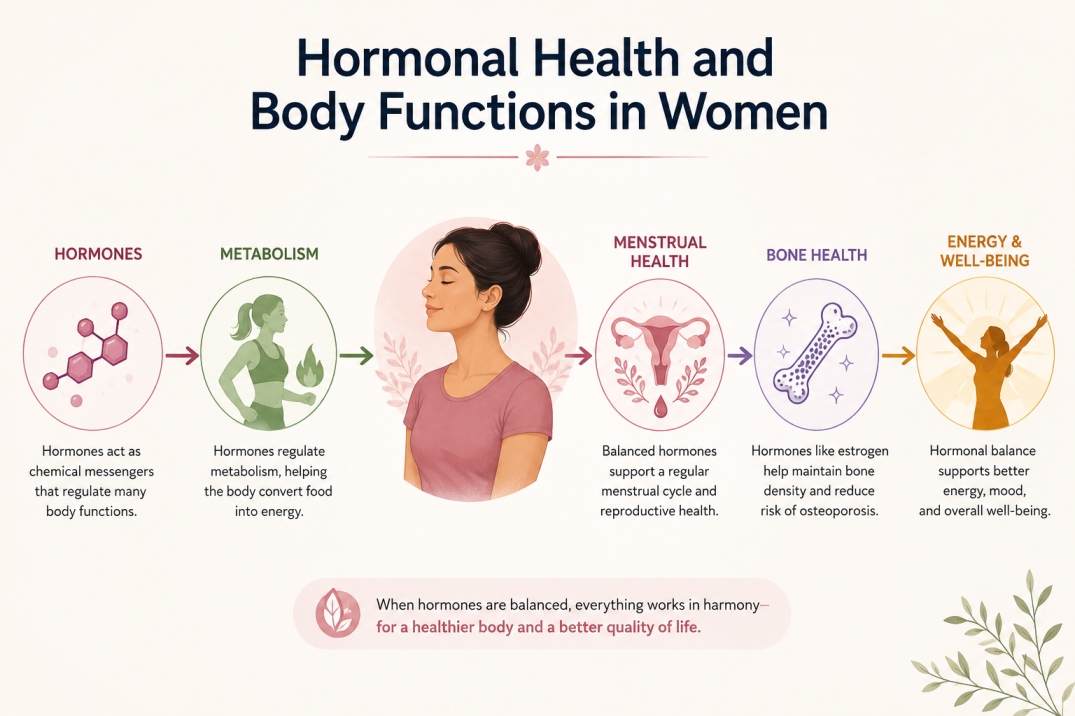
Hormones are chemical messengers that help regulate many important functions in the body, including metabolism, reproduction, menstrual cycles, bone health, mood, sleep, and energy.
Women experience natural hormonal changes throughout different stages of life. Puberty, the menstrual cycle, pregnancy, postpartum recovery, perimenopause, and menopause can all involve changes in hormone levels and nutritional needs.
Nutrition does not “balance” hormones through one specific food or diet. However, a balanced and nutrient-rich eating pattern can provide the energy, protein, healthy fats, vitamins, minerals, and other nutrients the body needs to support normal hormonal and metabolic functions.
This makes nutrition an important part of overall women's health.
What Is Hormonal Health?
Hormonal health refers to the normal production, regulation, and functioning of hormones in the body.
Hormones influence many processes, including:
· Menstrual cycles
· Ovulation and reproductive function
· Metabolism
· Blood glucose regulation
· Bone health
· Appetite
· Energy
· Sleep
· Mood
· Growth and development
Hormones do not work independently. They interact with the brain, reproductive organs, thyroid, adrenal glands, pancreas, and other systems throughout the body.
Because of this, hormonal health is influenced by more than food alone.https://womenshealth.gov
How Does Nutrition Support Hormonal Health?
The body needs adequate energy and nutrients to perform its normal functions.
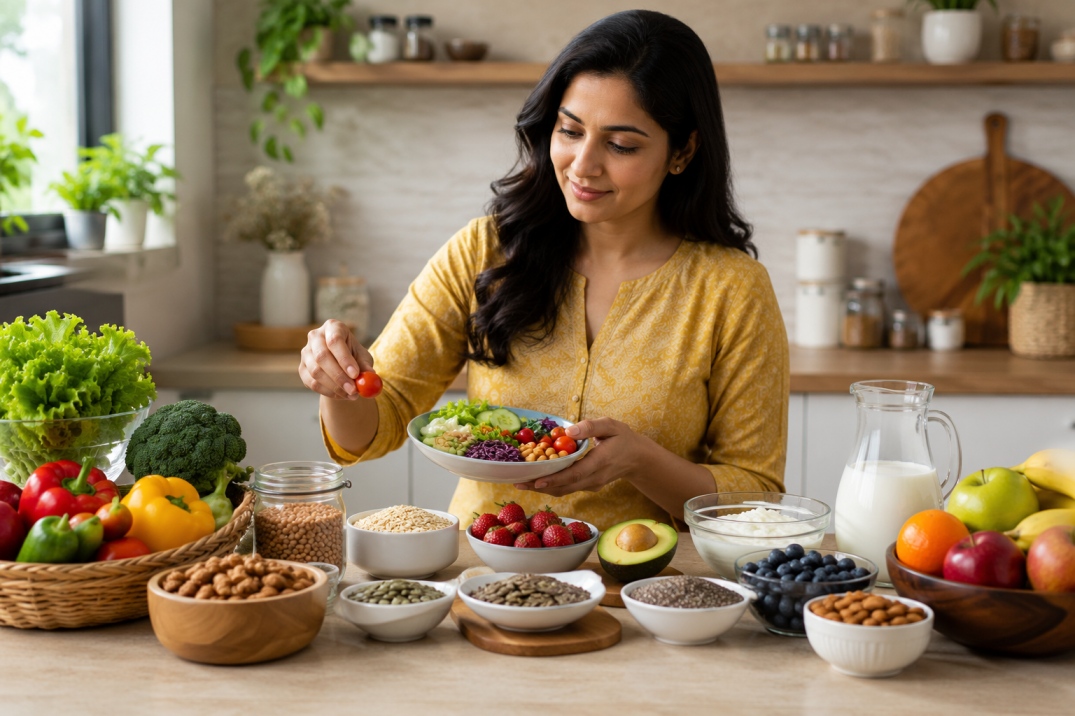
A balanced diet can support hormonal health by providing:
· Adequate energy
· Protein
· Essential fatty acids
· Fiber
· Vitamins
· Minerals
· Antioxidants
· Adequate hydration
Poor nutrition, severe calorie restriction, nutrient deficiencies, and highly unbalanced diets can interfere with overall health and may affect some hormone-related processes.
The goal is therefore not to find a single “hormone-balancing food,” but to create a consistent, varied, and nutritionally adequate diet.
Why Adequate Nutrition Matters for Women
Women's nutritional needs can change throughout life.
For example, nutritional priorities may differ during:
Reproductive Years → Pregnancy → Postpartum → Perimenopause → Menopause
Menstruating women may have increased iron needs because of menstrual blood loss.
Pregnancy increases the need for several nutrients, including iron and folate.
During perimenopause and menopause, nutrition becomes particularly important for maintaining muscle and bone health and supporting healthy aging.
This is why women's nutrition should be considered in the context of age, life stage, activity level, health status, and individual needs.https://www.nin.res.in
The Role of Protein
Protein is important for maintaining and repairing body tissues.
It also supports muscle health, which becomes particularly important as women age.
Protein-rich foods include:
· Dal
· Beans
· Chickpeas
· Rajma
· Soybeans
· Tofu
· Paneer
· Curd
· Greek yogurt
· Eggs
· Fish
· Chicken
Including a protein source in regular meals can help create a balanced eating pattern.https://wellorafit.com/services/nutrition-diet-planning/
The Role of Healthy Fats
Dietary fat is important for overall health and provides essential fatty acids.
Healthy fat sources include:
· Walnuts
· Almonds
· Peanuts
· Flaxseeds
· Chia seeds
· Sesame seeds
· Avocado
· Vegetable oils
· Fatty fish
Rather than eliminating dietary fat, focus on choosing nutritious sources and consuming appropriate portions.
The Importance of Fiber
Fiber is important for digestive health and can contribute to overall metabolic health.
Good sources include:
· Vegetables
· Whole fruits
· Oats
· Whole grains
· Millets
· Dal
· Beans
· Chickpeas
· Nuts
· Seeds
A practical goal is to include vegetables and/or fruit regularly and choose whole grains and legumes more often.
Hormonal Health and Blood Sugar Regulation
Nutrition also plays an important role in maintaining healthy blood glucose levels.
Meals containing a combination of:
Protein + Fiber + Carbohydrates + Healthy Fats
can be more balanced than meals based primarily on refined carbohydrates or added sugars.
For example:
Dal + roti + vegetables + curd
provides a combination of protein, carbohydrates, fiber, and other nutrients.
The goal is not to completely eliminate carbohydrates but to choose nutritious sources and appropriate portions.https://wellorafit.com/services/nutrition-diet-planning/
Hormonal Health Across Different Life Stages
Women's nutritional priorities can change throughout life.
During the Reproductive Years
Focus on:
· Adequate iron
· Protein
· Folate
· Calcium
· Vitamin D
· Fiber
· Overall balanced nutrition
During Pregnancy
Nutritional requirements increase, and specific nutrients become particularly important.
Pregnancy nutrition should be individualized with guidance from a healthcare professional.
Postpartum
Nutrition should support:
· Recovery
· Energy
· Breastfeeding needs, when applicable
· Muscle and bone health
· Overall well-being
During Perimenopause
Focus increasingly on:
· Protein
· Calcium
· Vitamin D
· Fiber
· Healthy fats
· Muscle maintenance
· Healthy weight management
After Menopause
Maintaining:
· Bone health
· Muscle mass
· Cardiovascular health
· Healthy body composition
· Adequate nutrient intake
becomes particularly important.
Can Food "Balance" Hormones?
You may see claims online that specific foods can “balance estrogen,” “flush out excess hormones,” or “reset your hormones.”
These claims are often much more simplistic than human biology.
There is no single food that can correct a hormonal disorder.
Foods such as vegetables, fruits, whole grains, legumes, nuts, seeds, and protein-rich foods can support overall health, but they should not be presented as treatments for diagnosed hormonal conditions.
If you have persistent symptoms or suspect a hormonal disorder, appropriate medical evaluation is more important than relying on a specific food or supplement.
Nutrition Is Only One Part of Hormonal Health
Hormonal health is influenced by multiple factors.
These can include:
· Nutrition
· Physical activity
· Sleep
· Stress
· Body composition
· Genetics
· Age
· Medical conditions
· Medications
This means that eating a healthy diet is important, but it is not the only factor.
A comprehensive approach combines balanced nutrition, regular movement, adequate sleep, stress management, and appropriate medical care.
Essential Nutrients for Women’s Hormonal Health
Nutrition for hormonal health should focus on overall dietary quality and adequate nutrient intake, rather than relying on a single “hormone-balancing” food.
Different nutrients support different functions, including energy production, blood health, muscle maintenance, bone health, and normal metabolic processes.
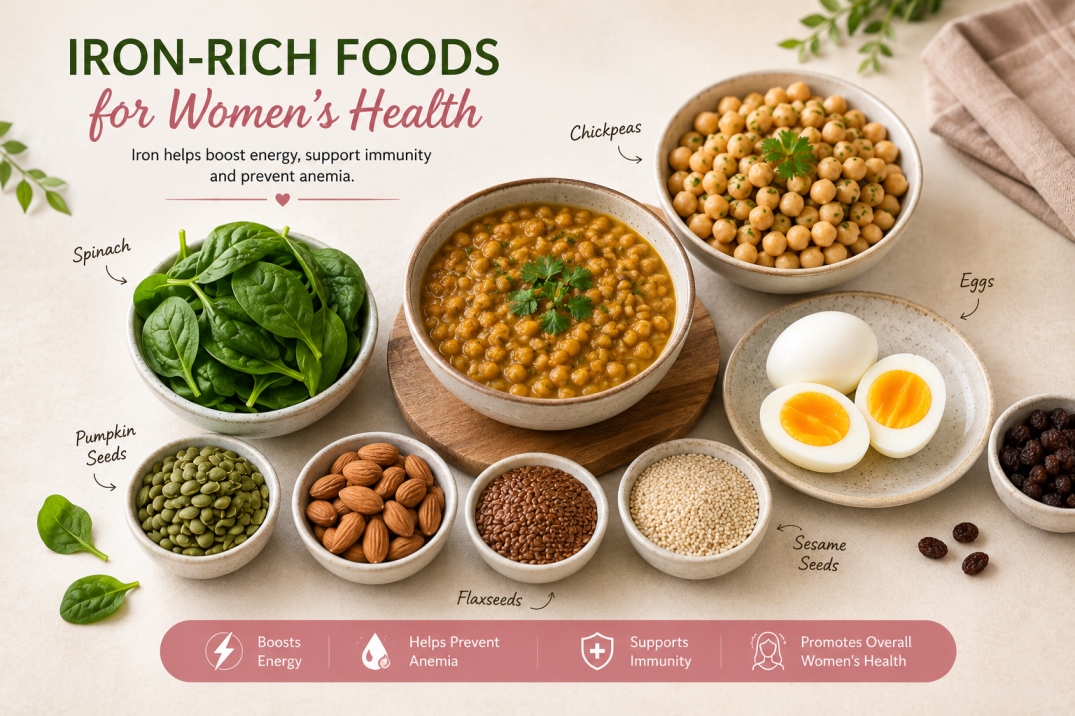
1. Iron
Iron is particularly important for women who menstruate because regular blood loss can increase iron requirements.
Iron supports:
· Hemoglobin production
· Oxygen transport
· Energy metabolism
· Normal cognitive and physical function
Food Sources
Vegetarian:
· Dal
· Rajma
· Chickpeas
· Soybeans
· Tofu
· Ragi
· Sesame seeds
· Leafy greens
Non-vegetarian:
· Meat
· Chicken
· Fish
· Eggs
Pairing plant-based iron sources with vitamin-C-rich foods such as lemon, guava, oranges, or tomatoes can help improve absorption of non-heme iron.
2. Calcium
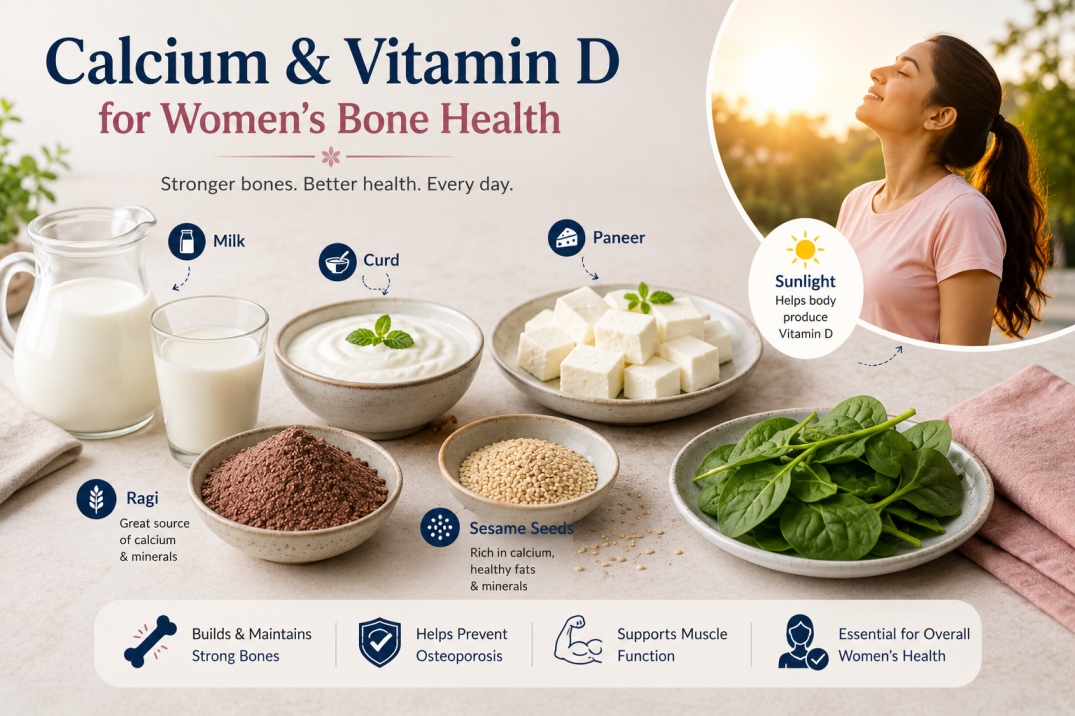
Calcium is essential for maintaining healthy bones and teeth.
This becomes particularly important as women approach perimenopause and menopause, when changes in estrogen levels can affect bone health.
Good sources include:
· Milk
· Curd
· Paneer
· Ragi
· Sesame seeds
· Calcium-fortified foods
· Calcium-set tofu
Including calcium-rich foods regularly can help support long-term bone health.
3. Vitamin D
Vitamin D helps the body absorb calcium and plays an important role in bone and muscle health.
Sources include:
· Appropriate sunlight exposure
· Egg yolks
· Fatty fish
· Fortified foods
Vitamin D status can vary considerably between individuals.
If deficiency is suspected, testing and supplementation should be discussed with a healthcare professional rather than taking high-dose supplements without guidance.
4. Protein
Protein supports muscle maintenance, tissue repair, and many normal body functions.
Maintaining muscle is particularly important for women as they age.
Good sources include:
· Dal
· Beans
· Chickpeas
· Rajma
· Soybeans
· Tofu
· Paneer
· Curd
· Greek yogurt
· Eggs
· Fish
· Chicken
Try to include protein regularly throughout the day rather than relying on one protein-heavy meal.
5. Omega-3 Fatty Acids
Omega-3 fatty acids are important components of a healthy diet.
Food sources include:
· Fatty fish
· Walnuts
· Flaxseeds
· Chia seeds
For women following vegetarian diets, flaxseeds, chia seeds, and walnuts can provide plant-based omega-3 fats.
Rather than focusing on supplements, prioritize food sources where appropriate.
6. Fiber
Fiber supports digestive health and can contribute to a healthy overall dietary pattern.
Good sources include:
· Vegetables
· Whole fruits
· Oats
· Whole grains
· Millets
· Dal
· Beans
· Chickpeas
· Nuts
· Seeds
A practical approach is to include vegetables with main meals and choose whole fruits instead of fruit juice more often.
7. Folate
Folate is important for cell division and DNA synthesis and is particularly important during pregnancy.
Food sources include:
· Leafy green vegetables
· Beans
· Lentils
· Chickpeas
· Peas
· Citrus fruits
· Fortified foods
Women who are planning pregnancy should discuss appropriate folic acid intake with their healthcare professional, as food alone may not provide the recommended amount needed during this stage.
8. Vitamin B12
Vitamin B12 is important for:
· Red blood cell formation
· Neurological function
· DNA synthesis
Food sources include:
· Milk
· Curd
· Eggs
· Fish
· Chicken
· Meat
· Fortified foods
Women following vegetarian or vegan diets may need particular attention to vitamin B12 intake because naturally occurring B12 is mainly found in animal-derived foods.
Supplementation may be appropriate when dietary intake is inadequate or deficiency is identified.
9. Magnesium
Magnesium participates in numerous processes in the body, including normal muscle and nerve function.
Food sources include:
· Nuts
· Seeds
· Legumes
· Whole grains
· Leafy green vegetables
A varied diet containing these foods can contribute to adequate magnesium intake.
10. Zinc
Zinc supports normal immune function, cell division, wound healing, and other physiological processes.
Food sources include:
· Dairy products
· Eggs
· Meat
· Fish
· Legumes
· Nuts
· Seeds
· Whole grains
Adequate zinc intake should come primarily from a varied diet unless supplementation is medically indicated.
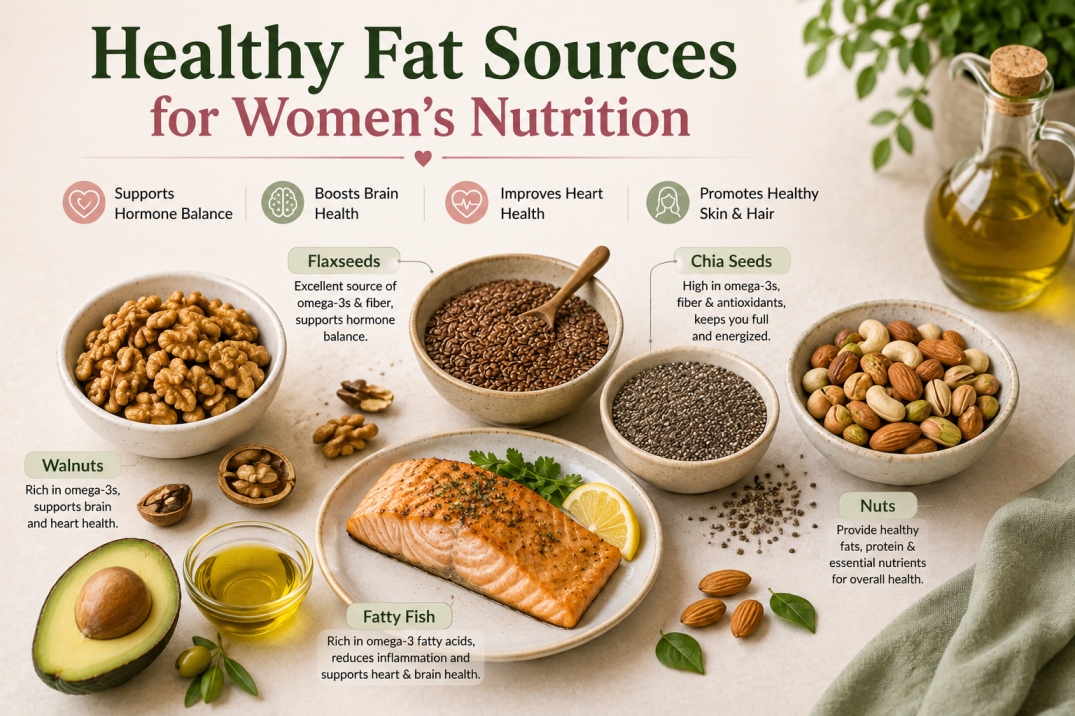
11. Healthy Fats
Dietary fats are an important part of a balanced eating pattern.
Useful sources include:
· Walnuts
· Almonds
· Peanuts
· Seeds
· Avocado
· Vegetable oils
· Fatty fish
Healthy fats should not be completely eliminated in an effort to manage weight or hormones.
Instead, focus on food quality and appropriate portions.
12. Antioxidant-Rich Foods
Fruits and vegetables provide vitamins, minerals, fiber, and numerous plant compounds.
Include a variety of colors:
· Green leafy vegetables
· Tomatoes
· Carrots
· Bell peppers
· Berries
· Guava
· Citrus fruits
· Papaya
· Pomegranate
Rather than searching for one “superfood,” aim for variety across the week.
13. Hydration
Water supports many normal processes in the body and should be the primary source of hydration for most people.
Simple habits include:
· Carrying a water bottle
· Drinking water with meals
· Keeping water accessible during work
· Choosing water instead of sugary drinks
· Increasing fluid intake appropriately during exercise or hot weather
Individual fluid requirements vary according to factors such as activity, climate, diet, and health status.
A Simple Hormonal-Health Plate
A practical meal structure can be:
½ Plate → Vegetables
¼ Plate → Protein
¼ Plate → Whole grains or other carbohydrate source
Add a moderate amount of healthy fat where appropriate.
Example Indian Meal
2 whole-wheat rotis + dal + mixed vegetable sabzi + curd + salad
This provides a combination of protein, carbohydrates, fiber, calcium, and several vitamins and minerals.
Another option:
Controlled portion of rice + rajma + vegetables + curd
Supplements: Are They Necessary?
Supplements can be useful when a deficiency is identified or when nutritional requirements cannot be adequately met through food.
However, supplements should not be treated as a replacement for a balanced diet.
Avoid taking multiple “hormone-balancing” supplements simply because they are marketed for women's health.
Particularly high doses of certain vitamins and minerals can be harmful.
If you suspect a deficiency, discuss appropriate testing and supplementation with a healthcare professional.
Practical Nutrition Strategies for Women’s Hormonal Health
Supporting hormonal health through nutrition is less about finding a single “hormone-balancing” food and more about eating enough, eating a variety of nutrient-rich foods, and maintaining consistent healthy habits.
A practical approach can support energy, metabolic health, bone health, muscle maintenance, and overall well-being.
1. Build Balanced Meals
A simple plate structure can make everyday eating easier:
½ Plate → Vegetables
¼ Plate → Protein
¼ Plate → Whole grains or other carbohydrate sources
Add a moderate amount of healthy fat where appropriate.
Example Indian Meal
2 whole-wheat rotis + dal + mixed vegetable sabzi + curd + salad
Or:
Controlled portion of rice + rajma + vegetables + curd
This approach provides a combination of protein, fiber, carbohydrates, vitamins, minerals, and other nutrients.
2. Include Protein Throughout the Day
Instead of consuming most of your protein in one meal, include protein regularly.
Breakfast
· Moong dal chilla + curd
· Besan chilla + paneer
· Eggs + whole-wheat toast
· Greek yogurt + nuts and seeds
Lunch
· Dal + roti + vegetables
· Rajma + rice + salad
· Paneer/tofu + roti + vegetables
Evening Snack
· Roasted chana
· Greek yogurt
· Boiled eggs
· Sprouts
Dinner
· Dal + roti + sabzi
· Paneer/tofu + vegetables
· Fish/chicken + vegetables + whole grains
Adequate protein is particularly important for maintaining muscle as women age.
3. Eat More Fiber-Rich Foods
Fiber can support digestive health and contribute to a balanced dietary pattern.
Include:
· Vegetables
· Whole fruits
· Oats
· Whole grains
· Millets
· Dal
· Beans
· Chickpeas
· Nuts
· Seeds
A simple habit is to include vegetables in your lunch and dinner and choose whole fruits instead of fruit juice more often.
4. Don't Fear Healthy Fats
Fat is an essential part of a balanced diet.
Include moderate amounts of:
· Walnuts
· Almonds
· Peanuts
· Flaxseeds
· Chia seeds
· Sesame seeds
· Avocado
· Vegetable oils
· Fatty fish
The goal is not to remove dietary fat but to choose nutritious sources and appropriate portions.
5. Support Iron Intake
For women who menstruate, iron deserves particular attention.
Include foods such as:
· Dal
· Rajma
· Chickpeas
· Soybeans
· Tofu
· Ragi
· Sesame seeds
· Leafy vegetables
· Eggs
· Fish
· Chicken
Pair plant-based iron sources with vitamin-C-rich foods such as lemon, guava, tomatoes, oranges, or bell peppers to support absorption of non-heme iron.
If you experience persistent fatigue or heavy menstrual bleeding, discuss iron testing with a healthcare professional.
6. Prioritize Calcium and Vitamin D
Bone health becomes increasingly important as women approach and move through menopause.
Include calcium-rich foods such as:
· Milk
· Curd
· Paneer
· Ragi
· Sesame seeds
· Calcium-fortified foods
· Calcium-set tofu
Vitamin D also plays an important role in bone and muscle health.
If vitamin D deficiency is suspected, discuss appropriate testing and supplementation with a healthcare professional.
7. Choose Whole Foods More Often
Make nutrient-rich foods the foundation of your diet.
Choose more often:
· Vegetables
· Fruits
· Dal and legumes
· Whole grains
· Nuts and seeds
· Dairy or suitable alternatives
· Eggs
· Fish
· Chicken
· Soy foods
This does not mean you can never eat sweets, snacks, or restaurant foods.
A healthy eating pattern can include occasional treats while keeping nutritious foods at the center of most meals.
8. Manage Added Sugar Without Extreme Restriction
You don't need to completely eliminate sugar.
Instead, limit frequent consumption of:
· Sugary drinks
· Sweets
· Cakes
· Biscuits
· Sweetened cereals
· Desserts
· Highly processed snacks
If you enjoy something sweet, consider having it as part of an overall balanced eating pattern rather than feeling that one food has “ruined” your diet.
9. Don't Eliminate Carbohydrates
Carbohydrates provide energy and can be part of a healthy diet.
Choose nutrient-rich sources such as:
· Whole wheat
· Oats
· Millets
· Brown rice
· Barley
· Potatoes
· Sweet potatoes
· Fruits
· Legumes
The important factors are food quality, portion size, and overall meal balance.
10. Stay Hydrated
Water supports many normal body functions.
Simple hydration habits include:
· Carrying a water bottle
· Drinking water with meals
· Keeping water accessible at work
· Choosing water instead of sugary drinks
· Drinking according to thirst and individual needs
Fluid requirements vary depending on climate, activity level, diet, and health status.
11. Avoid Extreme Dieting
Severe calorie restriction can make it difficult to meet nutritional requirements.
This is especially important for women who are:
· Highly active
· Pregnant
· Breastfeeding
· Trying to maintain muscle
· Recovering from illness
· Experiencing nutritional deficiencies
Instead of repeatedly starting restrictive diets, focus on a sustainable eating pattern.
Balanced Nutrition → Consistency → Better Long-Term Health
12. Support Hormonal Health With Lifestyle Habits
Nutrition works alongside other lifestyle factors.
Regular Physical Activity
Walking, cycling, swimming, and other cardiovascular activities support fitness and overall health.
Strength Training
Resistance training can help maintain muscle and support bone health, particularly as women age.
Sleep
Adequate sleep supports energy, mood, appetite regulation, and overall well-being.
Stress Management
Walking, meditation, breathing exercises, yoga, hobbies, and social connection can help support overall well-being.
13. Be Careful With “Hormone-Balancing” Products
Social media often promotes powders, teas, supplements, and detox products claiming to “balance hormones.”
Be cautious with these claims.
No single supplement or food can correct every hormonal problem.
Some supplements may also interact with medications or be inappropriate during pregnancy or breastfeeding.
If you are considering supplements for a specific hormonal concern, discuss them with a qualified healthcare professional.
14. Nutrition for Different Life Stages
Your nutritional priorities can change throughout life.
Reproductive Years
Focus on:
Iron + Protein + Calcium + Vitamin D + Fiber
Pregnancy
Focus on:
Adequate Energy + Protein + Folate + Iron + Calcium + Other Pregnancy-Specific Nutrients
Postpartum
Focus on:
Recovery + Adequate Nutrition + Hydration + Protein + Iron + Calcium
Perimenopause
Focus on:
Protein + Calcium + Vitamin D + Fiber + Healthy Fats + Muscle Health
Postmenopause
Focus on:
Bone Health + Muscle Maintenance + Heart Health + Healthy Body Composition + Overall Nutrient Adequacy
Individual requirements should always be adjusted according to health status and professional guidance.
A Simple Day of Hormone-Supportive Eating
Breakfast
Moong dal chilla + curd + vegetables
Mid-Morning
One whole fruit + a few nuts
Lunch
2 whole-wheat rotis + dal + mixed vegetables + curd + salad
Evening
Roasted chana + unsweetened tea
Dinner
Paneer/tofu/fish/chicken + vegetables + controlled portion of roti or rice
Hydration
Water regularly throughout the day according to individual needs.
This is an example of a balanced eating pattern, not a universal meal plan. Portions should be personalized according to age, activity, health status, dietary preferences, and goals.
Supporting Hormonal Health Through Long-Term Nutrition
Women’s hormonal health is influenced by many factors, and nutrition is one important part of the picture. Rather than searching for foods that “balance hormones,” the goal is to build an eating pattern that consistently provides the nutrients the body needs.
A sustainable approach should support energy, muscle, bone health, metabolic health, reproductive health, and healthy aging.
Build a Sustainable Nutrition Routine
A practical approach can be built around:
Balanced Meals → Adequate Protein → Essential Nutrients → Regular Activity → Good Sleep → Long-Term Consistency
You don't need to change everything at once.
Start with a few realistic habits and gradually build from there.
1. Make Nutrient-Dense Foods the Foundation
Try to make these foods a regular part of your meals:
· Vegetables
· Whole fruits
· Dal and legumes
· Whole grains
· Nuts and seeds
· Dairy or suitable alternatives
· Eggs
· Fish or lean meat, if part of your diet
· Soy and tofu
These foods provide a combination of protein, fiber, vitamins, minerals, healthy fats, and other nutrients.
2. Don't Follow an Extremely Restrictive Diet
Very restrictive diets can make it difficult to meet nutritional needs.
Avoid unnecessarily eliminating:
· All carbohydrates
· All dietary fats
· Entire food groups
· Multiple foods without a medical reason
Instead, focus on quality, variety, and appropriate portions.
A sustainable diet should fit your culture, preferences, lifestyle, and health needs.
3. Support Healthy Body Composition
Maintaining muscle becomes increasingly important as women age.
Combine:
Adequate Protein + Strength Training + Regular Movement
Protein-rich foods such as dal, beans, dairy, eggs, tofu, fish, and chicken can support muscle maintenance.
Strength training can further support muscle strength and bone health.
4. Pay Attention to Life-Stage Needs
Nutrition should evolve as your body changes.
Reproductive Years
Pay particular attention to:
· Iron
· Protein
· Calcium
· Vitamin D
· Folate
· Fiber
Pregnancy
Nutritional requirements increase, and specific nutrients become especially important. Pregnancy nutrition should be individualized with professional guidance.
Postpartum
Focus on:
· Recovery
· Adequate energy
· Protein
· Iron
· Calcium
· Hydration
· Breastfeeding needs, when applicable
Perimenopause
Give greater attention to:
· Protein
· Calcium
· Vitamin D
· Fiber
· Healthy fats
· Muscle preservation
· Healthy body composition
Postmenopause
Continue focusing on:
· Bone health
· Muscle maintenance
· Heart health
· Healthy weight
· Adequate nutrient intake
5. Don't Ignore Persistent Symptoms
Nutrition can support overall health, but persistent symptoms should not automatically be blamed on a nutrient deficiency or “hormonal imbalance.”
Speak with a healthcare professional if you experience:
· Persistent fatigue
· Very irregular or unusually heavy periods
· Significant unexplained weight changes
· Persistent hair loss
· Severe acne or unusual hair growth
· Significant mood changes
· Persistent sleep problems
· Symptoms that interfere with daily life
These symptoms can have many possible causes and may require appropriate medical evaluation.
6. Be Selective With Supplements
Supplements can be useful when there is a confirmed deficiency or a specific nutritional need.
However, avoid taking multiple supplements simply because they are marketed as:
· Hormone balancers
· Detox products
· Metabolism boosters
· Women's wellness formulas
More supplements do not necessarily mean better health.
If you are pregnant, breastfeeding, taking medications, or managing a health condition, discuss supplements with your healthcare professional before using them.
7. Combine Nutrition With Lifestyle
A healthy hormonal environment is supported by more than food.
Nutrition
Eat a varied, nutrient-rich diet.
Exercise
Include regular movement and strength training.
Sleep
Aim for a consistent and restorative sleep routine.
Stress Management
Use practical strategies such as walking, meditation, breathing exercises, hobbies, and social connection.
Medical Care
Seek appropriate evaluation when symptoms persist or change significantly.
These factors work together rather than independently.
Common Mistakes to Avoid
1. Searching for a Single “Hormone-Balancing” Food
No single food can regulate every hormone.
2. Cutting Calories Too Aggressively
Severe restriction can make it difficult to meet nutritional needs.
3. Avoiding Healthy Fats
Dietary fats are an important part of balanced nutrition.
4. Ignoring Protein
Adequate protein becomes increasingly important for muscle maintenance.
5. Relying Only on Supplements
Supplements cannot replace a varied diet.
6. Ignoring Sleep and Stress
Hormonal health is influenced by the broader lifestyle, not nutrition alone.
7. Self-Diagnosing Hormonal Problems
Symptoms alone cannot identify the underlying cause of a hormonal concern.
How to Make Healthy Eating Easier
Busy schedules can make healthy eating challenging.
Try simple strategies:
· Prepare dal or beans in batches.
· Keep fruits easily accessible.
· Store nuts and seeds in portioned containers.
· Keep curd or yogurt available.
· Prepare chopped vegetables in advance.
· Keep convenient protein sources available.
· Carry water when travelling.
· Plan simple meals rather than complicated recipes.
The easier a healthy habit is to follow, the more likely it is to become part of your routine.
Key Takeaways
· Hormonal health is influenced by nutrition, activity, sleep, stress, genetics, age, and health conditions.
· There is no single food that can “balance” all hormones.
· Focus on a varied and nutrient-dense diet.
· Include adequate protein, fiber, healthy fats, vitamins, and minerals.
· Pay attention to iron during the menstruating years.
· Calcium and vitamin D are particularly important for long-term bone health.
· Adjust nutrition according to your life stage.
· Avoid extreme diets and unnecessary restrictions.
· Be cautious with supplements marketed for hormonal balance.
· Persistent or concerning symptoms deserve professional evaluation.
Conclusion
Supporting women's hormonal health through nutrition is not about following a perfect diet or finding a miracle food.
It is about consistently giving your body the energy and nutrients it needs while maintaining healthy lifestyle habits.
Build meals around vegetables, protein, whole grains, fruits, legumes, healthy fats, and other nutrient-rich foods. Pay attention to important nutrients such as iron, calcium, vitamin D, folate, and vitamin B12 according to your life stage and individual needs.
Combine good nutrition with regular movement, strength training, adequate sleep, stress management, and appropriate medical care.
Most importantly, remember that women's nutritional needs change throughout life.
The goal is not to “control” your hormones with food—it is to build a nourishing lifestyle that supports your body through every stage of life.
FAQ Schema
1. What is the best diet for women’s hormonal health?
There is no single diet that works for every woman. A balanced eating pattern containing vegetables, fruits, whole grains, legumes, protein-rich foods, healthy fats, and essential vitamins and minerals can support overall health and normal hormonal function.
2. Can food balance women’s hormones?
No single food can “balance” all hormones. Nutrition can support normal body functions and overall health, but diagnosed hormonal conditions may require medical evaluation and treatment.
3. Which nutrients are important for women’s hormonal health?
Important nutrients include protein, iron, calcium, vitamin D, folate, vitamin B12, magnesium, zinc, healthy fats, fiber, and omega-3 fatty acids. Individual requirements vary according to age and life stage.
4. Is protein important for women’s health?
Yes. Protein supports muscle maintenance, tissue repair, and overall body function. Adequate protein becomes particularly important for maintaining muscle as women age.
5. Why is iron important for women?
Iron is needed for hemoglobin production and oxygen transport. Women who menstruate can have higher iron requirements because of regular blood loss.
6. What foods support bone health?
Calcium-rich foods such as milk, curd, paneer, ragi, sesame seeds, and calcium-fortified foods can contribute to bone health. Vitamin D and regular weight-bearing or resistance exercise are also important.
7. Should women avoid carbohydrates for hormonal health?
No. Carbohydrates can be part of a balanced diet. Choose nutrient-rich sources such as whole grains, oats, millets, fruits, vegetables, and legumes while considering portions and overall meal balance.
8. Are supplements necessary for hormonal health?
Not necessarily. Supplements may be appropriate when a deficiency or specific nutritional need is identified. They should not replace a varied diet or be used simply because they are marketed as “hormone balancers.”
9. Can nutrition help during perimenopause and menopause?
Yes. Balanced nutrition can support muscle, bone health, healthy body composition, energy, and overall well-being during perimenopause and menopause.
10. When should I see a healthcare professional about hormonal symptoms?
Speak with a healthcare professional if you experience persistent or concerning symptoms such as unusually heavy or irregular periods, significant unexplained weight changes, persistent fatigue, severe mood changes, or symptoms that interfere with daily life.
Ready to Begin Your Health Journey?
Get a personalized, medically guided plan built around your unique biology.